
IITA launches International Year of Plant Health (IYPH) 2020 at R4D Week
novembre 22, 2019
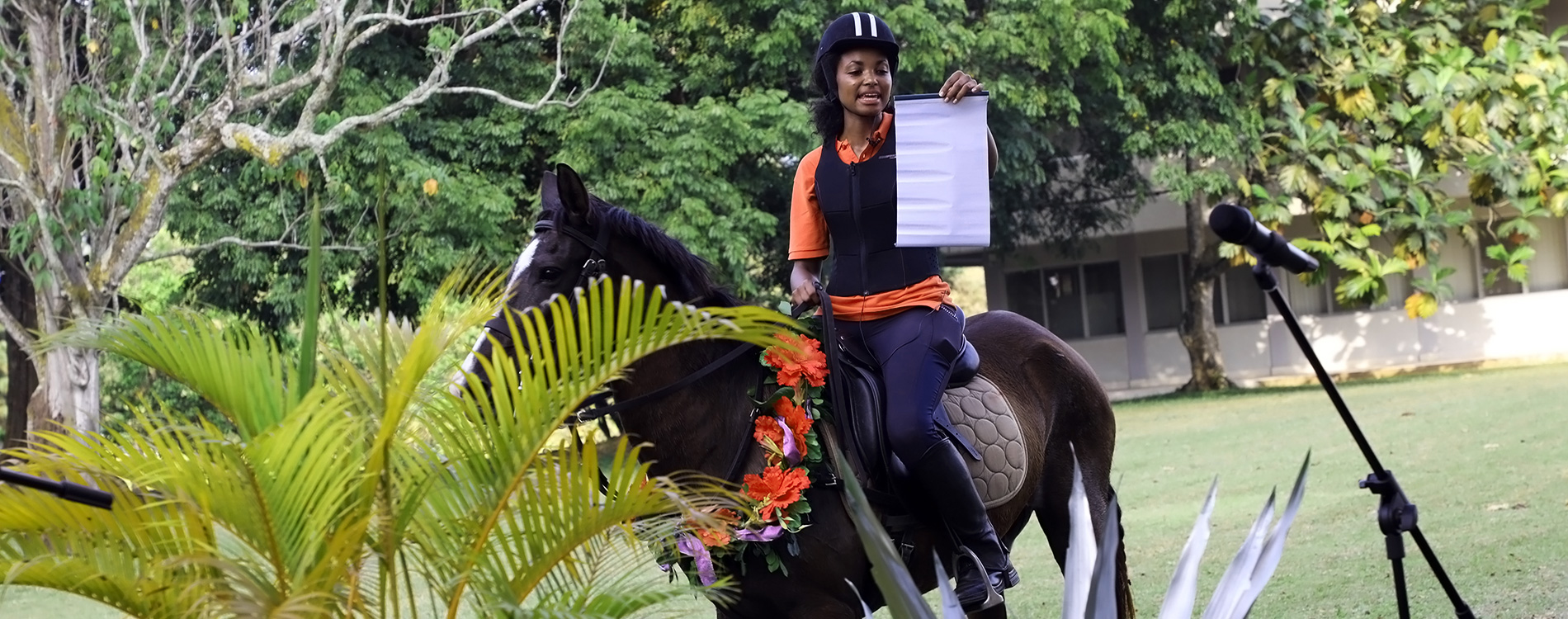
With decades of research contributing to the improvement of plant health globally and across Africa in particular, the International Institute of Tropical Agriculture (IITA) joined the plant science community on 22 November to launch the International Year of Plant Health (IYPH) 2020. The IYPH 2020 is a year-long observance with the theme, “Protecting Plant Health in a Changing World” and aims to raise global awareness on how plant health can help end hunger, reduce poverty, and protect biodiversity and the environment.
The launch took place as part of the Institute’s Research for Development (R4D) Week, and took into account the landmark contributions of the Institute in the area of plant health and agriculture in its over 50 years of research work in Africa.
 The United Nations General Assembly declared 2020 as the Year of Plant Health recognizing the importance of healthy plants in addressing food security and sustaining life on Earth. The UN sees plant health as key to the sustainable development of agriculture to feed the growing global population by 2050. In line with this, the Institute is taking stock of the immense progress in the area of breeding resistant crop varieties as part of efforts to improve crop productivity, tackle food security and plant health research.
The International Institute of Tropical Agriculture (IITA) began in 1967 with the founders—Ford and Rockefeller Foundations—targeting increased crop yields to meet the level of production required to supply the food demand in Africa. So in the earlier days, research focused on increasing productivity until nature played a nasty trick three years later.
In 1970, faced with the outbreak of the Maize Streak Virus (MSV) disease that could have entirely wiped out the maize crop, IITA’s research focus turned to plant health without abandoning the yield objective. IITA and partners worked tirelessly to combat MSV and by 1985 high yielding cultivars and hybrids with different maturity classes, grain colors, and textures for different zones in Africa were released.
To breed these MSV resistant varieties, IITA together with the International Maize and Wheat Improvement Center (CIMMYT) and 36 national partners, got germplasm from Thailand, Central and South America. Because of this concerted effort to overcome MSV, in 1986, IITA got its first award in plant health—the CGIAR King Baudouin Award.
According to IITA Entomologist Georg Goergen, “Agriculture in tropical Africa is widely prevailing in a smallholder situation. In this context, biodiversity is often comparatively high and biotic stress such as insect pests and plant diseases are frequently challenging,” hence the need to continuously research into ways to address these challenges.
Over the years, IITA recorded more successes in plant breeding research in Africa with numerous awards that have strengthened the Institute’s commitment to plant health. The research from the Institute has cut across different crops culminating in multiple awards including the 2006 CGIAR Outstanding Senior Scientist Award to IITA Breeder Bahdur Singh, for breeding fast maturing “60-day” cowpea cultivars for the tropics as well as cultivars with resistance to more than 10 pathogens and drought and heat tolerance in other cultivars.
Biological control, which is the use of natural enemies to fight crop pests, was also adopted alongside resistance breeding. Biocontrol was first used in combating the cassava mealybug and cassava green mite using Apoanagyrus lopezi, a predator wasp. This wasp, from South America, is a natural enemy to the mealybug and green mite. It controlled the cassava mealybug wherever it was released. This was the first of many successes in biocontrol, this research breakthrough won the CGIAR King Baudouin Award in 1990, along with the International Center for Tropical Agriculture (CIAT) team.
With the recorded success in the use of the biocontrol, IITA opened a Biological Control Center for Africa in Cotonou, Benin, in the 1980s. This center has grown to become Africa’s leading biocontrol research hub. Scientists from Cotonou have put their expertise to many pest challenges and surmounting them.
According to the UN resolution affirming this international year, the global science community is hoping that the celebration of the year would “encourage actions to promote and implement activities in favor of preserving and sustaining global plant resources and raise awareness of the importance of plant health in addressing issues of global concern, including hunger, poverty, and threats to the environment.”
The United Nations General Assembly declared 2020 as the Year of Plant Health recognizing the importance of healthy plants in addressing food security and sustaining life on Earth. The UN sees plant health as key to the sustainable development of agriculture to feed the growing global population by 2050. In line with this, the Institute is taking stock of the immense progress in the area of breeding resistant crop varieties as part of efforts to improve crop productivity, tackle food security and plant health research.
The International Institute of Tropical Agriculture (IITA) began in 1967 with the founders—Ford and Rockefeller Foundations—targeting increased crop yields to meet the level of production required to supply the food demand in Africa. So in the earlier days, research focused on increasing productivity until nature played a nasty trick three years later.
In 1970, faced with the outbreak of the Maize Streak Virus (MSV) disease that could have entirely wiped out the maize crop, IITA’s research focus turned to plant health without abandoning the yield objective. IITA and partners worked tirelessly to combat MSV and by 1985 high yielding cultivars and hybrids with different maturity classes, grain colors, and textures for different zones in Africa were released.
To breed these MSV resistant varieties, IITA together with the International Maize and Wheat Improvement Center (CIMMYT) and 36 national partners, got germplasm from Thailand, Central and South America. Because of this concerted effort to overcome MSV, in 1986, IITA got its first award in plant health—the CGIAR King Baudouin Award.
According to IITA Entomologist Georg Goergen, “Agriculture in tropical Africa is widely prevailing in a smallholder situation. In this context, biodiversity is often comparatively high and biotic stress such as insect pests and plant diseases are frequently challenging,” hence the need to continuously research into ways to address these challenges.
Over the years, IITA recorded more successes in plant breeding research in Africa with numerous awards that have strengthened the Institute’s commitment to plant health. The research from the Institute has cut across different crops culminating in multiple awards including the 2006 CGIAR Outstanding Senior Scientist Award to IITA Breeder Bahdur Singh, for breeding fast maturing “60-day” cowpea cultivars for the tropics as well as cultivars with resistance to more than 10 pathogens and drought and heat tolerance in other cultivars.
Biological control, which is the use of natural enemies to fight crop pests, was also adopted alongside resistance breeding. Biocontrol was first used in combating the cassava mealybug and cassava green mite using Apoanagyrus lopezi, a predator wasp. This wasp, from South America, is a natural enemy to the mealybug and green mite. It controlled the cassava mealybug wherever it was released. This was the first of many successes in biocontrol, this research breakthrough won the CGIAR King Baudouin Award in 1990, along with the International Center for Tropical Agriculture (CIAT) team.
With the recorded success in the use of the biocontrol, IITA opened a Biological Control Center for Africa in Cotonou, Benin, in the 1980s. This center has grown to become Africa’s leading biocontrol research hub. Scientists from Cotonou have put their expertise to many pest challenges and surmounting them.
According to the UN resolution affirming this international year, the global science community is hoping that the celebration of the year would “encourage actions to promote and implement activities in favor of preserving and sustaining global plant resources and raise awareness of the importance of plant health in addressing issues of global concern, including hunger, poverty, and threats to the environment.”
The United Nations General Assembly declared 2020 as the Year of Plant Health recognizing the importance of healthy plants in addressing food security and sustaining life on Earth. The UN sees plant health as key to the sustainable development of agriculture to feed the growing global population by 2050. In line with this, the Institute is taking stock of the immense progress in the area of breeding resistant crop varieties as part of efforts to improve crop productivity, tackle food security and plant health research.
The International Institute of Tropical Agriculture (IITA) began in 1967 with the founders—Ford and Rockefeller Foundations—targeting increased crop yields to meet the level of production required to supply the food demand in Africa. So in the earlier days, research focused on increasing productivity until nature played a nasty trick three years later.
In 1970, faced with the outbreak of the Maize Streak Virus (MSV) disease that could have entirely wiped out the maize crop, IITA’s research focus turned to plant health without abandoning the yield objective. IITA and partners worked tirelessly to combat MSV and by 1985 high yielding cultivars and hybrids with different maturity classes, grain colors, and textures for different zones in Africa were released.
To breed these MSV resistant varieties, IITA together with the International Maize and Wheat Improvement Center (CIMMYT) and 36 national partners, got germplasm from Thailand, Central and South America. Because of this concerted effort to overcome MSV, in 1986, IITA got its first award in plant health—the CGIAR King Baudouin Award.
According to IITA Entomologist Georg Goergen, “Agriculture in tropical Africa is widely prevailing in a smallholder situation. In this context, biodiversity is often comparatively high and biotic stress such as insect pests and plant diseases are frequently challenging,” hence the need to continuously research into ways to address these challenges.
Over the years, IITA recorded more successes in plant breeding research in Africa with numerous awards that have strengthened the Institute’s commitment to plant health. The research from the Institute has cut across different crops culminating in multiple awards including the 2006 CGIAR Outstanding Senior Scientist Award to IITA Breeder Bahdur Singh, for breeding fast maturing “60-day” cowpea cultivars for the tropics as well as cultivars with resistance to more than 10 pathogens and drought and heat tolerance in other cultivars.
Biological control, which is the use of natural enemies to fight crop pests, was also adopted alongside resistance breeding. Biocontrol was first used in combating the cassava mealybug and cassava green mite using Apoanagyrus lopezi, a predator wasp. This wasp, from South America, is a natural enemy to the mealybug and green mite. It controlled the cassava mealybug wherever it was released. This was the first of many successes in biocontrol, this research breakthrough won the CGIAR King Baudouin Award in 1990, along with the International Center for Tropical Agriculture (CIAT) team.
With the recorded success in the use of the biocontrol, IITA opened a Biological Control Center for Africa in Cotonou, Benin, in the 1980s. This center has grown to become Africa’s leading biocontrol research hub. Scientists from Cotonou have put their expertise to many pest challenges and surmounting them.
According to the UN resolution affirming this international year, the global science community is hoping that the celebration of the year would “encourage actions to promote and implement activities in favor of preserving and sustaining global plant resources and raise awareness of the importance of plant health in addressing issues of global concern, including hunger, poverty, and threats to the environment.”
À propos de l'IITA
Le Institut International d'Agriculture Tropicale (IITA) est une institution à but non lucratif qui génère des innovations agricoles pour répondre aux défis les plus pressants de l'Afrique en matière de faim, de malnutrition, de pauvreté et de dégradation des ressources naturelles. En collaboration avec divers partenaires à travers l'Afrique subsaharienne, nous améliorons les moyens de subsistance, renforçons la sécurité alimentaire et nutritionnelle, augmentons l'emploi et préservons l'intégrité des ressources naturelles. L'IITA est membre du CGIAR, un partenariat mondial de recherche agricole pour un avenir sûr sur le plan alimentaire. Contact presse : Katherine Lopez, Responsable de la communication, k.lopez@cgiar.orgContribué par
Histoires récentes
Aucun article trouvé