Hub de l'Afrique australe
The Hub coordinates projects and partnerships that promote sustainable agriculture, improve food and nutrition security, and enhance livelihoods across the region. The Hub works closely with governments, research institutions, development partners, and the private sector to scale agricultural innovations that address pressing challenges such as climate change, low productivity, and limited market access.
With modern research facilities and a dedicated team of scientists and development experts, its activities focus on major staple and income-generating crops such as cassava, soybean and cowpea, ensuring that research outcomes contribute directly to food security, nutrition, and economic transformation in the region.
Pays couverts
Domaines d'intervention
Cassava breeding and seed systems
Developing and deploying improved cassava, soybean, and cowpea varieties while strengthening seed systems to ensure farmers’ access to high-quality planting materials.
Sustainable Production and Mechanization
Promoting appropriate production practices and post-harvest mechanization technologies to improve efficiency, reduce losses, and enhance value addition.
Digital Agriculture and Remote Sensing
Using remote sensing and digital tools to monitor crop growth, soil moisture, and soil properties, enabling data-driven decision-making for farmers and stakeholders.
Plant Health Management
Addressing major crop threats including aflatoxin contamination, fall armyworm, and herbicide resistance, while advancing screening for pest- and disease-resistant varieties.
Climate and Environmental Sustainability
Monitoring greenhouse gas emissions and promoting conservation agriculture practices to support climate resilience and sustainable land use.
En vedette Projets
- Endroit : Bénin, Cameroun, République démocratique du Congo, Gambie, Kenya, Malawi
- Endroit : République démocratique du Congo, Éthiopie, Rwanda
- Endroit : République démocratique du Congo, Ghana, Mali, Niger
Points forts de l'IMPACT
IITA is delivering measurable impact across Southern Africa by strengthening crop improvement, seed systems, climate-smart agriculture, and youth engagement. Through strong partnerships with national institutions, development partners, and the private sector, the Hub translates research into scalable technologies and practical solutions for farmers and agribusinesses.The impact highlights below showcase key results across priority value chains and programs—demonstrating how innovation is improving productivity, strengthening resilience, and enhancing livelihoods across the region.
5,000+
youth trained in agribusiness
Young people gained skills in production, processing, entrepreneurship, and marketing across multiple value chains.
$25,000
secured by youth cooperative
Youth-led enterprises successfully accessed financing, demonstrating the viability of agribusiness.
15+
youth-led agribusinesses established
Le Moniteur de système alimentaire vivant Enterprises in horticulture, aquaculture, and poultry are creating jobs and strengthening local economies.
200+
youth engaged in seed production enterprises
Youth farmers are participating in contract farming for certified soybean seed production, transitioning into agripreneurs.
15
extension officers trained annually on farmer-led trials (Tricot)
Capacity building supports participatory research, data collection, and variety evaluation.
300+
stakeholders engaged in seed system strengthening
Collaboration with public and private sector actors has improved seed delivery systems.
Regional partnerships strengthened across Southern Africa
Multi-country collaboration supports scaling of innovations and knowledge sharing.
300+
tonnes métriques de semences de base fournies
Community-based seed systems for soybean and cowpea have been strengthened through the supply of quality seed.
150
hectares of disease-free cassava planting material established
Clean seed systems have improved resilience against cassava diseases and increased productivity.
1,3M
million households reached with planting materials
Cassava and sweet potato planting materials were distributed as part of climate adaptation and recovery efforts.
200,000+
households reached through awareness campaigns
Outreach through demonstrations, field days, and exhibitions increased awareness and adoption of improved technologies.
25,000+
farmers trained in improved agricultural practices
Farmers were trained on crop production, variety selection, and disease management to enhance productivity.
20,000+
femmes formées en nutrition et transformation des aliments
Women were empowered to improve household nutrition through soybean- and cowpea-based food products.
Improved incomes through value addition and agribusiness development
Training and enterprise support enabled farmers and youth to increase income and diversify livelihoods.
Installations
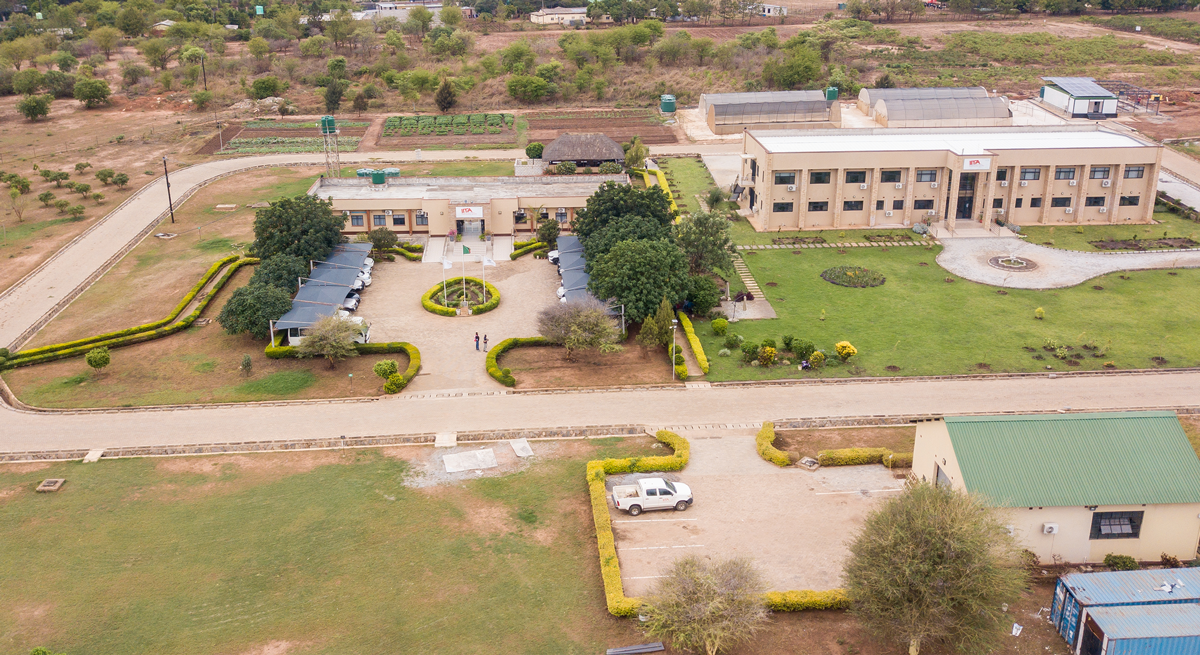
Southern Africa Research and Administration Hub (SARAH)
Located in Lusaka, the SARAH campus serves as a regional hub for research coordination, innovation, and capacity development across Southern Africa. The facility supports field research, partnerships, and training programs that advance agricultural transformation in the region.
Adresse du Hub
Bureau Southern Africa Research and Administration Hub (SARAH) Campus.
Plot 1458B, Ngwerere Road (Off Great North Road) Chongwe District, Lusaka Province.
P.O Box: 310142, Chelston Lusaka, Zambia
Tel : +260 211840365
Courriel : J.musiimenta@cgiar.org
Nouvelles Connexes

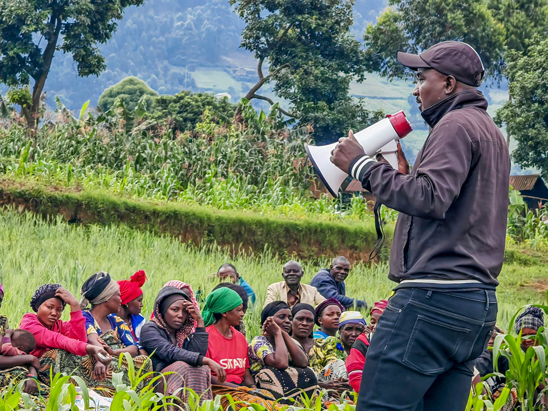
Projet pilote IITA–AALI–Fondation Virunga stimule la productivité agricole des petits exploitants du Nord-Kivu
Les petits exploitants agricoles du territoire de Lubero, au Nord-Kivu, en République Démocratique du Congo, assistent à des améliorations significatives de leurs récoltes et de leurs pratiques agricoles grâce au projet pilote pour l'intensification de la production agricole de l'IITA-CGIAR, de l'African Agricultural Leadership Institute (AALI) et de la Fondation Virunga.
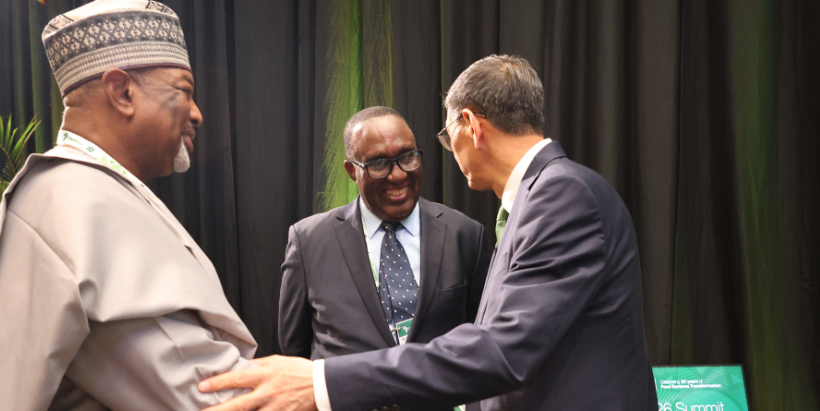
RDC : l'IITA renforce ses partenariats agricoles avec un nouveau mémorandum d'entente
Dans le cadre des efforts visant à renforcer la sécurité alimentaire en République Démocratique du Congo (RDC),

Strengthening seed systems in DR Congo through SeedTracker
A four-day Training-of-Trainers workshop on digitalizing the seed sector in the Democratic Republic of Congo
Collaborez avec nous
des innovations évolutives qui apportent un impact mesurable.