
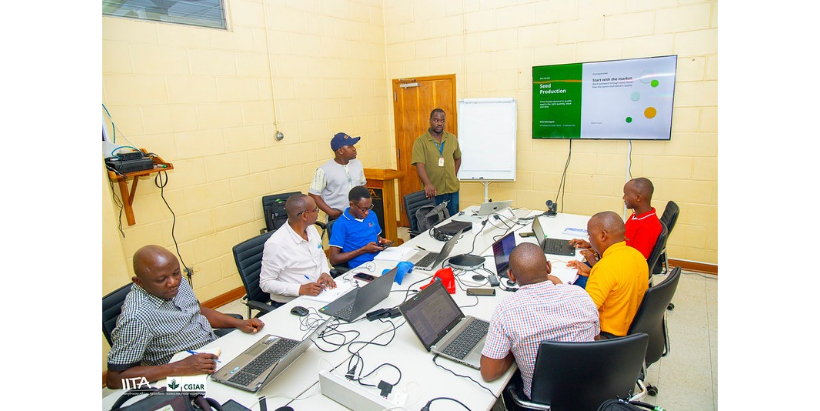
Access to quality seed is one of the most important foundations of a productive maize sector. In Burundi, maize is a priority value chain under the Burundi Rwanda Integrated Development Programme (BRIDEP), which aims to strengthen agricultural production, cross-border trade, and regional integration. Through its Maize Improvement Program, IITA–CGIAR is supporting Burundi in building the technical capacity needed to produce and certify hybrid maize seed locally.
Improving access to high-quality seed remains a major challenge for maize production in Burundi. Demand for certified hybrid seed has risen sharply in recent years, with pre-orders frequently exceeding available supply. In some cases, demand has increased from hundreds of kilograms to several tons, highlighting the need for stronger local seed production systems capable of maintaining genetic purity, managing seed multiplication, and ensuring timely distribution to farmers.
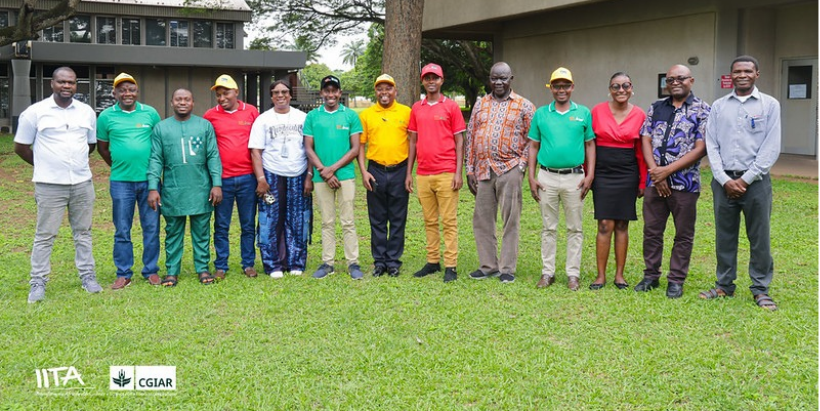
To help address this gap, a delegation of Burundian researchers and seed-sector professionals recently completed an intensive three-week training program at IITA headquarters in Ibadan, Nigeria. The training, organized by IITA’s Maize Breeding Team and led by Prof. John Derera, Head of Breeding at IITA, was held from 14 September to 2 October as the first phase of a broader capacity-development initiative aimed at strengthening Burundi’s hybrid maize seed sector.
Over 15 days, participants completed nine modules covering the entire hybrid seed value chain. Topics included hybrid seed production technologies, early-generation, foundation and certified seed production, seed certification and quality control, seed processing and storage, germplasm health and seed shipment, product development, market profiling, and regulatory frameworks. The program combined classroom instruction with practical field-based learning to ensure participants gained hands-on experience in every stage of hybrid seed production.
“This training equips Burundi’s seed leaders to manage every stage of hybrid seed production,” said Prof. John Derera. “By combining theoretical rigor with practical field applications, we are empowering local experts to strengthen quality control and boost national maize productivity.”
The initiative is supported by the African Development Bank (AfDB) through BRIDEP, which identifies maize as a strategic value chain for regional agricultural development. Commending the training, BRIDEP Project Lead Dr Mutuo Patrick emphasized the importance of human capacity development in agricultural transformation.
“Building local expertise is central to BRIDEP’s mission,” he said. “Translating this knowledge into field practices will be critical to achieving long-term food security in Burundi and the wider region.”
For participants, the training delivered practical insights that can be immediately applied within Burundi’s seed sector. Hakizimana Everiste highlighted the importance of mastering parent-line maintenance and detasseling protocols to achieve greater national seed self-sufficiency. Meanwhile, university researcher Nsabiyumua Athanase said he plans to integrate the knowledge and methodologies gained during the course into academic curricula to help train the next generation of agronomists.
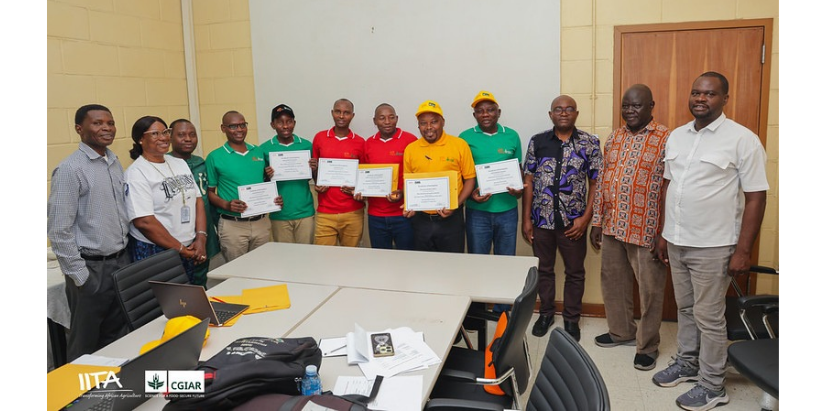
Participants also gained a deeper understanding of maize seed systems and the market segments for hybrid maize. The course concluded with integrated field-learning activities and a session focused on developing a roadmap for Burundi’s hybrid maize seed sector. At the close of the program, participants received certificates recognizing their successful completion of the training.
Building on existing collaborations with the Institut des Sciences Agronomiques du Burundi (ISABU), the Seed Systems Group (SSG), and local seed enterprises, IITA and its partners have developed a multi-year implementation plan to support local hybrid maize seed production in Burundi.
Running from 2026 to 2028, the plan includes the development of field and laboratory production manuals, training for laboratory personnel, target product profile workshops, the establishment of a national multi-location hybrid testing pipeline, and learning exchanges with commercial seed companies and molecular quality-control facilities in Zambia and Zimbabwe. The initiative will culminate in the full operational deployment of a modernized local seed production system capable of supporting Burundi’s growing demand for high-quality hybrid maize seed.
By strengthening local expertise and seed-sector infrastructure, the initiative is expected to improve farmer access to quality seed, increase maize productivity, enhance resilience to climate-related shocks, and contribute to long-term food security in Burundi and the wider region.
Contribué par
Alice Omoteji and Anu Oyeleye