
NEWS

ACReSAL partners strengthen collaboration to drive impact at scale
novembre 5, 2026
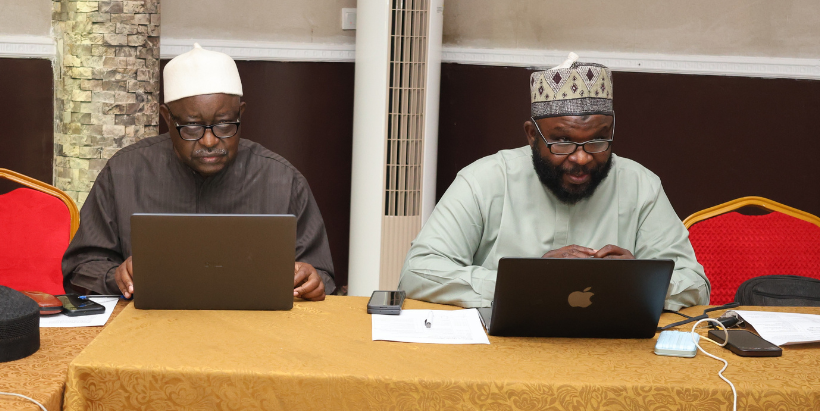
Dr Alpha Kamara, IITA's technical lead for the ACReSAL project at the workshop in Kaduna.
Dr Alpha Kamara, IITA’s technical lead for the ACReSAL project at the workshop in Kaduna.

Implementing partners for the Agro-Climatic Resilience in Semi-Arid Landscapes (ACReSAL) project have committed to stronger collaboration, harmonized implementation, and improved evidence-based reporting to accelerate the delivery of climate-resilient solutions and sustainable livelihoods across Nigeria’s semi-arid landscapes.

The commitment was made during a two-day workshop organized by the IITA on the “Harmonization of implementation strategy and reporting format,” held in Kaduna from 30 September to 1 October 2026. The workshop brought together IITA, national research and technical institutions, such as the Institute for Agricultural Research (IAR) Zaria, Center for Dryland Agriculture (CDA-BUK), International Crops Research Institute for Semi-Arid Tropics (ICRISAT), Federal College of Land Resources Technology (FECOLART), National Agricultural Extension Research Liaison Services (NAERLS), Lake Chad Research Institute (LCRI), and other implementing partners to review the first quarter implementation progress, address emerging challenges, and strengthen coordination for greater impact.

According to Dr Alpha Kamara, IITA’s technical lead for the ACReSAL project, to monitor progress across the different implementing partners, the workshop was convened to harmonize work plans. “We have been encouraging the diverse partners to work in multi-stakeholder platforms where they can pull resources and their strengths to implement activities and create bigger impact,” he said.

Dr Kamara noted that while some partners had recorded progress, others were implementing in isolation, thereby limiting the coordination needed to achieve the project’s objectives. He called for stronger engagement with state institutions, extension structures, and grassroots stakeholders, stressing that partners must ensure that their activities align with the resources available to them.
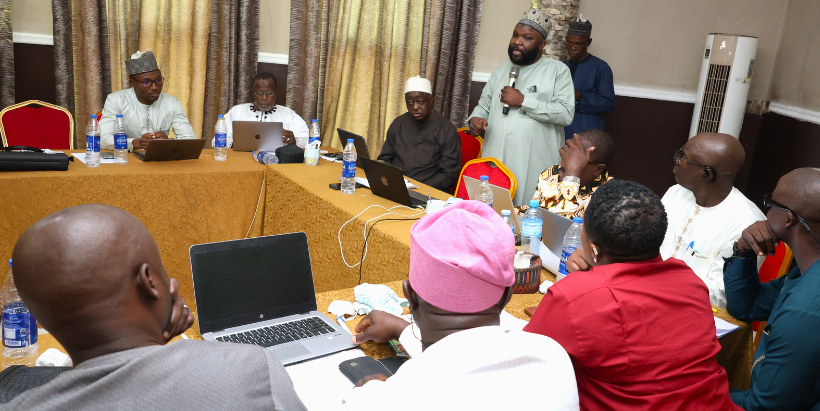
 Participants during the ACReSAL workshop.
Participants during the ACReSAL workshop.

Taking climate-smart agriculture to farmers

The need for stronger coordination was reflected in the experiences shared by implementing partners. For the National Agricultural Extension and Research Liaison Services (NAERLS), Co-implementation of Work Package 2.2 on climate-smart agriculture has focused on taking improved crop varieties and good agronomic practices to farmers across seven states.

Giving an account of the progress of the work, Prof. Muhammad Musa Jaliya, Deputy Director, NAERLS, and coordinator of the ACReSAL project at the institution, said farmers have received improved varieties of maize, sorghum, groundnut, soybean, and cowpea, along with training in improved production practices. Beyond providing improved seeds, he said the intervention is helping farmers understand the importance of using improved varieties and where they can access them, laying a foundation for increased productivity and resilience. He also recounted the challenges faced in the early stages of the project’s implementation, including the late start of activities, which meant that many farmers had already planted on their available land. Insecurity also restricted access to certain locations, while delays in the release of funds posed difficulties, as crop production is time sensitive. Despite these challenges, NAERLS mobilized institutional resources to commence activities and keep implementation on track.

Responding to community priorities

At the community level, partners emphasized the importance of ensuring that interventions respond to local realities. Dr Folashade Mary Olaoye, Technical Lead at the Federal College of Land Resources Technology (FECOLART), Kuru, Jos, highlighted the institution’s work in soil health, agroforestry, women and youth engagement, and landscape-related interventions. She stressed the need for partners to work together, which is the foundation of a successful partnership, rather than operating independently. “Partners should sit around the table and harmonize principles and have a nice way of carrying out this work,” she said.

Her recent field engagement with communities in Nasarawa State also demonstrated the value of listening to local priorities. For example, communities identified non-timber forest products such as shea, raffia palm, and moringa as potential sources of income. Such opportunities could provide alternative livelihoods while encouraging communities to conserve trees and reduce pressure on forest resources.
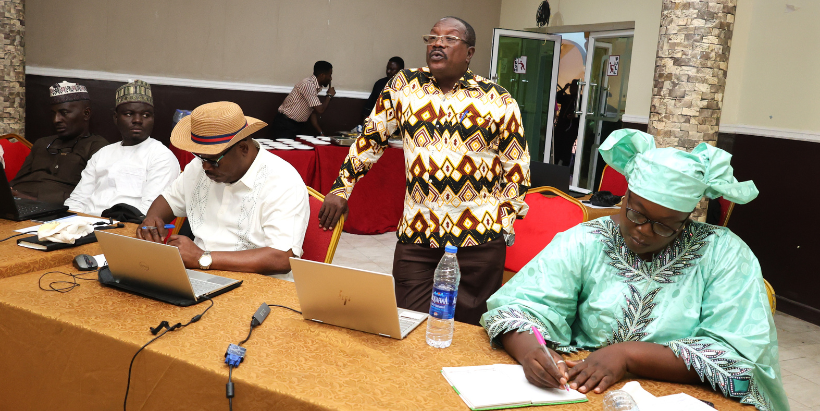
One of the facilitators, Dr Hakeem during his presentation.

Harmonizing reporting to strengthen accountability

A major outcome of the workshop was the emphasis on a unified approach to reporting and monitoring. Discussions revealed inconsistencies in the tools, indicators, definitions, and evidence used by partners to report activities, making it difficult to consolidate results and assess overall project performance. The harmonized framework will provide a common approach for tracking progress from inputs and activities through outputs and outcomes to impact, while strengthening the use of digital data, GPS coordinates, photographs, attendance records, and other source evidence.

Participants also stressed that sustainable impact requires more than training or demonstrations. Improved access to inputs, markets, processing facilities, technologies, extension services, and value-chain opportunities will be essential to ensuring that interventions translate into lasting benefits for communities.

As implementation progresses, ACReSAL partners are expected to strengthen communication, coordinate activities across work packages, deepen engagement with state and grassroots institutions, and improve the quality and timeliness of project reporting.

The workshop ultimately reinforced a shared vision: stronger partnerships, better evidence, and coordinated action are essential to taking climate-smart and landscape restoration solutions from individual interventions to impact at scale.


Contribué par

Sarah Sallau

Retour en haut
Olaosebikan, Olamide

Olamide Deborah Nwanze est une chercheuse principale spécialisée dans la recherche sur l'approche "genre" afin d'éclairer les politiques de sélection participative et inclusive, de développement de variétés et de systèmes semenciers concernant les cultures de racines, tubercules et bananes (RTB) au siège de l'Institut International d'Agriculture Tropicale, à Ibadan, au Nigeria. Elle est candidate au doctorat à l'Université d'Ibadan et titulaire d'un master et d'un diplôme d'ingénieur agronome en vulgarisation agricole et développement rural. Olamide est membre du programme African Women in Agricultural Research and Development – Gender Responsive Agricultural Systems Policy (SAISIE DE RÉCOMPENSEet les Chercheuses Sensibles au Genre Équipées pour la Transformation Agricole (SUPER. Elle cherche à appliquer ses apprentissages en matière d’approche genre, recherche sensible au genre, et expertise en développement et examen de politiques pour faciliter l’accès et l’adoption par les femmes, les jeunes, les enfants et les groupes sociaux vulnérables aux innovations agricoles qui garantissent la sécurité alimentaire, nutritionnelle, des revenus et des moyens de subsistance en Afrique. Ses rôles actuels comprennent le mentorat de chercheurs stagiaires, le développement de guides et manuels de formation, la mise en œuvre et l'adaptation de cadres et d'outils genre, l'engagement des acteurs de la chaîne de valeur en tant que partenaires de la science citoyenne, l'examen et la refonte des politiques, la gestion et l'analyse des données. Ses recherches actuelles portent sur les méthodes mixtes ainsi que sur les approches participatives et interdisciplinaires pour saisir et mettre en évidence les dynamiques de genre, les besoins, les préférences et les défis rencontrés par les parties prenantes au sein de la chaîne de valeur des moyens de subsistance agricoles afin de prioriser des stratégies axées sur le genre dans les programmes de sélection, la conception et la mise en œuvre des politiques.

À l'IITA, elle contribue à la mise en œuvre du CGIAR Initiative d'Élevage Accéléré et Innovation génétique Programmes ; recherche participative et genre au sein des Prochaine Génération Manioc, HarvestPlus, RTBAliments, et Tricot-ClimMob 1000Fermes Projets ; et la communication des connaissances sur le genre via le Série de webinaires G-LENS, vidéo documentaire, notes de politique, publications, et blogs.


Publications récentes

de Sousa, K., van Etten, J., Manners, R. Bello, A., Teeken, B., Olaosebikan, O., et al. 2024. L'approche tricot : un cadre agile pour les essais décentralisés à la ferme soutenus par la science citoyenne. Une rétrospective. Agron. Sustain. Dev. 44, 8. https://doi.org/10.1007/s13593-023-00937-1

Madu, T., Onwuka, S., Nwafor, S., Onyemauwa, N., Ejechi, M., Ofoeze, M., Ukeje, B., Eluagu, C., Olaosebikan, O., Okoye, B., 2024. Les études sur les consommateurs inclusifs en matière de genre améliorent l'amélioration du manioc au Nigeria dans : Frontiers in Sociology, volume 9, numéro : 1224504, doi : 10.3389/fsoc.2024.1224504

Olaosebikan, O. ; Bello, A. ; Utoblo, O. ; Okoye, B. ; Olutegbe, N. ; Garner, E. ; Teeken, B. ; Bryan, E. ; Forsythe, L. ; Cole, S. ; Madu, T. 2023. Facteurs de stress et résilience au sein de la chaîne de valeur du manioc au Nigeria : Caractéristiques préférées des variétés de manioc et stratégies de réponse des hommes et des femmes pour informer l'amélioration variétale. Sustainability 15, 7837. https://doi.org/10.3390/su15107837

Okoye, B., Ofoeze, M., Ejechi, M., Onwuka, S., Nwafor, S., Onyemauwa, N., Ukeje, B., Eluagu, C., Obidiegwu, J.*, Olaosebikan, O., Madu, T.* 2023. Priorisation des traits préférés dans la chaîne de valeur de l'igname au Nigeria : une analyse de la situation en matière de genre in: Frontiers in Sociology, volume 8, numéro : 1232626, pages 1 – 9, ISSN 2297-7775, 2023. https://www.frontiersin.org/articles/10.3389/fsoc.2023.1232626/full

Olaosebikan, O., Bello, A. A., de Sousa, K., Ndjouenkeu, R., Adesokan, M., Alamu, E. O., Agbona, A., van Etten, J., Kegah, F. N.*, Dufour, D., Bouniol, A., Teeken, B. 2023. Acceptabilité par les consommateurs des produits alimentaires à base de gari-eba de manioc dans des contextes culturels et environnementaux variés en utilisant l'approche triade de comparaison des technologies (tricot) dans : Journal of the Science of Food and Agriculture,

Teeken, B., Olaosebikan, O., Bello, A. A., Madu, T.*, Cole, S. M. 2023. Évaluation qualitative de la positionnalité et des préférences des dyades en relation avec les activités liées au manioc : travailler avec des scientifiques citoyens du procès tricot https://hdl.handle.net/10568/138326 Type : Manuel

Bouniol, A., Ceballos, H., Bello, A. A., Teeken, B., Olaosebikan, O., Owoade, D., Agbona, A., Fotso Kuate, A., Madu, T.*, Okoye, B.*, Ofoeze, M.*, Nwafor, S.*, Onyemauwa, N.*, Adinsi, L.*, Forsythe, L., Dufour, D. 2023. Impact variétal sur le travail des femmes, la charge de travail et la pénibilité associée dans le traitement des plantes à racines, tubercules et bananes : focus sur le manioc en Afrique subsaharienne dans : Journal of the Science of Food and Agriculture, pages 1 – 25, ISSN 0022-5142,

Bello, A. A., Agbona, A., Olaosebikan, O., Edughaen, G., Dufour, D., Bouniol, A., Iluebbey, P., Ndjouenkeu, R.*, Rabbi, I. Y., Teeken, B. 2023. Effets génétiques et environnementaux sur la productivité de la transformation et le rendement des produits alimentaires : la pénibilité du travail des femmes dans : Journal of the Science of Food and Agriculture, pages 1 – 32, ISSN 0022-5142, 5

Cavicchioli, M., Zimbiti, T., Teeken, B., Nwanze, D.O., Liani, M., Parkes, E. & Bello, A. 2023. Rapport sur la formation en sélection génétique sensible au genre à l'IITA. Genetic Resources Center, IITA-HQ, Ibadan, 21-23 septembre 2022. Ibadan, Nigéria : IITA, (34 p.).https://hdl.handle.net/10568/131368

Agbona, A. Peteti P., Teeken B., Olaosebikan O. Bello, A. A., Parkes, E., Rabbi, I. Y., Mueller, L., Egesi, C., Kulakow, P. 2022. Gestion des données dans les programmes d'amélioration des cultures RTB africaines multidisciplinaires. In : Williamson, H.F., Leonelli, S. (eds) Towards Responsible Plant Data Linkage: Data Challenges for Agricultural Research and Development. Springer, Cham. https://doi.org/10.1007/978-3-031-13276-6_5

Lora Forsythe, Pricilla Marimo, Sarah Mayanja, Olamide D. Olaosebikan, Esme Stuart, Bela Teeken, Benjamin Okoye, Tessy Madu, (2021). Analyse transversale du genre dans RTBfoods Étape 2 Cartographie des genres sur les produits RTB. Comprendre les moteurs des préférences en matière de traits et le développement de profils de produits RTB multi-utilisateurs, WP1. Londres, Royaume-Uni : Rapport scientifique de terrain RTBfoods, 30 p.

Teeken, B., Garner, E., Agbona, A., Balogun, I., Olaosebikan, O., Bello, A., Madu, T., Okoye, B., Egesi, C., Kulakow, P. et Tufan, H.A. 2021. Au-delà des “ traits des femmes ” : explorer comment le genre, les différences sociales et les caractéristiques des ménages influencent les préférences pour les traits. Frontiers Systèmes alimentaires durables 5:740926. https://doi.org/10.3389/fsufs.2021.740926

Teeken, B., Agbona, A., Bello, A., Olaosebikan, O., Alamu, E., Adesokan, M., Awoyale, W., Madu, T., Okoye, B., Chijioke, U., Owoade, D., Okoro, M., Bouniol, A., Dufour, D., Hershey, C., Rabbi, I., Maziya‐Dixon, B., Egesi, C., Tufan, H. et Kulakow, P. (020. Comprendre les préférences variétales du manioc par le classement par paires du gari-eba et du fufu préparés par des agriculteurs-transformateurs locaux. Int J Food Sci Technol. https://doi.org/10.1111/ijfs.14862

Bela Teeken, Olamide Olaosebikan, Ireti Balogun, Benjamin Okoye, Tessy Madu, Steven Cole, Abolore Bello, Elizabeth Parkes. (2020). Pilotage des outils de profil client et produit G+ pour l'amélioration sensible au genre du manioc au Nigeria. Nigeria : Institut international d'agriculture tropicale (IIAT). https://hdl.handle.net/20.500.11766/13000