
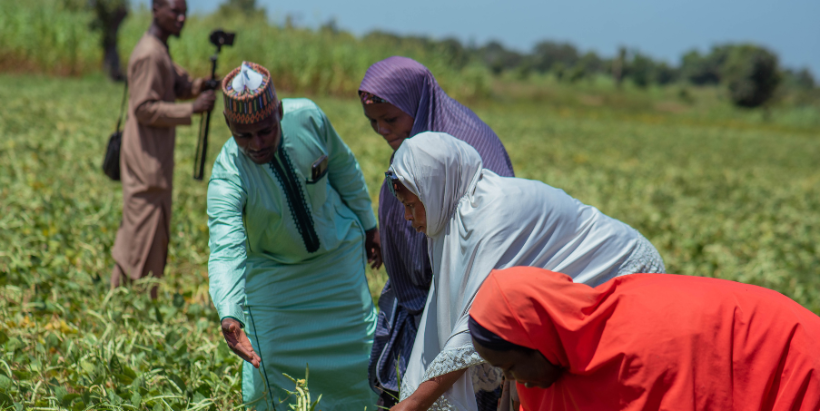
Seed Systems Specialist at IITA–CGIAR, Professor Lucky Omoigui, has commended farmers in Bauchi State for their willingness to embrace agricultural innovations and test improved crop varieties during a field day held at Kafin Madaki, Ganjuwa Local Government Area.
The commendation underscored the importance of farmer participation in research aimed at boosting productivity, strengthening food security, and improving rural livelihoods. He noted that “Farmers in Bauchi had demonstrated openness to new agricultural technologies and improved varieties introduced through research, and the willingness to test innovations under local farming conditions provides valuable opportunities to assess crop performance and identify varieties suited to farmers’ needs.”
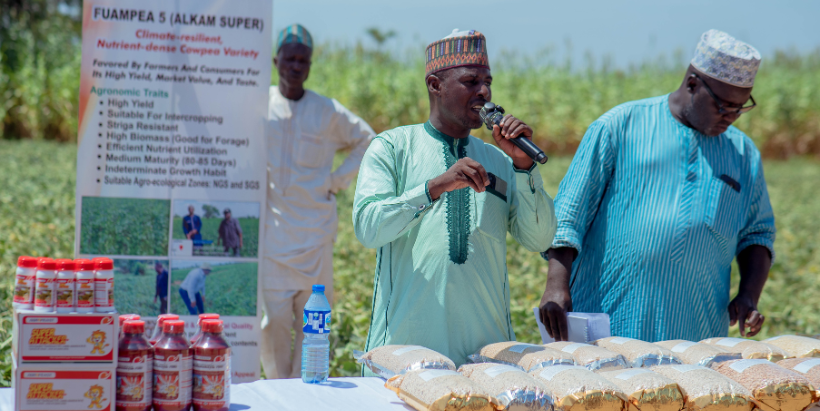
The field day showcased two cowpea varieties that attracted farmers’ attention: ALKAM SUPER, also known as FUAMPEA 5, and IT13-1308-5, released as SAMPEA 21. Farmers’ responses highlighted the importance of evaluating improved varieties under local farming conditions to identify those that best meet their production needs and preferences.
ALKAM SUPER was developed through collaboration between the Federal University of Agriculture, Makurdi, now Joseph Sarwuan Tarka University, Makurdi, and IITA, with support from the Alliance for a Green Revolution in Africa (AGRA). It has a reported yield potential of up to 2.9 tonnes per hectare under favorable growing conditions. The variety also offers desirable seed characteristics, good adaptation to intercropping, and a relatively short cooking time.

The second variety, SAMPEA 21, is high-yielding, early-maturing, and resistant to Striga, a parasitic weed that can damage crops and reduce yields. Farmers were particularly impressed by its abundant pod production and early maturity.
These traits are important to both farmers and consumers. While improved yield potential can create opportunities to increase production and income, characteristics such as seed size, cooking time, and taste can influence consumer preference and market demand.
Cowpea is a staple food and an important source of income for farming households across northern Nigeria. However, farmers continue to face production challenges that limit yields and profitability. Access to improved varieties, alongside appropriate agronomic practices and reliable seed supplies, can help farmers address these challenges and strengthen the crop’s contribution to household food and nutrition security and livelihoods.
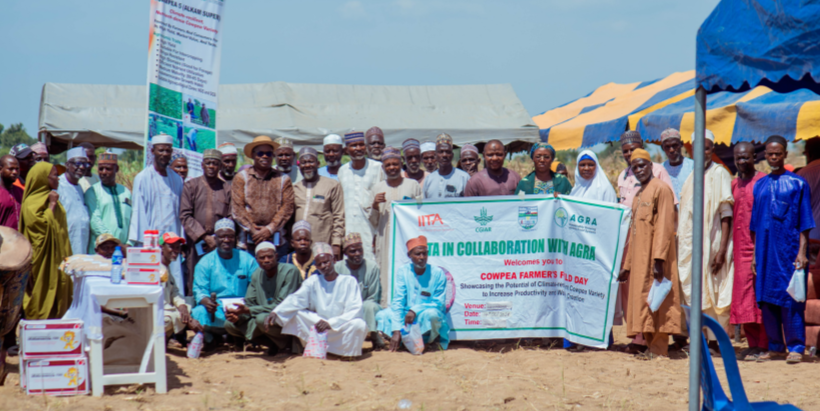
The field day also highlighted the value of bringing researchers and farmers together to assess improved varieties under local conditions and obtain farmers’ feedback. Such interactions allow farmers to observe crop characteristics, share their experiences, and make more informed decisions about which varieties to adopt. Sustained collaboration among research institutions, universities, development partners, seed producers, and farming communities remains essential to ensuring that promising agricultural innovations move beyond research plots and reach the farmers who need them.
Through initiatives that connect research with farmers’ priorities, IITA and its partners continue to support efforts to improve crop performance, expand access to improved varieties, and contribute to more productive and resilient agricultural systems in Nigeria.
Contribué par
Sarah Sallau