Farming Systems Agronomy Program
Why Farming Systems Agronomy
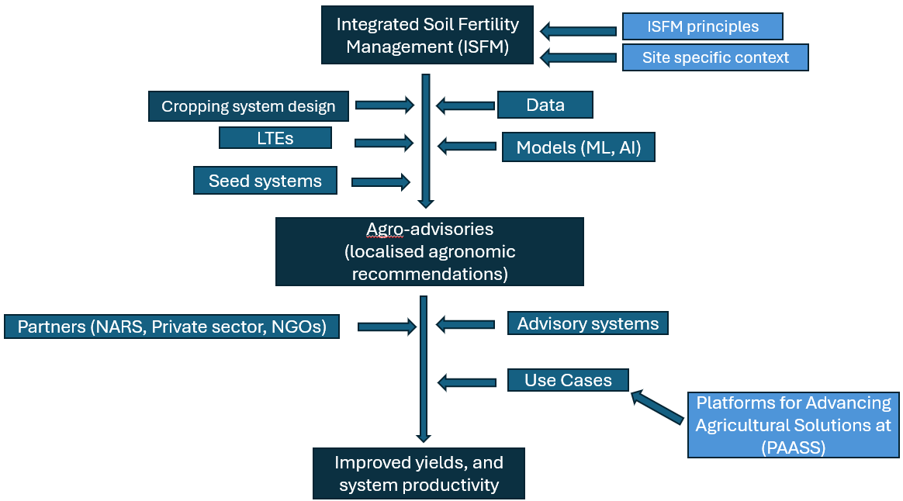
The Farming Systems Agronomy (FSA) Program develops and scales locally adapted agronomic solutions that improve agronomic gain, close yield gaps, crop productivity and enhance overall farming-system performance. FSA applies Integrated Soil Fertility Management (ISFM) principles within site-specific contexts, combining evidence from cropping-system design, long-term experiments, seed systems, field data, and advanced modelling including machine learning and AI.
These inputs are translated into localized agronomic recommendations (agro-advisories) that respond to differences in soils, climate, crops, management practices, and farmer circumstances. These recommendations support better farmer decision-making on nutrient management, crop and variety choice, planting, soil health, and cropping systems, helping address the key biophysical and management constraints responsible for yield gaps.
Lire la suite
Working with national agricultural research systems, private-sector actors, NGOs, and digital advisory platforms, FSA validates, delivers, and scales these recommendations through practical use cases. The overall goal is to turn agronomic science and data into actionable farmer-level decisions that increase yields, resource-use efficiency, and overall farming-system productivity.
Portée géographique
Hub d'Afrique centrale (DRC, Burundi, Rwanda),
Pôle d'Afrique de l'Est (Kenya, Tanzania, Uganda, Comoros),
Hub de l'Afrique australe (Malawi, Mozambique, Zambia, Madagascar)
Objectifs
- Close yield gaps and enhance agronomic gain through the development and validation of locally adapted agronomic practices that increase crop productivity, profitability, resource-use efficiency, and resilience.
- Design and improve productive, diverse and resilient cropping systems by optimizing crop combinations, rotations, intercropping, planting arrangements, crop and variety choices, and management practices suited to different farming environments.
- Improve soil fertility, soil health and nutrient-use efficiency through Integrated Soil Fertility Management, combining inorganic and organic nutrient sources, improved germplasm, biological inputs, and site-specific management.
- Advance data-driven and site-specific agronomy by integrating field experiments, long-term trials, environmental and socioeconomic data, crop modelling, machine learning and AI to understand yield gaps and generate localized agronomic recommendations.
- Co-develop, validate and scale agronomic innovations and agro-advisories with farmers, national research systems, private-sector actors, NGOs and digital advisory platforms, translating agronomic science into actionable decisions that improve farming-system performance.
Domaines de concentration
IITA’s Farming Systems Agronomy (FSA) Program combines integrated soil fertility management, cropping systems design, climate-resilient practices, and data-driven agronomy to close yield gaps and improve farming-system performance. The broader goal is to translate agronomic science into locally adapted solutions that support farmer decision-making, increase productivity and profitability, and enhance resource-use efficiency and resilience.
Gestion intégrée de la fertilité des sols (GIFS)
Develop and adapt integrated approaches that combine inorganic and organic nutrient sources…
Voir plus
improved germplasm, soil health management and locally adapted agronomic practices to improve soil fertility, nutrient-use efficiency, crop productivity and profitability within site-specific contexts.
Cropping Systems Design and Diversification
Design and optimize productive and diverse cropping systems through rotations, intercropping…
Voir plus
crop associations, planting arrangements and input combinations. This includes integration of legumes, roots and tubers, indigenous and alternative crops to improve productivity, resource-use efficiency and overall system performance.
Yield Gap Analysis and Agronomic Gain
Identify and quantify the biophysical, management and socioeconomic factors driving yield gaps…
Voir plus
and develop agronomic interventions that sustainably narrow the difference between current and attainable yields while increasing agronomic gain, profitability and resource-use efficiency.
Climate-Resilient Agronomy
Develop and evaluate agronomic strategies that improve the resilience of crops and farming systems to climate variability and change
Voir plus
including resilient varieties, optimized planting dates, climate-informed crop management, diversification and adaptive management practices.
Data-Driven Agronomy, Modelling and Decision Intelligence
Integrate field experiments, long-term experiments, soil, weather and geospatial data, remote sensing, crop models, machine learning
Voir plus
and AI to understand farming-system performance, predict agronomic responses and generate site-specific recommendations across diverse environments.
Agronomic Decision Support and Scaling
Translate research into localized agro-advisories and decision-support solutions that support farmer decisions
Voir plus
on nutrients, crops and varieties, planting, soil health and cropping systems. FSA works with national research systems, farmers, private-sector actors, NGOs and digital platforms to co-develop, validate, deliver and scale agronomic innovations.
Projets et initiatives clés
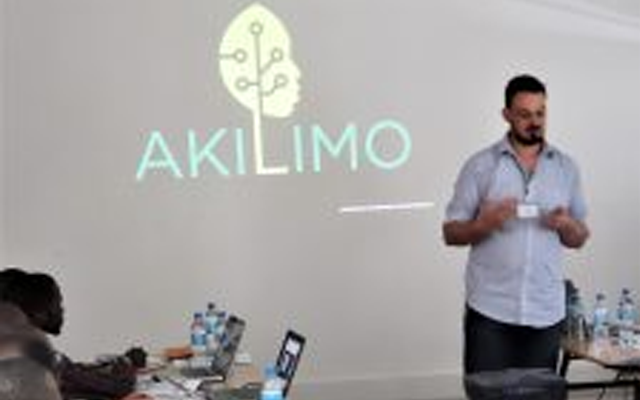
AKILIMO
Provides site-specific agronomic advice on fertilizer use, planting practices, weed management and intercropping.
Apprendre encore plus
By combining field data with crop modelling, AKILIMO helps farmers make informed decisions to improve cassava productivity and profitability.
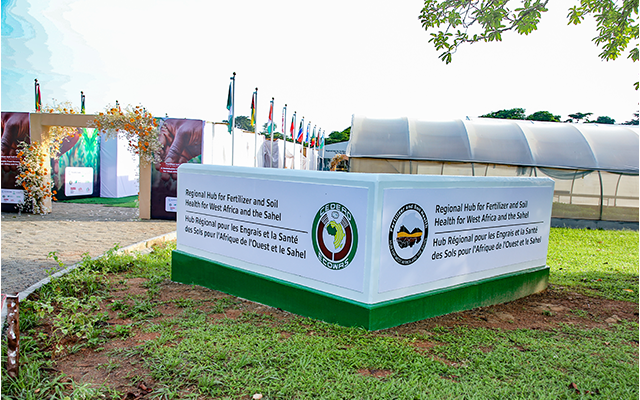
The Regional Hub for Fertilizer and Soil Health for West Africa and the Sahel
Advances soil health and efficient fertilizer use through data-driven recommendations, technical assistance and capacity development.
Apprendre encore plus
The Hub supports locally adapted nutrient management to improve agricultural productivity across West Africa and the Sahel.
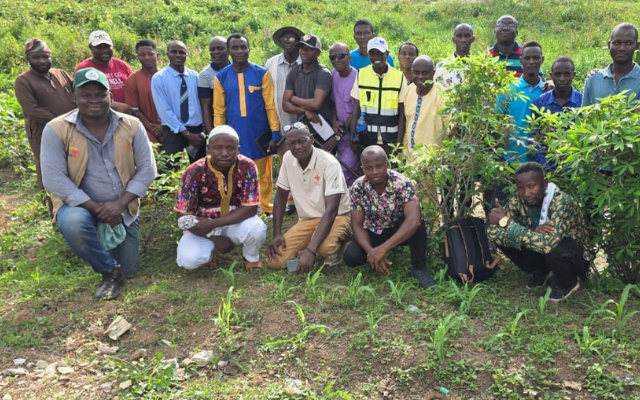
Food Systems Resilience Program (FSRP) — Sierra Leone
Supports more resilient food systems through improved soil information, field-based research and national capacity development.
Apprendre encore plus
IITA’s agronomy contribution combines digital soil mapping and fertilizer response trials to strengthen locally adapted nutrient-management recommendations and agricultural decision-making
BioSSA
Promotes effective bio-inputs to improve nutrient availability, crop productivity and profitability in smallholder farming systems.
Apprendre encore plus
The project focuses on nitrogen and phosphorus availability to support more efficient and resilient crop production under a changing climate.
Initiative de livraison accélérée de l'innovation (AID-I)
Accelerates smallholder access to improved seeds, agronomic practices and advisory services through delivery partnerships.
Apprendre encore plus
The initiative strengthens local capacity and scales agricultural innovations to improve farm productivity and food security.
Impact en un coup d'œil
4 Long-Term (25+ years) Experimental sites
Generating long-term evidence on Integrated Soil Fertility Management (ISFM), soil health and productivity in contrasting farming systems in Kenya.
6,000+ Agronomic field experiments
Field experiments generating crop- and location-specific agronomic evidence, including through nutrient omission trials (NOTs), and corresponding field trials testing and validating nutrient management recommendations, cropping systems, varieties, planting practices, and other agronomic interventions under local conditions.
25,000+ Soil samples collected
Building the evidence base for soil fertility and soil-health assessment and site-specific nutrient management across Africa.
2 million+ AI-ready data points Research datasets
Aggregated from 3,000+ IITA, CGIAR wide and datasets (agronomy, socio-economic and breeding) supporting agronomic research, modelling, targeting and decision support.
3 Million+ Smallholder farmers reached with agronomic advisories
Localized agronomic and farming systems recommendations delivered through local extension officers, digital agriculture platforms (e.g. AKILIMO, AgWise) and Partner Digital Advisory Systems (Solidaridad- Kvuno Systems).
CAS D'IMPACT
Des agriculteurs racontent les avantages d'AKILIMO dans la production de manioc
The outgrower farmers of Psaltry International Limited (PIL) have started experiencing the positive impact of the AKILIMO tools from the Initiative pour l'agronomie du manioc en Afrique. Multiple success stories have emerged in relation to the use of the tools. Apprendre encore plus
Smart farming of cassava with focus on integrated soil fertility management increases yield by 60% in Tanzania
Preliminary results from an ongoing study by IITA in Tanzania have shown an increase of nearly 60% in cassava yield which translates to a 30% increase in income for farmers. Apprendre encore plus
Projet pilote IITA–AALI–Fondation Virunga stimule la productivité agricole des petits exploitants du Nord-Kivu
Smallholder farmers in Lubero territory, North Kivu, in the Democratic Republic of Congo, are witnessing significant improvements in their harvests and agricultural practices… Apprendre encore plus
Publications connexes
- Determinants of Soybean Yield-Enhancing Technology Adoption by Smallholder Soybean Farmers in Northern and Upper East Regions of Ghana
- Fostering inclusivity: factors influencing women cocoa farmers’ access to agricultural extension services in Ghana
- The potential to increase maize yields and mitigate climate change by adopting integrated soil fertility management across different regions in Kenya — A simulation study
- Limited effect of organic matter addition on stabilised organic carbon in four tropical arable soils
- The importance of strengthening the research base and evaluation of climate change mitigation outcomes associated with cropping practices: Comment
- The ongoing journey of modelling intercropping systems: A conceptual resource sharing intercomparison from model developers and expert users
- Maize-bean row intercropping in Rwanda: labor constraints limit application despite nutritional and economic benefits
- Fertilizer and soil health for sustained crop production in sub-Saharan Africa: Theory and conceptual framework
- Profitability and cost-effectiveness of cowpea seed production and delivery systems: Evidence from Nigeria and Ghana
- Does Farmer Group Membership Improve Technology Adoption and Household Welfare? Evidence From Tanzania
- Rural households’ vulnerability to drought and implications for resilience: Insights from Bushbuckridge, Mpumalanga, South Africa
- Agronomic practices for climate-resilient okra production in agroecological systems: a review
- Agronomic levers to increase maize and soybean productivity across the Chinyanja Triangle, southern Africa
- Soil health forecasting: Exploring pathways toward integration in digital agronomic advisory for sustainable soil management
- A comparison of observed and perceived seasonal climate regimes in a rural socio-ecological system in the northeastern South Africa
- CY-Bench : un ensemble de données de référence complet pour la prévision des rendements agricoles infranationales
- National 10-m soybean maps for South Africa from 2018 to 2025
- Observer, prédire et expliquer la sécurité alimentaire
- Harnessing Digital Twin (DT) Technology for Food Security and Climate Resilience in Sub-Saharan Africa (SSA)
- Physicochemical properties of soils drive floristic richness of pastures in eastern Democratic Republic of Congo
- Beyond the average: understanding the heterogeneity of environmental impacts of green coffee in Brazil and the Democratic Republic of the Congo
Nouvelles Connexes

Smart farming of cassava with focus on integrated soil fertility management increases yield by 60% in Tanzania
Preliminary results from an ongoing study by IITA in Tanzania have shown an increase of nearly 60% in cassava yield which translates to a 30% increase in income for farmers.
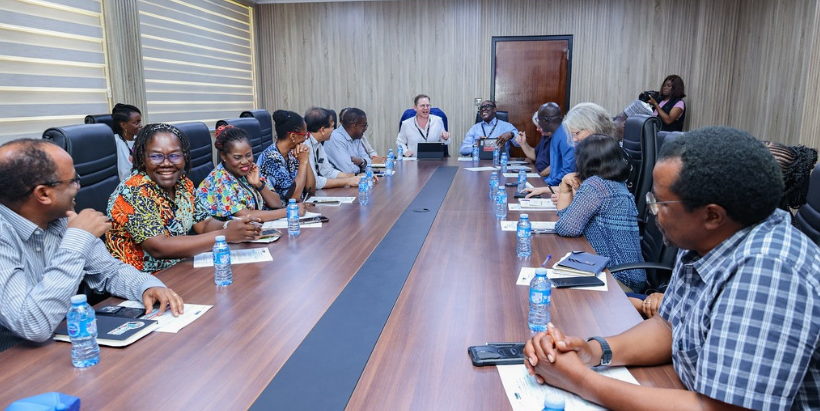
CGIAR Council Chair explores IITA innovations driving agricultural transformation across Africa
The Chair of the CGIAR Council, Renaud Seligmann, paid his first learning visit to IITA–CGIAR on
Unlocking Africa’s crop diversity through adaptive breeding: Insights from Prof Carlos Iglesias
As part of the working visit of Dr Makram Geha, Director of the CGIAR Breeding

Notre équipe
Data Specialist, Agronomic Decision Support Systems- Regional Hub for Fertilizer and Soil Health
Partenariats et Collaboration
FSA works through partnerships that connect scientific research with national systems, farmer-facing services, and scaling pathways. Collaboration spans national agricultural research and extension systems, universities and advanced research institutes, government and climate-service institutions, CGIAR and international research organizations, development and delivery partners, and private-sector actors.
- National agricultural research systems (NARS)
Examples include KALRO (Kenya), ZARI (Zambia), DARS (Malawi), IIAM (Mozambique), CSIR-SRI (Ghana), ITRA (Togo), SLARI (Sierra Leone), CARI (Liberia), and IER (Mali). - Universities and Advanced Research Institutions: University of California, Davis; University of Melbourne; Rothamsted Research; University of Nottingham; University of Warwick; University College Dublin; Trinity College Dublin; Tokyo University of Agriculture; Kyoto University; University of Hamburg; Stockholm University; University of Illinois; University of Bergen; University of Galway; Swedish University of Agricultural Sciences; LUANAR; UNZA; Kenyatta University; Nelson Mandela African Institution of Science and Technology; CIRAD and others.
- Government and climate-service institutions
FSA collaborates with government ministries, extension services, and national meteorological institutions, including the Kenya Meteorological Department, to connect agronomic science with national agricultural and climate-information systems. - Development, delivery, and private-sector partners: Partners such as Solidaridad, Good Nature Agro, and farmer-facing digital service providers support co-development, dissemination, implementation, and scaling of validated agronomic recommendations.
- Donateurs : Gates Foundation; USAID; Norad; QFFD; Netherlands/DGIS; African Development Bank; European Union; World Bank; CGIAR Trust Fund; OCP Africa