Farming Systems Agronomy Program
Why Farming Systems Agronomy
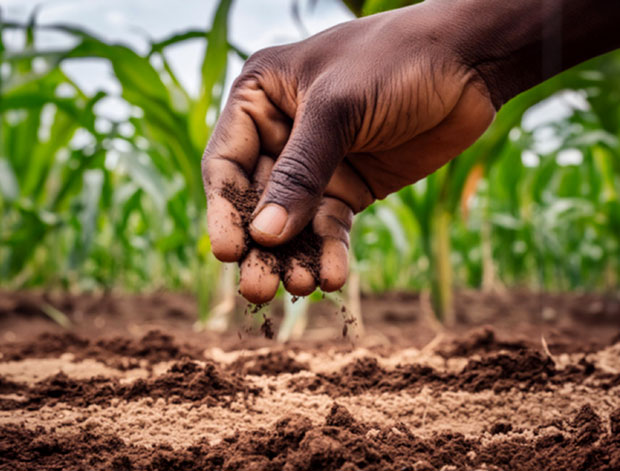
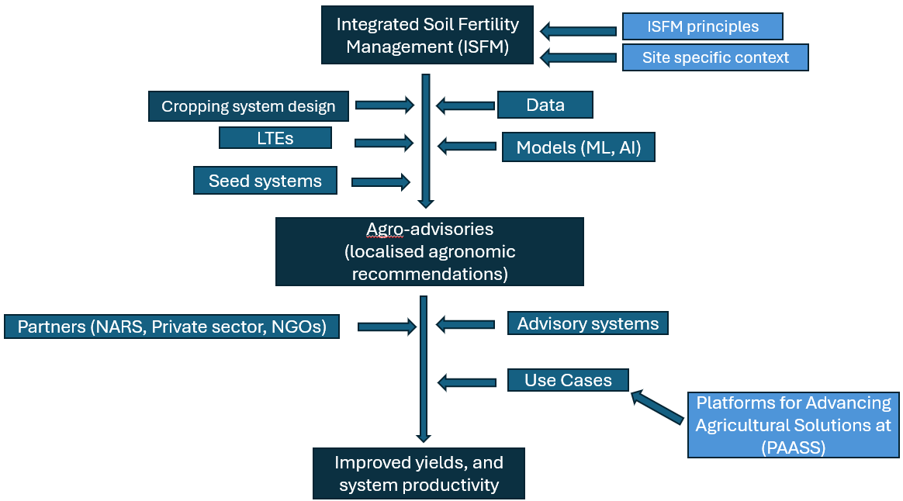
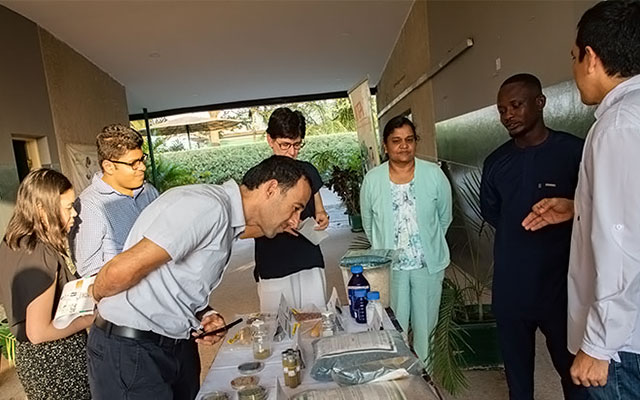
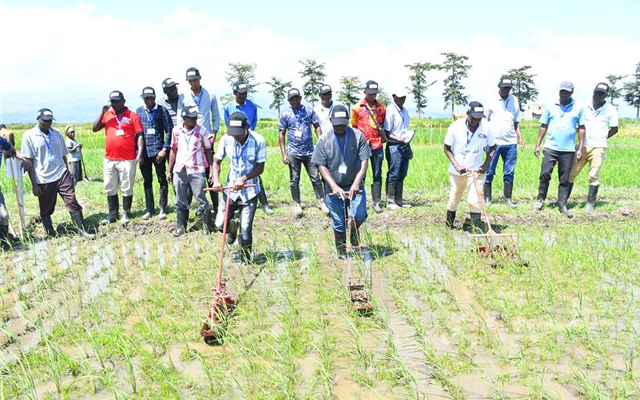
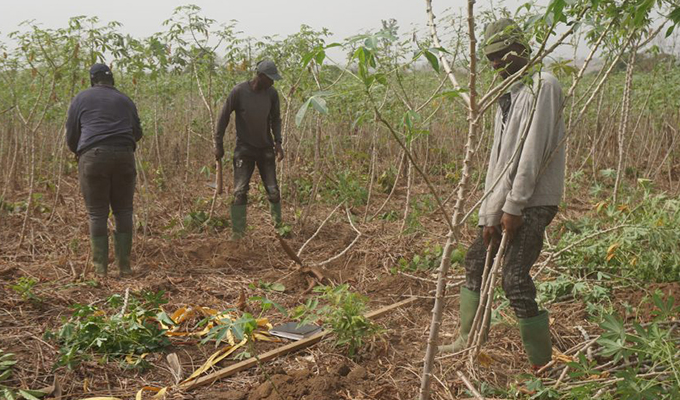
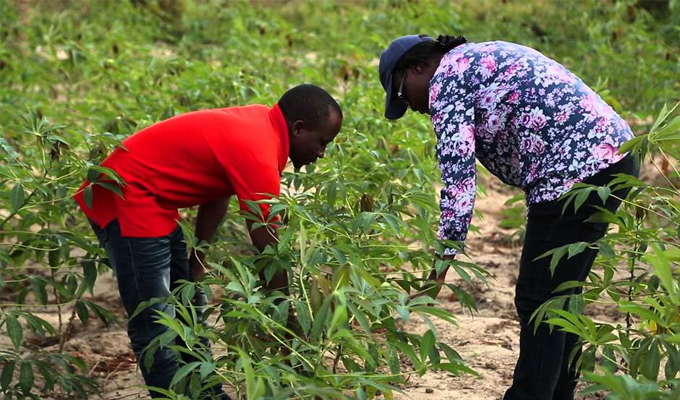
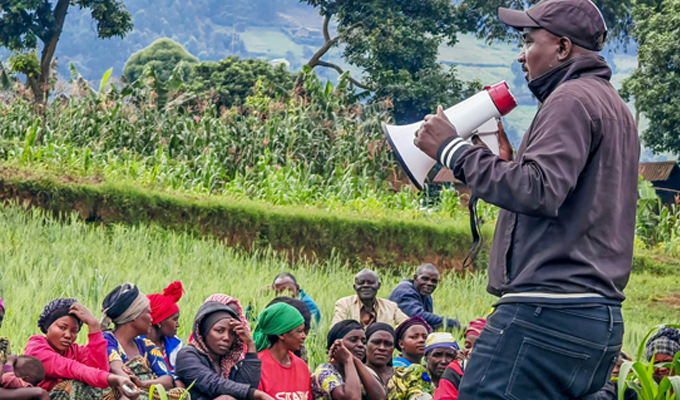
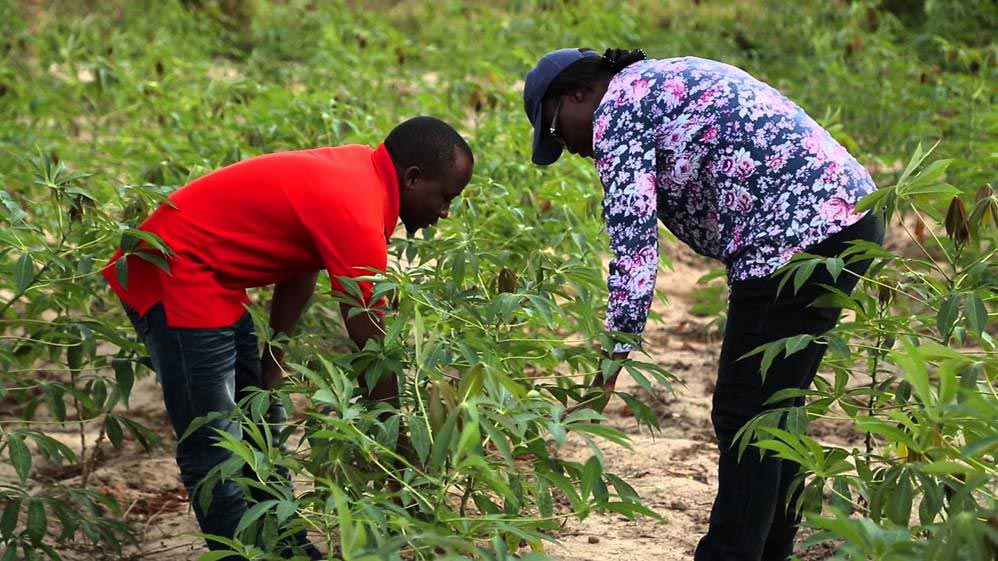
The Farming Systems Agronomy (FSA) Program develops and scales locally adapted agronomic solutions that improve agronomic gain, close yield gaps, crop productivity and enhance overall farming-system performance. FSA applies Integrated Soil Fertility Management (ISFM) principles within site-specific contexts, combining evidence from cropping-system design, long-term experiments, seed systems, field data, and advanced modelling including machine learning and AI.
These inputs are translated into localized agronomic recommendations (agro-advisories) that respond to differences in soils, climate, crops, management practices, and farmer circumstances. These recommendations support better farmer decision-making on nutrient management, crop and variety choice, planting, soil health, and cropping systems, helping address the key biophysical and management constraints responsible for yield gaps.
Read more
Working with national agricultural research systems, private-sector actors, NGOs, and digital advisory platforms, FSA validates, delivers, and scales these recommendations through practical use cases. The overall goal is to turn agronomic science and data into actionable farmer-level decisions that increase yields, resource-use efficiency, and overall farming-system productivity.
Geographic Reach
The program has breeding stations in Uganda, Tanzania and Nigeria serving East, Central and West Africa.
Objectives
- Develop high-yielding, pest and disease resistant, market preferred varieties of banana and plantain.
- Develop elite parents with end-user quality, climate resilience, and pest and disease resistance traits to accelerate the development of improved varieties.
- Integrate conventional and modern breeding technologies to accelerate the rate of genetic gain in both parental and product development pipelines.
- Enhance multi-stakeholder engagement to improve selection, dissemination and adoption of superior varieties.
Focus Areas
scalable agribusiness solutions that improve livelihoods and food security.
Germplasm development, trait discovery and deployment
In each breeding station, we maintain a set of germplasm relevant for both parental improvement and product
See more
development. This consists of wild diploids, improved diploids and tetraploids and landraces sourced from the international transit centre (ITC), national partners and other international Musa breeding programs. Routine cross-pollinations are carried out to develop new varieties and improve parental lines. In parallel, we genotype the germplasm and breeding populations for QC/QA in the breeding pipeline and to generate SNP markers that are used in genome-wide association studies and QTL mapping. Markers tightly linked to traits are converted into KASP assays for routine marker assisted selection. We have also developed a medium density marker panel and pangenome to facilitate diversity studies, gene discovery for gene editing and genomic selection.
Phenotyping
We conduct both field (on station, multi-location and on-farm) and controlled conditions (screen house and glass house) phenotyping using well
See more
established and approved SOPs. We measure traits such as yield, agronomic performance, pest and disease resistance and quality in both the germplasm and hybrids to select superior parents and new varieties. Image based phenotyping is under development for all traits.
Data management and analytics
We operate an end-to-end digitalized breeding program where data is digitally captured using FieldBook and BTracT
See more
and stored in MusaBase, enabling easy access, retrieval and traceability using a barcoding system. We have transferred this to 3 NARS and plan to transfer to all NARS partners of the banana breeding network for use in multi-location and on-farm verification trials. All our trials are established using appropriate statistical designs through consultation with biometrics and B4T quantitative genetics team and the data generated is analyzed in approved analytic pipelines in Bioflow to enable genetic gain estimation and other key results needed for breeding decision.
Product advancement and variety release
In collaboration with NARES partners and other stakeholders, the program conducts annual product advancement meeting
See more
(PAM) to select elite parents and potential breakthrough products for the next stage of evaluation. On-farm verification trials and national performance trials are conducted in accordance with harmonized protocols and national guidelines towards registration and release.
Seed systems and delivery
The program has well-established tissue culture laboratories with technical staff in all breeding stations to multiply breeder’s seed to
See more
facilitate dissemination and delivery of improved varieties. This is done in collaboration with IITA genetic resource centre and germplasm health unit for global distribution. The program for seed systems innovation for vegetatively propagated crops in Africa (PROSSIVA) helps to coordinate private tissue culture laboratories and community-based seed entrepreneurs (CSE) that have been trained in macro-propagation technologies to ensure delivery of clean planting materials to the farmers. Social Economists are engaged to assess the adoption rate and socio-economic impact resulting from the new varieties.
Key Activities
The program integrates market-driven breeding, advanced genomics, and digital innovation to develop improved banana and plantain varieties that meet stakeholder needs. Through a combination of cutting-edge research, rigorous field evaluation, and AI-powered tools, it accelerates the delivery of high-performing, resilient, and market-relevant hybrids while strengthening capacity across the breeding ecosystem.
Market-Driven Breeding Design & Product Profiling
The program in collaboration with ABI-Transform and currently Breeding for Tomorrow AoW ENABLE has conducted several country-specific product design team meeting with stakeholders across the banana and plantain value chain and defined market segments (MS), target population of environments (TPE) and target product profile (TPP) to align breeding objectives with market demands. The TPP define value propositions such as high yield and low risk and loss to biotic stresses.
Advanced Genomics & Trait Discovery Platforms
The program also conducts trait discovery and deployment under pre-breeding by conducting GWAS analysis, QTL mapping, diversity analysis, karyotyping, development of QA/QC markers, and low-density markers such as KASP for marker assisted selection (MAS), leveraging available genomics tools and genotyping platforms.
End-to-End Hybrid Development & Evaluation Pipeline
The main activities of the program include cross pollinations to generate new hybrids that are evaluated for yield, agronomic performance, pest and disease resistance and quality, selected and advanced through different stages of the pipeline including early evaluation trial (EET), preliminary yield trial (PYT), multi-locational evaluation trials (MET), on-farm verification trials (OFVT) and national performance trials (NPT). All these operations are digitalized using tools like FieldBook and BTracT, and the data made available to the Musa community through MusaBase.
Foundational Research & Breeding Innovation Systems
The program is also involved in some fundamental research such as floral biology to enhance seed production and hybrid recovery, through projects such as RTB pollen storage to enhance breeding efficiency, 2n gamete induction to facilitate diploid by diploid breeding to generate sterile triploid varieties, RTBFoodomics to understand metabolites responsible for food quality. In all these research activities, capacity building is embedded giving opportunities for master’s and PhD students.
Digital Phenotyping & AI-Driven Breeding Efficiency
The program is also exploring the use of digital phenotyping and use of AI models to improve data quality and phenotyping efficiency to enhance the precision of breeding decisions. Digital phenotyping has been developed to screen for weevil resistance using Image J and Machine Learning models. This is being extended to Fusarium (Foc R1) and nematode necrosis screening. We are also exploring estimation of bunch weight using images and ML-models.
Achievements
Innovations
The program is generating high-yielding varieties of matooke and plantain with a yield gain between 64 and 243%. We have developed KASP markers for fruit filling which allow rouging of 33% of the genotypes at nursery level before field planting. Other KASP markers for traits such as weevil resistance and pro-vitamin A content are in advanced stages of validation. We developed macro-propagation technology as a low-cost scalable technology for rapid multiplication of banana and plantain varieties. Digital phenotyping for weevil resistance is fully operational in East Africa.
IMPACT CASES
Tanzania (FHIA Hybrids): Regional Yield & Income Growth (+15% Yield, $7M Impact)
See more
In Kagera, the 48% adoption rate of FHIA hybrids has boosted production of bananas by 15%, resulting in US$ 7 million per annum for the region. It is important to note that it took nearly 15 years to achieve this.
Côte d’Ivoire (Improved Plantain): High Yield & Disease Resistance (+64% Advantage)
The released improved plantain variety yields up to 30 t/ha in Côte d’Ivoire. It is resistant to Black Sigatoka and tolerant to nematodes with a yield advantage of 64% over local landrace Agbagba.
Uganda (NARITA 17): Transformational Yield Breakthrough (+243% Increase)
The recently released NARITA 17/NAROBAN 6 in Uganda has a yield advantage of 243% when compared to local landrace check Mbwazirume. It is resistant to Black Sigatoka, Foc R1, TR4, and
See more
nematodes but also tolerant to weevils and has good table quality attributes surpassing earlier releases.
Related Resources
- Promising High-Yielding Tetraploid Plantain-Bred Hybrids in West Africa
- KASP low density genotyping Platform
- Improved Varieties of Plantain for Tropical Lowlands
- KABANA 6H/NARITA7 hybrid: High yielding and disease tolerant banana
- Improved Varieties of Banana for the African Highlands
- Improved Varieties of Plantain for Tropical Lowlands
- KABANA 6H/NARITA7 hybrid: High yielding and disease tolerant banana
Related News

Oyo State and IITA partners strategize to revive cocoa production
Oyo State Government, in pursuit of its Agribusiness transformation strategy to reposition the state’s economy, is taking steps to revive its cocoa sector through a three-year restoration initiative focused on

IITA deepens partnerships for Africa’s food systems transformation
For IITA, the just concluded Africa Food Systems Forum (AFSF) 2026 in Kigali, Rwanda, provided

Scientists explore pollen preservation to strengthen RTB crop breeding in Africa
IITA and PowerPollen Inc. are exploring pollen preservation and on-demand application approaches that could improve breeding efficiency for
Partnerships and Collaboration
- CGIAR centers: Alliance of Bioversity–CIAT; CIP; CIMMYT
- National research & extension partners (NARES): NARO (Uganda); TARI (Tanzania); KALRO (Kenya); ISABU (Burundi); RAB (Rwanda); INERA (DR Congo); NIHORT (Nigeria); CRI (Ghana); CNRA (Côte d’Ivoire)
- Private sector partners: Maua Mazuri (Tanzania); SENAI (Uganda); Royal Plants & Nurseries (Uganda); Agrobiotech (Burundi)
- Advanced research institutions (ARI): KUL (Belgium); MBG (Belgium); IEB (Czech Republic); Salk Institute (USA); NCSU (USA); BTI–Cornell (USA); CIRAD (France); RHUL (UK); BRIN (Indonesia); ICAR-NRCB (India); CATIE (Costa Rica); CATAS (China); SLU (Sweden)
- Universities: Makerere University (Uganda); NM-AIST (Tanzania); Stellenbosch University (South Africa); University of Ibadan (Nigeria); University of Kisangani (DR Congo); University of Dschang (Cameroon)