Cameroon
COUNTRY OVERVIEW
International Institute of Tropical Agriculture (IITA) has been active in Cameroon since 1977, starting with root and tuber and cereal seed system projects. Its operations were formalized through a country agreement with the Government of Cameroon in 1997, establishing research sites in Nkolbisson, Minkomeyos, and Mbalmayo.
Read more
The Cameroon station operates from a 10-hectare campus adjacent to the Institute of Agricultural Research for Development (IRAD) and collaborates with multiple international partners. IITA Cameroon focuses on strengthening seed systems, promoting climate-resilient agriculture, and developing improved crop varieties, including cassava, maize, banana and plantain, cowpea, and yam. The station also supports regional initiatives in Gabon, the Central African Republic, and São Tomé and Príncipe, advancing food security, livelihoods, and sustainable transformation of the agrifood system in Central Africa.
Location
Yaoundé
Yaoundé, Cameroon
IITA-Cameroon, Eco-regional Center HFS, BP 2008 (Messa) IRAD Main Road, Nkolbisson Yaoundé, Cameroon
Tel: (+237) 696 838 958
Contacts
Fiaboe Komi
k.fiaboe@cgiar.org
Claire-Chantale Wokssu
c.wokssu@cgiar.org
FOCUS AREAS
Agroecology and Climate-Resilient Systems
Implementing the CANALLS project to co-develop climate-resilient farming practices, integrating scientific, local, and indigenous knowledge through Agroecology Living Labs.
Crop Development
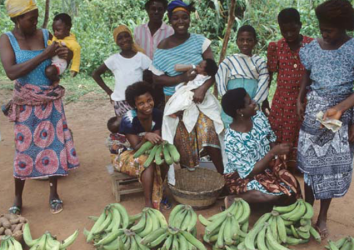
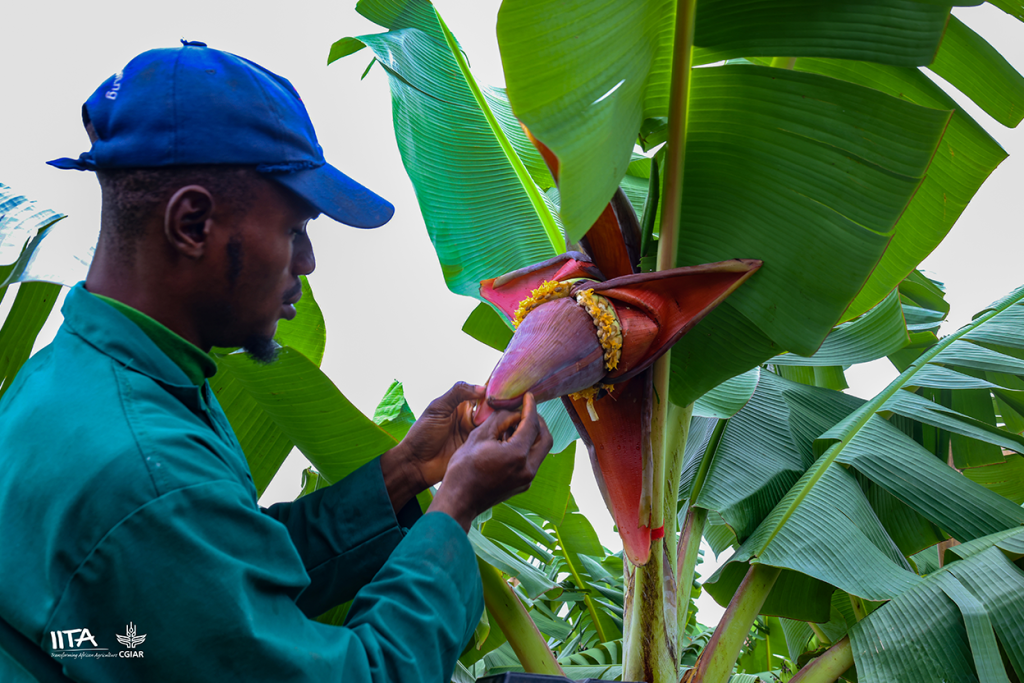
Improving cassava, maize, banana, plantain, cowpea, and yam varieties, focusing on productivity, disease resistance, and farmer-preferred traits.
Soil Fertility and Pest Management
Enhancing soil health, nutrient management, and integrated pest and disease control to boost sustainable crop production.
Pest Risk Assessment
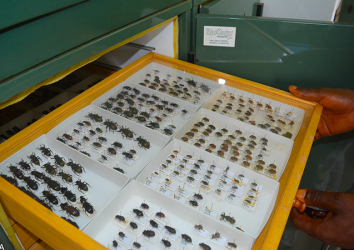
Monitoring and managing pest threats to support resilient cropping systems and informed decision-making.
Seed System Innovation
Strengthening national seed systems through improved propagation, disease-free planting material, and rapid multiplication platforms.
Featured Projects
- Location: Benin, Cameroon, Democratic Republic of Congo, Gambia, Kenya, Malawi
INNOVATION
New Technologies and Improved Seed Varieties
Developed improved cassava, maize, banana, plantain, cowpea, and yam varieties to enhance productivity, disease resistance, and farmer adoption.
Disease-Free Planting Material and Multiplication Platforms
Introduced clean planting material and rapid multiplication systems to strengthen national seed systems.
Seed System Innovation
Improved the efficiency and accessibility of seed delivery for key crops.
Improved Plantain Hybrids
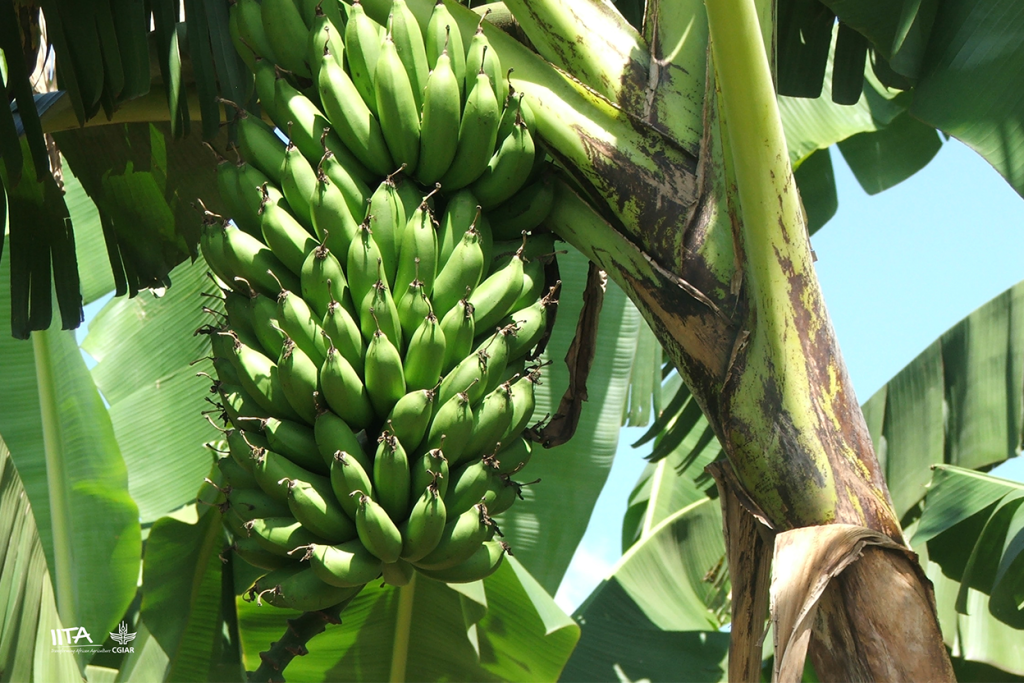
Developed and deployed high-yielding and disease-resistant plantain varieties.
Improved Cassava Varieties
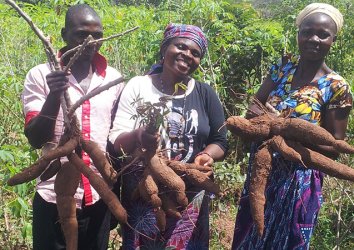
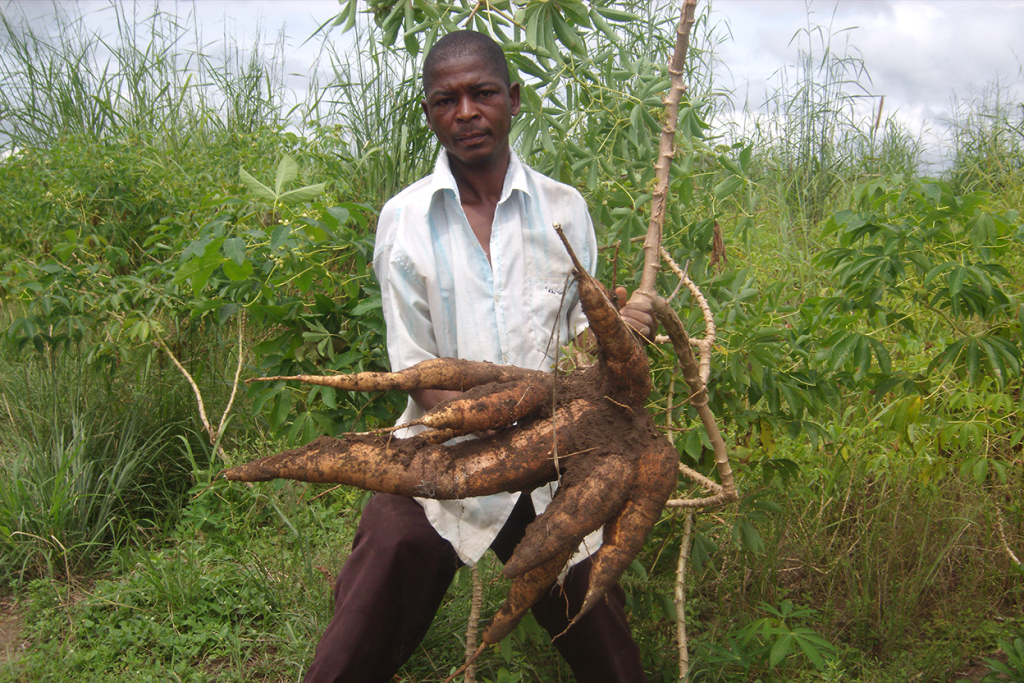
Introduced cassava varieties with enhanced resistance to pests and diseases, supporting climate-resilient cropping.
Banana Varietal Assessment
Thirty-five high-yielding banana varieties resistant to Banana Xanthomonas Wilt (BXW) were introduced for testing and homologation. Quality planting materials have been transferred to ISABU for maintenance and further multiplication to support national banana production.
IMPACT HIGHLIGHTS
IITA is delivering measurable impact in Cameroon by strengthening crop improvement, seed systems, and climate-resilient agriculture. Working with national institutions, research partners, and the private sector, IITA translates research into improved crop varieties, clean seed systems, and scalable agricultural innovations. The impact highlights below demonstrate how these efforts are improving productivity, strengthening food systems, and enhancing livelihoods across Cameroon and the wider Central Africa region.
Improved Seed Production
Developed and deployed new technologies and improved seed varieties for cassava, maize, banana, plantain, cowpea, and yam to enhance productivity, disease resistance, and farmer adoption.
Disease-Free Planting Material
Introduced clean planting material and multiplication platforms, strengthening national seed systems and ensuring access to high-quality planting material.
Plantain and Cassava Innovations
Released improved plantain hybrids and cassava varieties with enhanced pest and disease resistance, contributing to climate-resilient cropping systems.
Capacity Building
Strengthened local research and extension capacity through technical support, partnerships with universities, and collaboration with national research and government institutions.
Regional Impact
Supported sustainable agriculture initiatives and crop improvement programs across Cameroon and neighboring countries, including Gabon, the Central African Republic, and São Tomé and Príncipe.
PARTNERS
IITA Cameroon’s success relies on strong partnerships with research institutions, universities, government agencies, farmer organizations, and international development partners, enabling innovation, technology adoption, and sustainable agricultural development.
- IRAD
- MINRESI
- MINADER
- University of Dschang
- University of Yaoundé
- University of Buea
- CIRAD
- ICRAF
- CIFOR
- UCLA/Congo Basin Institute
- Farmer Organizations
- Local NGOs
- AfDB
- EU
- Packard Foundation
Publications
A countrywide molecular survey leads to a seminal identification of the invasive cattle tick…
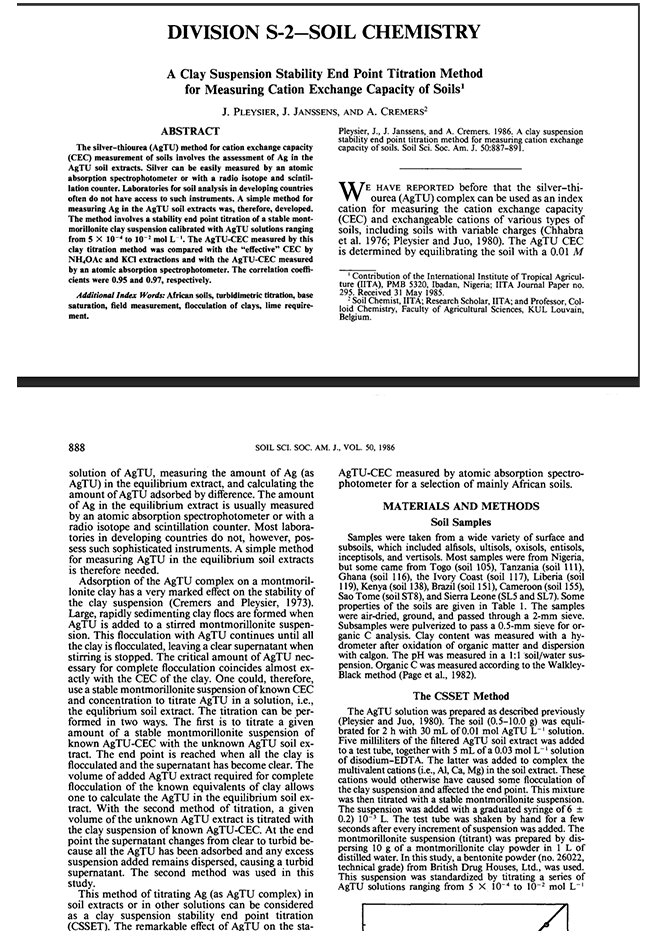
A Clay Suspension Stability End Point Titration Method for Measuring Cation Exchange Capacity of Soils
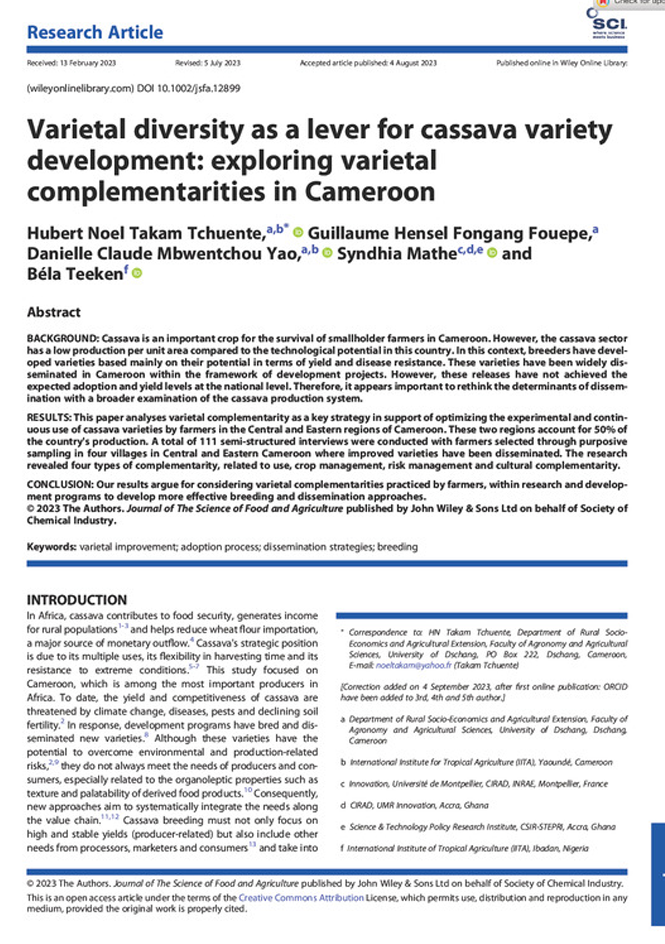
Varietal diversity as a lever for cassava variety development: exploring varietal complementarities in Cameroon
Related News
See all news

Why Climate Finance Must Tackle Food Loss and Waste
Every harvest season in Africa, food is lost or wasted at staggering levels. Nigeria loses 45% of its 3.9 million tons of tomato harvest each year to postharvest losses and supply chain inefficiencies.

Belgium honors IITA scientist with noble title of Baron
IITA–CGIAR celebrates one of its distinguished scientists, Professor Rony Swennen, following his conferment of the noble

IITA, Democratic Republic of the Congo strengthen agricultural partnership with new MoU
As part of efforts to strengthen food security in the Democratic Republic of Congo (DRC),
See all news