
Analytical Laboratory
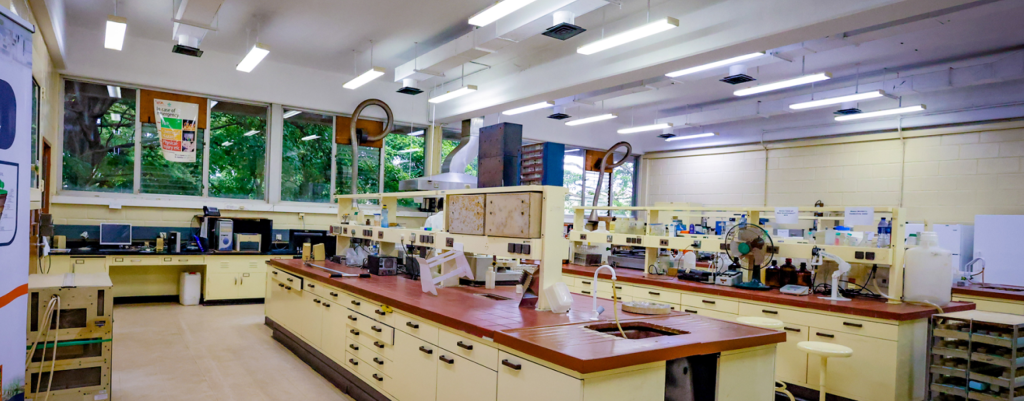
Analytical Services Laboratory – Ibadan, Nigeria
The Analytical Laboratory at IITA is a multi‑disciplinary scientific facility dedicated to providing precise chemical and physical analyses of agricultural materials, soils, plant tissues, water, fertilizers, feeds, and food products. The laboratory supports research, crop improvement, soil fertility management, food quality evaluation, and agribusiness innovation by generating reliable data used for decision‑making, product development, and scientific research.
Purpose and scope
The Analytical Laboratory’s primary purpose is to deliver high-quality, validated analytical data that supports:
- Research programs (agronomy, soil science, crop biology, nutrition)
- Soil and plant nutrient diagnostics
- Fertilizer composition and quality profiling
- Feed and food product analysis
- Quality assurance of agricultural inputs
- Value chain and agribusiness product testing
- Environmental monitoring and safety assessments
It functions as a central service laboratory, serving IITA’s internal research units and external partners involved in agricultural development.
Core analytical capabilities
The lab performs a wide range of analyses using standardized methods and calibrated instruments. Major areas of analytical work include:
- Soil and fertilizer analysis
- Soil pH, organic matter, texture, and cation exchange capacity
- Macro‑ and micronutrient quantification (N, P, K, Ca, Mg, Zn, Fe, etc.)
- Fertilizer nutrient content and quality assessment
- Evaluation of soil health indicators for fertility management
These analyses help inform soil-specific fertilizer recommendations and sustainable soil management practices.
- Plant tissue and crop sample analysis
- Nutrient profiling of plant tissues (leaf, stem, root)
- Elemental analysis (useful for deficiency diagnosis)
- Determination of nutrient uptake patterns
This supports crop physiology research and breeding program evaluations.
- Food and feed quality analysis
- Proximate analysis (protein, fat, carbohydrate, moisture, ash)
- Mineral and vitamin quantification
- Anti‑nutrient detection (e.g., phytates, tannins)
- Safety and contaminant screening
These services are critical for nutritional lab research, food product development, and crop utilization studies.
- Water and environmental testing
- Water quality parameters (pH, electrical conductivity)
- Contaminant checks where relevant
- Supporting irrigation and environmental research
Environmental testing provides insights for studies linking climate, water use, and agricultural productivity.
- Advanced instrumentation
The lab uses a range of analytical equipment, such as:
- Spectrophotometers
- Atomic Absorption Spectroscopy (AAS)
- Inductively Coupled Plasma (ICP) systems
- High‑Performance Liquid Chromatography (HPLC)
- Gas Chromatography (GC)
- Flame Photometers
- Micro Kjeldahl Systems
These instruments enable precise quantification of nutrients, elements, and biochemical components in diverse sample types.
Role in research and innovation
The Analytical Laboratory provides data and technical support for a wide array of research outputs:
- Breeding programs — evaluating nutrient uptake and plant performance
- Soil health initiatives — informing soil fertility recommendations
- Crop production studies — assessing nutrient dynamics and environmental interactions
- Food utilization research — contributing to nutritional profiling
- Value chain development — validating quality and safety of processed products
Its data feeds into scientific publications, policy recommendations, and extension advisories.
Data quality and standards
To ensure reliability and comparability of results, the Analytical Laboratory:
- Implements standard operating procedures (SOPs)
- Participates in quality control and assurance protocols
- Calibrates instruments regularly
- Uses certified reference materials where applicable
- Adheres to internationally recognized analytical methods
This guarantees that research and advisory decisions are based on high-integrity data.
Clientele and users
The laboratory serves a wide group of users, including:
- IITA research programs
- Soil fertility and fertilizer research units
- Food science and nutrition researchers
- External agricultural research partners
- Agribusinesses needing product analysis
- Donors and policy stakeholders requiring validated data
Strategic importance
The Analytical Laboratory plays a central, enabling role in supporting evidence-based agriculture by:
- Providing objective measurements for scientific research
- Supporting soil and fertilizer management decisions
- Enhancing food and feed product quality evaluation
- Enabling nutritional and safety profiling for processed products
- Strengthening research credibility and impact
The Analytical Laboratory at IITA is a crucial scientific unit that delivers robust, high-quality analyses of soil, plant, fertilizer, food, water, and environmental samples. By supplying validated data to research and agribusiness stakeholders, it underpins sound decision-making, promotes sustainable agricultural practices, and supports the development of healthy, market-ready agricultural products.
Analytical Laboratory – Yaoundé, Cameroon
The Analytical Laboratory in Yaoundé conducts routine soil, water, and plant nutrient analyses, including fertilizer element content determination. It evaluates micronutrient and macronutrient levels in fresh and processed cassava, yam, banana, and plantain genotypes from research trials, and measures chlorophyll and carotenoid content in leaf samples.
The laboratory is expanding its services to include cyanide testing and food contaminant analysis, such as aflatoxins and pesticide residues. It also supplies deionized water to partners and collaborators and prioritizes capacity strengthening through the training of technicians at national and international levels.
The laboratory plays a critical role in advancing IITA’s climate change mandate. Equipped with state-of-the-art instrumentation, it measures greenhouse gas emissions across forests, degraded forests, and diverse agricultural landscapes. This work supports the assessment of environmental impacts associated with land-use change in the Congo Basin and contributes to quantifying the effects of deforestation on greenhouse gas emissions and climate change.