

Rwanda
COUNTRY OVERVIEW
The International Institute of Tropical Agriculture (IITA) has a longstanding and impactful history in Rwanda since the 1980s. Over the years, IITA has worked hand in hand with the Government of Rwanda and partners to advance agricultural research, innovation, and capacity development. Through close collaboration with the Ministry of Agriculture and Animal Resources (MINAGRI), Rwanda Agriculture and Animal Resources Development (RAB), Rwanda Inspectorate, Competition and Consumer Protection Authority (RICA), academia, civil society, and the private sector, IITA has contributed to improving crop productivity, strengthening seed systems, and promoting climate-smart and nutrition-sensitive agriculture. Guided by the IITA 2024–2030 Strategy, IITA’s work in Rwanda aligns with national priorities for sustainable, inclusive, and resilient food systems.
Location
Kigali
Kigali, Rwanda
IITA-Rwanda, Kacyiru, Urban Golf Peak Building. KG 548 ST, House #4 PO Box 1269 Kigali – Rwanda
Tel: +250 788380555
Contacts
Matieyedou Konlambique
IITA.Rwanda@cgiar.org
Sandra Gatete
IITA.Rwanda@cgiar.org
FOCUS AREAS
Advancing crop varieties and developing sustainable seed systems
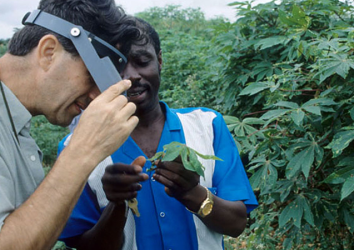
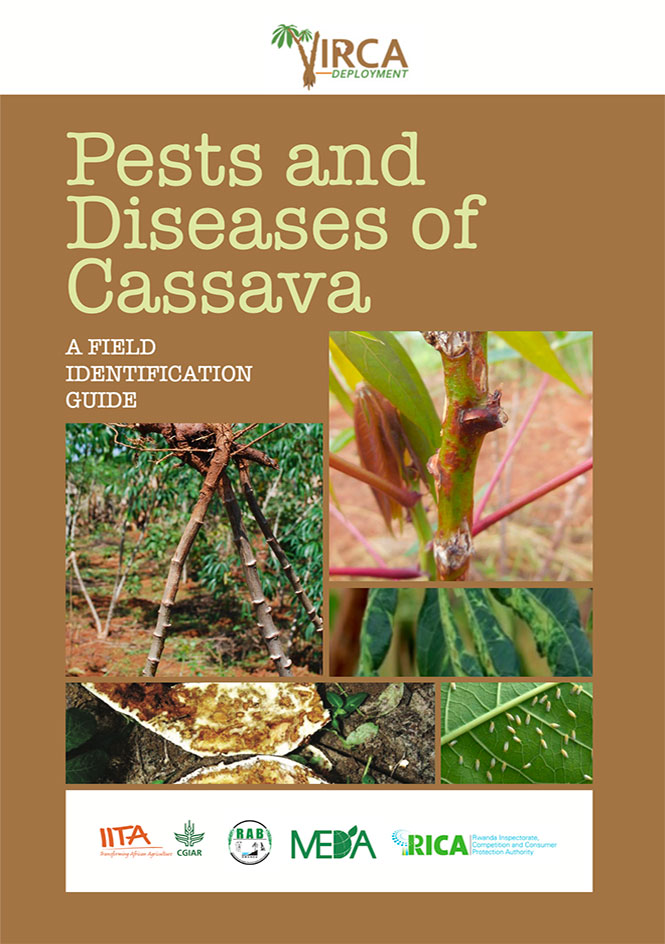
IITA has been investing in crop improvement, pest, and disease management as part of its effort to strengthen the country’s seed systems by aligning research with strategic interventions across key food-security crops. These include cassava, bananas, maize, and soybeans. Working with RAB and other partners, IITA led research to develop and disseminate improved varieties resistant to two devastating cassava viral diseases: cassava brown streak disease (CBSD) and cassava mosaic disease (CMD). IITA is also collaborating with RAB, RICA, and private seed companies to enhance the availability and accessibility of highquality seeds to Rwandan farmers.
strengthening agriculture extension and advisory services
IITA in Rwanda strengthens agricultural extension services by training farmers
and extension agents in climate-smart practices and improved agronomic
practices. It promotes digital tools to deliver real-time farming advisories.
Partnering with government and development partners, IITA ensures inclusive,
gender-responsive extension support to enhance food security and resilience
for smallholder farmers across Rwanda.
Promoting food safety, healthy diets, and nutrition-sensitive Agriculture
Healthy diets and nutrition are fundamental pillars of sustainable households. Rwanda has made significant progress in improving nutrition through collaborative efforts with partners. However, challenges persist, as
evidenced by high rates of stunting and malnutrition, particularly among children under five. IITA, alongside other CGIAR centers, is contributing to addressing these challenges through innovative solutions, leveraging digital tools and food-safety technologies, strengthening food security, and promoting nutrition-sensitive interventions across the country
Developing and disseminating agroecology and circular-Economy Innovations
IITA in Rwanda promotes agroecology and circular-economy innovations to build more resilient and sustainable food systems. By encouraging climate-smart practices, recycling agricultural and household waste into valuable resources, and fostering inclusive business models, these efforts improve soil health, reduce reliance on external inputs, and create new livelihood opportunities for farming communities, particularly women and youth.
Featured Projects
- Location: Burundi, Democratic Republic of Congo, Ghana, Kenya, Nigeria, Rwanda, Tanzania, Uganda
- Location: Democratic Republic of Congo, Ethiopia, Rwanda
INNOVATION
Hybrid Maize Seed Production
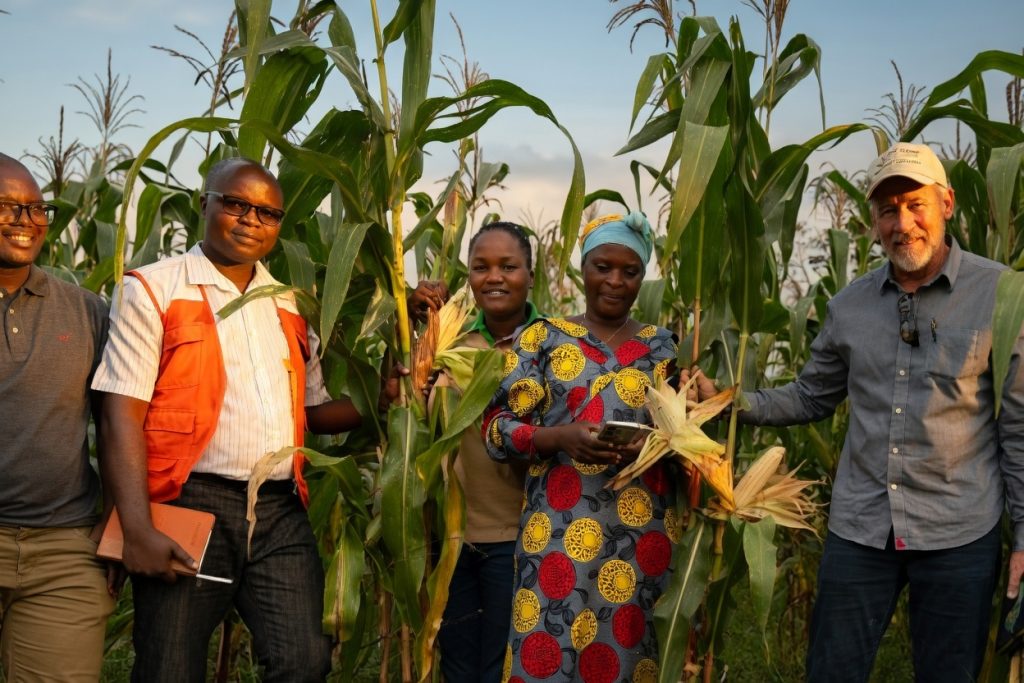
IITA supported the Institut des Sciences Agronomiques du Burundi (ISABU), SSG, and a local seed company to produce the first IITA-bred hybrid maize seeds in Burundi, including the variety AM1911-7 (M20-07/Ibadan) for the 2024/25 season. This milestone strengthens national seed systems and improves farmers’ access to high-performing maize varieties.
Banana Seed Multiplication
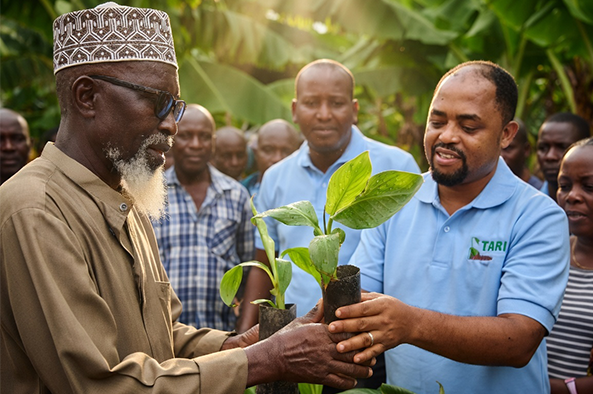
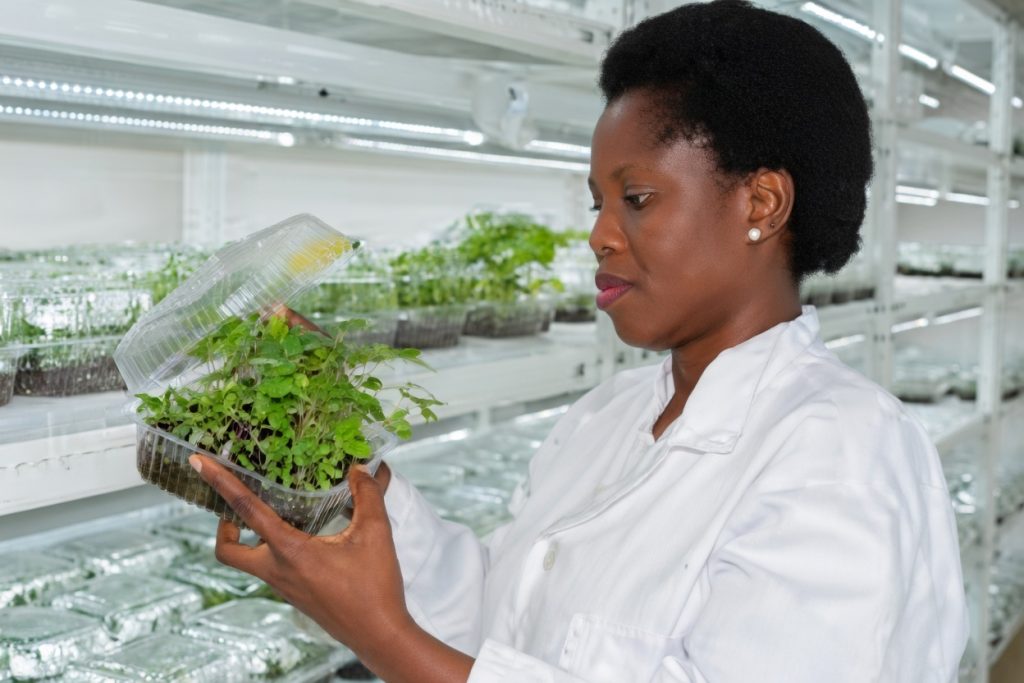
To improve access to clean banana planting materials, IITA introduced in-vitro propagation techniques through 13 propagation nurseries. The program also supported a private biotechnology company, Agrobiotec, to establish a viable in-vitro propagation system for large-scale seed multiplication.
Cassava Seed Multiplication
IITA deployed Semi-Autotrophic Hydroponic (SAH) technology in Bukemba to accelerate the multiplication of cassava planting materials. This innovative system enables rapid production of disease-free cassava seed, improving the availability of quality planting materials for farmers.
IMPACT HIGHLIGHTS
IITA delivers measurable impact in Rwanda through crop improvement, climate-smart agriculture, strengthened seed systems, and youth-focused agribusiness initiatives. Working closely with national and regional partners, IITA translates research into improved crop varieties, scalable agricultural technologies, and practical solutions that enhance productivity, resilience, and incomes for farmers and value-chain actors.
5,000+
farmers engaged in participatory crop testing
Farmers across 18 districts participated in the 1000Farms citizen-science initiative, helping test and identify climate-resilient crop varieties.
$10.9M
mobilized for research partnerships
Investments supported 12 PhD and 17 MSc students and produced 110+ scientific publications.
8,000
diet-quality responses collected monthly
The Live Food System Monitor gathers real-time data from households and markets to track food and nutrition trends.
200+
stakeholders trained in circular agriculture
Farmers, entrepreneurs, and local authorities gained skills in sustainable waste management and circular food systems.
8
circular-economy enterprises supported
Agribusinesses convert cassava waste and organic materials into animal feed and organic fertilizers, creating new income streams.
72,621
cassava seeds introduced for disease-resistant varieties
Improved cassava germplasm and 17 elite clones were introduced to strengthen breeding efforts against CBSD and CMD.
6
high-yielding soybean varieties released
New soybean varieties were introduced and tested, increasing adoption among participating farmers from 27% to 61%.
5,750
soil samples analyzed
Soil diagnostics and 839 field trials informed site-specific fertilizer recommendations for Rwanda’s priority crops.
266,000+
farmers reached with digital advisory
Mobile platforms, SMS alerts, and chatbots provide farmers with real-time guidance on banana production and disease management.
1,000+
farmers engaged in agroecology living labs
Farmers collaborate with researchers to test and scale sustainable and climate-smart farming practices.
PARTNERS
IITA Rwanda collaborates with national institutions, farmer organizations, development partners, and the private sector to strengthen seed systems, promote climate-smart agriculture, and support inclusive food systems.
- RAB
- MINAGRI
- Rwanda Inspectorate
- RICA
- AGRA
- One Acre Fund
- Imbaraga Farmers Association
- Ingabo Farmers Syndicate
- Africa Improved Food (AIF)
- BK Techouse
- I & J Harvest Ltd
- You & I Best Seed Ltd
- Akanoze Nyamiyaga Ltd
- MULIMECO Ltd
- Ikijumva One Stop Shop
- VIAMO
- COPED Ltd
Publications
IITA Rwanda
Booklet
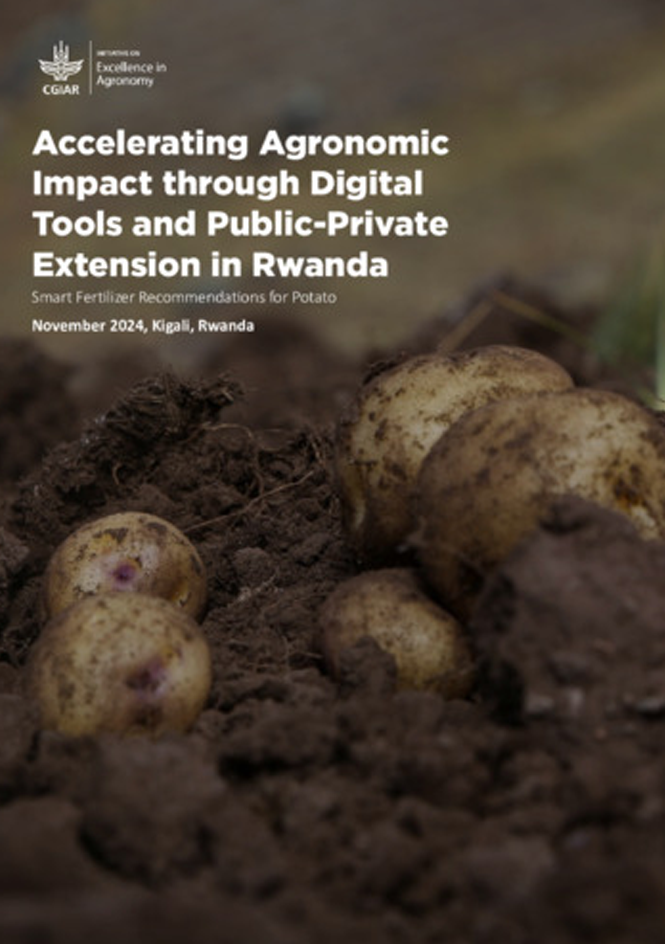
Accelerating agronomic impact through digital tools and public-private extension in Rwanda: smart fertilizer recommendations for potato
Related News
See all news
IITA scientist Paterne Agre wins prestigious 2026 Japan International Award for Young Agricultural Researchers
IITA’s Molecular Breeder and Bioinformatics Scientist, Dr Sourou Angelot Paterne Agre, is named one of three recipients of the prestigious 2026 Japan International Award for Young Agricultural Researchers!
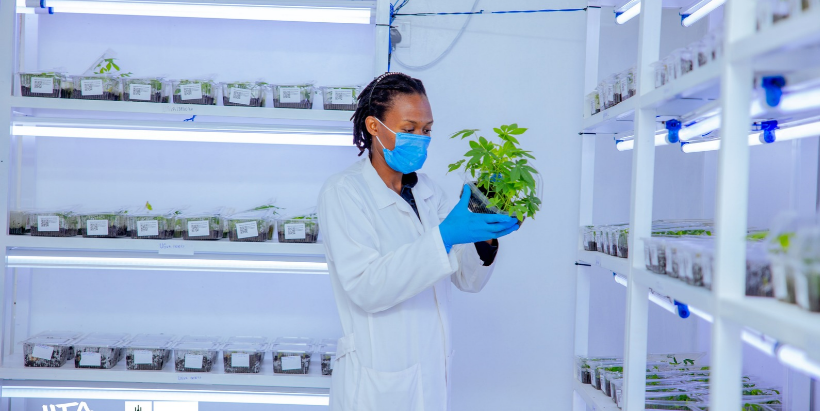
How SAH tripled cassava seed multiplication in Rwanda
IITA introduced Semi-Autotrophic Hydroponics (SAH) at the RAB Rubona station to increase multiplication rates while
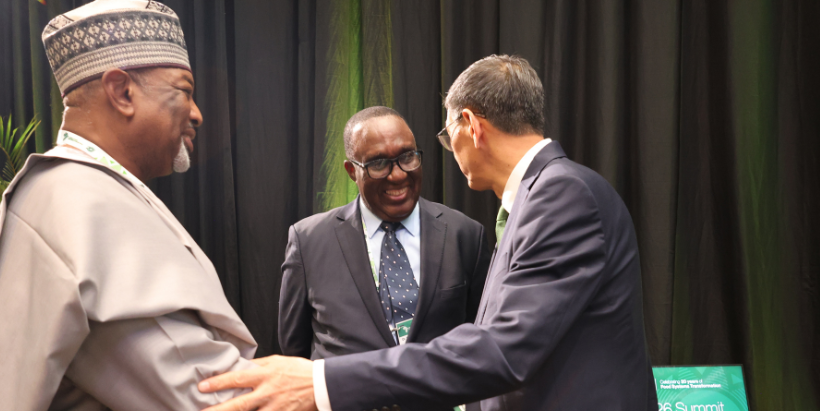
IITA deepens partnerships for Africa’s food systems transformation
For IITA, the just concluded Africa Food Systems Forum (AFSF) 2026 in Kigali, Rwanda, provided
See all news
MEDIA/RESOURCES
Events
Explore key events and
engagements
Photos
Highlights from field activities and impact
Videos
Watch stories of innovation and transformation