GAMBIA
COUNTRY OVERVIEW
The International Institute of Tropical Agriculture operates in The Gambia as part of its West Africa and Sahel regional initiatives, advancing agricultural research for development to improve food security, nutrition, and livelihoods.
Working with national and regional partners, IITA focuses on food safety, agricultural policy support, and capacity development. Its work in the country is strongly centered on aflatoxin mitigation, knowledge systems strengthening, and enabling evidence-based agricultural transformation.
FOCUS AREAS
Aflatoxin Management and Food Safety
Scaling the use of Aflasafe technologies to reduce aflatoxin contamination in maize and groundnut, improving food safety, public health, and market access.
Agricultural Policy and Knowledge Systems
Strengthening national capacity for data-driven decision-making through strategic analysis, monitoring, and knowledge platforms.
Capacity Development and Partnerships
Building the capacity of national institutions, stakeholders, and value chain actors through training, awareness creation, and technical support.
Featured Projects
- Location: Benin, Cameroon, Democratic Republic of Congo, Gambia, Kenya, Malawi
INNOVATION
Aflasafe for Aflatoxin Control
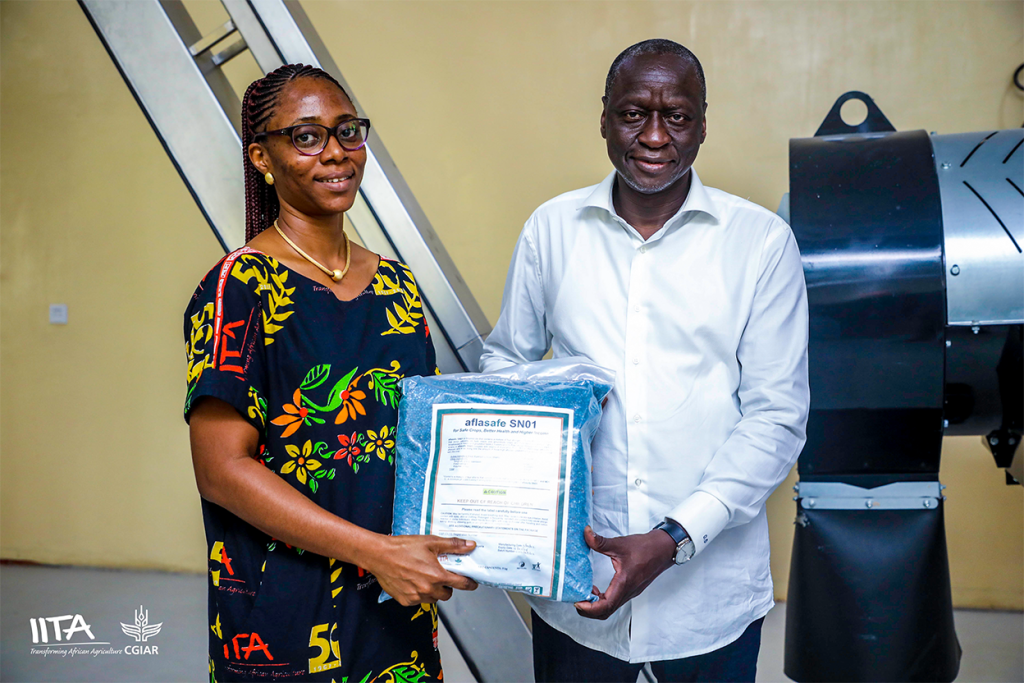
Deployment of Aflasafe SN01, a biocontrol product that reduces aflatoxin contamination in maize and groundnut from very high levels to safe thresholds, improving food safety and market access.
IMPACT HIGHLIGHTS
IITA is delivering measurable impact in The Gambia by improving food safety, strengthening seed systems, and enhancing agricultural productivity. Through partnerships with national and regional stakeholders, IITA translates research into practical solutions that support farmers, improve market access, and build more resilient food systems.
90%
reduction in aflatoxin contamination achieved
Field studies show Aflasafe-treated crops consistently meet safe aflatoxin limits, improving food safety and trade potential.
Food safety and export potential improved
Reduced contamination helps meet international standards, particularly for groundnut exports.
Aflasafe Commercialization (ATTC)
Through the ATTC initiative, sustainable production and distribution systems are enabling wider access to Aflasafe and scaling aflatoxin control nationwide.
PARTNERS
IITA works in The Gambia with key national institutions such as the National Agricultural Research Institute (NARI), alongside regional, CGIAR, and private sector partners to scale agricultural innovations and strengthen food systems.
- National Agricultural Research Institute (NARI)
- AfDB
- Food Safety and Quality Authority (FSQA)
- World Vegetable Center (WorldVeg)
- BAMTAARE SA
- Medical Research Council (MRC)
Publications
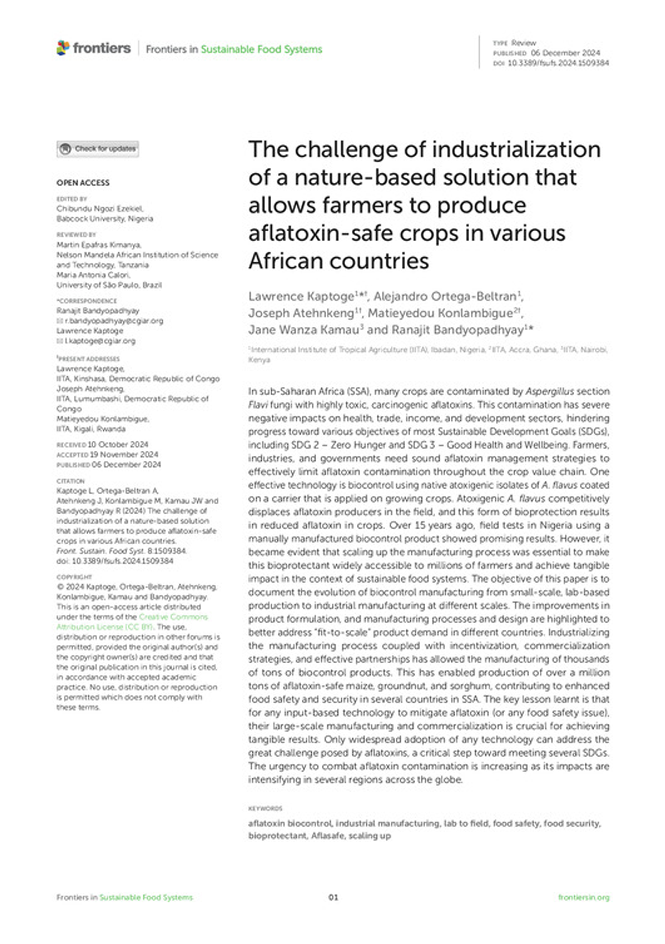
The challenge of industrialization of a nature-based solution that allows farmers to produce aflatoxin-safe
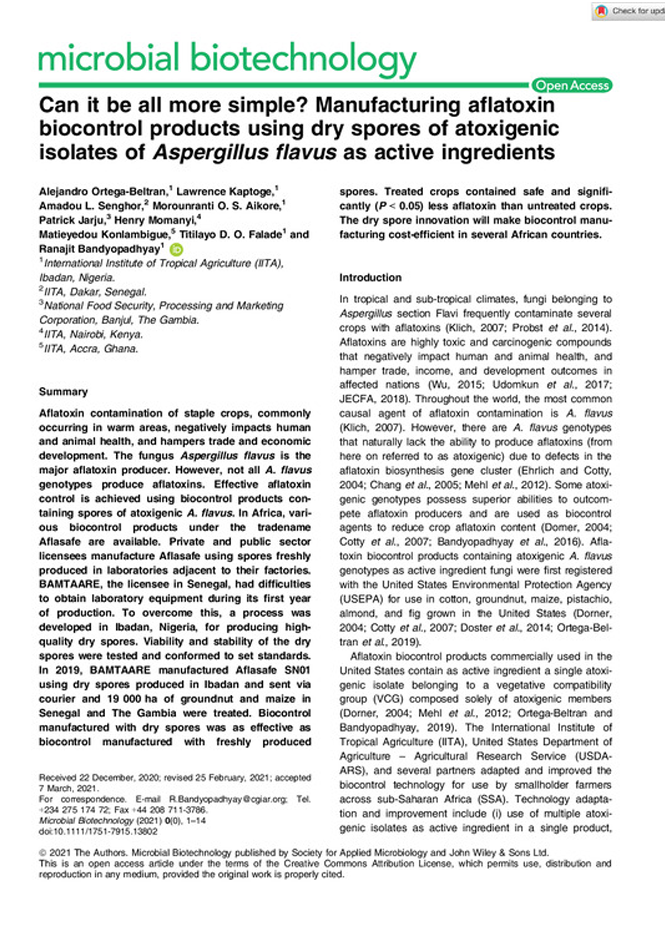
Can it be all more simple? Manufacturing aflatoxin biocontrol products…
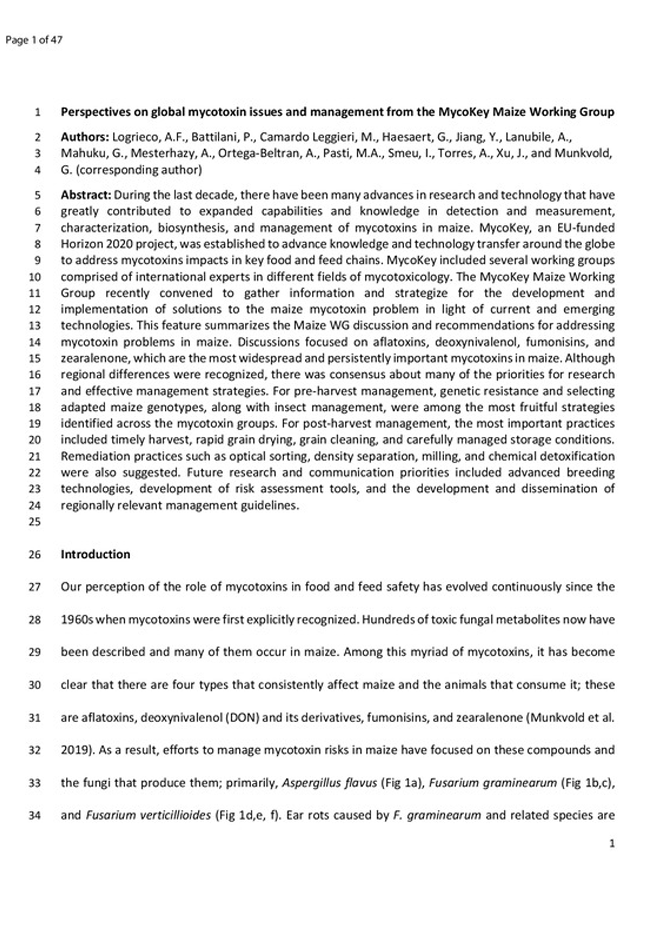
Perspectives on global mycotoxin issues and management from the mycokey maize working group
Related News
See all news

Why Climate Finance Must Tackle Food Loss and Waste
Every harvest season in Africa, food is lost or wasted at staggering levels. Nigeria loses 45% of its 3.9 million tons of tomato harvest each year to postharvest losses and supply chain inefficiencies.

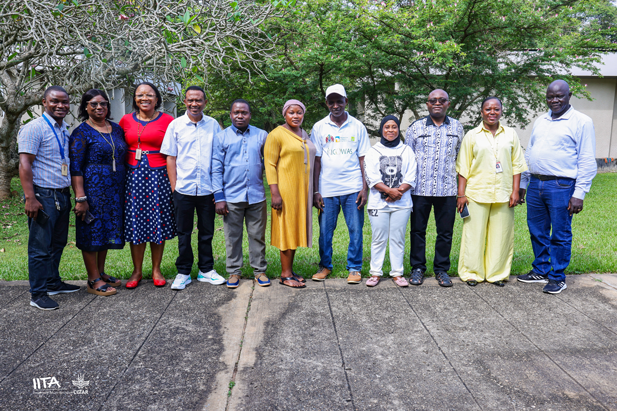
IITA, WorldVeg, and AfricaRice join forces to strengthen the Gambia’s food security
IITA–CGIAR continues to strengthen research linkages with African countries, ensuring that national institutions have the
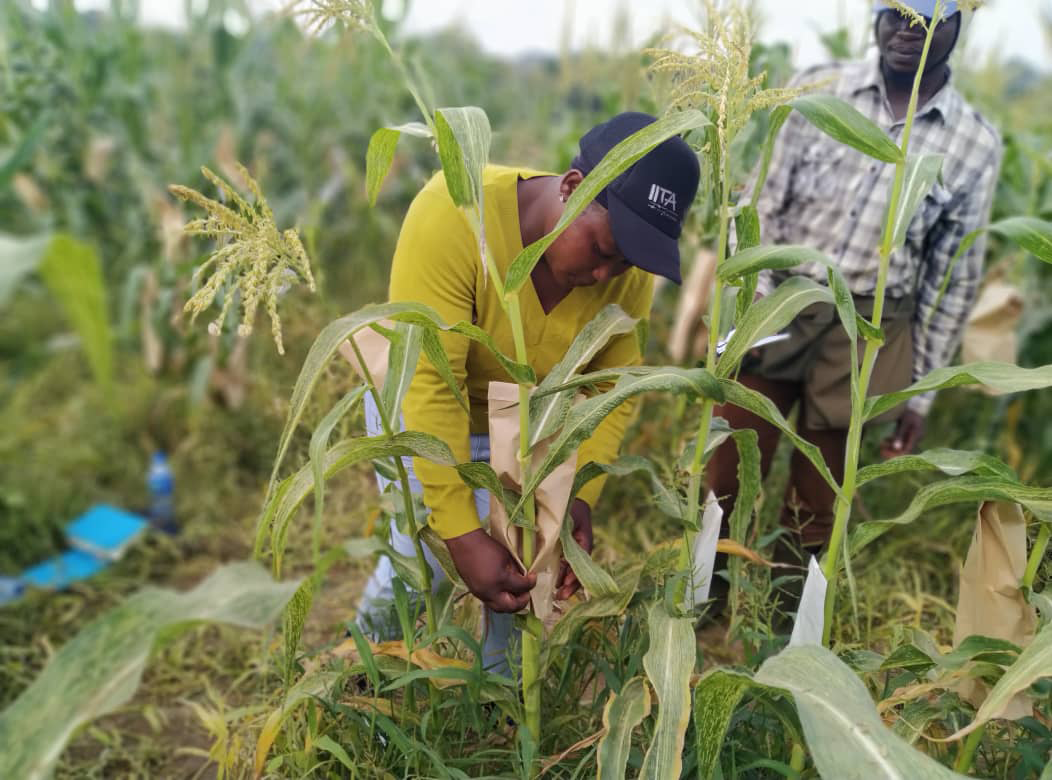
Maize variety transforming nutrition, health, and livelihoods in the Gambia
A breakthrough in agricultural innovation is reshaping food security, nutrition, and income generation in The
See all news
MEDIA/RESOURCES
Events
Explore key events and
engagements
Photos
Highlights from field activities and impact
Videos
Watch stories of innovation and transformation