
BENIN
Country Overview
The IITA-Benin Station, established in 1983, serves as a major research, training, and technology transfer hub for Francophone West Africa. It gained global recognition in the late 1980s as the IITA Biological Control Center for Africa, leading the highly successful cassava mealybug biocontrol program—widely regarded as the most successful biocontrol initiative worldwide and a landmark CGIAR achievement. This breakthrough earned its initiator, Dr. Hans Herren, the World Food Prize. Over the years, the station has also expanded its assets, including a donated rehabilitated forest and monkey sanctuary that now support conservation and biodiversity research.
Read more
oday, IITA-Benin is the largest IITA station in Francophone Africa, with impact extending beyond the region to Asia. Fully under IITA administration since 2018, it operates under a renewed Host Country Agreement with the Government of Benin and hosts key international partners, sister CGIAR institutions, private seed companies, and the TAAT Clearinghouse. While maintaining strong expertise in plant health and biological control, the station has diversified into integrated research areas such as circular bioeconomy, climate change, gender and social inclusion, and One Health approaches, positioning it as a strategic platform for scaling agricultural innovations across Africa and beyond.
Location
Cotonou
Cotonou, Republic of Benin
IITA-Benin, Route de Tankpè, Abomey Calavi, Benin
Postal address: IITA-Benin, 08 BP 0932 Tri Postal, Cotonou, Benin
Tel: +229 01 64 18 15 15
Contacts
Manuele Tamo
m.tamo@cgiar.org
Francois Tosse
f.tosse@cgiar.org
Manuele Tamo
Country Representative
m.tamo@cgiar.org
FOCUS AREAS
Maize
Enhancing maize yields and food security by promoting improved germplasm, integrated pest management, and climate-smart agronomic practices tailored to local farming systems.
Cassava
Strengthening cassava productivity and resilience through pest and disease management, biological control innovations, improved varieties, and sustainable seed systems for smallholder farmers.
Plant Health & Biological Control
Advancing environmentally friendly solutions for crop protection through biological control, biopesticides, and integrated pest management to reduce reliance on chemical inputs.
Digital Agriculture
Deploying digital tools and data-driven solutions to support decision-making, improve advisory services, and accelerate the scaling of agricultural innovations.
Arthropod Biodiversity
Researching and conserving arthropod biodiversity to support ecosystem services, strengthen biological control systems, and promote environmentally sustainable agriculture.
Agro-Eco-Health and Circular Bio-Economy
Advancing integrated approaches that link agriculture, environmental, and human health through circular bio-economy innovations, waste-to-value systems, and climate-smart practices.
Featured Projects
- Location: Benin, Cameroon, Democratic Republic of Congo, Gambia, Kenya, Malawi
- Location: Benin, Ethiopia, Ghana, Kenya, Malawi, Mali, Nigeria, Tanzania, Uganda, Zambia
- Location: Benin, Ghana, Mali, Niger, Nigeria, Senegal, Togo
Innovations
Biological control of mango mealybug
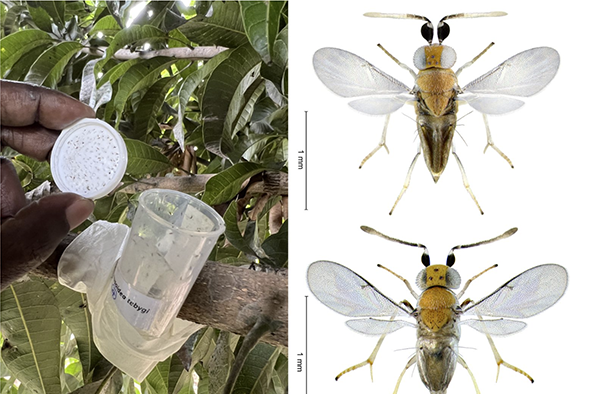
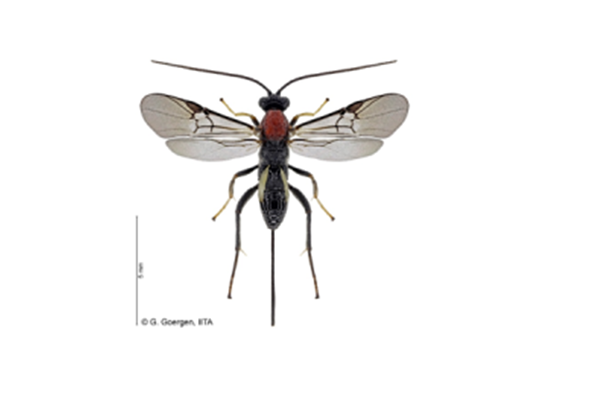
This technology is a biological control method using two specific parasitoid species, Gyranusoidea tebygi and Anagyrus mangicola, imported from India. These tiny wasps target the invasive mango mealybug by locating and parasitizing it—laying their eggs inside the pest. As the parasitoid larvae develop, they consume the host, ultimately leading to its death. This targeted attack significantly reduces the mealybug population, with field releases in West and Central Africa achieving reductions of about 95%.
Biological control of cassava mealybug
The technology of “Biological control of the pod borer Maruca vitrata with exotic parasitoids” involves the strategic use of specific parasitic wasps as natural antagonists to manage and reduce the population of the destructive Maruca vitrata pod borer. These parasitoid wasps are sourced from the World Vegetable Center labs in Taiwan and are released in collaboration with national agencies in affected regions.
Low cost fertilizer for healthy and profitable agriculture for African farmers.
Frass is a compost derived from black soldier fly (BSFL) larvae treatment of biodegradable wastes. In a commercial context, BSFF often refers to a mixture of primarily BSFL faeces, substrate residues, shed BSFL exoskeletons, and a microbial population that carries out fermentation. One of the primary reasons for the high value placed on BSF frass is its nutrient-rich composition. Packed with essential soluble nutrients like nitrogen (1.7 to 1.9%), phosphorus (from 1.0 to 2.5%), potassium, and micronutrients. Organic matter content (C/N ratio) of BSFL frass derived from different types of food may range from 8:1 to 27:1.
IMPACT HIGHLIGHTS
IITA works with national partners, the private sector, and farming communities to deliver measurable impact in Kenya’s agri-food systems. Through research, innovation, and capacity development, our work supports safer food, improved crop productivity, healthier soils, stronger value chains, and informed decision-making. The impact highlights below present key results across priority areas.
200,000+
improved cassava cuttings distributed
Pro-vitamin A (yellow-fleshed) cassava planting materials were multiplied and distributed to seed growers and farmers across more than 40 villages in Benin to promote nutrition and productivity.
42+
villages reached with sensitization and planting materials
Planting materials and behavioural change campaigns were deployed in over 40 rural locations, increasing awareness and adoption potential among farmers.
25
tonnes/ha target average yield potential
The introduced pro-vitamin A cassava varieties are promoted for their capacity to raise yields to an average of 25 t/ha, improving productivity compared with traditional varieties.
400+
improved cassava varieties available continent-wide
IITA has been involved in developing more than 400 improved cassava varieties—many with high yield, disease resistance, or enhanced nutrition—that are deployed across Africa, including Benin.
44,133
farmers reached with certified rice seed
Certified rice seed production and dissemination reached 44,133 farmers, covering 22,066 hectares and driving a 65% yield increase in project influence areas.
8
climate-smart rice varieties deployed
Eight high-performing, climate-smart rice varieties were introduced in Benin, with yield potentials ranging from 6.5–12 t/ha, supporting productivity and resilience among rice farmers.
2.19 million
people reached through awareness campaigns
Rice value-chain innovations and nutrition messaging reached approximately 2.19 million people across seven countries, including Benin.
1000+
youth trained in agribusiness value chains
Over 1,000 young people were trained in profitable agricultural value chains such as maize, cassava, vegetables, fisheries, and seed production, supported by coaching and mentorship.
267 USD/ha
income increase through Smart Valley technology
Adoption of Smart Valley water-management technology increased farmers’ net income by USD 267 per hectare, while improving water control and reducing fertilizer losses.
Partners
IITA works with national institutions, development partners, the private sector, and farming communities to deliver measurable impact across Benin’s agri-food systems. Through research, innovation, and capacity development, our work supports improved crop productivity, resilient seed systems, climate-smart practices, youth agribusiness development, and stronger livelihoods. The impact highlights below present key results achieved across major value chains and programs.
- African Development Bank (AfDB)
- Government of Benin
- Institut National de la Recherche Agricole du Bénin (INRAB)
- Mennonite Economic Development Associates (MEDA)
Publications
Yam genetic diversity in Sub-Saharan Africa: implications for conservation and breeding
Evaluating logistic regression and geographically weighted logistic regression models…
Benefits, environmental risks and habitats of edible insects in Benin, West Africa
Related News
See all news

Why Climate Finance Must Tackle Food Loss and Waste
Every harvest season in Africa, food is lost or wasted at staggering levels. Nigeria loses 45% of its 3.9 million tons of tomato harvest each year to postharvest losses and supply chain inefficiencies.

Republic of Benin and IITA deepen strategic partnership on youth-centered agricultural transformation
President of the Republic of Benin, His Excellency Patrice Guillaume Talon, has articulated a clear
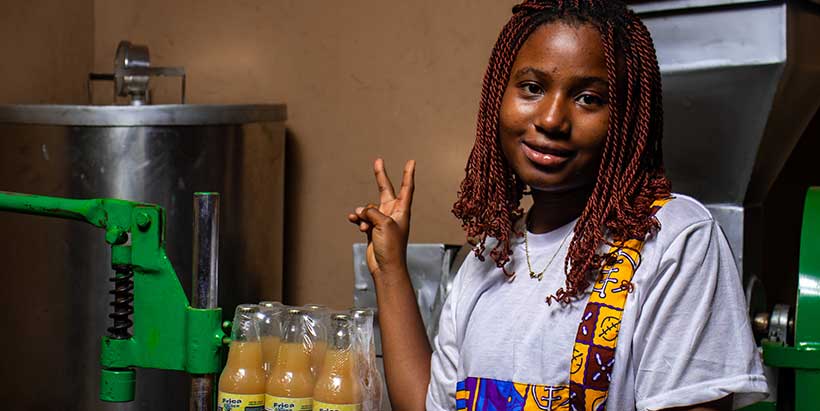
A youth agripreneur’s journey from Benin to the global market
Rose-Marie MINGNINOU, a determined graduate with a degree in Agricultural Sciences, was never destined for
Media/Resources
Events
Explore key events and
engagements
Photos
Highlights from field activities and impact
Videos
Watch stories of innovation and transformation