










ABOUT US
Science, partnerships, and innovation
IITA improves food security and livelihoods in Africa by developing practical agricultural solutions that help farmers and communities thrive.
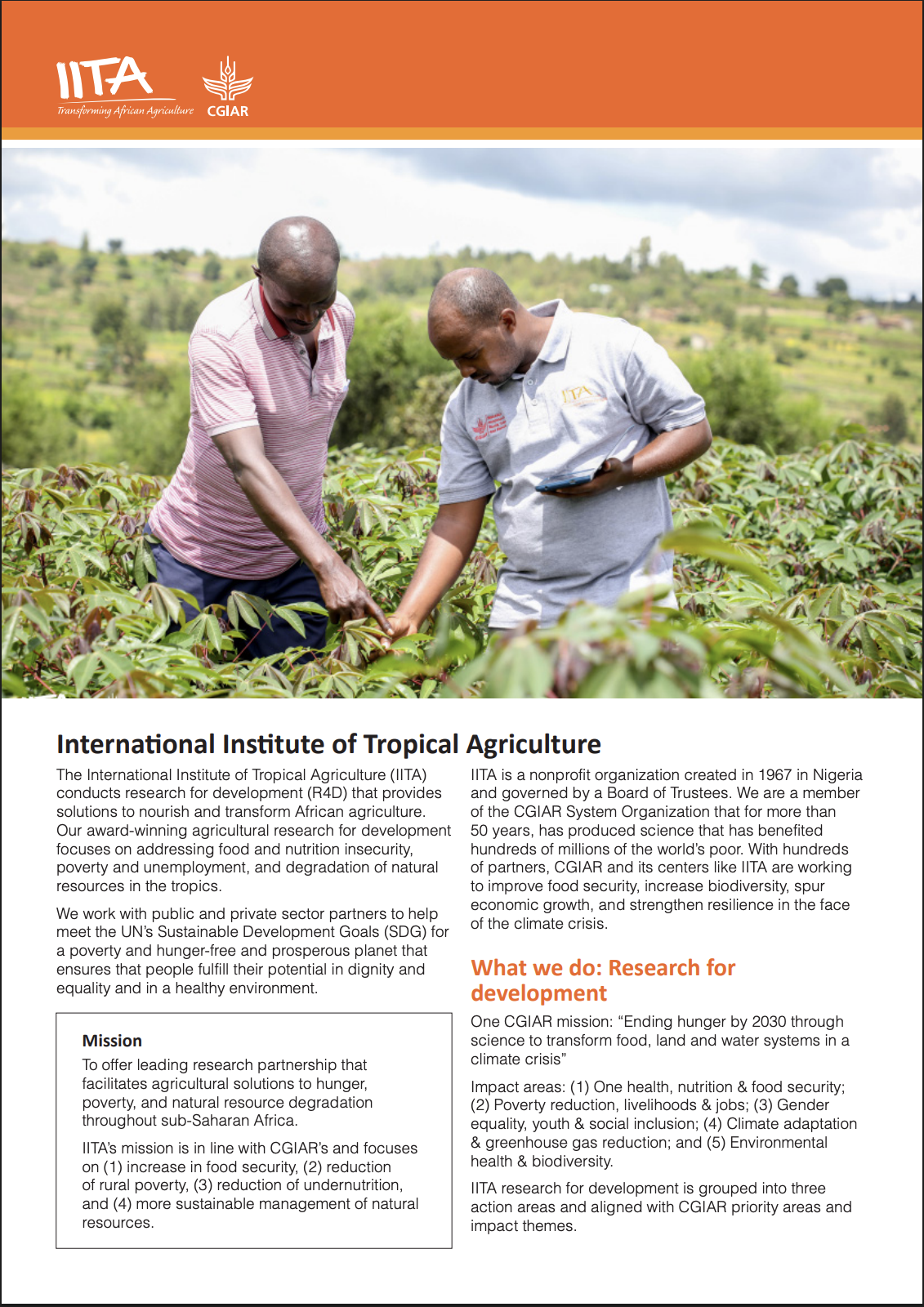
IITA (International Institute of Tropical Agriculture) is a leading research-for-development organization working to address Africa’s most pressing agricultural challenges. We generate science-based solutions that improve food and nutrition security, reduce poverty, and protect natural resources across the continent.
OUR VISION
IITA is guided by an ambitious strategy–to lift 11.5 million people out of poverty and revitalize 7.5 million hectares of farmland–by 2020. As one of 15 research centers in the CGIAR, a global partnership for a food secure future, IITA is engaged in several CGIAR Research Programs (CRPs).
IITA has delivered more than 70% of the CGIAR’s impact in sub-Saharan Africa and remains committed to science-driven improvement of agriculture and related food value chains.
OUR MISSION
Our R4D programs focus on four crucial areas: Biotechnology and Genetic Improvement, Natural Resource Management, Social Science and Agribusiness, Plant Production and Plant Health.
Our Strategy
IITA’s R4D strategy integrates cutting-edge science, partnerships, and delivery models to generate scalable agricultural solutions.
Our R4D programs focus on four crucial areas: Biotechnology and Genetic Improvement, Natural Resource Management, Social Science and Agribusiness, Plant Production and Plant Health.
HOW WE WORK
Transforming African Agriculture
IITA works at the intersection of science, partnerships, and delivery—ensuring that research moves beyond discovery to real-world adoption and impact.
We follow a research-for-development approach that integrates scientific excellence with strong partnerships, capacity sharing, and locally grounded delivery models. By co-designing solutions with farmers, institutions, and the private sector, we ensure innovations are relevant, scalable, and sustainable.
Research
Generating cutting-edge knowledge and technologies through rigorous science.
Innovation
Transforming research outputs into practical tools, products, and services.
Scaling
Working with partners to enable adoption, policy uptake, and impact at scale.
Our Values
Our values shape how we collaborate, innovate, and deliver impact anchoring our work in integrity, inclusiveness, excellence, and respect for the communities we serve.
- Originality
- Inclusiveness
- Multiculturalism
- Professionalism
- Multidisciplinarity
- Respect
- Collaboration
- Equity
- Integrity
- Excellence
Our Focus
Nutrition and Health
Advancing genetic innovation with a strong focus on building innovative and inclusive seed systems. This work ensures farmers have reliable access to high-quality, improved planting materials that enhance productivity, resilience, and food security.
Plant Health
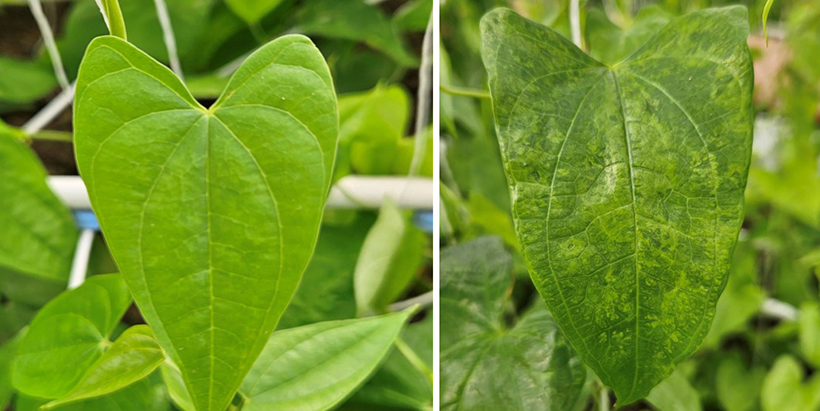
Strengthening plant health management for major staple crops, horticultural crops, and fruit trees to reduce losses, improve yields, and enhance food quality across farming systems.
Natural Resource Management
Researching arthropod biodiversity to better understand pest dynamics, beneficial insects, and ecosystem services, supporting sustainable pest management and biodiversity conservation.
Mechanization
Promoting integrated Agro-Eco-Health approaches that link agriculture, environment, and human well-being, including the development of circular bio-economy solutions that reduce waste and improve sustainability.
Biotechnology
Promoting integrated Agro-Eco-Health approaches that link agriculture, environment, and human well-being, including the development of circular bio-economy solutions that reduce waste and improve sustainability.
Seed system
Promoting integrated Agro-Eco-Health approaches that link agriculture, environment, and human well-being, including the development of circular bio-economy solutions that reduce waste and improve sustainability.
Genebank
Promoting integrated Agro-Eco-Health approaches that link agriculture, environment, and human well-being, including the development of circular bio-economy solutions that reduce waste and improve sustainability.
Resilient Climate Adaptaion
Promoting integrated Agro-Eco-Health approaches that link agriculture, environment, and human well-being, including the development of circular bio-economy solutions that reduce waste and improve sustainability.
Gender, youth, and social inclusion (GYSI)
Promoting integrated Agro-Eco-Health approaches that link agriculture, environment, and human well-being, including the development of circular bio-economy solutions that reduce waste and improve sustainability.
Foresight, Impact assessment and Scaling (FIAS)
Promoting integrated Agro-Eco-Health approaches that link agriculture, environment, and human well-being, including the development of circular bio-economy solutions that reduce waste and improve sustainability.
Value-chains, Markets, and agribusiness (VCMA)
Leadership
FINANCIALS AND RESOURCES
See all
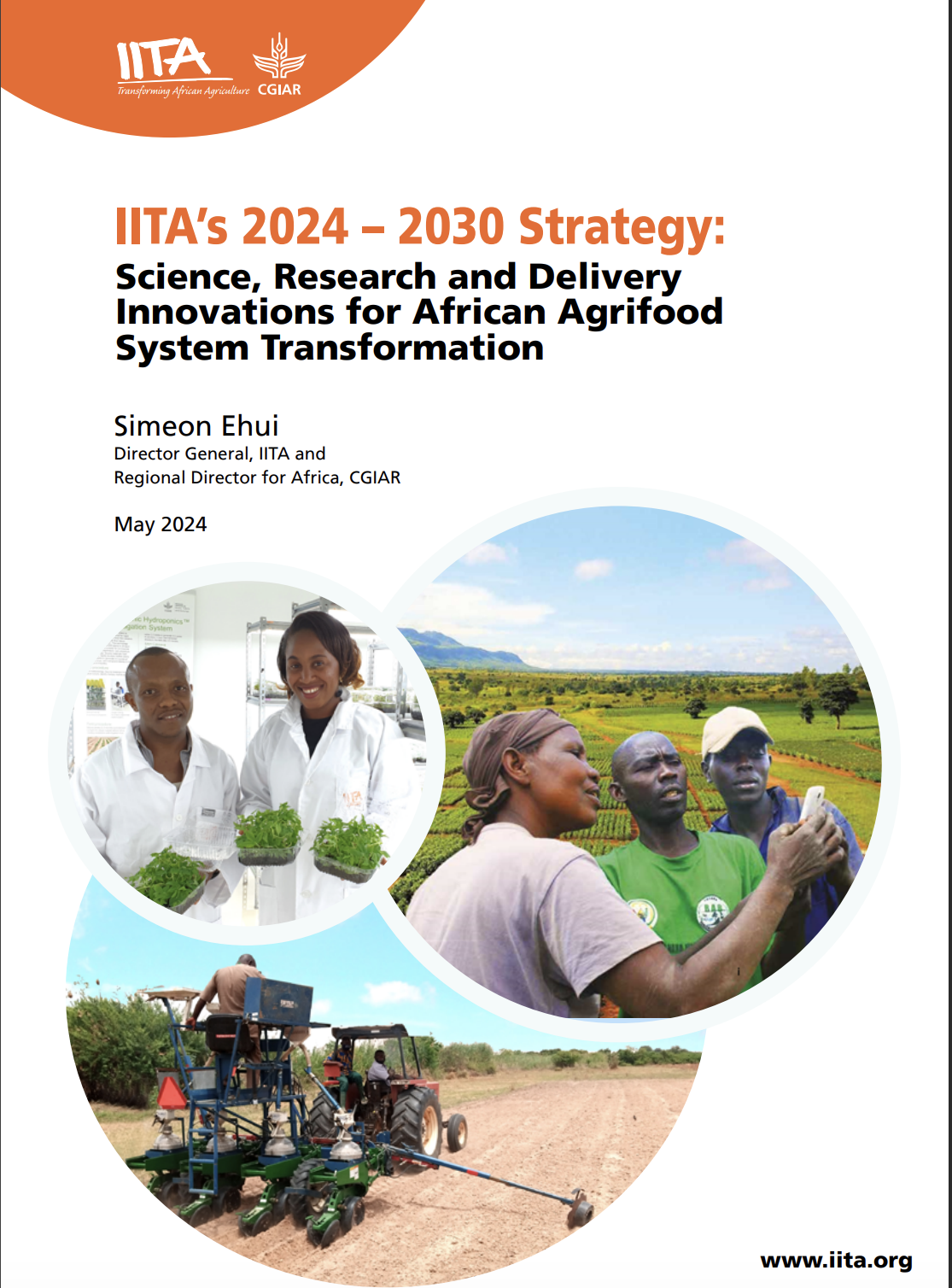
IITA 2024 – 2030 Refreshed Strategy
Publications
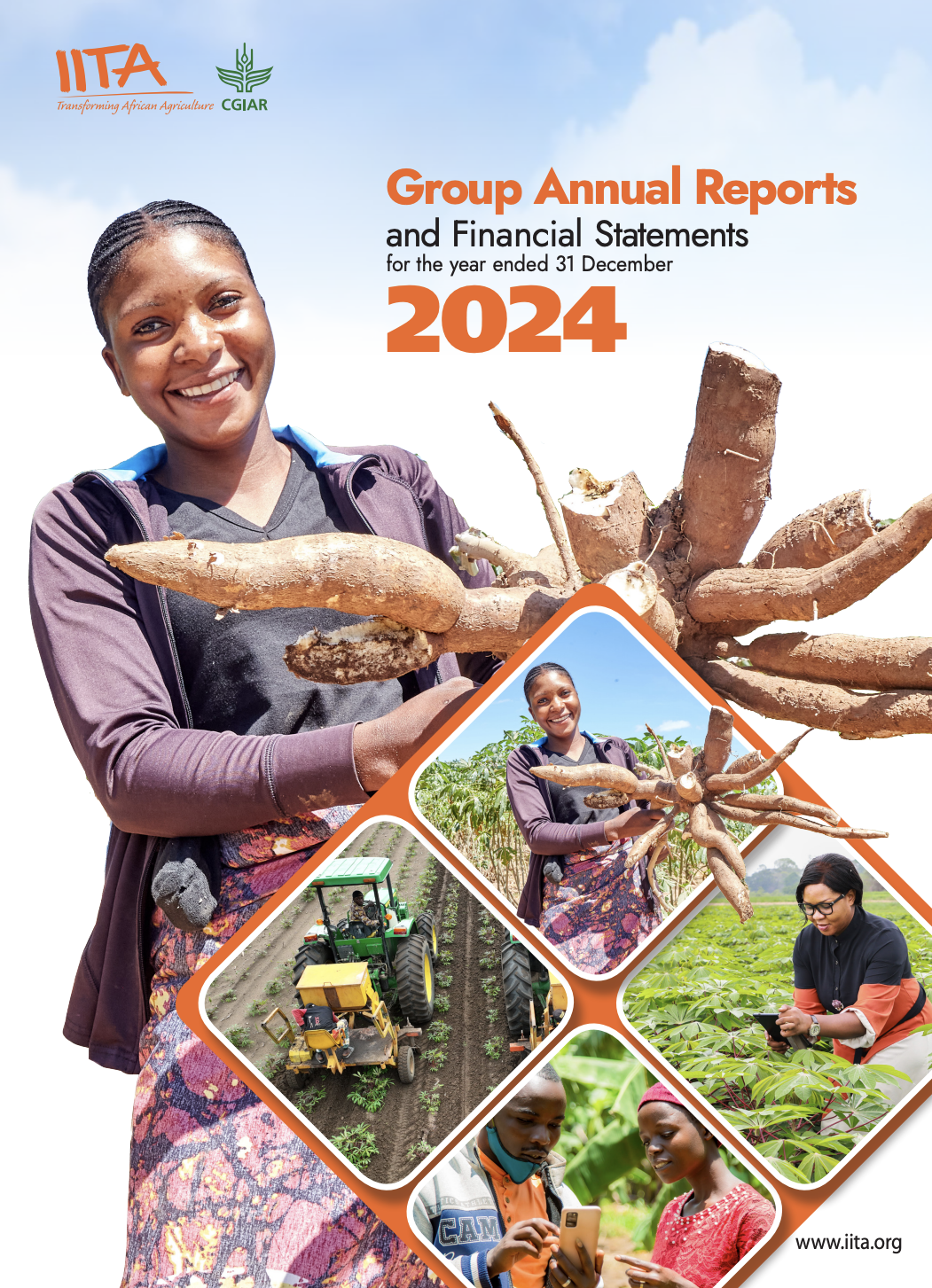
Financial Statement 2024
Recent News
See all news

Why Climate Finance Must Tackle Food Loss and Waste
Every harvest season in Africa, food is lost or wasted at staggering levels. Nigeria loses 45% of its 3.9 million tons of tomato harvest each year to postharvest losses and supply chain inefficiencies.

Belgium honors IITA scientist with noble title of Baron
IITA–CGIAR celebrates one of its distinguished scientists, Professor Rony Swennen, following his conferment of the noble

IITA, Democratic Republic of the Congo strengthen agricultural partnership with new MoU
As part of efforts to strengthen food security in the Democratic Republic of Congo (DRC),