
NEWS

Researchers to resolve challenges of rural youth employment in the agricultural sector for improved livelihood

A recent étudier has shown that many rural young people are still interested in agriculture as a present livelihood option and imagined future. This opposes the general belief that young people in rural areas have turned their backs on agriculture. The research acknowledges that rural young people actively combine work in agriculture with other non-farm self- or wage employment and domestic work.
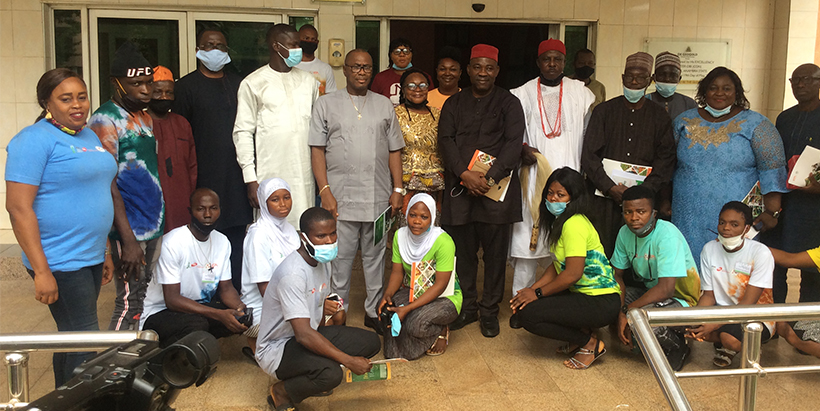
Youth representatives (squatting), Government officials, NRCRI-IITA Director representatives and community leaders at the stakeholder’s research results’ validation workshop event in Awka, March, 2021

The male youth are majorly involved in farming, while females feature more in supportive value chain roles. However, while young people will continue to be involved in agriculture as many have a passion for it, and because there are few other options, there is uncertainty about the scope—within the limited opportunities—for obtaining decent livelihoods from agriculture.

These livelihoods are being built under severe and persistent constraints due to infrastructural deprivation, taxation/levies of agricultural produce, limited access to productive resources, and the seasonal nature of economic activities. This has created instability, diverse risks, limited financial reward, and a lack of protection. Despite these challenges, access to land within the study sites remains the assuring asset, partly stable for rural youth engagement in agriculture, while other opportunities like training on how to access soft loans from the government do not reach the intended youth. With hard work and support from their families and social networks, male and female youth set about to build their livelihoods with the hope that the gains from it will not only meet their immediate needs but will be enough to make an impact in their communities.
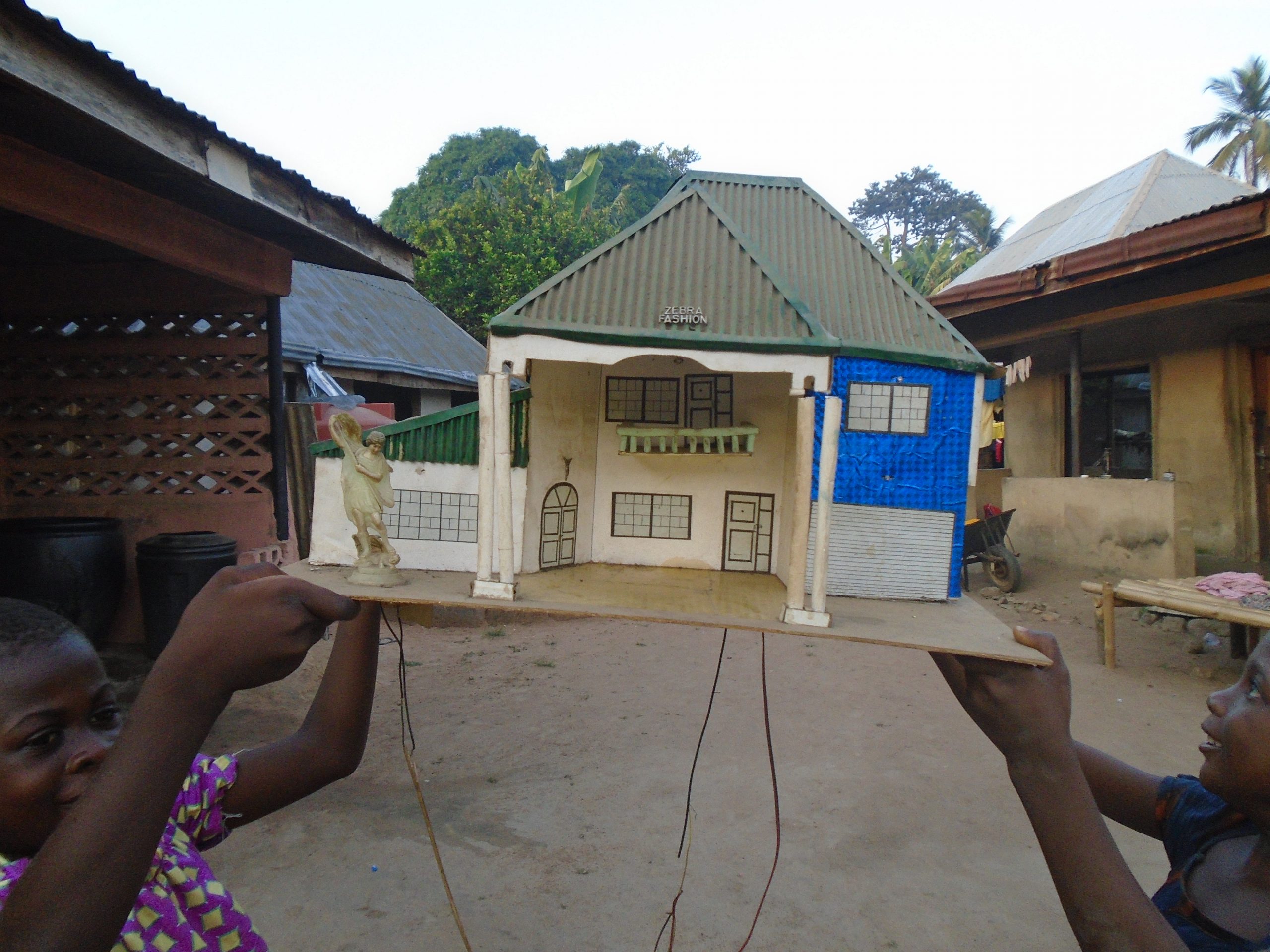
Youth study participant’s creation on the theme, ‘Imagined work’.

The overall qualitative research was led by the Institute of Development Studies (IDS), UK with funding from the International Fund for Agricultural Development (IFAD). It was conducted in four African countries, including Nigeria. In Nigeria, the research was carried out in Osun and Anambra States. While IITA focused research on two sites—Oba-Oke and Idi-Amu communities—in Osun State, the Institut national de recherche sur les cultures racinaires focused on Umumbo and Igbariam communities in Anambra State.

From IITA, Olamide Olaosebikan and Béla Teeken, Gender Specialists and Bello Abolore, Senior Research Supervisor, were part of the research team. For NRCRI,  Tessy Madu, Social and Gender Researcher at NRCRI and Benjamin Okoye, Socioeconomist, were part of the research team. The analysis of 416 interviews using life histories, photo voices, and eight focus group discussions with young people between 15 and 29 years gave the findings. The research featured in a film and research results were validated through a workshop with stakeholders that was part of the research.

Young researchers were part of the project research team. They undertook roles as enumerators, facilitators, and workshop coordinators. The research became an active process of developing young people’s capacity to participate, validate, lead, and think about appropriate policies. The research also heightened awareness and provided an opportunity for rural youth to articulate their views through the research validation workshop and make important inputs to an informed and evidence-based policy brief published based on the research.

The study’s results and recommendations highlighted in the policy brief were that access to resources such as infrastructure, inputs, and training is crucial for addressing identified challenges. Beyond meeting basic needs that are mostly not youth-specific, interventions must be linked to the potential to raise productivity and income in both agricultural and non-farm livelihoods. Also, youth identified non-farm income as essential to raise funds for investment in agricultural practices that are more mechanized, making them more profitable with less drudgery involved.

The recommended policy would promote the creation of accessible education with special attention for the disadvantaged position of girls related to their culturally assumed role of caretakers. This role especially becomes even more restrictive when they reach the age when society believes they should marry and have children. The policy would inform the provision of sustainable infrastructural facilities and basic amenities and strong linkages to all economic sectors. The policy would also involve reducing or canceling levies concerning the movement of agricultural produce. Although many of these recommendations are not necessarily youth-specific, they concern the rural population.

“Aligning policies and interventions with existing initiatives and opportunities within the rural space and with youth’s active and entrepreneurial spirit can complement efforts on rural youth development and rural transformation in Nigeria generally,” said Teeken. “It will also largely contribute to reverse outmigration from rural areas to cities,” Olaosebikan added.

“Special thanks to Dr Victor Manyong for initiating the collaboration between IDS and IITA on this research,” Teeken added.


Contribué par

Histoires récentes

Aucun article trouvé

Laisser un commentaire

Votre adresse e-mail ne sera pas publiée. Les champs obligatoires sont indiqués avec *

Retour en haut
Olaosebikan, Olamide

Olamide Deborah Nwanze est une chercheuse principale spécialisée dans la recherche sur l'approche "genre" afin d'éclairer les politiques de sélection participative et inclusive, de développement de variétés et de systèmes semenciers concernant les cultures de racines, tubercules et bananes (RTB) au siège de l'Institut International d'Agriculture Tropicale, à Ibadan, au Nigeria. Elle est candidate au doctorat à l'Université d'Ibadan et titulaire d'un master et d'un diplôme d'ingénieur agronome en vulgarisation agricole et développement rural. Olamide est membre du programme African Women in Agricultural Research and Development – Gender Responsive Agricultural Systems Policy (SAISIE DE RÉCOMPENSEet les Chercheuses Sensibles au Genre Équipées pour la Transformation Agricole (SUPER. Elle cherche à appliquer ses apprentissages en matière d’approche genre, recherche sensible au genre, et expertise en développement et examen de politiques pour faciliter l’accès et l’adoption par les femmes, les jeunes, les enfants et les groupes sociaux vulnérables aux innovations agricoles qui garantissent la sécurité alimentaire, nutritionnelle, des revenus et des moyens de subsistance en Afrique. Ses rôles actuels comprennent le mentorat de chercheurs stagiaires, le développement de guides et manuels de formation, la mise en œuvre et l'adaptation de cadres et d'outils genre, l'engagement des acteurs de la chaîne de valeur en tant que partenaires de la science citoyenne, l'examen et la refonte des politiques, la gestion et l'analyse des données. Ses recherches actuelles portent sur les méthodes mixtes ainsi que sur les approches participatives et interdisciplinaires pour saisir et mettre en évidence les dynamiques de genre, les besoins, les préférences et les défis rencontrés par les parties prenantes au sein de la chaîne de valeur des moyens de subsistance agricoles afin de prioriser des stratégies axées sur le genre dans les programmes de sélection, la conception et la mise en œuvre des politiques.

À l'IITA, elle contribue à la mise en œuvre du CGIAR Initiative d'Élevage Accéléré et Innovation génétique Programmes ; recherche participative et genre au sein des Prochaine Génération ManiocHarvestPlusRTBAliments, et Tricot-ClimMob 1000Fermes Projets ; et la communication des connaissances sur le genre via le Série de webinaires G-LENS, vidéo documentaire, notes de politiquepublications, et blogs.


Publications récentes

de Sousa, K., van Etten, J., Manners, R. Bello, A., Teeken, B., Olaosebikan, O., et al. 2024. L'approche tricot : un cadre agile pour les essais décentralisés à la ferme soutenus par la science citoyenne. Une rétrospective. Agron. Sustain. Dev. 44, 8. https://doi.org/10.1007/s13593-023-00937-1

Madu, T., Onwuka, S., Nwafor, S., Onyemauwa, N., Ejechi, M., Ofoeze, M., Ukeje, B., Eluagu, C., Olaosebikan, O., Okoye, B., 2024. Les études sur les consommateurs inclusifs en matière de genre améliorent l'amélioration du manioc au Nigeria dans : Frontiers in Sociology, volume 9, numéro : 1224504, doi : 10.3389/fsoc.2024.1224504

Olaosebikan, O. ; Bello, A. ; Utoblo, O. ; Okoye, B. ; Olutegbe, N. ; Garner, E. ; Teeken, B. ; Bryan, E. ; Forsythe, L. ; Cole, S. ; Madu, T. 2023. Facteurs de stress et résilience au sein de la chaîne de valeur du manioc au Nigeria : Caractéristiques préférées des variétés de manioc et stratégies de réponse des hommes et des femmes pour informer l'amélioration variétale. Sustainability 15, 7837. https://doi.org/10.3390/su15107837

Okoye, B., Ofoeze, M., Ejechi, M., Onwuka, S., Nwafor, S., Onyemauwa, N., Ukeje, B., Eluagu, C., Obidiegwu, J.*, Olaosebikan, O., Madu, T.* 2023. Priorisation des traits préférés dans la chaîne de valeur de l'igname au Nigeria : une analyse de la situation en matière de genre in: Frontiers in Sociology, volume 8, numéro : 1232626, pages 1 – 9, ISSN 2297-7775, 2023. https://www.frontiersin.org/articles/10.3389/fsoc.2023.1232626/full

Olaosebikan, O., Bello, A. A., de Sousa, K., Ndjouenkeu, R., Adesokan, M., Alamu, E. O., Agbona, A., van Etten, J., Kegah, F. N.*, Dufour, D., Bouniol, A., Teeken, B. 2023. Acceptabilité par les consommateurs des produits alimentaires à base de gari-eba de manioc dans des contextes culturels et environnementaux variés en utilisant l'approche triade de comparaison des technologies (tricot) dans : Journal of the Science of Food and Agriculture,

Teeken, B., Olaosebikan, O., Bello, A. A., Madu, T.*, Cole, S. M. 2023. Évaluation qualitative de la positionnalité et des préférences des dyades en relation avec les activités liées au manioc : travailler avec des scientifiques citoyens du procès tricot https://hdl.handle.net/10568/138326 Type : Manuel

Bouniol, A., Ceballos, H., Bello, A. A., Teeken, B., Olaosebikan, O., Owoade, D., Agbona, A., Fotso Kuate, A., Madu, T.*, Okoye, B.*, Ofoeze, M.*, Nwafor, S.*, Onyemauwa, N.*, Adinsi, L.*, Forsythe, L., Dufour, D. 2023. Impact variétal sur le travail des femmes, la charge de travail et la pénibilité associée dans le traitement des plantes à racines, tubercules et bananes : focus sur le manioc en Afrique subsaharienne dans : Journal of the Science of Food and Agriculture, pages 1 – 25, ISSN 0022-5142,

Bello, A. A., Agbona, A., Olaosebikan, O., Edughaen, G., Dufour, D., Bouniol, A., Iluebbey, P., Ndjouenkeu, R.*, Rabbi, I. Y., Teeken, B. 2023. Effets génétiques et environnementaux sur la productivité de la transformation et le rendement des produits alimentaires : la pénibilité du travail des femmes dans : Journal of the Science of Food and Agriculture, pages 1 – 32, ISSN 0022-5142, 5

Cavicchioli, M., Zimbiti, T., Teeken, B., Nwanze, D.O., Liani, M., Parkes, E. & Bello, A. 2023. Rapport sur la formation en sélection génétique sensible au genre à l'IITA. Genetic Resources Center, IITA-HQ, Ibadan, 21-23 septembre 2022. Ibadan, Nigéria : IITA, (34 p.).https://hdl.handle.net/10568/131368

Agbona, A. Peteti P., Teeken B., Olaosebikan O. Bello, A. A., Parkes, E., Rabbi, I. Y., Mueller, L., Egesi, C., Kulakow, P. 2022. Gestion des données dans les programmes d'amélioration des cultures RTB africaines multidisciplinaires. In : Williamson, H.F., Leonelli, S. (eds) Towards Responsible Plant Data Linkage: Data Challenges for Agricultural Research and Development. Springer, Cham. https://doi.org/10.1007/978-3-031-13276-6_5

Lora Forsythe, Pricilla Marimo, Sarah Mayanja, Olamide D. Olaosebikan, Esme Stuart, Bela Teeken, Benjamin Okoye, Tessy Madu, (2021). Analyse transversale du genre dans RTBfoods Étape 2 Cartographie des genres sur les produits RTB. Comprendre les moteurs des préférences en matière de traits et le développement de profils de produits RTB multi-utilisateurs, WP1. Londres, Royaume-Uni : Rapport scientifique de terrain RTBfoods, 30 p.

Teeken, B., Garner, E., Agbona, A., Balogun, I., Olaosebikan, O., Bello, A., Madu, T., Okoye, B., Egesi, C., Kulakow, P. et Tufan, H.A. 2021. Au-delà des “ traits des femmes ” : explorer comment le genre, les différences sociales et les caractéristiques des ménages influencent les préférences pour les traits. Frontiers Systèmes alimentaires durables 5:740926. https://doi.org/10.3389/fsufs.2021.740926

Teeken, B., Agbona, A., Bello, A., Olaosebikan, O., Alamu, E., Adesokan, M., Awoyale, W., Madu, T., Okoye, B., Chijioke, U., Owoade, D., Okoro, M., Bouniol, A., Dufour, D., Hershey, C., Rabbi, I., Maziya‐Dixon, B., Egesi, C., Tufan, H. et Kulakow, P. (020. Comprendre les préférences variétales du manioc par le classement par paires du gari-eba et du fufu préparés par des agriculteurs-transformateurs locaux. Int J Food Sci Technol. https://doi.org/10.1111/ijfs.14862

Bela Teeken, Olamide Olaosebikan, Ireti Balogun, Benjamin Okoye, Tessy Madu, Steven Cole, Abolore Bello, Elizabeth Parkes. (2020). Pilotage des outils de profil client et produit G+ pour l'amélioration sensible au genre du manioc au Nigeria. Nigeria : Institut international d'agriculture tropicale (IIAT). https://hdl.handle.net/20.500.11766/13000