
IITA scientists, in partnership with more than 55 other CGIAR researchers and partners, have published a book that highlights over 30 years of history and wealth of gender knowledge. The IITA team contributed to four out of ten chapters of the book—chapters 2, 4, 9, and 10. The book “Faire progresser l'égalité des genres grâce à la recherche agricole et environnementale : passé, présent et futur” was launched in November 2021.
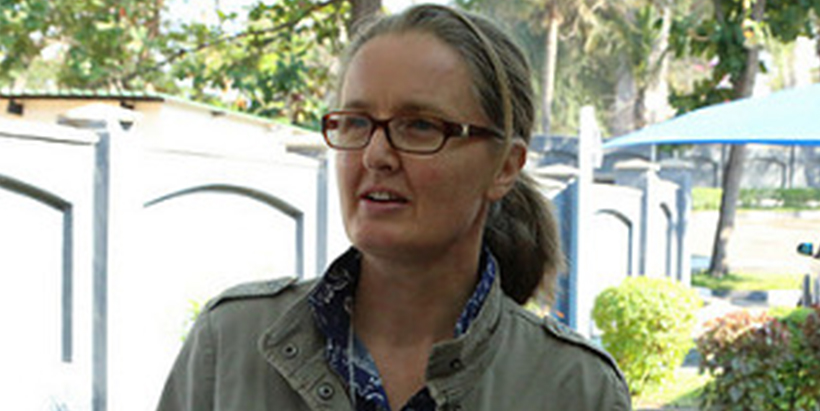
Chapter 2, “Examining choice to advance gender equality in breeding research,” was co-authored by IITA Associate Social and Gender Scientist Bela Teeken. The chapter explores how breeding research can promote gender equality. It critically examines what has been done to address gender dynamics in current breeding structures and processes. It explores further plans to ensure that breeding programs can advance gender equality. Progressing toward gender equality in agriculture requires that women and men have equal capabilities to make agricultural innovation decisions, specifically technology choices. The authors were explicitly concerned with technology choices relating to the plant variety or animal and fish breed by resource-poor smallholders in low-income countries.

In Chapter 4—“Promise and contradiction: Value chain participation and women’s empowerment”— co-authored by IITA-Benin Visiting Scientist Sounkoura Adetonah, the authors reveal that research and development actors now have a growing interest in developing more “inclusive” value chains. This increased interest is due to expanding agricultural production for the global market. “There is an urgent need to strengthen the contribution of agriculture and natural resource management to gender equality through the development of inclusive value chains including the participation and empowerment of women and men,” says Adetonah.
IITA Senior Scientist and Gender Specialist Steven Cole co-authored Chapter 9—“Assessing women’s empowerment in agricultural research”—exploring the steady rise of the empowerment in the international development agenda. Feminists highlighted women’s empowerment at the 1995 Fourth World Conference on Women in Beijing, leading to the Beijing Declaration referring to “enhancing further the advancement and empowerment of women all over the world.”
Collective struggles to challenge patriarchal structures and intersecting structures of class, ethnicity, caste, and race previously shaped women’s subordinate position in society. Now, “empowerment” animates the fifth Sustainable Development Goal (SDG5): “Achieve gender equality and empower all women and girls.”
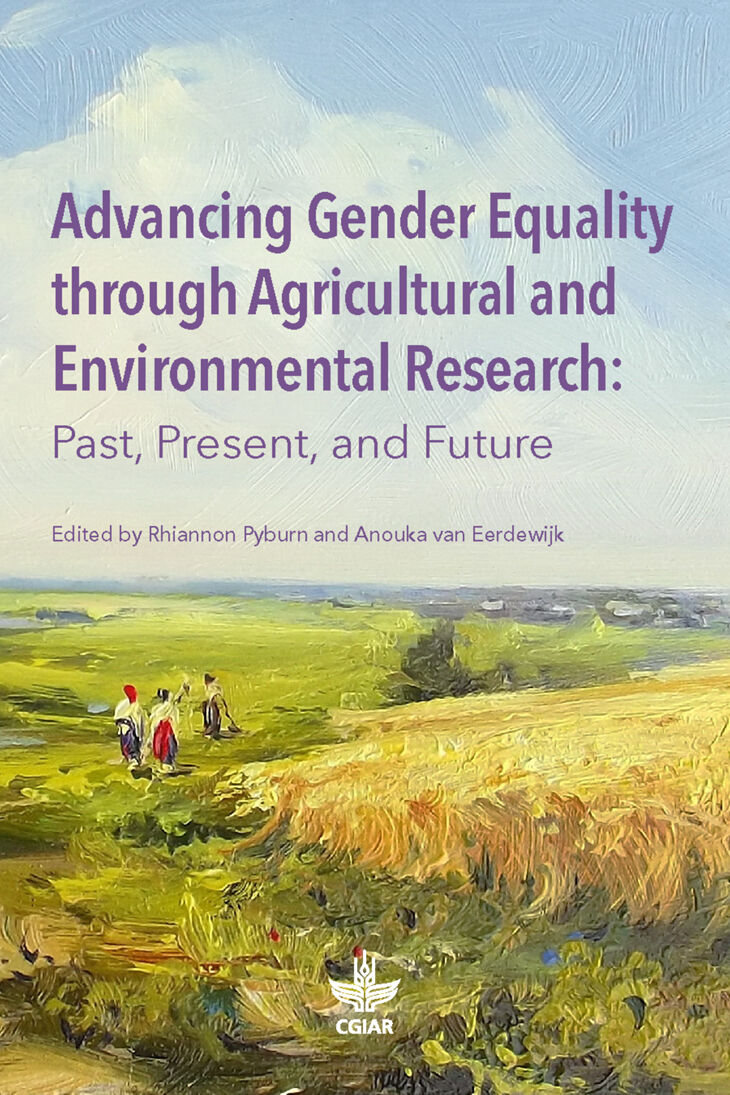
The book’s tenth chapter, “Toward structural change: Gender transformative approaches,” co-authored by IITA Social Scientist and Gender Expert Gundula Fischer, reviews the gender approaches applied in agriculture over the past decades. It lays out how these must be re-thought to remove inequalities sustainably. “Gender norms are an important leverage point for accelerated and lasting progress. They are the socially agreed rules of how men and women should behave. Gender-transformative approaches address these norms and shift them towards more equity,” says Fisher.
Almost a quarter of a century after the Beijing Declaration, and with less than ten years left to meet the Sustainable Development Goals, The Guardian announced that the SDG Gender Index’s findings show that no country is likely to achieve gender equality by 2030. This aligns with the most recent Global Gender Gap Index, which indicates that on the current route, it will take approximately 170 years to achieve gender equality—a wait of seven generations or two and a half lifetimes for the average woman.
The book offers an opportunity to change and reframe the global debate on gender equality. It also defines the partnership that people have to build in achieving gender equality and women’s empowerment as a goal.
Contribué par
Histoires récentes