
IITA, en partenariat avec Laboratoire d'innovation pour le leadership politique dans l'agriculture et la sécurité alimentaire (PiLAF) et Agence de développement de l'agro-industrie de l'État d'Oyo, a organisé un atelier d'une journée sur le thème “ Améliorer le statut de la fabrication d'équipements agricoles pour la sécurité alimentaire dans l'État d'Oyo ”. L'atelier visait à répondre au besoin des fabricants d'équipements agricoles modernes de répondre stratégiquement aux demandes des partenaires, des investisseurs et des agriculteurs. Il visait également à évaluer divers types d'équipements agricoles fabriqués localement et à comprendre les interventions requises pour une fabrication d'équipements de qualité et optimale.
L'atelier s'est tenu le 17 mai au siège de l'IITA à Ibadan, dans l'État d'Oyo, au Nigéria, et a compté 118 participants. Parmi ces participants figuraient des fabricants de matériel agricole, des agriculteurs, des universitaires et des investisseurs du secteur privé.
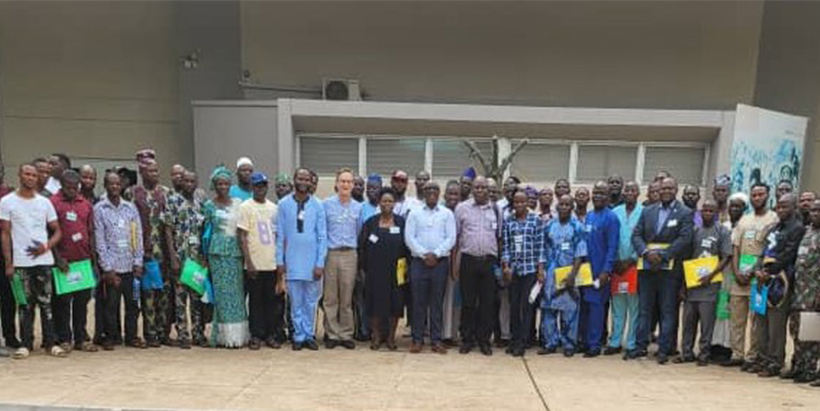
Dans son allocution de bienvenue, le chef de l'unité d'agroentreprise et de mécanisation de l'IITA Debo Akande Il a noté que l'unité de mécanisation de l'Institut, relevant de la direction des Partenariats pour la livraison (P4D), s'oriente vers une approche de la mécanisation axée sur les affaires afin de stimuler l'implication du secteur privé. Il a en outre fait remarquer que le gouvernement de l'État d'Oyo investit dans un système agricole qui encourage le secteur privé à investir dans l'agriculture, notamment dans la fabrication locale d'équipements agricoles pour une agriculture mécanisée.
Dans un discours d'ouverture, le directeur du Bureau de développement et de livraison de l'IITA, Alfred Dixon, a noté que l'Afrique devait développer sa propre industrie de machines agricoles en fabriquant localement des équipements adaptés et abordables pour les petits agriculteurs.
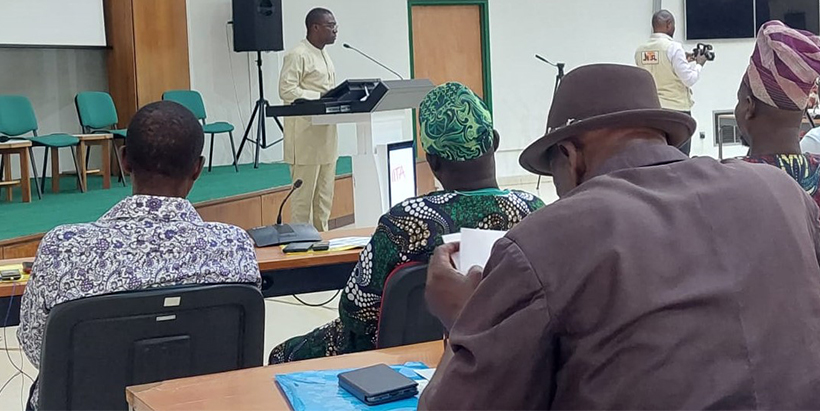
L'un des coordinateurs principaux de PiLAF, le professeur Adegbenga Adekoya, a déclaré : “ La mécanisation agricole devrait se voir accorder une place majeure dans le budget agricole national pour que l'agriculture puisse prospérer. ”
Un panel de discussion a réuni l'ingénieur Kolawole Adeniji du groupe Niji, le Dr Michael Odeniyi du Centre national de mécanisation agricole (NCAM), le Dr Mobolaji Omobowale de l'Université d'Ibadan (UI) et Peter Kolawole, spécialiste post-récolte à l'IITA. Ils se sont concentrés sur l'état de la fabrication agricole au Nigéria, en particulier dans l'État d'Oyo. Ils ont également abordé les aspects techniques liés au choix des matériaux, à la tarification et à la durabilité de la fabrication des équipements agricoles. Ils ont discuté de la nécessité d'équipements réduisant la pénibilité dans l'agriculture nigériane et de l'importance de la qualité de production pour améliorer la fabrication du matériel agricole.
La session a également marqué l'inauguration des coordinateurs des fabricants à travers les sept zones de l'État d'Oyo en tant que pionniers et représentants. L'un des coordinateurs nouvellement intronisés représentant la zone d'Oyo, Olusola Fasina, a remercié les organisateurs mais a déploré que l'instabilité de l'alimentation électrique, le manque de fonds, le prix et la qualité des matériaux de fabrication, ainsi que l'indisponibilité d'une entreprise de laminage d'acier fassent partie des défis rencontrés par les fabricants.
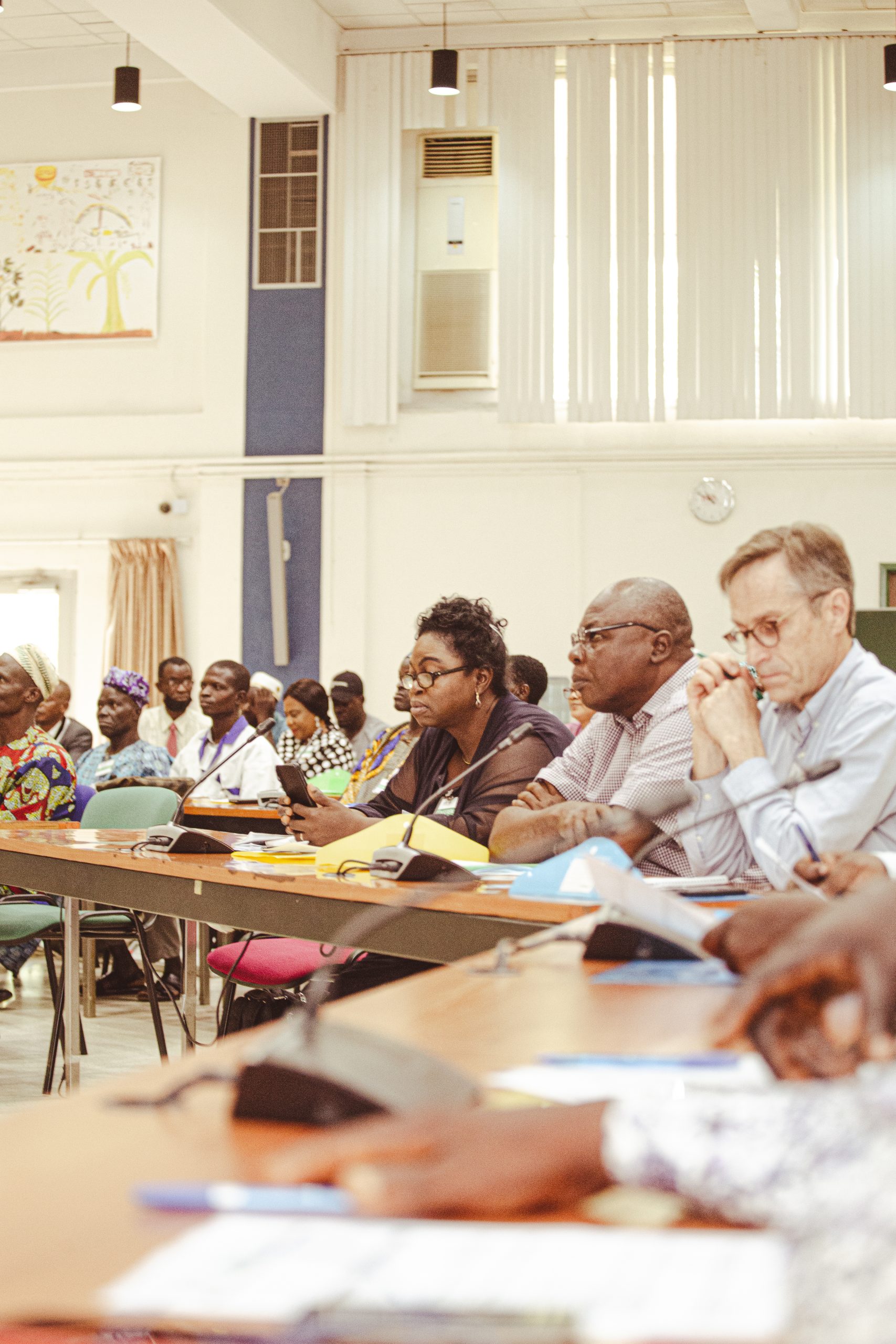
Le professeur Dave Tschirley de l'Université d'État du Michigan (MSU), dans son message de bonne volonté, s'est dit satisfait de l'atelier et a imploré toutes les parties prenantes d'accélérer les actions concernant l'approvisionnement en énergie, la taille et la qualité des matériaux de fabrication, les équipements adaptés aux femmes, la formulation de politiques et l'unification de la technologie comme certains des défis auxquels sont confrontés les fabricants de l'État.
Les parties prenantes ont appelé au renforcement des capacités des fabricants nigérians et ont sollicité le soutien du gouvernement pour accéder à des équipements favorisant la fabrication de précision. Les fabricants nigérians sont bons, mais une mauvaise finition ne leur permet pas de concurrencer favorablement sur le plan mondial, en partie à cause d'un manque d'accès à de bonnes matières premières pour la fabrication. Les participants ont convenu que les fabricants et les parties prenantes concernées se réuniraient à nouveau pour poursuivre les discussions.
Contribué par Bolanle Olorode
Contribué par
Histoires récentes