
At the basic level, most students have only theoretical knowledge of their academic pursuits, which has caused a decline or discrepancy in their passion and learning. To address this, IITA–CGIAR created a quarterly “Hands-on basic molecular biology techniques” training for young graduates. The training took place at the Institute’s headquarters from 14 to 18 November. Bioscience Laboratory Manager Yemi Fajire coordinated the training.
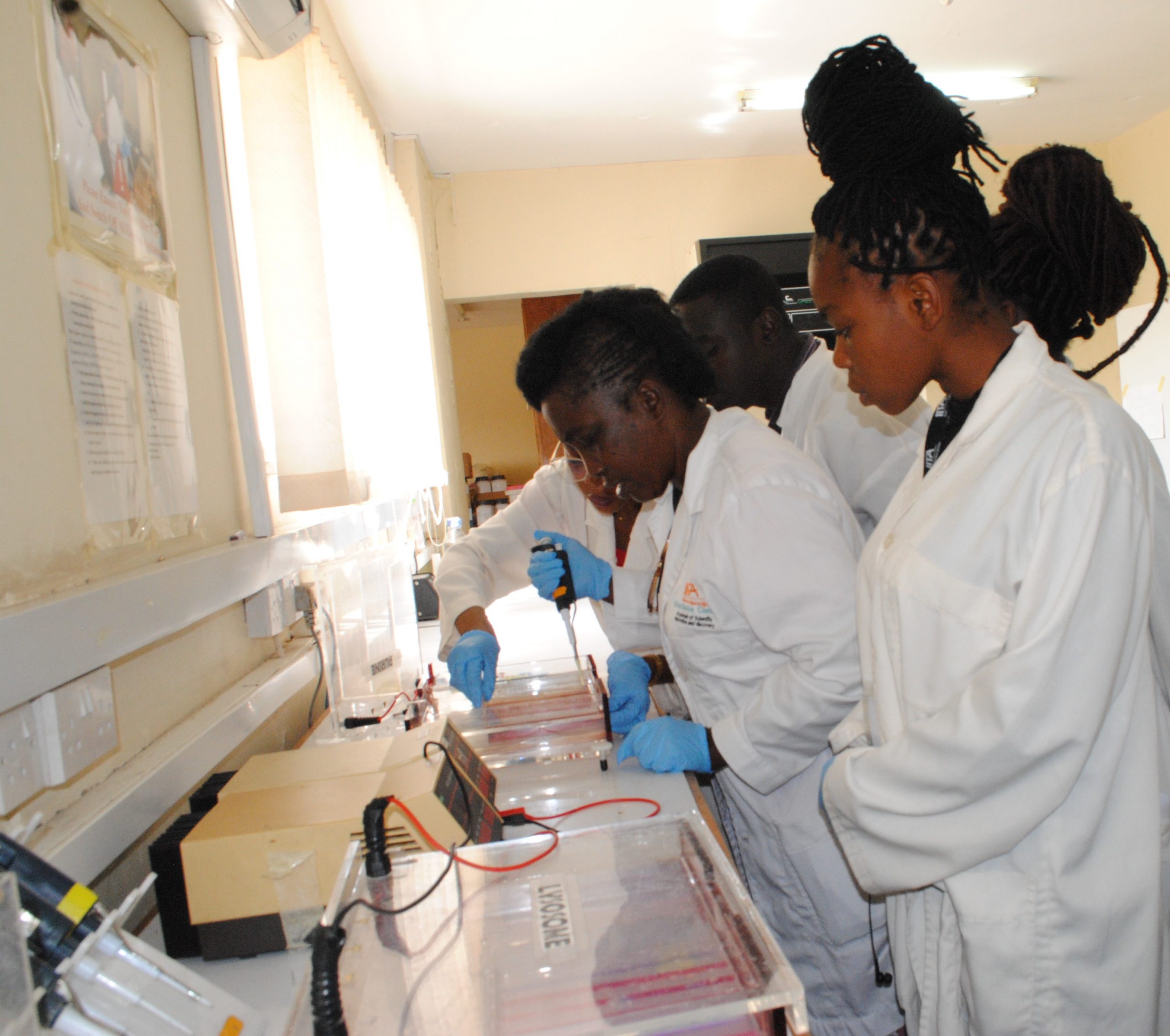
The training focused on the practical aspect of molecular biology to give students a solid footing as they pursue their academic careers. Interns, National Youth Service Corps (NYSC) members, and Masters and PhD students attended the workshop from various African universities, representing different disciplines, including molecular biology, genetics, biotechnology, biochemistry, and microbiology. The workshop also included lecturers and researchers who needed skills in the field of molecular biology.
Giving the welcome address, IITA West Africa Hub Director and Head of Bioscience Center, Michael Abberton, explained that the training would expose the participants to molecular biology. He encouraged the participants to embrace this opportunity and explore it in their careers.
During the five-day training, the participants learned various molecular biology techniques such as Polymerase Chain reaction (PCR) analysis, DNA extraction, sequencing, NanoDrop spectrophotometry analysis, and Agarose gel electrophoresis. The facilitators, including IITA Molecular Geneticist Ranjana Bhattacharjee and nine other Bioscience staff, assessed the participants before and after the training.
In an interview with the participants, they ascertained the effectiveness of the training in helping them discover technical and practical ways of applying molecular biology techniques. One of the participants—Uchechukwu Uzoetoh, a Corps member—said, “I was not sure about my career path before the training. Now, I can use the knowledge acquired to contribute my quota to food security in Africa by developing new and improved crop varieties.”
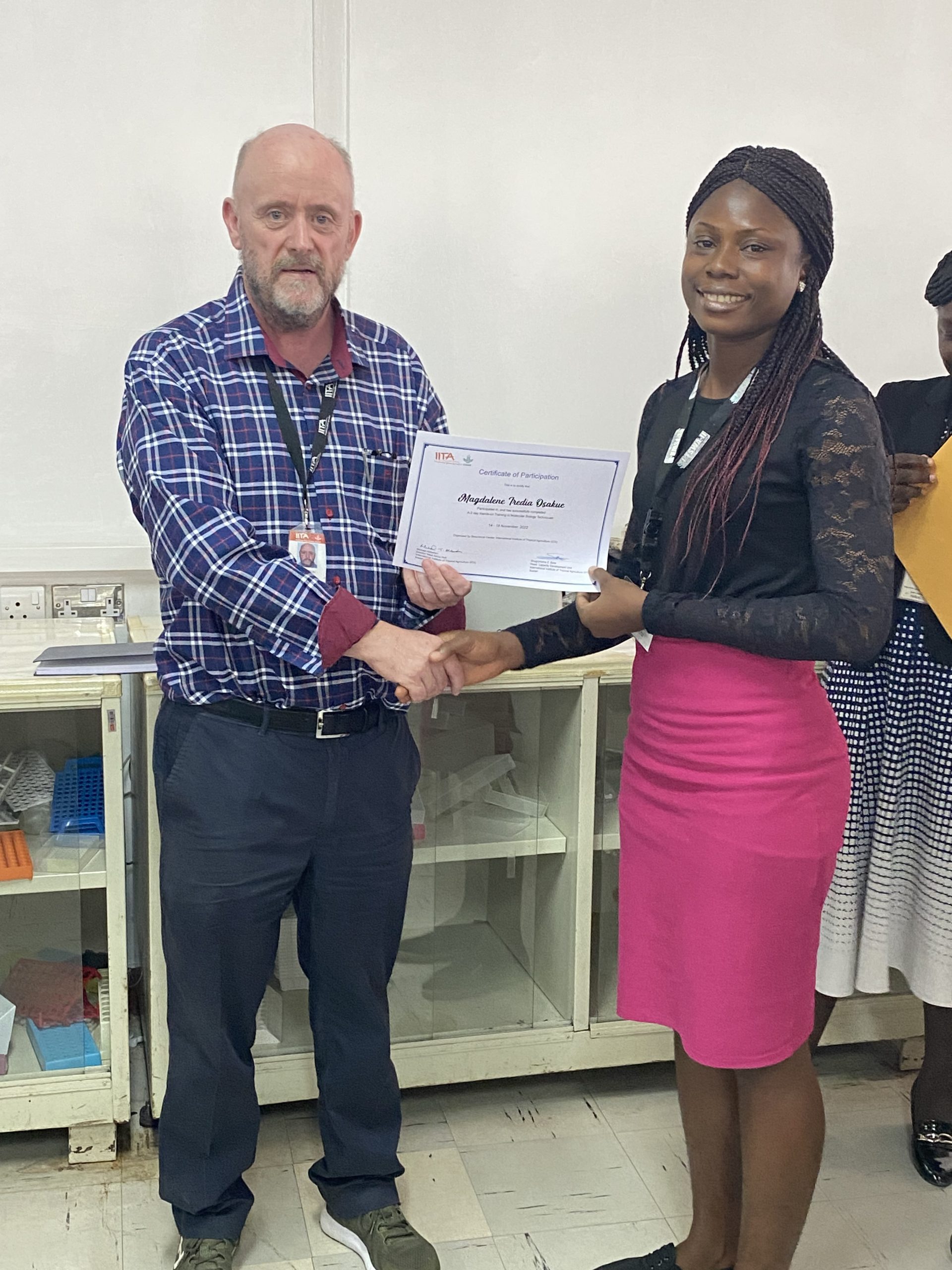
At the end of the training, the participants were awarded certificates.
Contribué par Anita Akinyomade
Contribué par
Histoires récentes