
Formal and informal Ugandan institutions contribute collaboratively to upscale sustainable crop intensification (SCI). Such interrelationships among key players in the system often provide the support required to ensure service provision in the Ugandan potato and rice cropping systems.
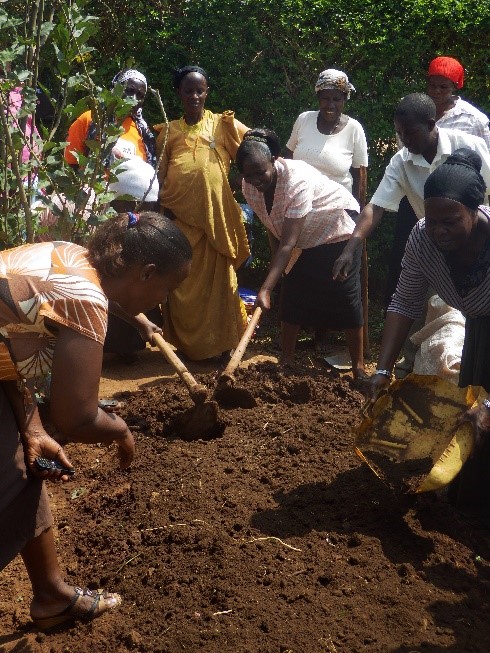
Previous research has described SCI as increasing the production of available farmland while minimizing the pressure on soil without jeopardizing production capacities in the future. Yet, sub-Saharan African countries have performed poorly in agricultural productivity, despite recovering strongly from the stagnation of previous decades. One of the major causes has been attributed to weak and inefficient institutional arrangements.
According to a recent étudier by researchers from several institutes, including IITA–CGIAR, the slow pace of agricultural growth in developing countries—in this case, Uganda—has been linked to a lack of coordination between the micro, meso (intermediate), and macro-level institutions. According to the study, this affects their institutional functionality to execute SCI.
With the world’s marginal population increase concentrated in SSA, there is an urgent call for sustainable agricultural systems in the face of concerns that Africa cannot feed itself. This accompanies a demand for innovation within existing institutions and a status quo of institutional arrangements to respond better to smallholders’ needs.
Implementing these will address the major constraints smallholder farmers face, such as finance, access to clean and improved seed varieties, storage facilities, logistics, and land use.
The study revealed that informal institutions in Uganda facilitate access to land and financial resources but are unaccompanied with mechanisms to support investment in SCI interventions. They also influence farmers’ adoption of SCI practices in the country.
Conducted in the Butaleja and Kabale districts of eastern and southwestern Uganda, respectively, the researchers focused on aspects of the interrelationship between formal and informal institutions in Uganda, using potato and rice farmers’ perceptions to assess institutions and their roles in SCI.
Identifying and describing organizations’ roles in SCI, the study showed that different institutions played separate roles within the value chain, and observed a gap in knowledge of the interaction between formal and informal institutions.
From the farmers’ perceptions, the study discovered that informal institutions are more widely appreciated than formal institutions, despite both formal and informal institutions contributing significantly towards SCI.
Also, agents within these informal institutions have found innovative ways to engage by providing a multiplicity of services available within a single organization.
According to the study, there is a lack of coordination among macro, meso, and micro institutions in the country. However, where available, the inter-institutional synergies resulted in innovative ways of enhancing access to financial resources and collaborative methods of knowledge access.
Food security is a front-burner issue in sub-Saharan Africa. The impact of each key player’s contribution can reach millions if strong and sustainable collaborations exist between formal and informal institutions.
Policymakers can create an enabling environment to enhance public-private and civil society collaboration and networks at vertical and horizontal levels. This will enable better service provision and increased production and productivity among rice and potato farmers in the country.
Researchers and consultants from IITA-CGIAR, Université de Wageningen, Makerere University, et Olam Food Ingredients collaborated on the study. They recommend that, with the emergent attitude of institutional entrepreneurship, private and public sector and NGO agents can recombine resources available in food ecosystems to improve the system-level functioning of their food chains through enhanced collaborative approaches in Uganda.
Proposé par Timilehin Osunde
Contribué par
Histoires récentes