
For a long time, stereotype threat has kept women and girls from unleashing their full potential. Women begin to perceive themselves as risks rather than positive addition to society. This has limited their performance in all aspects of life, including their families and careers.
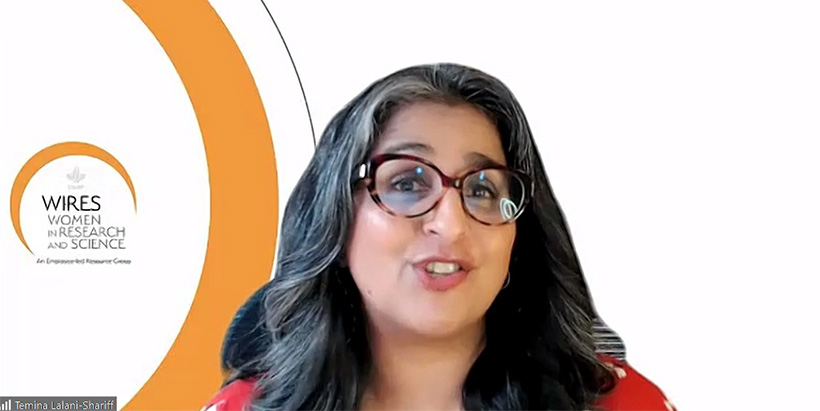
To address the issue of stereotypes, the Women In Research and Science (WIRES) ERG and Gender, Diversity and Inclusion (GDI) function of CGIAR organized a virtual meeting themed, “Breaking Barriers- Overcoming Limiting Beliefs.” The meeting took place on 8 March as part of the International Women’s Day celebration. The discussion focused on identifying and addressing limiting beliefs that have held women back from unleashing their potential.
Knowledge Sharing Specialist at Alliance of Bioversity International & CIAT, Arwen Bailey, in her opening remarks, explained that they chose the topic of discourse because the concept of limiting beliefs emerged in the previous WIRES workshop. She added that the discussion would help the community work to help women reach their full potential.
One of the speakers, CGIAR Regional Director for South Asia, Temina Lalani-Shariff, shared her private experiences with limiting beliefs and how she overcame them. She gave an example of how people told her that she was bad at mathematics and, as a result, she avoided the subject until she opened her business and realized that she was good at mathematics. She encouraged participants to share their stories to help address the beliefs that have limited them.
Another speaker, CEO of INCLUDE consulting, Helen Duce, provided the research and insights about identifying the limiting beliefs women face and ways to address them effectively. She anchored a breakout session for limiting beliefs audit. The session aimed to help participants identify and address the limitations they have.
Some limitations identified were self-doubt, guilt trip, and imposter syndrome. Duce highlighted a four-step process for addressing these limitations: identifying the limitation, debunking it, creating a turn-around approach by declaring the opposite, and using visualization to create a better picture of oneself.
“Self-affirmation is a major factor for reducing stereotype stress,” she said.
Closing the meeting, CGIAR Global Director of People and Culture, Fiona Bourdin-Farrell, appreciated the presenters for the comprehensive delivery. She added that it was fun meeting power women, learning from them, and realizing from the discussions that women have similar limiting beliefs and the ways to overcome them. “This has helped us reflect on the progress we have made in promoting gender equality,” she said.
By Ochuwa Favour Daramola
Contribué par
Histoires récentes