
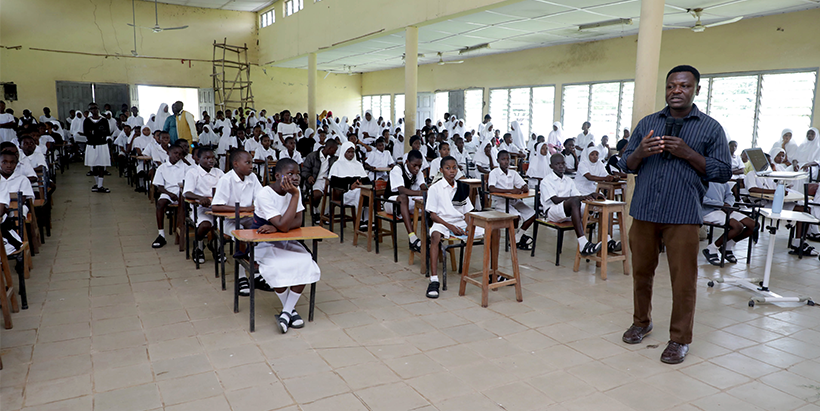
Every 5 June, World Environment Day (WED) is celebrated to sensitize and propose practical actions to address environmental and climate issues worldwide. The IITA Centre Forestier celebrated this year’s WED with students from PADE School of Science in Ibadan around the theme “Solutions to Plastic Pollution”.
 Plastic pollution is one of the growing hazards threatening environmental, human, and animal health and well-being globally. Plastic waste constitutes about 80% of waterways’ pollution, with an estimated 12 million tons reaching the ocean every year.
About 27 million tons of plastic waste, including food wraps, polystyrene bags, pet bottles, and household scraps, fill landfills globally.
The principal of PADE, Ishola Bolaji, welcomed the IITA team and gave a brief background of the school and its mandate to raise young scientists who take responsibility for the development and progress of their environment and society.
IITA Forest Center Field Supervisor Ademola Ajayi told the students, “As future scientists who are raised to proffer solutions to problems, you should do your bit to contribute to plastic pollution solutions, not contribute to it.”
Improperly disposed plastics end up in oceans and other water bodies. They get stuck in sea animals and fish. When humans consume these, they indirectly ingest the toxic content of plastics. Worldwide, 73% of beach litter is plastic, and about 700 marine animal species have eaten or become entangled in plastic.
He emphasized the importance of the ‘3Rs‘- refuse, reuse, and recycle, as working strategies to provide solutions to our plastic waste mayhem. Ajayi said, “Avoid single use of plastic bottles and plates. When you go shopping, take your old shopping bags along so you don’t contribute to the tons of plastic waste in our landfills and oceans.”
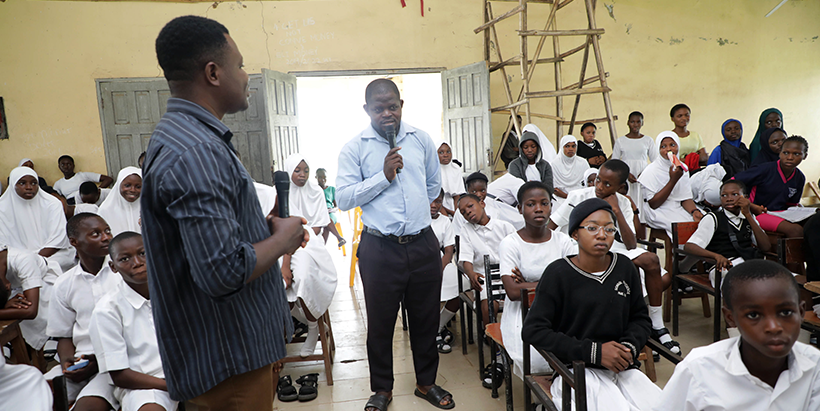
The students were highly receptive and enthusiastic to learn various ways to curb plastic pollution. They asked questions and showed interest in contributing their quota to addressing plastic pollution. Many students pledged to repurpose their plastic waste into fruit pots, flower vases, and other beautiful arts and jewelry.
Waste segregation was also proposed as an effective solution to plastic pollution. Properly sorted waste will make production materials easily accessible to companies repurposing plastic waste for other valuable items.
The Forest Center team urged the students to spread the news to their parents and community members. They will subsequently receive vocational training from environmental managers who turn waste into wealth, through the IITA Forest Center.
Proposé par Folake Oduntan
Contribué par
Histoires récentes