
In Tanzania’s Tabora Region, IITA Gender Research Fellow (Cassava) Millicent Liani organized a capacity-strengthening workshop focused on changing how cassava is grown and highlighting the importance of identifying and addressing gender inequalities in cassava seed systems. The workshop was an initiative under the Meilleur manioc (Better Cassava) project, a collaborative effort led by Collège d'agriculture et des sciences de la vie de l'Université Cornell and implemented by the IITA–CGIAR et Institut Tanzanien de Recherche Agricole (TARI).
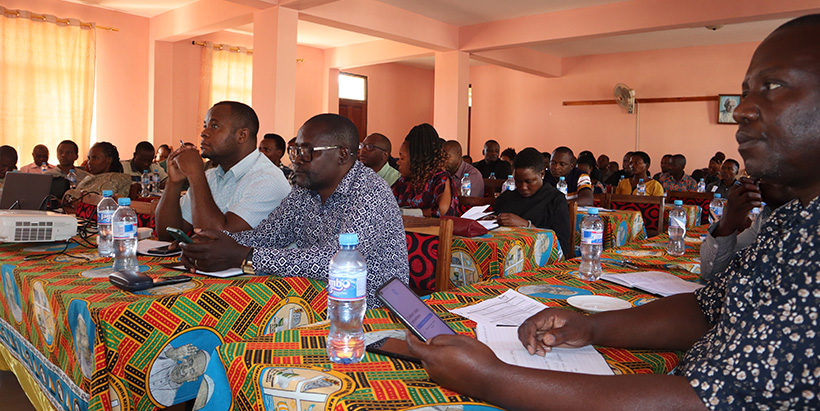
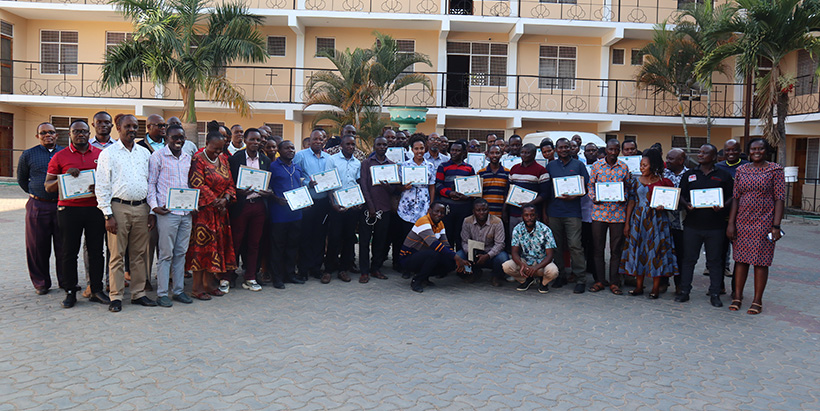
Sixty-four agricultural extension agents (EAs) (11 female and 53 male) participated in the training outlining new perspectives. The EAs work in Tanzania’s Western Zone and support the project’s implementation activities. The training aimed to equip them with tools and approaches to champion gender issues within the cassava seed entrepreneurship (CSE) ecosystem.
The training emphasized creating an enabling environment where both genders—especially women—and the youth could access and control vital cassava seed production resources such as land and credit. This would empower them to participate equally as commercialized CSEs. Muhogo Bora Technical Lead Kiddo Mtunda underscored the significance of empowering youth and achieving gender balance in CSE activities. She acknowledged the challenges, noting that many young people prioritize quick financial gains over long-term agricultural investments. However, she believed these hurdles could be overcome through capacity strengthening and awareness creation.
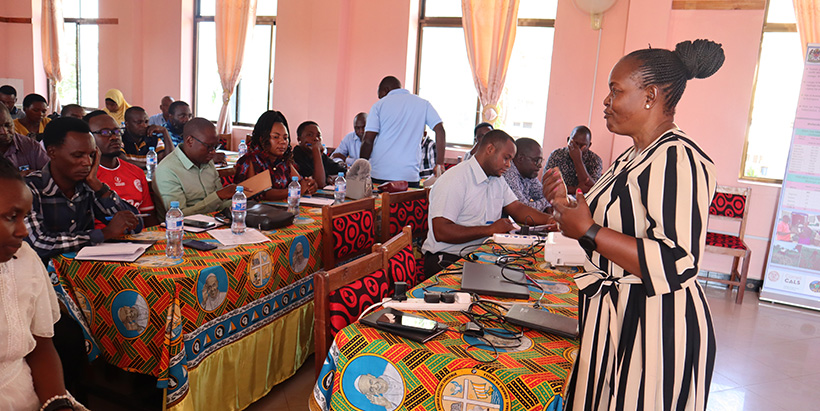
The training also stressed the importance of adhering to good agronomic practices (GAPs). The participants were introduced to cutting-edge digital tools such as the Nuru App for diagnosing diseases, the Seed Tracker for linking seed value chain actors, and the Kobo Toolbox for data collection. These tools would boost cassava production and streamline the entire process.
An extension agent from Manyoni District Council, Zakayo Jojo, echoed this sentiment. He recognized the rapid growth in cassava cultivation, with women and youth at the forefront. The knowledge acquired about improved cassava seeds, he believed, would lead to increased production and, consequently, enhance food security. “Change is necessary in our community. We must ensure that both genders work together, making decisions that bring prosperity to our lives,” Zakayo emphasized.
Neema David Mbuya, an extension agent from Tanganyika District, Katavi, spoke passionately about the vital role of women in agriculture. She acknowledged the challenges they face and expressed her commitment to using the knowledge gained from the training to actively promote women’s involvement as CSEs.
In his closing remarks, Faridu Abdul Mtiru, Regional Agricultural Advisor from Katavi, appreciated the training organizers and emphasized that cassava is both a staple food and a key commercial crop essential for human health. He appreciated the practical knowledge gained during the workshop, highlighting its real-world applicability. “We must work together to raise awareness among farmers about the importance of improved cassava seeds. Our goal is to increase cassava production, and to do that, we must focus on increasing women and youth participation, as they have a significant role to play in the agricultural sector,” he noted.
He noted that the seeds of change have been sown not only in the fields but also in the hearts and minds of these extension agents. As they returned to their respective regions, they carried the tools to cultivate cassava toward a brighter and more inclusive future for their communities.
Contributed by Hadi Rashid
Contribué par
Histoires récentes