
Nigeria is an ornithologically diverse country with various species of birds. According to the African Bird Club, over 900 bird species have been recorded in Nigeria, ranking it the 7th most ornithologically diverse country on the African continent.
However, Nigeria’s human population currently (mid-2023) stands at 223 million, with a projected annual growth rate of 2.4%. As the country’s total landmass is fixed at 923,768 km2, the available natural areas face continuing threats from anthropogenic activities like unsustainable farming practices, exploitation, and urbanization. The crucial question is, “How do we conserve Nigeria’s dwindling biodiversity caused by habitat degradation?”
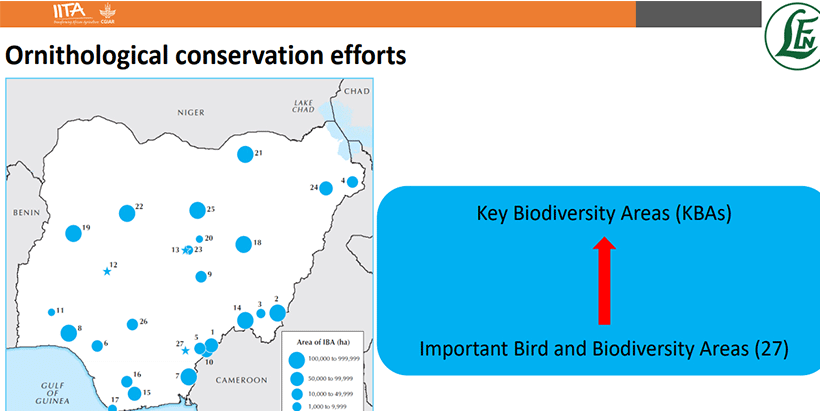
There are 27 designated Key Biodiversity Areas (KBAs) in Nigeria, of which only two are found in the southwest region—the IITA Forest Reserve in Ibadan and Omo Forest Reserve in Ogun State. “Perhaps the most ambitious action targeted at conserving Nigeria’s vast bird diversity was the designation of the KBA sites,” Awoyemi said. He quickly added, “The 27 KBAs in Nigeria account for merely 3% of the country’s total landmass, suggesting that we need to do more work.”
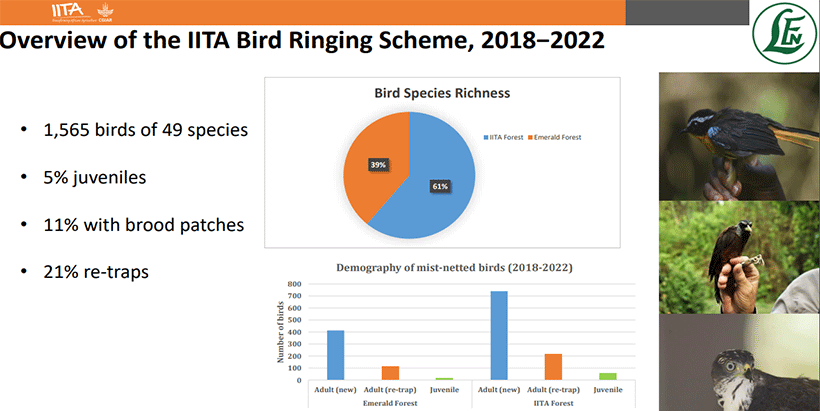
Awoyemi highlighted the various ornithological activities of the IITA Forest Center, particularly the quarterly monitoring of birds in the IITA and Emerald (in Osun State, southwest Nigeria) Forest Reserves that equally capture the wet and dry seasons in the area. These activities mainly involve using the line transect and mist-netting census techniques. While the first method involves walking along forest trails and recording birds seen and heard, the latter involves setting up special nets to capture live birds.
Forest staff record data from the birds before releasing them safe and sound back into the forest. Awoyemi said only licensed experts are permitted to buy and use the specialized nets to trap birds. Awoyemi is a licensed bird ringer who trains staff and students how to deploy the technique at IITA.
Thanks to the A.G Leventis Foundation sponsorship, Centre forestier de l'IITA continues making remarkable feats in the bird conservation space. Previously trapped birds are retrapped, showing that birds find the forest safe for living, breeding, and roosting. Likewise, new species are recorded. Since IITA premise is highly protected, birds and other fauna are often found lounging without fear of harm around the campus. Results from the regular bird surveys serve valuable resource materials for researchers.
Another resounding success of IITA Forest Center’s bird surveys is the identification of a potential KBA—the Emerald Forest Reserve. This forest is not part of Nigeria’s 27 designated KBAs. However, it hosts 31% of the total number of important bird species restricted to the Guinea-Congo forest belt of Nigeria (187). Despite its small size (120 ha) compared to IITA Forest Reserve (360 ha), the Emerald Forest Reserve boasts a total 128 bird species.
The IITA Forest Center has recorded the endemic and endangered Ibadan Malimbe Malimbus Ibadanensis and its only available song in the Emerald Forest Reserve. This has since contributed useful data to the RedList assessment conducted by the International Union for Conservation of Nature.
IITA Forest Center has taken the bold step of recommending the Emerald Forest Reserve as a KBA. This nomination was made to the KBA Secretariat through the Nigerian Conservation Foundation, le BirdLife International partner in Nigeria. A favorable response to this will strengthen southwest Nigeria’s ornithological relevance, especially as it is the only host to the Ibadan Malimbe.
Proposé par Folake OduntanContribué par
Histoires récentes