
Awe Community seeks to strengthen public-private partnership to enhance youth participation in agriculture
avril 10, 2021
IITA has a culture of promoting good relationships. In Oyo State, IITA continues to build on its partnership with the government and people of the State in agriculture and agribusiness activities. Over the years, past and present governors and other groups in the State have collaborated with IITA to boost economic development through agriculture. A major focus has been on agribusiness, farm machine fabrication, and capacity building for farmers, women, and youth.
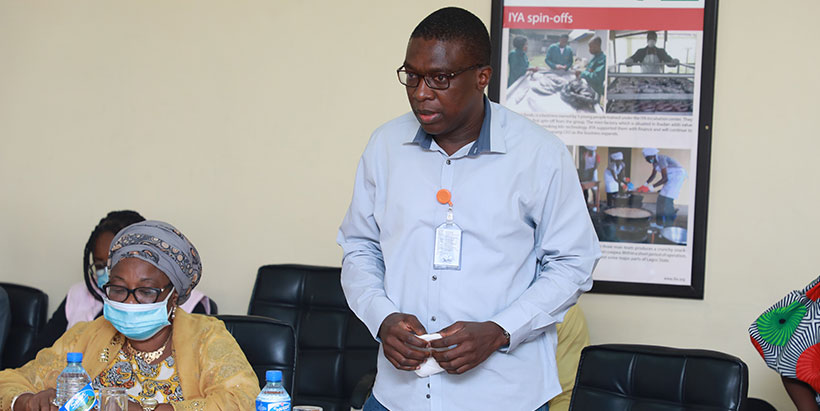 To strengthen partnership for agricultural development in Awe community, Oyo State, a representative of the Awe Kingship-in-Council accompanied by chiefs and Oyo State Government officials visited IITA Ibadan on 19 March. The meeting was moderated by F.D. Olofinyole, Permanent Secretary to the Ministry of Agriculture, who introduced the members of Oyo State Government (OYSG), IITA, and the Awe Kingship-in-Council team.
Representing the Honorable Commissioner for Agriculture, Adebowale Akande, Executive Adviser to the Governor of Oyo State in Agribusiness, stated Governor Seyi Makinde’s desire to ensure the spread of development across all the regions of the State. He mentioned four major areas of focus, including agriculture which has the third-highest budget for development in the State. “Agriculture and agribusiness will be a major area of development in Oyo State, especially because we have to be self-sufficient and also process what we are producing,” he added.
To strengthen partnership for agricultural development in Awe community, Oyo State, a representative of the Awe Kingship-in-Council accompanied by chiefs and Oyo State Government officials visited IITA Ibadan on 19 March. The meeting was moderated by F.D. Olofinyole, Permanent Secretary to the Ministry of Agriculture, who introduced the members of Oyo State Government (OYSG), IITA, and the Awe Kingship-in-Council team.
Representing the Honorable Commissioner for Agriculture, Adebowale Akande, Executive Adviser to the Governor of Oyo State in Agribusiness, stated Governor Seyi Makinde’s desire to ensure the spread of development across all the regions of the State. He mentioned four major areas of focus, including agriculture which has the third-highest budget for development in the State. “Agriculture and agribusiness will be a major area of development in Oyo State, especially because we have to be self-sufficient and also process what we are producing,” he added.
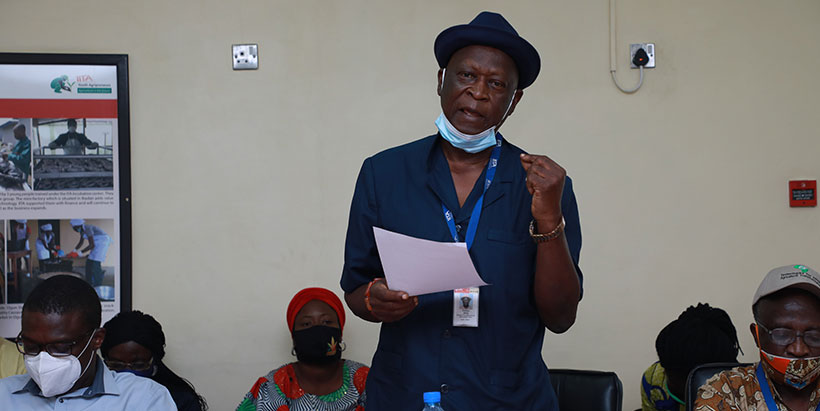 Alfred Dixon, IITA Director of the Development and Delivery Office, gave the welcome address while representing the DDG, Partnerships for Delivery. Dixon noted that IITA works with international and national partners to improve livelihoods, enhance food and nutrition security, increase employment opportunities, and preserve natural resource integrity in Africa. Explaining the emergence of the Awe Park project, Dixon stated that it is an offshoot of the IITA Youth Agripreneurs (IYA) Program initiated by IITA to make agriculture and agribusiness attractive to youth, to eradicate poverty, and reduce unemployment in Africa. The IYA model led to a partnership with Oyo State Government to create the Oyo State-IITA Youth Agribusiness Incubation Park Center in Awe for cooperation and agribusiness education for youth.
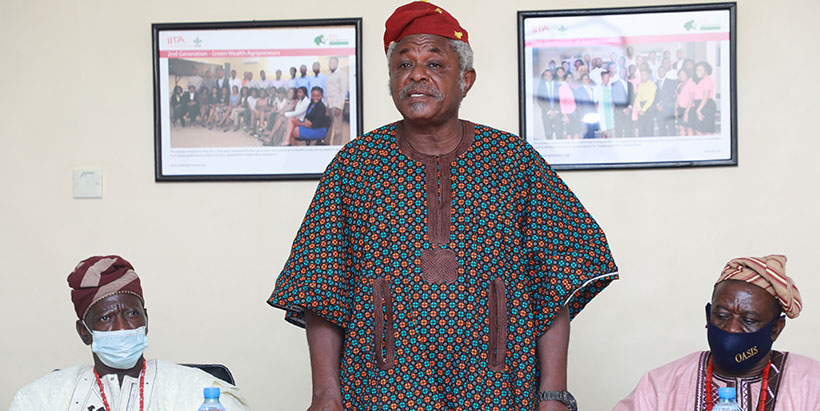
Highlighting the purpose of the visit, Simeon Ademola Adeniyi, Community Relations Consultant to Oyo State Agribusiness Development Agency (OYSADA), emphasized the need to strengthen the public-private development partnership with the State as the park has generated employment for indigenes of Awe Community. Apostle Oladipo, the representative of the Alawee of Awe, appreciated IITA and the government for the project and stated that the community believes in development. He also suggested that IITA organize an agriculture seminar for retirees and youth who migrated back from cities to make life in the rural areas more meaningful. “We will try our best to give our utmost support to make this program a success in our community,” he said.
Alfred Dixon, IITA Director of the Development and Delivery Office, gave the welcome address while representing the DDG, Partnerships for Delivery. Dixon noted that IITA works with international and national partners to improve livelihoods, enhance food and nutrition security, increase employment opportunities, and preserve natural resource integrity in Africa. Explaining the emergence of the Awe Park project, Dixon stated that it is an offshoot of the IITA Youth Agripreneurs (IYA) Program initiated by IITA to make agriculture and agribusiness attractive to youth, to eradicate poverty, and reduce unemployment in Africa. The IYA model led to a partnership with Oyo State Government to create the Oyo State-IITA Youth Agribusiness Incubation Park Center in Awe for cooperation and agribusiness education for youth.
Highlighting the purpose of the visit, Simeon Ademola Adeniyi, Community Relations Consultant to Oyo State Agribusiness Development Agency (OYSADA), emphasized the need to strengthen the public-private development partnership with the State as the park has generated employment for indigenes of Awe Community. Apostle Oladipo, the representative of the Alawee of Awe, appreciated IITA and the government for the project and stated that the community believes in development. He also suggested that IITA organize an agriculture seminar for retirees and youth who migrated back from cities to make life in the rural areas more meaningful. “We will try our best to give our utmost support to make this program a success in our community,” he said.
 Chrys Akem, Coordinator of IITA’s TAAT Program Management Unit and Akande gave the IITA/OYSG plans for the park. Akem mentioned youth capacity building as a major focus and the plan to establish profitable agricultural enterprises on crop and animal husbandry and train youth on production and processing to open up employment opportunities. Stating the objectives of the OYSG, Akande mentioned that the government is interested in developing Awe community and has made it clear that whatever is needed to make the project work will be provided.
Waheed Oni, Agribusiness Hub Manager of IITA-IFAD Agrihub Project, gave an update on youth activities in Awe, noting that the processing center is functioning with sales ongoing. “Two days ago, we sold one ton of cassava,” he said. He also mentioned the availability of a fish pond that accommodates over five thousand fish. “The first set of interns will be admitted into the project, and there will also be community recruitment,” he added.
Chrys Akem, Coordinator of IITA’s TAAT Program Management Unit and Akande gave the IITA/OYSG plans for the park. Akem mentioned youth capacity building as a major focus and the plan to establish profitable agricultural enterprises on crop and animal husbandry and train youth on production and processing to open up employment opportunities. Stating the objectives of the OYSG, Akande mentioned that the government is interested in developing Awe community and has made it clear that whatever is needed to make the project work will be provided.
Waheed Oni, Agribusiness Hub Manager of IITA-IFAD Agrihub Project, gave an update on youth activities in Awe, noting that the processing center is functioning with sales ongoing. “Two days ago, we sold one ton of cassava,” he said. He also mentioned the availability of a fish pond that accommodates over five thousand fish. “The first set of interns will be admitted into the project, and there will also be community recruitment,” he added.
 In his vote of thanks, Fausat Fadekemi Akande, Secretary at OYSADA, appreciated the Oyo State Government for the vision and passion in working to make the State an agribusiness hub, IITA for the technical support on the project, and Awe Community for accepting and supporting the project.
Adebowale Akande, stating OYSG plan for the Awe Park Center.
Alfred Dixon, representing the DDG Partnerships for Delivery.
Apostle Olapido, the Awe Kingship-in-Council representative, speaking on behalf of the Community.
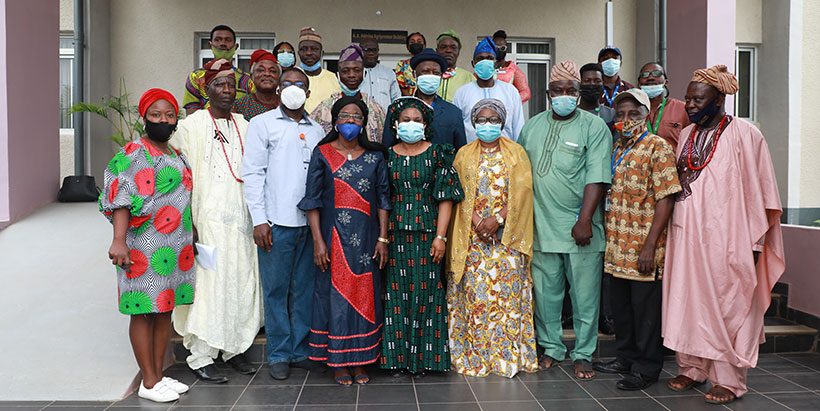
The Awe Kingship-in-Council members with the IITA team and OYSG representatives.
Contribué par
Histoires récentes
Aucun article trouvé