
NOUVELLES DE L'IITA

Youth in Agribusiness project targets capacity development of 5,000 youths in 2024
janvier 22, 2024

The recently launched Youth in Agribusiness: Enabling Scaling of Innovative Technologies for Sustainable Food Solutions (YAS) project, implemented in partnership with the Government of The Netherlands, concluded its activities for 2023 with the training of 1,918 youths between 18 and 35 years old. The project has set a target to train 5,000 youths in the new year.
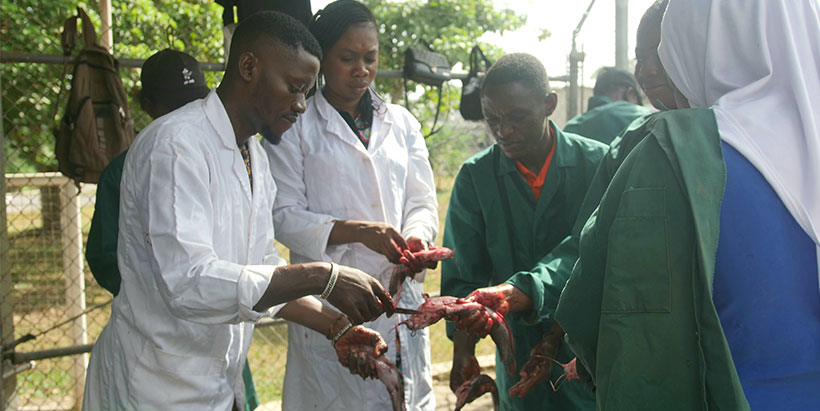
YAS 2023_Beneficiaries engaged in experiential learning in the Aquaculture value chain.

The training, categorized under Incubation and Acceleration tracks, focused on different value chains and took place in the project’s four locations in Nigeria—Kano, Ogun, and Oyo states, and Abuja, the Federal Capital Territory. The beneficiaries were identified based on the project’s selection criteria, with value chains including horticulture, poultry, aquaculture, and cassava processing.

The training aligned with YAS’s mandate to deepen youth involvement in agriculture and create viable agribusiness enterprises using innovative, climate-smart technologies. The project employed a tailored and localized approach to maximize the impact in each community while ensuring persuasive and result-driven engagements with the beneficiaries during and after the training.

Training partners comprised the International Livestock Research Institute (ILRI), Green Development and Agro-Allied Services Limited, Farm Help Agro Stores, Aberten Farms and Consults, Ogun State Fisheries and Aquaculture Farmers Association, BIC, Golden Fingers Farms and Ranches (GFFR), and Netherlands-African Business Council (NABC). YAS’s implementing partner, Bopinc, facilitated the business training and mentorship, teaching the beneficiaries the advantages of being in cooperatives and how to access finance.
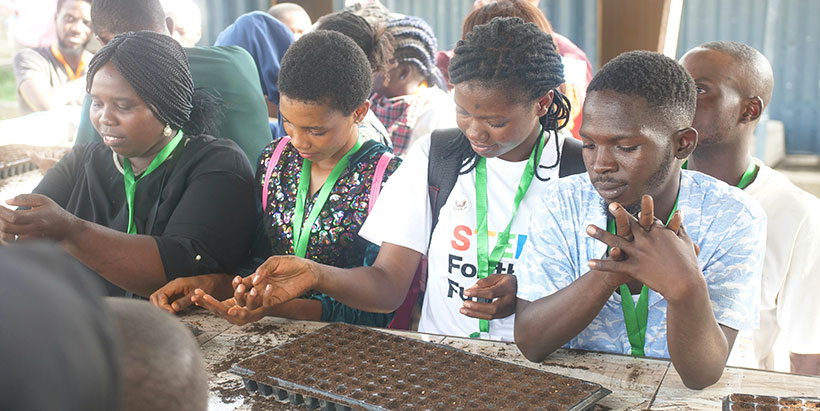
YAS 2023_Beneficiaries engaged in experiential learning in the Horticulture value chain.

In Oyo State, 476 persons were trained in aquaculture, cassava processing, horticulture, and poultry value chains during the period under review. The project identified training hubs and selected persons from Akinyele, Ido, Afijio, Lagelu, Ibadan North, and Ibadan South Local Government Areas (LGAs).

For the Incubator track, 87 persons were trained, comprising 43 (49%) for aquaculture and 44 (51%) for poultry. About 52% of the participants were male, while 48% were female. On the other hand, there were 389 accelerators, with 150 persons (39%) trained in cassava processing, 169 (43%) trained in horticulture, and 70 (18%) in poultry. Overall, 51% of the participants were male and 49% female.

They were also gifted free sample seeds from Technisem Digital, a farm record template, etc.

In Ogun State, the training was held in three LGAs—Obafemi Owode, Abeokuta North, and Ijebu Ode. About 463 youths, comprising 276 males and 187 females, were trained in the three commodities: aquaculture, horticulture, and cassava.

For the Incubation track, 110 youths, comprising 60 males and 50 females, participated and have begun exploring means of starting their respective enterprises. Under the Acceleration track, 353 business owners—216 males and 137 females—were trained to enhance their businesses in the three commodities.
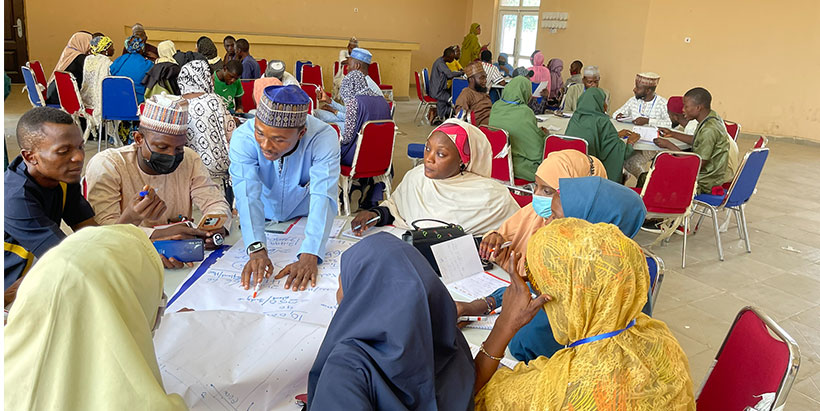
YAS 2023_Beneficiaries participating in a group activity

Strategic collaborations were also forged with HortiNigeria and other partners, leading to a robust and impactful experience for the participants. The training module included market linkages, product certification, climate-smart farming, etc.

In Abuja, the survey outcome resulted in more demand-driven training on aquaculture, horticulture, and poultry. The training included 473 youth participants, with poultry recording 205 participants, followed by aquaculture (189) and horticulture (79). Furthermore, 244 persons, representing 52%, were for the incubation track, while 229 persons, representing 48%, were for the acceleration track.

The training module focused on technology-driven practices and digital marketing. However, there are plans to explore other value chains in this second year.

In Kano State, 506 participants were selected from 952 applicants. About 404 were selected for the Accelerators and 102 for the Incubators track. They were trained in the opportunities that abound in the value chain of the various commodities, including production, processing, marketing, and logistics. They were also equipped with the skills to start or upscale their business.

An agribusiness hub was established for aquaculture to train people and boost their practical experience. The 1,000-capacity trampoline pond facility acquired through a partnership with another youth project, provided by I-Youth, was stocked with 1,000 Super Jumbo-size catfish.

Thirteen youths are already matched to the Agribusiness hub to learn and monitor the fish.

The participants in the different tracks applauded the training, describing it as a necessary boost to their business and entrepreneurship aspirations. One of the beneficiaries in the FCT, David Ekene, described the training as a real eye-opener. He boasted that with what he learned, he was prepared to build a business empire while ensuring that other people benefitted from his newly acquired knowledge.

“I find myself privileged to be part of this great move and training,” he stated. “In Africa, we have the land and what it takes, but the technical knowledge on how to go about it is what YAS has brought to us. With this training, I can create a business empire, not just a little business. The YAS experience is amazing, exciting, and mind-blowing.”

Similarly, Rebecca Titilayo Sanusi, a master’s student at Oyo State, described her training experience as excellent. She added, “I learned aquaculture and value addition, and I have learned how to set up my pond, stock the pond, feed the fish, including the business aspect of it. I don’t want to waste this knowledge; I intend to start my pond very soon and progress from there. The YAS training was wonderful.”

For 2024, no fewer than 5,000 persons will be trained in the select commodities across the listed locations. This figure comprises 1,000 Accelerators and 250 Incubators in each location.

Contributed by Jesutofunmi Sharon Robinson

Contribué par

Nouvelles connexes

Aucun article trouvé

Laisser un commentaire

Votre adresse e-mail ne sera pas publiée. Les champs obligatoires sont indiqués avec *

Retour en haut
Olaosebikan, Olamide

Olamide Deborah Nwanze est une chercheuse principale spécialisée dans la recherche sur l'approche "genre" afin d'éclairer les politiques de sélection participative et inclusive, de développement de variétés et de systèmes semenciers concernant les cultures de racines, tubercules et bananes (RTB) au siège de l'Institut International d'Agriculture Tropicale, à Ibadan, au Nigeria. Elle est candidate au doctorat à l'Université d'Ibadan et titulaire d'un master et d'un diplôme d'ingénieur agronome en vulgarisation agricole et développement rural. Olamide est membre du programme African Women in Agricultural Research and Development – Gender Responsive Agricultural Systems Policy (SAISIE DE RÉCOMPENSEet les Chercheuses Sensibles au Genre Équipées pour la Transformation Agricole (SUPER. Elle cherche à appliquer ses apprentissages en matière d’approche genre, recherche sensible au genre, et expertise en développement et examen de politiques pour faciliter l’accès et l’adoption par les femmes, les jeunes, les enfants et les groupes sociaux vulnérables aux innovations agricoles qui garantissent la sécurité alimentaire, nutritionnelle, des revenus et des moyens de subsistance en Afrique. Ses rôles actuels comprennent le mentorat de chercheurs stagiaires, le développement de guides et manuels de formation, la mise en œuvre et l'adaptation de cadres et d'outils genre, l'engagement des acteurs de la chaîne de valeur en tant que partenaires de la science citoyenne, l'examen et la refonte des politiques, la gestion et l'analyse des données. Ses recherches actuelles portent sur les méthodes mixtes ainsi que sur les approches participatives et interdisciplinaires pour saisir et mettre en évidence les dynamiques de genre, les besoins, les préférences et les défis rencontrés par les parties prenantes au sein de la chaîne de valeur des moyens de subsistance agricoles afin de prioriser des stratégies axées sur le genre dans les programmes de sélection, la conception et la mise en œuvre des politiques.

À l'IITA, elle contribue à la mise en œuvre du CGIAR Initiative d'Élevage Accéléré et Innovation génétique Programmes ; recherche participative et genre au sein des Prochaine Génération ManiocHarvestPlusRTBAliments, et Tricot-ClimMob 1000Fermes Projets ; et la communication des connaissances sur le genre via le Série de webinaires G-LENS, vidéo documentaire, notes de politiquepublications, et blogs.


Publications récentes

de Sousa, K., van Etten, J., Manners, R. Bello, A., Teeken, B., Olaosebikan, O., et al. 2024. L'approche tricot : un cadre agile pour les essais décentralisés à la ferme soutenus par la science citoyenne. Une rétrospective. Agron. Sustain. Dev. 44, 8. https://doi.org/10.1007/s13593-023-00937-1

Madu, T., Onwuka, S., Nwafor, S., Onyemauwa, N., Ejechi, M., Ofoeze, M., Ukeje, B., Eluagu, C., Olaosebikan, O., Okoye, B., 2024. Les études sur les consommateurs inclusifs en matière de genre améliorent l'amélioration du manioc au Nigeria dans : Frontiers in Sociology, volume 9, numéro : 1224504, doi : 10.3389/fsoc.2024.1224504

Olaosebikan, O. ; Bello, A. ; Utoblo, O. ; Okoye, B. ; Olutegbe, N. ; Garner, E. ; Teeken, B. ; Bryan, E. ; Forsythe, L. ; Cole, S. ; Madu, T. 2023. Facteurs de stress et résilience au sein de la chaîne de valeur du manioc au Nigeria : Caractéristiques préférées des variétés de manioc et stratégies de réponse des hommes et des femmes pour informer l'amélioration variétale. Sustainability 15, 7837. https://doi.org/10.3390/su15107837

Okoye, B., Ofoeze, M., Ejechi, M., Onwuka, S., Nwafor, S., Onyemauwa, N., Ukeje, B., Eluagu, C., Obidiegwu, J.*, Olaosebikan, O., Madu, T.* 2023. Priorisation des traits préférés dans la chaîne de valeur de l'igname au Nigeria : une analyse de la situation en matière de genre in: Frontiers in Sociology, volume 8, numéro : 1232626, pages 1 – 9, ISSN 2297-7775, 2023. https://www.frontiersin.org/articles/10.3389/fsoc.2023.1232626/full

Olaosebikan, O., Bello, A. A., de Sousa, K., Ndjouenkeu, R., Adesokan, M., Alamu, E. O., Agbona, A., van Etten, J., Kegah, F. N.*, Dufour, D., Bouniol, A., Teeken, B. 2023. Acceptabilité par les consommateurs des produits alimentaires à base de gari-eba de manioc dans des contextes culturels et environnementaux variés en utilisant l'approche triade de comparaison des technologies (tricot) dans : Journal of the Science of Food and Agriculture,

Teeken, B., Olaosebikan, O., Bello, A. A., Madu, T.*, Cole, S. M. 2023. Évaluation qualitative de la positionnalité et des préférences des dyades en relation avec les activités liées au manioc : travailler avec des scientifiques citoyens du procès tricot https://hdl.handle.net/10568/138326 Type : Manuel

Bouniol, A., Ceballos, H., Bello, A. A., Teeken, B., Olaosebikan, O., Owoade, D., Agbona, A., Fotso Kuate, A., Madu, T.*, Okoye, B.*, Ofoeze, M.*, Nwafor, S.*, Onyemauwa, N.*, Adinsi, L.*, Forsythe, L., Dufour, D. 2023. Impact variétal sur le travail des femmes, la charge de travail et la pénibilité associée dans le traitement des plantes à racines, tubercules et bananes : focus sur le manioc en Afrique subsaharienne dans : Journal of the Science of Food and Agriculture, pages 1 – 25, ISSN 0022-5142,

Bello, A. A., Agbona, A., Olaosebikan, O., Edughaen, G., Dufour, D., Bouniol, A., Iluebbey, P., Ndjouenkeu, R.*, Rabbi, I. Y., Teeken, B. 2023. Effets génétiques et environnementaux sur la productivité de la transformation et le rendement des produits alimentaires : la pénibilité du travail des femmes dans : Journal of the Science of Food and Agriculture, pages 1 – 32, ISSN 0022-5142, 5

Cavicchioli, M., Zimbiti, T., Teeken, B., Nwanze, D.O., Liani, M., Parkes, E. & Bello, A. 2023. Rapport sur la formation en sélection génétique sensible au genre à l'IITA. Genetic Resources Center, IITA-HQ, Ibadan, 21-23 septembre 2022. Ibadan, Nigéria : IITA, (34 p.).https://hdl.handle.net/10568/131368

Agbona, A. Peteti P., Teeken B., Olaosebikan O. Bello, A. A., Parkes, E., Rabbi, I. Y., Mueller, L., Egesi, C., Kulakow, P. 2022. Gestion des données dans les programmes d'amélioration des cultures RTB africaines multidisciplinaires. In : Williamson, H.F., Leonelli, S. (eds) Towards Responsible Plant Data Linkage: Data Challenges for Agricultural Research and Development. Springer, Cham. https://doi.org/10.1007/978-3-031-13276-6_5

Lora Forsythe, Pricilla Marimo, Sarah Mayanja, Olamide D. Olaosebikan, Esme Stuart, Bela Teeken, Benjamin Okoye, Tessy Madu, (2021). Analyse transversale du genre dans RTBfoods Étape 2 Cartographie des genres sur les produits RTB. Comprendre les moteurs des préférences en matière de traits et le développement de profils de produits RTB multi-utilisateurs, WP1. Londres, Royaume-Uni : Rapport scientifique de terrain RTBfoods, 30 p.

Teeken, B., Garner, E., Agbona, A., Balogun, I., Olaosebikan, O., Bello, A., Madu, T., Okoye, B., Egesi, C., Kulakow, P. et Tufan, H.A. 2021. Au-delà des “ traits des femmes ” : explorer comment le genre, les différences sociales et les caractéristiques des ménages influencent les préférences pour les traits. Frontiers Systèmes alimentaires durables 5:740926. https://doi.org/10.3389/fsufs.2021.740926

Teeken, B., Agbona, A., Bello, A., Olaosebikan, O., Alamu, E., Adesokan, M., Awoyale, W., Madu, T., Okoye, B., Chijioke, U., Owoade, D., Okoro, M., Bouniol, A., Dufour, D., Hershey, C., Rabbi, I., Maziya‐Dixon, B., Egesi, C., Tufan, H. et Kulakow, P. (020. Comprendre les préférences variétales du manioc par le classement par paires du gari-eba et du fufu préparés par des agriculteurs-transformateurs locaux. Int J Food Sci Technol. https://doi.org/10.1111/ijfs.14862

Bela Teeken, Olamide Olaosebikan, Ireti Balogun, Benjamin Okoye, Tessy Madu, Steven Cole, Abolore Bello, Elizabeth Parkes. (2020). Pilotage des outils de profil client et produit G+ pour l'amélioration sensible au genre du manioc au Nigeria. Nigeria : Institut international d'agriculture tropicale (IIAT). https://hdl.handle.net/20.500.11766/13000