
Scientists discuss better ways to protect plant health
décembre 14, 2020
Every year, the Germplasm Health Units (GHUs) of the CGIAR Centers organize the “Phytosanitary Awareness Week”. This year, the event was themed, “Phytosanitary safety for the prevention of the transboundary spread of pests and pathogens,” and took place from 9 to 13 November to highlight the International Year of Plant Health (IYPH 2020).
 The CGIAR Centers set up the GHUs to prevent the outbreak of pests, avert the spread of quarantine pests that can be easily transferred with germplasm, and safeguard biodiversity. This is because plants and seeds harbor various pests like pathogens, insects, and nematodes, which can spread into new territories along with germplasm. The spread of these pests and germplasm distribution is a concern for the Centers, as they supply germplasm to developing countries and biodiversity hotspots that lack the sufficient phytosanitary capacity to prevent pest entry or respond to pest outbreaks.
The event commenced with a global plenary session where the Centers in Africa, Asia, and Latin America, discussed the activities of the GHUs in preventing transboundary pests and ensuring the transfer of clean germplasm. Each continent shared the challenges and opportunities their centers have in preventing the transboundary spread of pests and guaranteeing clean germplasm transfer in their region.
Head of CIRDI Plant Quarantine Unit and Cereal Pathologist in India, Dr Rajan Sharma, facilitated the Asia session. He explained that the presentations’ focus was on the role of CGIAR and National Plant Production Organizations in preventing the introduction and spread of pests. Dr Anitha Kodaru, Head of National Bureau of Plant Genetic Resources (NBPGR), India, spoke on the “Global exchange of crop germplasm: Phytosanitary issues with reference to India.” She stated that one major phytosanitary issue is banning pesticides due to human and animal health risks. She suggested prioritizing collaborative research across the world for alternatives to the banned pesticides suitable to specific crops and pathogens. Alternatively, she suggested that quarantine stations be exempt from this regulatory ban until other options become available.
During the Latin America session, Dr Jan Krueze, Head of the CIP Health Quarantine Unit in Peru, stated that international germplasm exchanges play a significant role in the diversification and improvement of world agriculture. “However, if not well managed, the exchange can also introduce exotic pests to territories where they did not previously exist,” he added. Speaking on the “Phytosanitary measures for safe distribution of maize and wheat germplasm from CIMMYT to the World,” Head of Seed Unit at CIMMYT, Mexico, Dr Amos Alakonya, highlighted the critical role they are playing to ensure that seeds distributed are free from pests and diseases. According to Alakonya, the Institute takes seeds through various levels of control to ensure that their collaborators in developing countries with limited phytosanitary infrastructure get seeds free from quarantined and non-quarantined seed-borne pathogens.
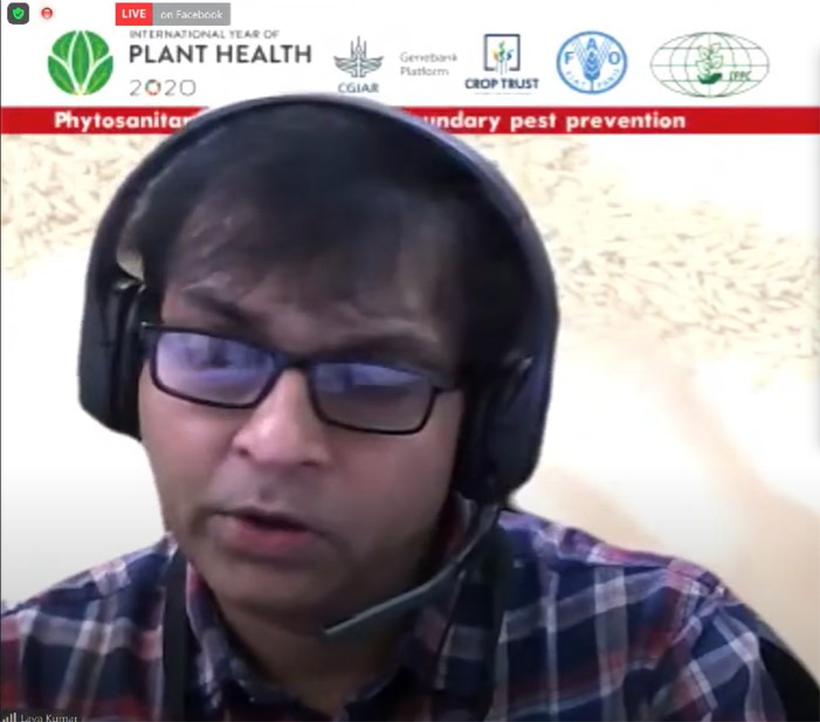
Dr Lava Kumar, Head of IITA Germplasm Health and Virology Unit, took the Africa session. He noted that one of Africa’s oldest challenges is the prevalence of several quarantine pests, affecting germplasm distribution activities. Another challenge is that these pests can also move out of the continent if adequate precautions are not taken when distributing planting materials. “On the positive side, the continent is a hub for curbing the most notorious quarantine pests that pose a big challenge to germplasm exchange activities,” he said. While speaking on “Nigeria Agricultural Quarantine Service (NAQS) and CGIAR partnership,” Director of Plant Quarantine (NAQS), Abuja, John Obaje, highlighted the objectives of NAQS towards preventing the introduction and spread of transboundary pests into Nigeria and preventing the export of pests existing in Nigeria to other countries. “IITA is one of the CGIAR centers that has been a major collaborator of NAQS in terms of germplasm exchange and pest and disease diagnosis through research and development,” he added.
The event ended with conclusions drawn from the presentations of the various sessions, and discussions were made on better ways to achieve the goal of distributing clean seeds free from pathogens. Kumar highlighted some key takeaway points gathered from all the sessions. These key points include having a harmonized plan and protocol across all GHUs; best guidelines; more research, better protocols and more internal awareness; SMTA-like models of phytosanitary standards for CGIAR exchanges; national capacity development (Genebanks and National Plant Protection Organizations); and more collaboration between the international, regional, and national partners. These points would serve as the way forward for all the Centers.
The CGIAR Centers set up the GHUs to prevent the outbreak of pests, avert the spread of quarantine pests that can be easily transferred with germplasm, and safeguard biodiversity. This is because plants and seeds harbor various pests like pathogens, insects, and nematodes, which can spread into new territories along with germplasm. The spread of these pests and germplasm distribution is a concern for the Centers, as they supply germplasm to developing countries and biodiversity hotspots that lack the sufficient phytosanitary capacity to prevent pest entry or respond to pest outbreaks.
The event commenced with a global plenary session where the Centers in Africa, Asia, and Latin America, discussed the activities of the GHUs in preventing transboundary pests and ensuring the transfer of clean germplasm. Each continent shared the challenges and opportunities their centers have in preventing the transboundary spread of pests and guaranteeing clean germplasm transfer in their region.
Head of CIRDI Plant Quarantine Unit and Cereal Pathologist in India, Dr Rajan Sharma, facilitated the Asia session. He explained that the presentations’ focus was on the role of CGIAR and National Plant Production Organizations in preventing the introduction and spread of pests. Dr Anitha Kodaru, Head of National Bureau of Plant Genetic Resources (NBPGR), India, spoke on the “Global exchange of crop germplasm: Phytosanitary issues with reference to India.” She stated that one major phytosanitary issue is banning pesticides due to human and animal health risks. She suggested prioritizing collaborative research across the world for alternatives to the banned pesticides suitable to specific crops and pathogens. Alternatively, she suggested that quarantine stations be exempt from this regulatory ban until other options become available.
During the Latin America session, Dr Jan Krueze, Head of the CIP Health Quarantine Unit in Peru, stated that international germplasm exchanges play a significant role in the diversification and improvement of world agriculture. “However, if not well managed, the exchange can also introduce exotic pests to territories where they did not previously exist,” he added. Speaking on the “Phytosanitary measures for safe distribution of maize and wheat germplasm from CIMMYT to the World,” Head of Seed Unit at CIMMYT, Mexico, Dr Amos Alakonya, highlighted the critical role they are playing to ensure that seeds distributed are free from pests and diseases. According to Alakonya, the Institute takes seeds through various levels of control to ensure that their collaborators in developing countries with limited phytosanitary infrastructure get seeds free from quarantined and non-quarantined seed-borne pathogens.
Dr Lava Kumar, Head of IITA Germplasm Health and Virology Unit, took the Africa session. He noted that one of Africa’s oldest challenges is the prevalence of several quarantine pests, affecting germplasm distribution activities. Another challenge is that these pests can also move out of the continent if adequate precautions are not taken when distributing planting materials. “On the positive side, the continent is a hub for curbing the most notorious quarantine pests that pose a big challenge to germplasm exchange activities,” he said. While speaking on “Nigeria Agricultural Quarantine Service (NAQS) and CGIAR partnership,” Director of Plant Quarantine (NAQS), Abuja, John Obaje, highlighted the objectives of NAQS towards preventing the introduction and spread of transboundary pests into Nigeria and preventing the export of pests existing in Nigeria to other countries. “IITA is one of the CGIAR centers that has been a major collaborator of NAQS in terms of germplasm exchange and pest and disease diagnosis through research and development,” he added.
The event ended with conclusions drawn from the presentations of the various sessions, and discussions were made on better ways to achieve the goal of distributing clean seeds free from pathogens. Kumar highlighted some key takeaway points gathered from all the sessions. These key points include having a harmonized plan and protocol across all GHUs; best guidelines; more research, better protocols and more internal awareness; SMTA-like models of phytosanitary standards for CGIAR exchanges; national capacity development (Genebanks and National Plant Protection Organizations); and more collaboration between the international, regional, and national partners. These points would serve as the way forward for all the Centers.
Lava Kumar, Head of IITA Germplasm Health and Virology Unit, Facilitator of the Africa Session.
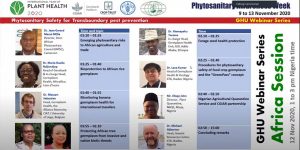 Keynote speakers for the Africa Session.
Contribué par
Histoires récentes
Aucun article trouvé