NOUVELLES DE L'IITA

USAID high-level visit commends AID-I Great Lakes work in Rwanda
octobre 4, 2024

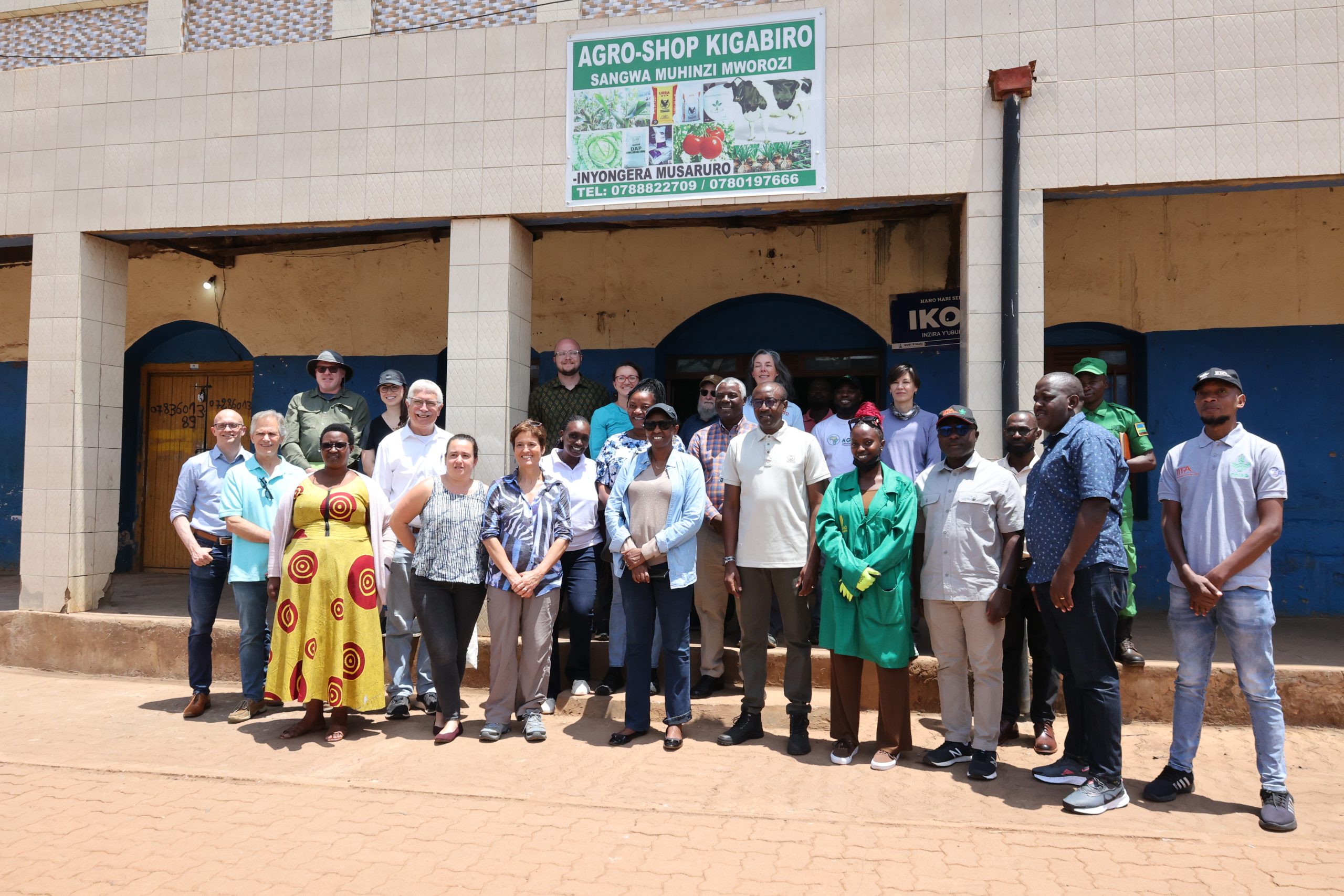
High-ranking officials from AGRA, USAID, IITA, and local administration in Rwanda visit an agrodealer in Rwamagana District, Eastern Province, Rwanda.

30 August 2024, Rwamagana District, Rwanda – The Assistant to the Administrator for the Bureau for Resilience, Environment, and Food Security (REFS) at the United States Agency for International Development (USAID) and Deputy Coordinator for Development of Feed the Future, Dina Esposito, led a delegation comprising Alliance for a Green Revolution in Africa (AGRA) President Dr Agnes Kalibata, USAID Bureau for Resilience and Food Security Chief Scientist Dr Rob Bertram, IITA Country Representative and Chief of Party of the Great Lakes Accelerated Innovation Delivery Initiative Rapid Delivery Hub (AID-I Great Lakes) Abdou (Matieyedou) Konlambigue, and Rwamagana District Mayor Mbonyumuvunyi Radjab to visit some of AID-I Great Lakes Project’s sites in Rwanda to assess firsthand the progress being made to enhance Rwanda’s seed systems.

The visitors directly engaged with scaling partners, including Emma Uwera, a seed entrepreneur and owner of I&J Harvest Ltd, and other agrodealers. They were also shown the Rwanda Agriculture and Animal Resources Development Board (RAB) seed certification processes.

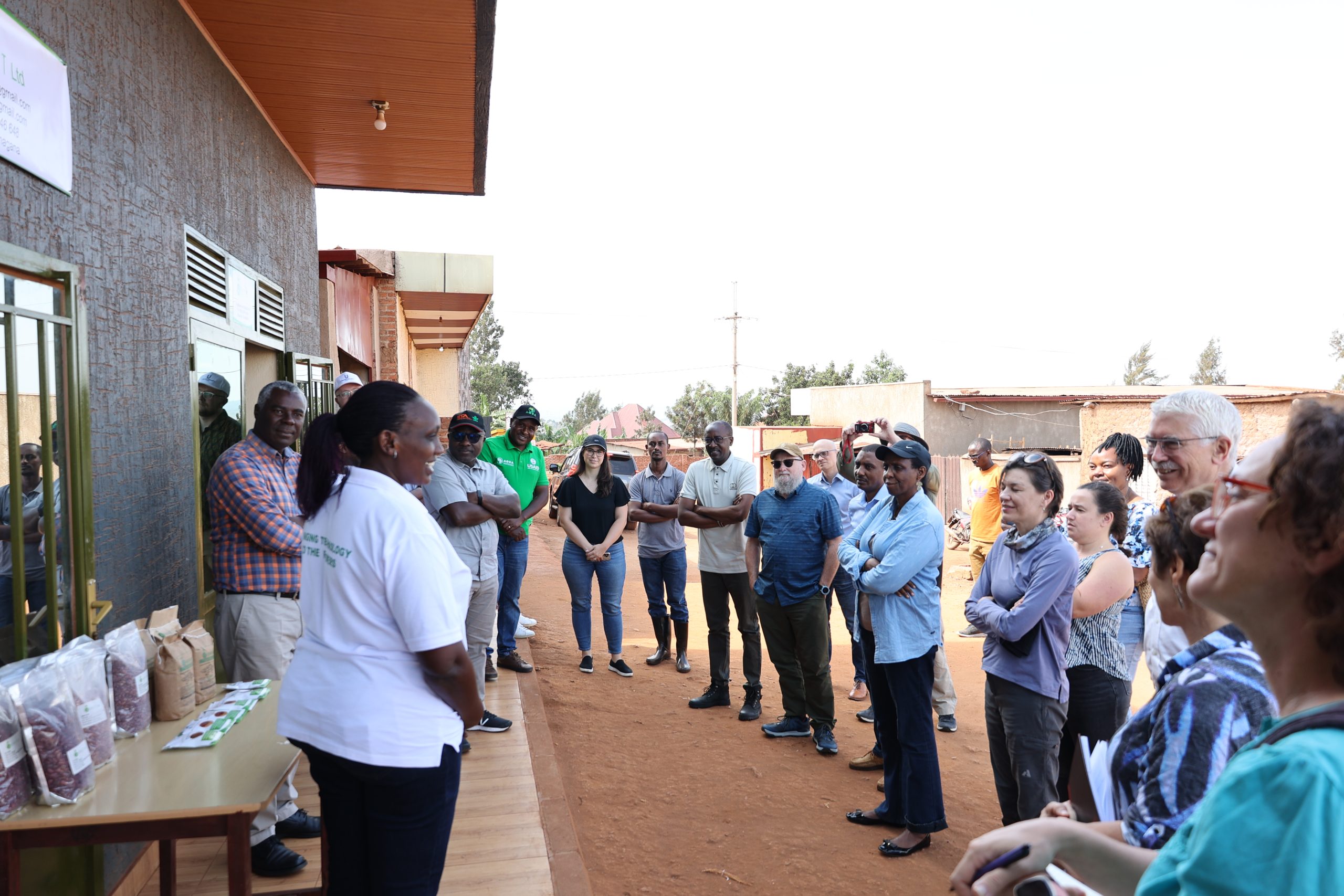
Emma Uwera, standing in front (in a white top), explains her company's role in improving the availability, adoption, and sustainability of the seed system in Rwanda.
Emma Uwera, standing in front (in a white top), explains her company’s role in improving the availability, adoption, and sustainability of the seed system in Rwanda.

The visitors commended the project’s role in improving the livelihoods of smallholder farmers through access to disease-resistant, nutrient-rich seeds and scaling sustainable practices across the country.

The delegation had lively and extensive interactions with AID-I Great Lakes scaling partners across various levels, giving them on-the-ground insights into the tangible and transformative support provided by Feed the Future/USAID and the project’s profound effect on improving the livelihoods of some of Rwanda’s smallholder farmers.

Emma narrated the process of producing high-quality bean seeds and the pivotal role of AID-I Great Lakes in expanding her business to several new locations in Rwanda. This expansion has not only increased seed accessibility for farmers, but also promoted the adoption of good agronomic practices.

She works closely with RAB, acquiring early-generation seeds to produce clean seeds that are distributed to farmers through agrodealers across different districts. Recognizing the challenge of persuading agrodealers to stock bean seeds owing to low market demand and lack of subsidies, Emma has established on-site innovative show-and-tell, a proven effective marketing tool through demonstration plots near agrodealer shops. These plots showcase the superior quality and yield of the new seeds, enabling farmers to make informed purchasing decisions—knowing what to expect regarding crop performance and management, including optimizing production.

Highlighting the potential impact of these efforts, Konlambigue underscored the importance of replacing old seeds with disease-resistant varieties rich in nutrients like iron and zinc, which also promise higher yields.

The delegation also toured a seed testing laboratory jointly run by RAB and Rwanda Inspectorate, Competition and Consumer Protection Authority (RICA). Here, they saw, among others, the seed certification process and implementation of loop-mediated isothermal amplification (LAMP)—a technology for improving capacities for cassava disease diagnostics as a crucial step in the inspection and certification of early-generation seed in Rwanda.

RAB Director General Dr Telesphore Ndabamenye expressed optimism about the laboratory’s progress and acknowledged the critical role of the private sector in expediting seed testing and certification through collaboration with RAB.

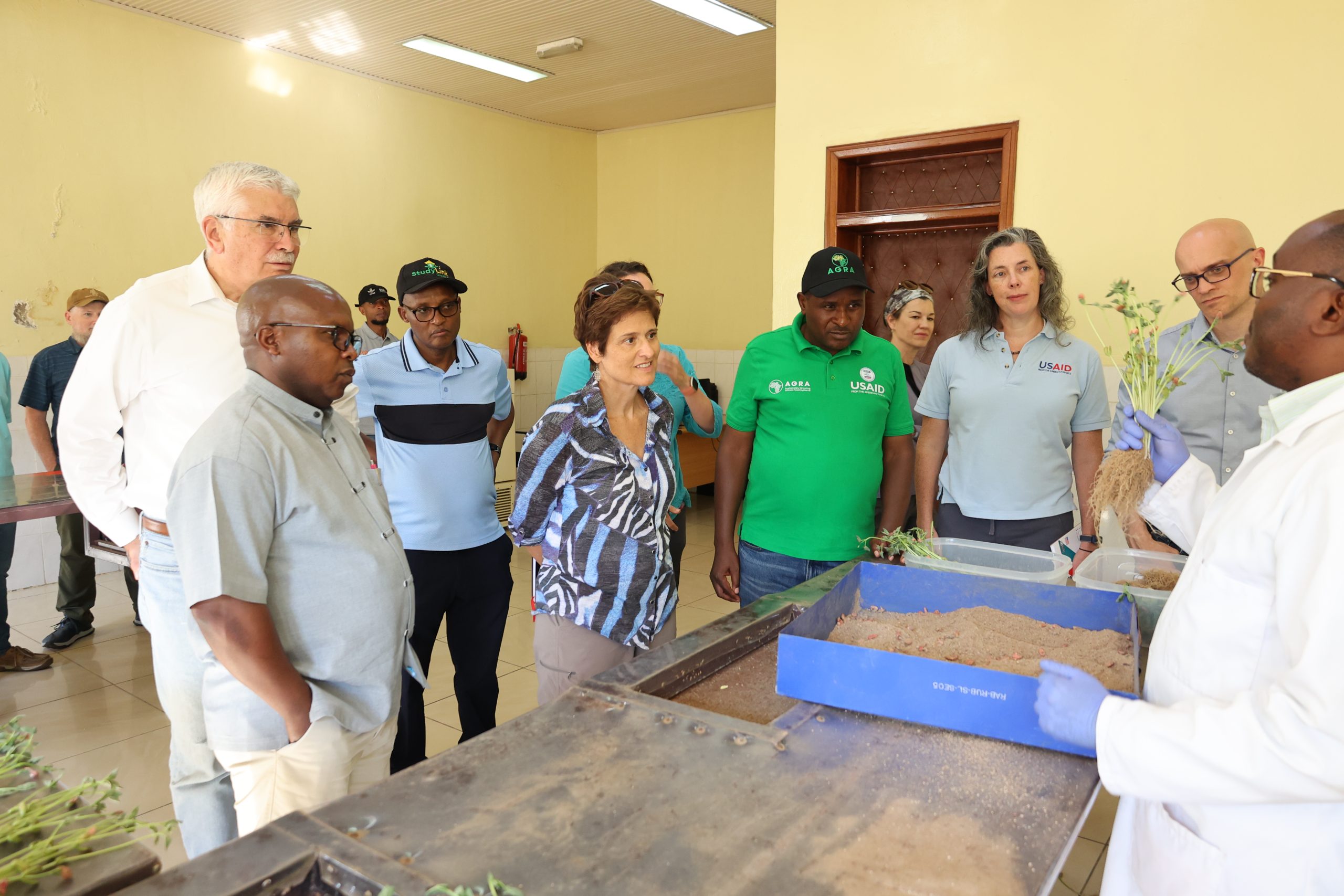
At the RAB-RICA seed testing laboratory: (left to right) Dr Telesphore Ndabamenye, Director General of RAB; Dr Rob Bertram, Chief Scientist
At the RAB-RICA seed testing laboratory: (left to right) Dr Telesphore Ndabamenye, Director General of RAB; Dr Rob Bertram, Chief Scientist, USAID’s Bureau for Resilience and Food Security; Mark Cyubahiro Bagabe, PhD, Director General of RICA; Dina Esposito, Assistant to the Administrator for the Bureau for Resilience, Environment, and Food Security (REFS), USAID and Feed the Future Deputy Coordinator for Development; Fidele Nizeyimana, Seed Systems Expert, AGRA; Jessie Snaza (partially hidden), Economic Growth Deputy Office Director at USAID; Jessica Torrens-Spence, Director of the Economic Growth Office, USAID/Rwanda and Burundi; Adam Gerstenmier, Chief of Party USAID/Partnership for Inclusive Agriculture Transformation in Africa (PIATA) and Chief of Strategic Initiatives at AGRA; and Martin Niyondora, a laboratory technician explaining the seed certification process to the delegation.

Esposito praised AID-I Great Lakes collaborative efforts: “The work being done here is a model of what can be achieved through partnership and innovation. We must continue to focus on scalability, ensuring that this success is replicated beyond the project’s timeframe and made sustainable in the long run for farmers and seed entrepreneurs.”

The AID-I GLR project continues to make remarkable strides in transforming Rwanda’s seed systems. By partnering with local seed entrepreneurs and supporting agrodealers across different districts, the project has successfully enhanced the availability of improved disease-resistant seeds to smallholder farmers.


Contribué par

Nouvelles connexes

Aucun article trouvé

Laisser un commentaire

Votre adresse e-mail ne sera pas publiée. Les champs obligatoires sont indiqués avec *

Retour en haut
Olaosebikan, Olamide

Olamide Deborah Nwanze est une chercheuse principale spécialisée dans la recherche sur l'approche "genre" afin d'éclairer les politiques de sélection participative et inclusive, de développement de variétés et de systèmes semenciers concernant les cultures de racines, tubercules et bananes (RTB) au siège de l'Institut International d'Agriculture Tropicale, à Ibadan, au Nigeria. Elle est candidate au doctorat à l'Université d'Ibadan et titulaire d'un master et d'un diplôme d'ingénieur agronome en vulgarisation agricole et développement rural. Olamide est membre du programme African Women in Agricultural Research and Development – Gender Responsive Agricultural Systems Policy (SAISIE DE RÉCOMPENSEet les Chercheuses Sensibles au Genre Équipées pour la Transformation Agricole (SUPER. Elle cherche à appliquer ses apprentissages en matière d’approche genre, recherche sensible au genre, et expertise en développement et examen de politiques pour faciliter l’accès et l’adoption par les femmes, les jeunes, les enfants et les groupes sociaux vulnérables aux innovations agricoles qui garantissent la sécurité alimentaire, nutritionnelle, des revenus et des moyens de subsistance en Afrique. Ses rôles actuels comprennent le mentorat de chercheurs stagiaires, le développement de guides et manuels de formation, la mise en œuvre et l'adaptation de cadres et d'outils genre, l'engagement des acteurs de la chaîne de valeur en tant que partenaires de la science citoyenne, l'examen et la refonte des politiques, la gestion et l'analyse des données. Ses recherches actuelles portent sur les méthodes mixtes ainsi que sur les approches participatives et interdisciplinaires pour saisir et mettre en évidence les dynamiques de genre, les besoins, les préférences et les défis rencontrés par les parties prenantes au sein de la chaîne de valeur des moyens de subsistance agricoles afin de prioriser des stratégies axées sur le genre dans les programmes de sélection, la conception et la mise en œuvre des politiques.

À l'IITA, elle contribue à la mise en œuvre du CGIAR Initiative d'Élevage Accéléré et Innovation génétique Programmes ; recherche participative et genre au sein des Prochaine Génération ManiocHarvestPlusRTBAliments, et Tricot-ClimMob 1000Fermes Projets ; et la communication des connaissances sur le genre via le Série de webinaires G-LENS, vidéo documentaire, notes de politiquepublications, et blogs.


Publications récentes

de Sousa, K., van Etten, J., Manners, R. Bello, A., Teeken, B., Olaosebikan, O., et al. 2024. L'approche tricot : un cadre agile pour les essais décentralisés à la ferme soutenus par la science citoyenne. Une rétrospective. Agron. Sustain. Dev. 44, 8. https://doi.org/10.1007/s13593-023-00937-1

Madu, T., Onwuka, S., Nwafor, S., Onyemauwa, N., Ejechi, M., Ofoeze, M., Ukeje, B., Eluagu, C., Olaosebikan, O., Okoye, B., 2024. Les études sur les consommateurs inclusifs en matière de genre améliorent l'amélioration du manioc au Nigeria dans : Frontiers in Sociology, volume 9, numéro : 1224504, doi : 10.3389/fsoc.2024.1224504

Olaosebikan, O. ; Bello, A. ; Utoblo, O. ; Okoye, B. ; Olutegbe, N. ; Garner, E. ; Teeken, B. ; Bryan, E. ; Forsythe, L. ; Cole, S. ; Madu, T. 2023. Facteurs de stress et résilience au sein de la chaîne de valeur du manioc au Nigeria : Caractéristiques préférées des variétés de manioc et stratégies de réponse des hommes et des femmes pour informer l'amélioration variétale. Sustainability 15, 7837. https://doi.org/10.3390/su15107837

Okoye, B., Ofoeze, M., Ejechi, M., Onwuka, S., Nwafor, S., Onyemauwa, N., Ukeje, B., Eluagu, C., Obidiegwu, J.*, Olaosebikan, O., Madu, T.* 2023. Priorisation des traits préférés dans la chaîne de valeur de l'igname au Nigeria : une analyse de la situation en matière de genre in: Frontiers in Sociology, volume 8, numéro : 1232626, pages 1 – 9, ISSN 2297-7775, 2023. https://www.frontiersin.org/articles/10.3389/fsoc.2023.1232626/full

Olaosebikan, O., Bello, A. A., de Sousa, K., Ndjouenkeu, R., Adesokan, M., Alamu, E. O., Agbona, A., van Etten, J., Kegah, F. N.*, Dufour, D., Bouniol, A., Teeken, B. 2023. Acceptabilité par les consommateurs des produits alimentaires à base de gari-eba de manioc dans des contextes culturels et environnementaux variés en utilisant l'approche triade de comparaison des technologies (tricot) dans : Journal of the Science of Food and Agriculture,

Teeken, B., Olaosebikan, O., Bello, A. A., Madu, T.*, Cole, S. M. 2023. Évaluation qualitative de la positionnalité et des préférences des dyades en relation avec les activités liées au manioc : travailler avec des scientifiques citoyens du procès tricot https://hdl.handle.net/10568/138326 Type : Manuel

Bouniol, A., Ceballos, H., Bello, A. A., Teeken, B., Olaosebikan, O., Owoade, D., Agbona, A., Fotso Kuate, A., Madu, T.*, Okoye, B.*, Ofoeze, M.*, Nwafor, S.*, Onyemauwa, N.*, Adinsi, L.*, Forsythe, L., Dufour, D. 2023. Impact variétal sur le travail des femmes, la charge de travail et la pénibilité associée dans le traitement des plantes à racines, tubercules et bananes : focus sur le manioc en Afrique subsaharienne dans : Journal of the Science of Food and Agriculture, pages 1 – 25, ISSN 0022-5142,

Bello, A. A., Agbona, A., Olaosebikan, O., Edughaen, G., Dufour, D., Bouniol, A., Iluebbey, P., Ndjouenkeu, R.*, Rabbi, I. Y., Teeken, B. 2023. Effets génétiques et environnementaux sur la productivité de la transformation et le rendement des produits alimentaires : la pénibilité du travail des femmes dans : Journal of the Science of Food and Agriculture, pages 1 – 32, ISSN 0022-5142, 5

Cavicchioli, M., Zimbiti, T., Teeken, B., Nwanze, D.O., Liani, M., Parkes, E. & Bello, A. 2023. Rapport sur la formation en sélection génétique sensible au genre à l'IITA. Genetic Resources Center, IITA-HQ, Ibadan, 21-23 septembre 2022. Ibadan, Nigéria : IITA, (34 p.).https://hdl.handle.net/10568/131368

Agbona, A. Peteti P., Teeken B., Olaosebikan O. Bello, A. A., Parkes, E., Rabbi, I. Y., Mueller, L., Egesi, C., Kulakow, P. 2022. Gestion des données dans les programmes d'amélioration des cultures RTB africaines multidisciplinaires. In : Williamson, H.F., Leonelli, S. (eds) Towards Responsible Plant Data Linkage: Data Challenges for Agricultural Research and Development. Springer, Cham. https://doi.org/10.1007/978-3-031-13276-6_5

Lora Forsythe, Pricilla Marimo, Sarah Mayanja, Olamide D. Olaosebikan, Esme Stuart, Bela Teeken, Benjamin Okoye, Tessy Madu, (2021). Analyse transversale du genre dans RTBfoods Étape 2 Cartographie des genres sur les produits RTB. Comprendre les moteurs des préférences en matière de traits et le développement de profils de produits RTB multi-utilisateurs, WP1. Londres, Royaume-Uni : Rapport scientifique de terrain RTBfoods, 30 p.

Teeken, B., Garner, E., Agbona, A., Balogun, I., Olaosebikan, O., Bello, A., Madu, T., Okoye, B., Egesi, C., Kulakow, P. et Tufan, H.A. 2021. Au-delà des “ traits des femmes ” : explorer comment le genre, les différences sociales et les caractéristiques des ménages influencent les préférences pour les traits. Frontiers Systèmes alimentaires durables 5:740926. https://doi.org/10.3389/fsufs.2021.740926

Teeken, B., Agbona, A., Bello, A., Olaosebikan, O., Alamu, E., Adesokan, M., Awoyale, W., Madu, T., Okoye, B., Chijioke, U., Owoade, D., Okoro, M., Bouniol, A., Dufour, D., Hershey, C., Rabbi, I., Maziya‐Dixon, B., Egesi, C., Tufan, H. et Kulakow, P. (020. Comprendre les préférences variétales du manioc par le classement par paires du gari-eba et du fufu préparés par des agriculteurs-transformateurs locaux. Int J Food Sci Technol. https://doi.org/10.1111/ijfs.14862

Bela Teeken, Olamide Olaosebikan, Ireti Balogun, Benjamin Okoye, Tessy Madu, Steven Cole, Abolore Bello, Elizabeth Parkes. (2020). Pilotage des outils de profil client et produit G+ pour l'amélioration sensible au genre du manioc au Nigeria. Nigeria : Institut international d'agriculture tropicale (IIAT). https://hdl.handle.net/20.500.11766/13000