
Permettre aux agriculteurs de lutter contre le virus du sommet buissonnant du bananier grâce au partage des connaissances
22 novembre 2024
Introduction
Les bananes (et les plantains) constituent un aliment de base et une source de revenus pour des millions de foyers en Ouganda, avec plus de 70% produites et consommées, que ce soit cuites ou en dessert. Dans le district de Kasese, la production de bananes est vitale pour de nombreux petits agriculteurs. Cependant, la maladie du “ Bunchy Top ” de la bananier (BBTD) représente une menace importante pour leurs moyens de subsistance : elle entraîne des pertes de rendement dévastatrices et des difficultés économiques, met en péril la diversité des variétés qu’ils cultivent et conduit à terme à l’insécurité alimentaire. « Au moins 90% des plantations de bananes des huit sous-comtés du comté de Bukonzo-Ouest, dans le district de Kasese, sont touchées par le virus », a indiqué le Dr Julius Rukara, responsable agricole du district (DAO) de Kasese. Le virus du « Bunchy Top » de la banane peut entraîner des pertes de production annuelles comprises entre $200 et 600 millions de dollars américains en Afrique ; il est classé comme agent pathogène de quarantaine de catégorie A1 et figure parmi les 100 pires espèces exotiques envahissantes. Dans le cadre de l’effort conjoint de lutte contre le BBTD, l’IITA, en partenariat avec le ministère de l’Agriculture, de l’Élevage et de la Pêche (MAAIF), l’Association pour le renforcement de la recherche agricole en Afrique orientale et centrale (ASARECA) et l’Initiative pour la santé des végétaux, par le biais du cadre de l’Alliance d’apprentissage Ukama Ustawi (UU), a organisé une visite d’apprentissage pour les parties prenantes afin de permettre aux agriculteurs des districts de Bushenyi, Rubirizi et Bunyangabu, où la maladie n’est pas encore présente, de tirer des enseignements de leurs pairs du district de Kasese et d’acquérir les connaissances et les compétences nécessaires pour prévenir et gérer la BBTD. Ukama Ustawi (UU) est une initiative menée par le CGIAR (IWMI, IITA, ILRI) visant à soutenir une agriculture et des moyens de subsistance résilients face au changement climatique dans 12 pays d’Afrique orientale et australe (ESA) : l’Eswatini, l’Éthiopie, le Kenya, Madagascar, le Malawi, le Mozambique, le Rwanda, l’Afrique du Sud, la Tanzanie, l’Ouganda, la Zambie et le Zimbabwe. L’Alliance pour l’apprentissage (LA) est un élément essentiel de l’initiative UU, car elle favorise l’apprentissage en matière de systèmes agricoles diversifiés et d’innovation. Il s’agit d’un réseau collaboratif de partage des connaissances, axé sur la demande, mis en place en ESA entre le CGIAR, le CCARDESA et l’ASARECA.La visite d'étude
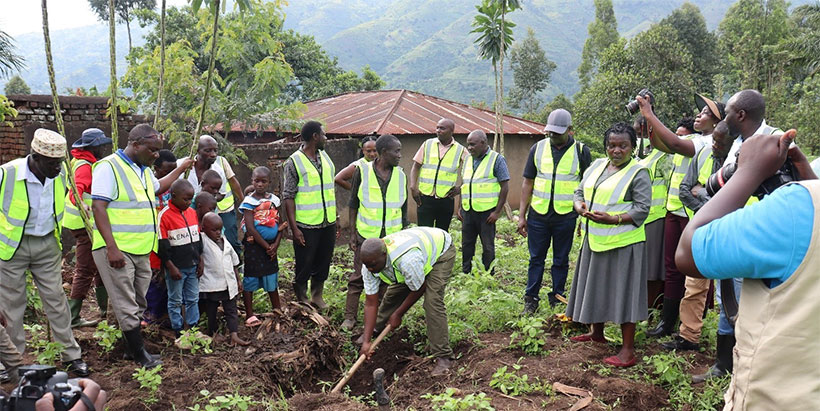
Du 3 au 4 octobre 2024, 71 acteurs, dont 41 petits exploitants agricoles des districts de Bunyangabu, Bushenyi, Kasese et Rubirizi, des membres du personnel de l'IITA, de l'ASARECA, de la Plant Health Initiative, du MAAIF, de la NARO, des agents de vulgarisation et des décideurs politiques locaux, se sont réunis dans le district de Kasese pour une expérience d'apprentissage complète de deux jours sur l'émergence de la maladie du bunchy top du bananier (BBTD) causée par le virus envahissant du bunchy top du bananier (BBTV). Des démonstrations sur le terrain concernant l'identification des maladies, l'assainissement et les mesures de lutte, le partage d'expériences et de réussites entre agriculteurs, des présentations d'experts sur la biologie, les symptômes et la gestion de la BBTD, ainsi que des sessions interactives sur les stratégies de lutte intégrée contre les ravageurs (LIR) ont permis de doter les agriculteurs des connaissances et des compétences nécessaires sur les symptômes et la transmission de la BBTD, notamment la manière de reconnaître les plantes infectées, l'importance de la détection précoce et de l'élimination des plantes infectées, les stratégies de prévention et de gestion des maladies, ainsi que des connaissances sur le matériel de plantation sain. Les agriculteurs ont également pu constater et mesurer l'impact de la BBTD grâce à l'expérience partagée par des agriculteurs de Kasese.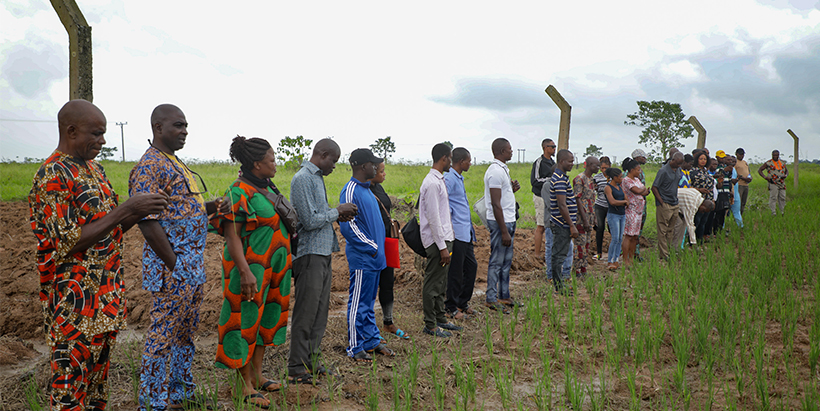
Points clés :
Symptômes et transmission du BBTD
Les plantes infectées par le BBTV présentent un retard de croissance et un port rabattus, avec des feuilles aux bords jaunis et des stries vert foncé sur le pétiole et la face inférieure des feuilles. Les plantes infectées à un stade précoce ne produisent pas de fruits, tandis que celles infectées à un stade plus avancé peuvent produire des fruits déformés ; toutefois, les pousses qui apparaissent par la suite ne produisent pas de fruits, ce qui entraîne une perte de rendement de 100%. La propagation principale du BBTD se fait par l’utilisation de matériel végétal infecté. La maladie peut également être transmise par le puceron de la banane (Pentalonia nigronervosa), répandue dans les régions productrices de bananes de l'Ouganda. L'utilisation de rejets provenant de vieux champs est découragée car ils pourraient potentiellement propager la maladie. L'utilisation de matériel de plantation certifié est considérablement faible en raison d'une production insuffisante, de réseaux de distribution médiocres et d'une sensibilisation limitée aux avantages d'un matériel de plantation sain, ce qui exacerbe la propagation du virus à l'intérieur et entre les pays. Stratégies de prévention et de gestion des maladies Pour prévenir et gérer la maladie du sommet touffu du bananier, les agriculteurs doivent adopter des mesures intégrées. Une prévention efficace implique donc une combinaison de différentes stratégies de lutte, notamment l'utilisation de matériel de plantation sain et exempt de maladies, l'élimination des plantes infectées, leur découpage en petits morceaux et l'arrosage avec une solution détergents pour lutter contre les pucerons, l'arrêt de l'approvisionnement en matériel de plantation ou en rejets provenant de champs infectés, la pratique d'une bonne hygiène, la lutte contre les pucerons vecteurs et la surveillance régulière du champ pour éliminer les plantes infectées. Cela permettra de réduire les niveaux d'inoculum, minimisant ainsi le risque de propagation du virus du sommet touffu du bananier (BBTV). Les stratégies de gestion comprennent la détection précoce et l'élimination des plantes infectées pour lutter contre les pucerons, la sensibilisation des parties prenantes et le renforcement de leurs capacités à lutter contre la maladie. En outre, l'application de réglementations de quarantaine et la mise en œuvre d'approches de lutte intégrée contre les ravageurs (LIR) peuvent contribuer à réduire l'impact de la maladie. Globalement, une surveillance et une évaluation régulières sont essentielles pour garantir une gestion efficace de la maladie.Avis d'expert
Le phytopathologiste de l'IITA, le Dr George Mahuku, a souligné l'importance d'une approche régionale pour lutter contre le BBTV : “ Des maladies comme le BBTV ne respectent pas les frontières. Nos frontières sont poreuses et les gens transportent souvent du matériel de plantation, introduisant par inadvertance le virus dans de nouvelles zones. Les gens doivent être conscients des mesures qu'ils doivent adopter pour minimiser les risques d'introduction et de propagation de la maladie. Nous devons travailler avec nos voisins de la RDC, où la maladie est présente depuis les années 1960. Ensemble, nous pouvons gagner la lutte contre cette maladie. ” La suggestion d'une approche régionale pour lutter contre la maladie a été fortement soutenue par Blaise Amony, chargé de programme pour les partenariats et le renforcement des capacités à l'Association pour le renforcement de la recherche agricole en Afrique orientale et centrale (ASARECA), qui a noté que l'ASARECA contribuait à la cause par son travail avec les Systèmes nationaux de recherche agricole (NARS) et des partenaires internationaux, afin de garantir que les agriculteurs utilisent du matériel de plantation sain, réduisant ainsi l'impact du virus. Le Dr Alex Barakye, responsable du programme de recherche sur le bananier au NARO, a déclaré : “ Il est crucial que les agriculteurs adoptent des pratiques de gestion efficaces pour contrôler la propagation du BBTV, car le virus peut dévaster la production bananière s'il n'est pas maîtrisé. Des pratiques telles que la surveillance régulière des bananiers, la détection précoce des plantes infectées, l'élimination appropriée du matériel infecté et le contrôle du puceron du bananier (le vecteur du virus) sont essentielles. La mise en œuvre de ces mesures aide à maintenir des cultures saines et réduit les pertes économiques associées aux épidémies de BBTV. ” Il convient de noter que la vulgarisation des collectivités locales a joué un rôle déterminant dans l'éducation des agriculteurs sur l'importance de la détection précoce et des bonnes pratiques de gestion. L'agent agricole du district, Rukara, a déclaré : “ Le projet a grandement aidé à suivre la maladie et à sensibiliser tout le district. Nous avons utilisé diverses méthodes, notamment les radios locales et le personnel de vulgarisation, pour informer les agriculteurs dans les zones touchées. ”Impact et futurs projets
L'impact de la visite d'apprentissage se fait déjà sentir, les agriculteurs visiteurs faisant état de connaissances et d'une confiance accrues dans la gestion du BBTD. Les plans comprennent des formations de suivi et un soutien pour garantir un progrès durable. Barekye s'est engagé à fournir des matériel de plantation de bananiers sains pour établir un jardin de démonstration dans la ferme de l'Église catholique romaine Saint-Joseph Kisolholho à Kasese afin de lutter contre la maladie du sommet touffu du bananier (BBTD) dans le district. Cette initiative vise à promouvoir une production de bananes indemnes de maladies et à présenter les meilleures pratiques de gestion du BBTD. Le jardin de démonstration servira de modèle aux agriculteurs locaux, leur permettant d'adopter des stratégies de prévention et de gestion efficaces. Barekye a souligné l'engagement du NARO à soutenir les petits exploitants agricoles et à garantir la sécurité alimentaire grâce à des pratiques agricoles durables.Partenariat et soutien
La visite a été soutenue en partie par l'Initiative intégrée régionale du CGIAR, Ukama Ustawi (UU), l'Initiative sur la santé des plantes (PHI) et le Service agricole étranger du Département de l'Agriculture des États-Unis. (USDA-FAS, et le projet de la mission régionale de l'USAID en Afrique de l'Est “ Combattre le BBTV dans la région de l'Afrique de l'Est ”.” Partenaires : IITA (Chef de file), MAAIF, ASARECA, NARO et le gouvernement local.



 Conclusion
La visite d'apprentissage des agriculteurs sur la maladie du bunchy top du bananier témoigne de la force des partenariats et des initiatives dirigées par le CGIAR dans le cadre d'Ukama Ustawi (UU). Elle a doté les agriculteurs de connaissances et de compétences essentielles pour lutter contre cette maladie dévastatrice, maintenir la production de bananes et améliorer leurs moyens de subsistance.
Liens vers la galerie photo
https://www.flickr.com/photos/iita-media-library/albums/72177720321921310
https://www.flickr.com/photos/iita-media-library/albums/72177720321921310/page2
Conclusion
La visite d'apprentissage des agriculteurs sur la maladie du bunchy top du bananier témoigne de la force des partenariats et des initiatives dirigées par le CGIAR dans le cadre d'Ukama Ustawi (UU). Elle a doté les agriculteurs de connaissances et de compétences essentielles pour lutter contre cette maladie dévastatrice, maintenir la production de bananes et améliorer leurs moyens de subsistance.
Liens vers la galerie photo
https://www.flickr.com/photos/iita-media-library/albums/72177720321921310
https://www.flickr.com/photos/iita-media-library/albums/72177720321921310/page2
Contribué par
Histoires récentes
Aucun article trouvé