Une consultation d'experts sur l'amélioration des procédures phytosanitaires pour l'échange de matériel génétique en Afrique
22 novembre 2024
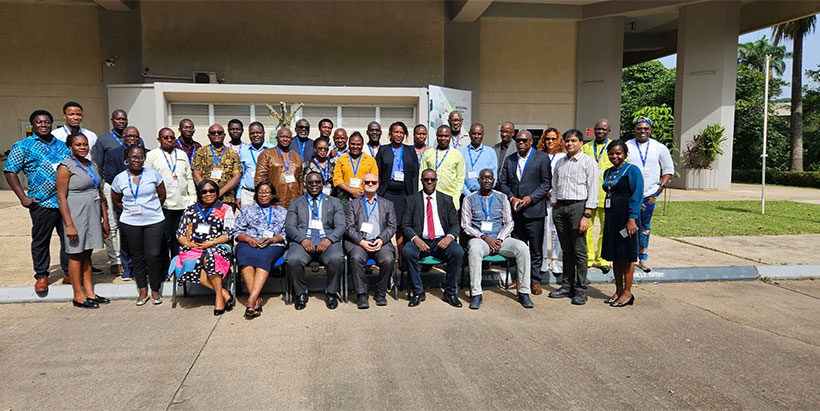
On 7 and 8 November 2024, IITA–CGIAR hosted the “Expert consultation workshop on addressing phytosanitary bottlenecks to improve germplasm exchange in Africa” at its headquarters in Ibadan, Nigeria. The workshop brought together key stakeholders, including Heads of Quarantine Agencies from nine African nations (Benin, Cameroon, Côte d’Ivoire, Ethiopia, Ghana, Kenya, Nigeria, Uganda, and Zimbabwe), representatives from the Food and Agriculture Organization Regional Office for Africa (FAORAF), CABI, et le African Union Inter-African Phytosanitary Council (AU-IAPSC).
Participants from different stakeholder organisations during the workshop.
The primary aim was to address critical challenges, explore opportunities, and outline actionable steps for harmonizing protocols for germplasm exchange to enhance agricultural productivity across sub-Saharan Africa (SSA).
Dr Kenton Dashiell, IITA Deputy Director General for Partnerships for Delivery, opened the workshop, emphasizing the significance of international collaboration between CGIAR and national partners. He highlighted how access to germplasm is fundamental for research and called for stronger ties between national plant protection organizations and academia to facilitate safe transboundary germplasm movement.
The IITA Plant Health Program Lead, Dr Lava Kumar, explained the crucial role of CGIAR’s genebanks and breeding programs in global agricultural research. He detailed rigorous phytosanitary measures used by CGIAR Germplasm Health Units (GHUs) to ensure compliance with international standards and mitigate pest risks during germplasm distribution. With CGIAR facilitating approximately 1,000 annual international exchanges involving over 100 countries, Dr Kumar stressed the need to address delays caused by phytosanitary challenges, which can result in missed planting seasons and other repercussions.
Dr David Chikoye, IITA R4D Director for Resilient Agri-Food Systems, raised urgent concerns about informal germplasm exchange through porous borders. He identified this as a significant pathway for pest spread and underscored the immediate need to tackle emerging pests and diseases that threaten food security. Dr Chikoye further advocated for integrated approaches, including genetic solutions, which rely on access to germplasm.
Introducing the Plant Health Strategy for Africa (PHSA), Dr Saliou Niassy, AU-IAPSC Coordinator said this is critical to harmonize phytosanitary capacities across member states. He highlighted the importance of germplasm accessibility and improved crop varieties in building resilient agricultural systems, achieving zero hunger, and addressing climate change challenges in line with the Malabo Declaration. He conveyed the unwavering commitment of AU-IAPSC to addressing bottlenecks for safe germplasm exchange and trade on the continent.
Dr Akindele Ogunfunmilayo, Head of the Plant Quarantine Directorate of Nigerian Agricultural Quarantine Services (NAQS), speaking during the workshop said it was a timely approach towards improving germplasm distribution, and lauded IITA and CGIAR’s contributions to national and regional biosecurity and agricultural development.
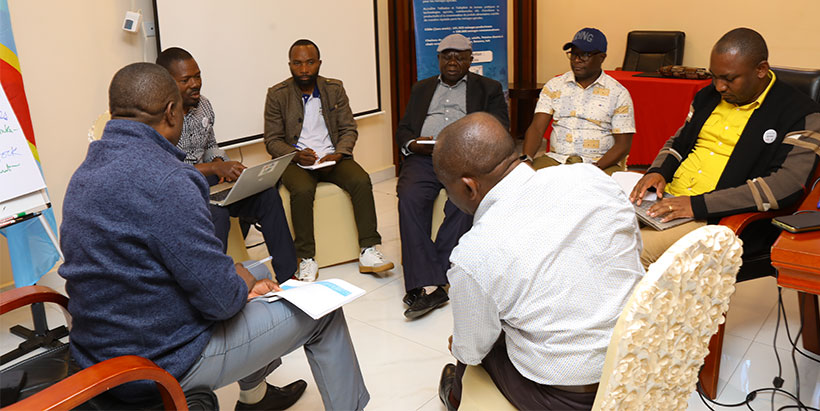
Breakout session during the consultation workshop.
The workshop sessions featured expert presentations on the opportunities and challenges associated with germplasm exchange. Participants, including quarantine regulators and plant breeders, shared insights on developing harmonized procedures for SSA.
Key highlights included:
Breeding Programs and Genebank Management:Dr John Derera (CGIAR) and Dr Mushoriwa Hapson (IITA) underscored the global impact of CGIAR’s breeding programs and international nurseries, emphasizing the need for streamlined procedures to accelerate germplasm delivery.
Germplasm Seed and Microbial Germplasm Exchange:Dr Olaniyi Oyatomi, the Manager of the IITA Seed Bank, and Dr Marie-Noelle Ndjiondjop, Head of the AfricaRice genebank, discussed genebank seed flow management, while Dr Alejandro Ortega-Beltran highlighted the role of microbial germplasm in biocontrol programs like AflaSafe.
FAO Genebanks Standards: Jean Baptist Bahama from FORAF highlighted the scope of a harmonized framework in the FAO Genebanks Standards. The seed system specialists, Dr Delphine Amah et Morufat Balogun, stressed the importance of flexible procedures for the regional exchange of clonal plant propagation materials.
Quarantine Practices and Challenges: Representatives from national quarantine agencies shared existing protocols for germplasm import and export, identifying gaps such as outdated pest lists, inadequate seed health testing capacity, and funding shortages. They also noted regionally harmonized efforts, including the East African Community (EAC) supported by KEPHIS and Southern African Development Community (SADC) initiatives. Dr Benoit Gnonlonfin from CABI shared the experience of harmonizing SPS measures in the ECOWAS region.
Systems Approach: Representatives from AfricaRice, Geoffrey Onaga; ILRI, Dawit Woubit, and IITA, Lava Kumar, shared systems approaches used in CGIAR GHUs to produce, conserve, and distribute clean germplasm in collaboration with the national plant production organizations.
The discussions converged on the pressing need for a harmonized framework to facilitate safe germplasm exchange in SSA. Expert recommendations included:
Identifying Priority Crops for Harmonization: Partners established priority crops for developing harmonized germplasm exchange protocols.
Renforcement des capacités : Targeted training and technical support for officials in plant quarantine regulatory agencies.
Raising Awareness: Information to stakeholders on the risks of informal exchanges, best procedures used during formal exchange of germplasm seed and the benefits of standardized procedures to improve agrifood systems.
Facility Accreditation: A system for accrediting germplasm health facilities by the national plant protection organizations as per the ISPM-45.
During breakout sessions, participants developed a roadmap for implementing harmonized procedures, focusing on:
Coordinating efforts among regional and national organizations.
Addressing capacity gaps in plant quarantine organizations.
Promoting mutual recognition of phytosanitary measures among African nations.
Dr Kumar outlined a way-forward plan to implement the harmonized exchange procedures for priority crops while addressing capacity-building needs. The workshop underscored the critical importance of regional collaboration in improving germplasm exchange systems. By aligning efforts across sub-Saharan Africa (SSA), stakeholders aim to create resilient agricultural systems capable of meeting the challenges of food security, climate change, and sustainable farming. Enhanced phytosanitary measures and streamlined procedures will ensure that germplasm’s safe and efficient movement drives innovation and productivity in African agriculture.
Contributed by Anita Akinyomade and Lava Kumar
Olamide Deborah Nwanze est une chercheuse principale spécialisée dans la recherche sur l'approche "genre" afin d'éclairer les politiques de sélection participative et inclusive, de développement de variétés et de systèmes semenciers concernant les cultures de racines, tubercules et bananes (RTB) au siège de l'Institut International d'Agriculture Tropicale, à Ibadan, au Nigeria. Elle est candidate au doctorat à l'Université d'Ibadan et titulaire d'un master et d'un diplôme d'ingénieur agronome en vulgarisation agricole et développement rural. Olamide est membre du programme African Women in Agricultural Research and Development – Gender Responsive Agricultural Systems Policy (SAISIE DE RÉCOMPENSEet les Chercheuses Sensibles au Genre Équipées pour la Transformation Agricole (SUPER. Elle cherche à appliquer ses apprentissages en matière d’approche genre, recherche sensible au genre, et expertise en développement et examen de politiques pour faciliter l’accès et l’adoption par les femmes, les jeunes, les enfants et les groupes sociaux vulnérables aux innovations agricoles qui garantissent la sécurité alimentaire, nutritionnelle, des revenus et des moyens de subsistance en Afrique. Ses rôles actuels comprennent le mentorat de chercheurs stagiaires, le développement de guides et manuels de formation, la mise en œuvre et l'adaptation de cadres et d'outils genre, l'engagement des acteurs de la chaîne de valeur en tant que partenaires de la science citoyenne, l'examen et la refonte des politiques, la gestion et l'analyse des données. Ses recherches actuelles portent sur les méthodes mixtes ainsi que sur les approches participatives et interdisciplinaires pour saisir et mettre en évidence les dynamiques de genre, les besoins, les préférences et les défis rencontrés par les parties prenantes au sein de la chaîne de valeur des moyens de subsistance agricoles afin de prioriser des stratégies axées sur le genre dans les programmes de sélection, la conception et la mise en œuvre des politiques.
de Sousa, K., van Etten, J., Manners, R. Bello, A., Teeken, B., Olaosebikan, O., et al. 2024. L'approche tricot : un cadre agile pour les essais décentralisés à la ferme soutenus par la science citoyenne. Une rétrospective. Agron. Sustain. Dev. 44, 8. https://doi.org/10.1007/s13593-023-00937-1
Madu, T., Onwuka, S., Nwafor, S., Onyemauwa, N., Ejechi, M., Ofoeze, M., Ukeje, B., Eluagu, C., Olaosebikan, O., Okoye, B., 2024. Les études sur les consommateurs inclusifs en matière de genre améliorent l'amélioration du manioc au Nigeria dans : Frontiers in Sociology, volume 9, numéro : 1224504, doi : 10.3389/fsoc.2024.1224504
Olaosebikan, O. ; Bello, A. ; Utoblo, O. ; Okoye, B. ; Olutegbe, N. ; Garner, E. ; Teeken, B. ; Bryan, E. ; Forsythe, L. ; Cole, S. ; Madu, T. 2023. Facteurs de stress et résilience au sein de la chaîne de valeur du manioc au Nigeria : Caractéristiques préférées des variétés de manioc et stratégies de réponse des hommes et des femmes pour informer l'amélioration variétale. Sustainability 15, 7837. https://doi.org/10.3390/su15107837
Okoye, B., Ofoeze, M., Ejechi, M., Onwuka, S., Nwafor, S., Onyemauwa, N., Ukeje, B., Eluagu, C., Obidiegwu, J.*, Olaosebikan, O., Madu, T.* 2023. Priorisation des traits préférés dans la chaîne de valeur de l'igname au Nigeria : une analyse de la situation en matière de genre in: Frontiers in Sociology, volume 8, numéro : 1232626, pages 1 – 9, ISSN 2297-7775, 2023. https://www.frontiersin.org/articles/10.3389/fsoc.2023.1232626/full
Olaosebikan, O., Bello, A. A., de Sousa, K., Ndjouenkeu, R., Adesokan, M., Alamu, E. O., Agbona, A., van Etten, J., Kegah, F. N.*, Dufour, D., Bouniol, A., Teeken, B. 2023. Acceptabilité par les consommateurs des produits alimentaires à base de gari-eba de manioc dans des contextes culturels et environnementaux variés en utilisant l'approche triade de comparaison des technologies (tricot) dans : Journal of the Science of Food and Agriculture,
Teeken, B., Olaosebikan, O., Bello, A. A., Madu, T.*, Cole, S. M. 2023. Évaluation qualitative de la positionnalité et des préférences des dyades en relation avec les activités liées au manioc : travailler avec des scientifiques citoyens du procès tricot https://hdl.handle.net/10568/138326 Type : Manuel
Bouniol, A., Ceballos, H., Bello, A. A., Teeken, B., Olaosebikan, O., Owoade, D., Agbona, A., Fotso Kuate, A., Madu, T.*, Okoye, B.*, Ofoeze, M.*, Nwafor, S.*, Onyemauwa, N.*, Adinsi, L.*, Forsythe, L., Dufour, D. 2023. Impact variétal sur le travail des femmes, la charge de travail et la pénibilité associée dans le traitement des plantes à racines, tubercules et bananes : focus sur le manioc en Afrique subsaharienne dans : Journal of the Science of Food and Agriculture, pages 1 – 25, ISSN 0022-5142,
Bello, A. A., Agbona, A., Olaosebikan, O., Edughaen, G., Dufour, D., Bouniol, A., Iluebbey, P., Ndjouenkeu, R.*, Rabbi, I. Y., Teeken, B. 2023. Effets génétiques et environnementaux sur la productivité de la transformation et le rendement des produits alimentaires : la pénibilité du travail des femmes dans : Journal of the Science of Food and Agriculture, pages 1 – 32, ISSN 0022-5142, 5
Cavicchioli, M., Zimbiti, T., Teeken, B., Nwanze, D.O., Liani, M., Parkes, E. & Bello, A. 2023. Rapport sur la formation en sélection génétique sensible au genre à l'IITA. Genetic Resources Center, IITA-HQ, Ibadan, 21-23 septembre 2022. Ibadan, Nigéria : IITA, (34 p.).https://hdl.handle.net/10568/131368
Agbona, A. Peteti P., Teeken B., Olaosebikan O. Bello, A. A., Parkes, E., Rabbi, I. Y., Mueller, L., Egesi, C., Kulakow, P. 2022. Gestion des données dans les programmes d'amélioration des cultures RTB africaines multidisciplinaires. In : Williamson, H.F., Leonelli, S. (eds) Towards Responsible Plant Data Linkage: Data Challenges for Agricultural Research and Development. Springer, Cham. https://doi.org/10.1007/978-3-031-13276-6_5
Lora Forsythe, Pricilla Marimo, Sarah Mayanja, Olamide D. Olaosebikan, Esme Stuart, Bela Teeken, Benjamin Okoye, Tessy Madu, (2021). Analyse transversale du genre dans RTBfoods Étape 2 Cartographie des genres sur les produits RTB. Comprendre les moteurs des préférences en matière de traits et le développement de profils de produits RTB multi-utilisateurs, WP1. Londres, Royaume-Uni : Rapport scientifique de terrain RTBfoods, 30 p.
Teeken, B., Garner, E., Agbona, A., Balogun, I., Olaosebikan, O., Bello, A., Madu, T., Okoye, B., Egesi, C., Kulakow, P. et Tufan, H.A. 2021. Au-delà des “ traits des femmes ” : explorer comment le genre, les différences sociales et les caractéristiques des ménages influencent les préférences pour les traits. Frontiers Systèmes alimentaires durables 5:740926. https://doi.org/10.3389/fsufs.2021.740926
Teeken, B., Agbona, A., Bello, A., Olaosebikan, O., Alamu, E., Adesokan, M., Awoyale, W., Madu, T., Okoye, B., Chijioke, U., Owoade, D., Okoro, M., Bouniol, A., Dufour, D., Hershey, C., Rabbi, I., Maziya‐Dixon, B., Egesi, C., Tufan, H. et Kulakow, P. (020. Comprendre les préférences variétales du manioc par le classement par paires du gari-eba et du fufu préparés par des agriculteurs-transformateurs locaux. Int J Food Sci Technol.https://doi.org/10.1111/ijfs.14862
Bela Teeken, Olamide Olaosebikan, Ireti Balogun, Benjamin Okoye, Tessy Madu, Steven Cole, Abolore Bello, Elizabeth Parkes. (2020). Pilotage des outils de profil client et produit G+ pour l'amélioration sensible au genre du manioc au Nigeria. Nigeria : Institut international d'agriculture tropicale (IIAT). https://hdl.handle.net/20.500.11766/13000