

The recently held annual review and planning meeting by the IITA BSF for Bio Circular Economy and Environmental Sustainability (BBEST) Project in Accra, recognized the support of the Government of Ghana through the Ministry of Food and Agriculture (MOFA) by creating an enabling environment for implementing the project activities in the country.
The IITA-BBEST, an environmentally friendly project addresses the issue of urban waste management and unsustainable agricultural outputs for poultry and vegetable producers.
The meeting, held from 24 to 28 February, brought together key stakeholders such as the MOFA, Norad, the Royal Norwegian Embassy, and national and international partners working with the IITA-BBEST project, namely, BNARI, CSIR-IIR AALI, INERA, UNIKIN, IER, WORLDVEG, INRAN, NIBIO, and IMR.
In his address, Dr Mawufe Agbodzavu, the Project Manager, stated that the purpose of the meeting was, “to review the project’s achievements over the past year and exchange ideas on improving its collaborative impact and strengthening networking and cross-country learning.”
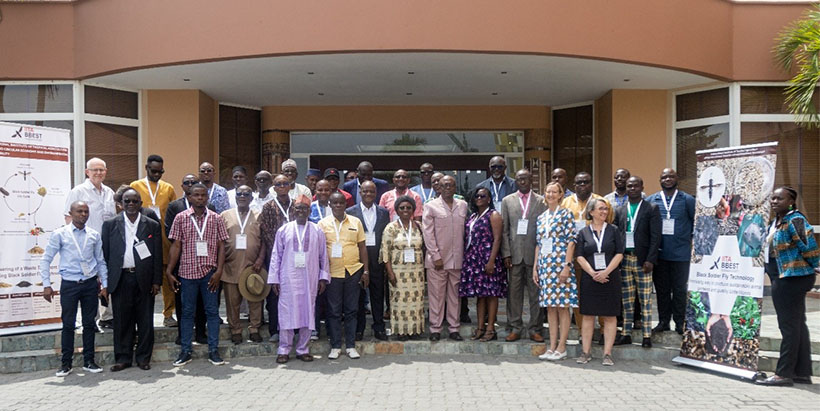
Vivian Hilde, the Counsellor for Food Security and Climate, representing the Royal Norwegian Embassy and Norad, said, “The Black Soldier Flies were a high-protein feed option for poultry and aquaculture production, offering a sustainable and cost-effective alternative to traditional feed sources.
In her goodwill message, Prof Anna Lartey, a board member of IITA, said a substantial amount of food produced in Ghana was lost due to the inefficient supply chain, and BSF technology was needed to address such challenges. She called on the government and stakeholders to upscale the technology for farmers, especially youth and women farmers, to get the maximum benefits from their work.
The IITA-BBEST project partners presented the experiments’ results and updated the audience on the mass production of BSF larvae and frass. They also discussed the challenges faced by the partners and the lessons learned.
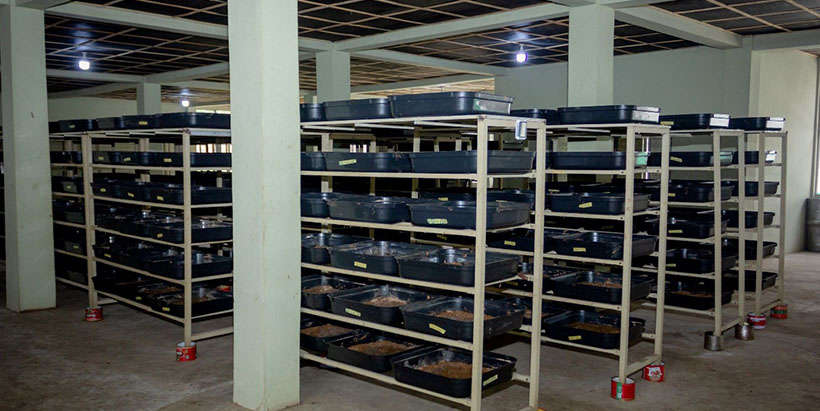
Together with the partners, the IITA-BBEST Project Management discussed research results that can be repackaged for practical and effective dissemination of the benefit of BSF larvae and the frass aiming to take the BSF technologies to scale and establish market demand.
An assessment of the engagement of policymakers in each country was done by examining the progress in developing and adopting standards for using BSF products in animal feed and vegetable production in participating countries. Finally, they discussed and agreed on the Project Implementation Plan and reviewed the Annual Indicator Targets for 2025.
The review meeting provided a platform for stakeholders to explore the progress made in Ghana, namely, the production of BSF larvae and frass at the centralized unit established in Kofisah, the gazetting of the dried BSF standard, and the ongoing certification process for the sales of the BSF products.
Contributed by Francisca Ocloo
Contribué par
Histoires récentes