
NOUVELLES DE L'IITA

IITA and partners review progress of Sierra Leone’s Feed Salone Strategy
avril 7, 2026

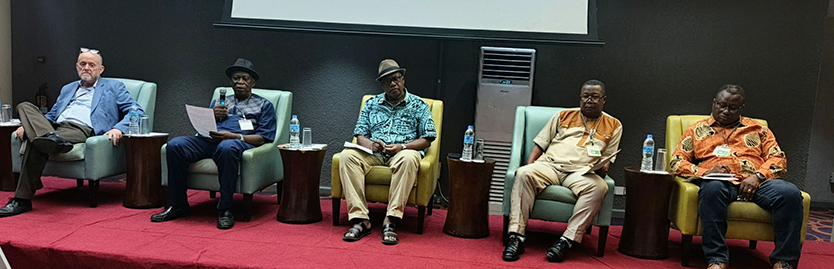
Panelists from IITA, SLARI and FSRP during the panel session.

Sierra Leone’s agricultural sector remains central to millions of livelihoods, employing a significant proportion of the population. Yet, it continues to face persistent challenges, including low productivity, limited access to improved inputs, climate variability, and weak market linkages. These constraints have contributed to food insecurity and a heavy reliance on food imports, underscoring the urgent need for a coordinated and systems-based transformation of the sector.

In response, the Government of Sierra Leone launched the Feed Salone Strategy as a flagship national initiative to drive agricultural growth, enhance food self-sufficiency, and create economic opportunities, particularly for smallholder farmers, women, and youth. The strategy prioritizes key value chains, promotes climate-smart agriculture, and strengthens institutions across the country’s agricultural ecosystem.
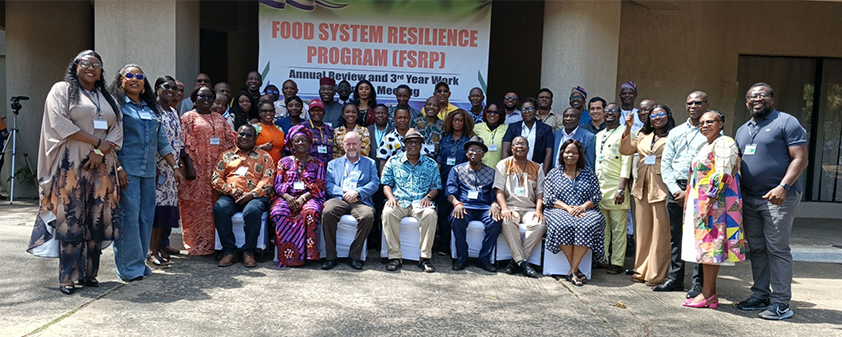
IITA team with the SLARI and FSRP team.

To support the effective implementation of this agenda, IITACGIAR is providing technical assistance through a World Bank-funded Food System Resilience Programme (FSRP). The program aims to strengthen food system resilience by enhancing productivity, improving regional coordination, and building the capacity of national institutions to respond to shocks and long-term challenges.
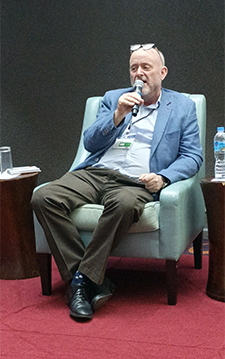
Professor Michael Abberton during the panel session.

IITA’s technical assistance focuses on delivering science-based solutions, capacity building, strengthening research-extension linkages, supporting policy and institutional development, and facilitating partnerships that enable the scaling of proven agricultural innovations. Through this integrated approach, the project is helping to translate the Feed Salone vision into tangible outcomes that improve food and nutrition security while building a more resilient agricultural system in Sierra Leone.

Through its technical assistance to the Feed Salone Strategy under FSRP, IITA-CGIAR recently convened stakeholders for the 2nd Annual Review and Planning Meeting for Year three implementation plans in Freetown, Sierra Leone, marking another milestone in the country’s journey toward agricultural transformation and food security.

The annual review and planning meeting, held at the Radisson Blu Hotel, brought together key national and international partners, including the Sierra Leone Ministry of Agriculture and Food Security (MAFS), the Sierra Leone Agricultural Research Institute (SLARI), and development partners. The platform provided an opportunity to reflect on achievements, assess implementation progress, and align priorities for the coming year.

Over the past two years, the FSRP-supported technical assistance has recorded significant milestones, contributing meaningfully to the implementation of the Feed Salone Strategy. These achievements have been driven by strong collaboration among key stakeholders, including SLARI, the Sierra Leone Seed Certification Agency (SLeSCA), universities, and private sector actors, ensuring a coordinated and inclusive approach to agricultural transformation.

IITA-CGIAR’s role in providing technical assistance, a critical component of the country’s flagship program, has supported the government in strengthening agricultural systems through research-driven innovations, institutional capacity building, and the deployment of proven technologies. It has also facilitated stronger coordination among national systems and key partners, ensuring that interventions align with the country’s agricultural transformation agenda.

The annual review meeting highlighted progress across several strategic areas, including improved access to agricultural technologies, entrepreneurship and business management skills development, enhanced Agribusiness advisory services, including a mentorship program, establishment of cooperatives for beneficiaries, and capacity strengthening of national research systems. These efforts align with the broader objectives of FSRP, which aim to improve food system resilience, boost productivity, and enhance regional agricultural coordination across West Africa.

Speaking at the meeting, Chief Dr Alfred Dixon emphasized the importance of sustained partnerships and innovation in delivering impact.

“This review meeting reflects our shared commitment to transforming Sierra Leone’s agriculture through science, innovation, and strong partnerships. By working together, we are building resilient food systems that will improve livelihoods and ensure long-term food security,” he said.

Also speaking, Prof Abdulai Jalloh reaffirmed the government’s commitment to the Feed Salone Strategy, noting that collaboration with IITA and partners is critical to achieving national food sovereignty.

“Feed Salone is a national priority, and partnerships such as this are essential to unlocking the full potential of our agricultural sector. With the support of IITA and our partners, we are laying the foundation for a more productive, resilient, and inclusive food system,” he stated.

Looking ahead, the project is entering its third year of implementation, with a renewed focus on consolidating gains and expanding impact. The team plans to deepen engagement with existing partners while bringing on board new collaborators to ensure that all project objectives are fully achieved.

The meeting concluded with the approval of the work plan and budget for the third year of implementation, signaling continued momentum and stakeholder commitment to delivering measurable results.

As Sierra Leone, IITA-CGIAR, and partners move into the next phase, the focus remains on scaling proven innovations, strengthening institutional systems, and accelerating impact at the last mile.

Contribué par ‘Timilehin Osunde


Contribué par

Nouvelles connexes

Aucun article trouvé

Laisser un commentaire

Votre adresse e-mail ne sera pas publiée. Les champs obligatoires sont indiqués avec *

Retour en haut
Olaosebikan, Olamide

Olamide Deborah Nwanze est une chercheuse principale spécialisée dans la recherche sur l'approche "genre" afin d'éclairer les politiques de sélection participative et inclusive, de développement de variétés et de systèmes semenciers concernant les cultures de racines, tubercules et bananes (RTB) au siège de l'Institut International d'Agriculture Tropicale, à Ibadan, au Nigeria. Elle est candidate au doctorat à l'Université d'Ibadan et titulaire d'un master et d'un diplôme d'ingénieur agronome en vulgarisation agricole et développement rural. Olamide est membre du programme African Women in Agricultural Research and Development – Gender Responsive Agricultural Systems Policy (SAISIE DE RÉCOMPENSEet les Chercheuses Sensibles au Genre Équipées pour la Transformation Agricole (SUPER. Elle cherche à appliquer ses apprentissages en matière d’approche genre, recherche sensible au genre, et expertise en développement et examen de politiques pour faciliter l’accès et l’adoption par les femmes, les jeunes, les enfants et les groupes sociaux vulnérables aux innovations agricoles qui garantissent la sécurité alimentaire, nutritionnelle, des revenus et des moyens de subsistance en Afrique. Ses rôles actuels comprennent le mentorat de chercheurs stagiaires, le développement de guides et manuels de formation, la mise en œuvre et l'adaptation de cadres et d'outils genre, l'engagement des acteurs de la chaîne de valeur en tant que partenaires de la science citoyenne, l'examen et la refonte des politiques, la gestion et l'analyse des données. Ses recherches actuelles portent sur les méthodes mixtes ainsi que sur les approches participatives et interdisciplinaires pour saisir et mettre en évidence les dynamiques de genre, les besoins, les préférences et les défis rencontrés par les parties prenantes au sein de la chaîne de valeur des moyens de subsistance agricoles afin de prioriser des stratégies axées sur le genre dans les programmes de sélection, la conception et la mise en œuvre des politiques.

À l'IITA, elle contribue à la mise en œuvre du CGIAR Initiative d'Élevage Accéléré et Innovation génétique Programmes ; recherche participative et genre au sein des Prochaine Génération ManiocHarvestPlusRTBAliments, et Tricot-ClimMob 1000Fermes Projets ; et la communication des connaissances sur le genre via le Série de webinaires G-LENS, vidéo documentaire, notes de politiquepublications, et blogs.


Publications récentes

de Sousa, K., van Etten, J., Manners, R. Bello, A., Teeken, B., Olaosebikan, O., et al. 2024. L'approche tricot : un cadre agile pour les essais décentralisés à la ferme soutenus par la science citoyenne. Une rétrospective. Agron. Sustain. Dev. 44, 8. https://doi.org/10.1007/s13593-023-00937-1

Madu, T., Onwuka, S., Nwafor, S., Onyemauwa, N., Ejechi, M., Ofoeze, M., Ukeje, B., Eluagu, C., Olaosebikan, O., Okoye, B., 2024. Les études sur les consommateurs inclusifs en matière de genre améliorent l'amélioration du manioc au Nigeria dans : Frontiers in Sociology, volume 9, numéro : 1224504, doi : 10.3389/fsoc.2024.1224504

Olaosebikan, O. ; Bello, A. ; Utoblo, O. ; Okoye, B. ; Olutegbe, N. ; Garner, E. ; Teeken, B. ; Bryan, E. ; Forsythe, L. ; Cole, S. ; Madu, T. 2023. Facteurs de stress et résilience au sein de la chaîne de valeur du manioc au Nigeria : Caractéristiques préférées des variétés de manioc et stratégies de réponse des hommes et des femmes pour informer l'amélioration variétale. Sustainability 15, 7837. https://doi.org/10.3390/su15107837

Okoye, B., Ofoeze, M., Ejechi, M., Onwuka, S., Nwafor, S., Onyemauwa, N., Ukeje, B., Eluagu, C., Obidiegwu, J.*, Olaosebikan, O., Madu, T.* 2023. Priorisation des traits préférés dans la chaîne de valeur de l'igname au Nigeria : une analyse de la situation en matière de genre in: Frontiers in Sociology, volume 8, numéro : 1232626, pages 1 – 9, ISSN 2297-7775, 2023. https://www.frontiersin.org/articles/10.3389/fsoc.2023.1232626/full

Olaosebikan, O., Bello, A. A., de Sousa, K., Ndjouenkeu, R., Adesokan, M., Alamu, E. O., Agbona, A., van Etten, J., Kegah, F. N.*, Dufour, D., Bouniol, A., Teeken, B. 2023. Acceptabilité par les consommateurs des produits alimentaires à base de gari-eba de manioc dans des contextes culturels et environnementaux variés en utilisant l'approche triade de comparaison des technologies (tricot) dans : Journal of the Science of Food and Agriculture,

Teeken, B., Olaosebikan, O., Bello, A. A., Madu, T.*, Cole, S. M. 2023. Évaluation qualitative de la positionnalité et des préférences des dyades en relation avec les activités liées au manioc : travailler avec des scientifiques citoyens du procès tricot https://hdl.handle.net/10568/138326 Type : Manuel

Bouniol, A., Ceballos, H., Bello, A. A., Teeken, B., Olaosebikan, O., Owoade, D., Agbona, A., Fotso Kuate, A., Madu, T.*, Okoye, B.*, Ofoeze, M.*, Nwafor, S.*, Onyemauwa, N.*, Adinsi, L.*, Forsythe, L., Dufour, D. 2023. Impact variétal sur le travail des femmes, la charge de travail et la pénibilité associée dans le traitement des plantes à racines, tubercules et bananes : focus sur le manioc en Afrique subsaharienne dans : Journal of the Science of Food and Agriculture, pages 1 – 25, ISSN 0022-5142,

Bello, A. A., Agbona, A., Olaosebikan, O., Edughaen, G., Dufour, D., Bouniol, A., Iluebbey, P., Ndjouenkeu, R.*, Rabbi, I. Y., Teeken, B. 2023. Effets génétiques et environnementaux sur la productivité de la transformation et le rendement des produits alimentaires : la pénibilité du travail des femmes dans : Journal of the Science of Food and Agriculture, pages 1 – 32, ISSN 0022-5142, 5

Cavicchioli, M., Zimbiti, T., Teeken, B., Nwanze, D.O., Liani, M., Parkes, E. & Bello, A. 2023. Rapport sur la formation en sélection génétique sensible au genre à l'IITA. Genetic Resources Center, IITA-HQ, Ibadan, 21-23 septembre 2022. Ibadan, Nigéria : IITA, (34 p.).https://hdl.handle.net/10568/131368

Agbona, A. Peteti P., Teeken B., Olaosebikan O. Bello, A. A., Parkes, E., Rabbi, I. Y., Mueller, L., Egesi, C., Kulakow, P. 2022. Gestion des données dans les programmes d'amélioration des cultures RTB africaines multidisciplinaires. In : Williamson, H.F., Leonelli, S. (eds) Towards Responsible Plant Data Linkage: Data Challenges for Agricultural Research and Development. Springer, Cham. https://doi.org/10.1007/978-3-031-13276-6_5

Lora Forsythe, Pricilla Marimo, Sarah Mayanja, Olamide D. Olaosebikan, Esme Stuart, Bela Teeken, Benjamin Okoye, Tessy Madu, (2021). Analyse transversale du genre dans RTBfoods Étape 2 Cartographie des genres sur les produits RTB. Comprendre les moteurs des préférences en matière de traits et le développement de profils de produits RTB multi-utilisateurs, WP1. Londres, Royaume-Uni : Rapport scientifique de terrain RTBfoods, 30 p.

Teeken, B., Garner, E., Agbona, A., Balogun, I., Olaosebikan, O., Bello, A., Madu, T., Okoye, B., Egesi, C., Kulakow, P. et Tufan, H.A. 2021. Au-delà des “ traits des femmes ” : explorer comment le genre, les différences sociales et les caractéristiques des ménages influencent les préférences pour les traits. Frontiers Systèmes alimentaires durables 5:740926. https://doi.org/10.3389/fsufs.2021.740926

Teeken, B., Agbona, A., Bello, A., Olaosebikan, O., Alamu, E., Adesokan, M., Awoyale, W., Madu, T., Okoye, B., Chijioke, U., Owoade, D., Okoro, M., Bouniol, A., Dufour, D., Hershey, C., Rabbi, I., Maziya‐Dixon, B., Egesi, C., Tufan, H. et Kulakow, P. (020. Comprendre les préférences variétales du manioc par le classement par paires du gari-eba et du fufu préparés par des agriculteurs-transformateurs locaux. Int J Food Sci Technol. https://doi.org/10.1111/ijfs.14862

Bela Teeken, Olamide Olaosebikan, Ireti Balogun, Benjamin Okoye, Tessy Madu, Steven Cole, Abolore Bello, Elizabeth Parkes. (2020). Pilotage des outils de profil client et produit G+ pour l'amélioration sensible au genre du manioc au Nigeria. Nigeria : Institut international d'agriculture tropicale (IIAT). https://hdl.handle.net/20.500.11766/13000