
When people think of agricultural research, they often picture scientists in white coats working quietly in laboratories, surrounded by microscopes, and test tubes or researchers on the field under the scorching sun collecting data from field trials.
What is less visible is what happens after the experiments are completed.
How does a research breakthrough become a drought-resistant cowpea variety planted by a farmer in southwest Nigeria? How does a laboratory innovation or field trial evolve into a thriving agribusiness, improved nutrition for families, or employment opportunities for young people in northern Madagascar?
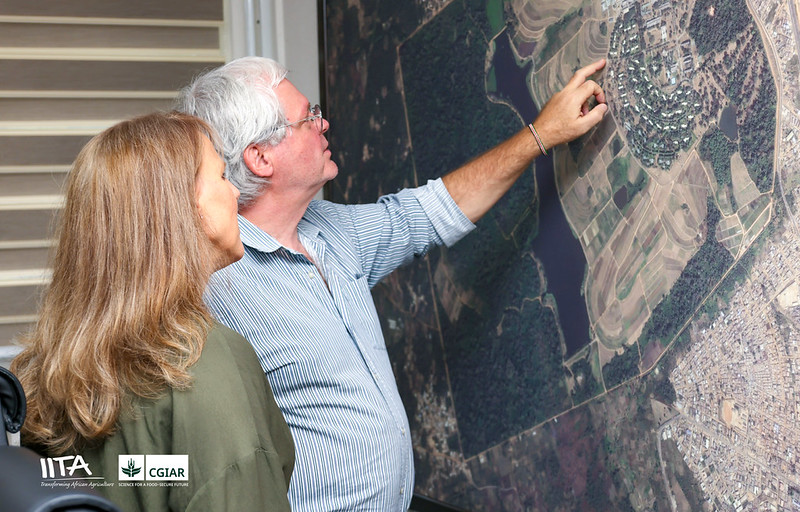
These were among the questions that came into focus during the recent technical visit of CGIAR Chief Scientist, Dr Sandra Milach, to IITA’s Headquarters in Ibadan from 22 – 26, June.
Her first technical mission to IITA since assuming office in 2025 was much more than a routine institutional tour. It was an exploration of a larger and increasingly urgent question facing global agricultural research: How can science move beyond laboratories and translate into meaningful impact in people’s lives?
Speaking during the opening discussions, IITA Deputy Director General, Research for Development, Dr Bernard Vanlauwe who hosted the visit, highlighted IITA’s role in research innovation, scaling and breeding adding that the institute has positioned itself as a leader in research for impact on the continent.
Contribué par
Histoires récentes