
WEATHER STATION
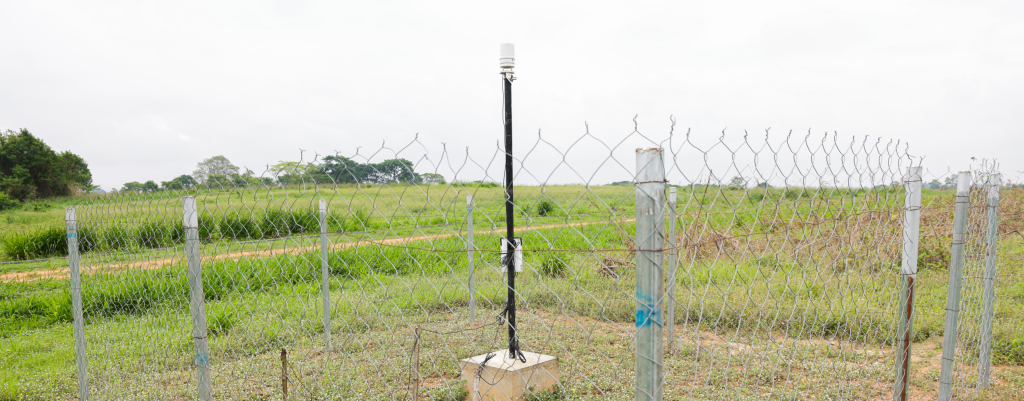
WEATHER STATION – Ibadan, Nigeria
Le IITA Weather Station is an operational meteorological observatory located on the IITA campus in Ibadan, Oyo State, Nigeria. It serves as a key facility for collecting weather and climate data that support a wide range of research and decision‑making activities across the institute’s research programs.
Purpose and functions
Data Collection
Recording key meteorological variables such as:
- Rainfall
- Temperature (including dry bulb and wet bulb)
- Relative humidity
- Solar radiation
- Sunshine hours
- Pan evaporation
- Soil temperatures at various depths
These data are collected both through manual instruments and automatic weather data loggers at regular intervals (e.g., every 15 – 30 minutes).
Research support
The station provides weather and climate information that underpins research in:
- Crop performance and phenology
- Resource‑efficient water and soil management
- Climate variability and adaptation studies
- Irrigation planning and evapotranspiration analysis
Such data are often integrated into modelling and decision‑support tools used in IITA’s research and development programs. (iieta.org)
Management and operations
The weather station network at IITA is actively managed by technical staff, typically under the supervision of a GIS & Meteorological Officer, whose responsibilities include:
- Installing and maintaining both automatic and conventional weather stations
- Collecting, processing, and analysing meteorological data
- Supporting GIS and remote sensing analysis for spatial products and mapping
- Facilitating educational visits and field practicals related to weather monitoring and data interpretation
This role is central to ensuring that high-quality climate data are available to researchers, students, and partners and are used effectively to support IITA’s research outputs.
Pourquoi c'est important
- Improves field research planning: Weather data help researchers understand environmental variability and its influence on crop growth and experimental outcomes.
- Supports climate adaptation: Long‑term meteorological records enable scientists to study climate trends and develop resilient agricultural practices.
- Informs natural resource management: Soil‑atmosphere interactions, driven by weather conditions, inform soil health, water use, and crop scheduling decisions.
Le IITA Weather Station is a vital research and data collection facility on the institute’s Ibadan campus. It continuously collects and processes detailed meteorological data — both manually and automatically — to support agricultural research, climate studies, and resource management. The station is maintained by dedicated technical staff, and its data contribute to improved research outcomes, climate adaptation strategies, and practical agricultural decision-making for stakeholders across Nigeria and beyond.