
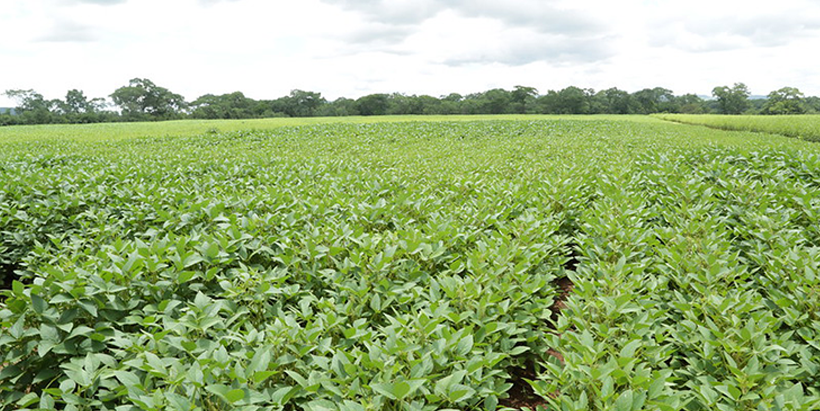
À une époque où les défis de la sécurité alimentaire, du changement climatique et de l'agriculture durable continuent de définir les priorités mondiales, les acteurs du secteur des sciences végétales se sont réunis pour un mini-symposium captivant qui a offert un aperçu approfondi de la manière dont l'innovation en matière de sciences végétales et de recherche peut façonner l'avenir de l'agriculture et des systèmes alimentaires en Afrique et au-delà.
Le mini-symposium hybride ayant pour thème : “Science et innovation végétales – Faire le lien entre la découverte et l'application”, un événement parallèle de la réunion du projet Cassava Source Sink (CASS), organisé par IITA-CGIAR, a réuni des étudiants, des chercheurs et des scientifiques de tous les pôles de l'IITA ainsi que des donateurs. Sept éminents conférenciers ont, à travers leurs différentes présentations, offert un aperçu de la manière dont les avancées technologiques et les innovations ont eu un impact sur la science végétale, en mettant en lumière les tournants clés, les perspectives et une compréhension approfondie de la réglementation sur la santé des plantes.
Uwe Sonnewald, le président de biochimie à l'Université Friedrich-Alexander d'Erlangen-Nuremberg (FAU), a mis en lumière les mécanismes génétiques qui sous-tendent la tolérance à la chaleur chez les pommes de terre. Il a été démontré que les génotypes tolérants présentaient une tubérisation précoce et une forte expression de SELF-PRUNING 6A (SP6A), un gène clé de la tubérisation, et que la tolérance à la chaleur est associée à une expression réduite des gènes de défense tels que la terpène synthase. Compte tenu du changement climatique et de l'insécurité alimentaire mondiale, la compréhension de la génétique de la tolérance à la chaleur est essentielle pour une agriculture durable en Afrique subsaharienne.
Wolfgand Zierer, un chercheur senior de l'Université Friedrich-Alexander d'Erlangen-Nürnberg (FAU), a expliqué en termes simples comment les concepts biotechnologiques sont testés chez le manioc. Les idées sont identifiées, introduites dans des constructions d'ADN, transformées et testées sur le terrain. Grâce à cette approche, plusieurs gènes ont été testés, suivis d'une mesure phénotypique ciblée. Wolfgang et ses collègues, dont les recherches se concentrent sur l'amélioration de la relation source-puits, ont mis en évidence le rôle favorable d'ATK2, un gène végétal codant pour une protéine motrice de type kinésine, dans l'allocation du carbone, ainsi que son impact sur les tissus soumis à un stress hydrique. La preuve d'un chargement phloémien symplasmique a été soulignée. La compréhension et la manipulation des relations source-puits peuvent augmenter l'efficacité de la capture du carbone (la source), de sa conversion en sucre et de son transport par le système vasculaire jusqu'à la racine (le puits), où le sucre est converti et stocké. Cela permettra d'augmenter le rendement racinaire de la plante.
Le phénotypage de terrain, tel que présenté par Onner Muller, chef adjoint du phénotypage de terrain au centre de recherche Forschungszentrum Jülich, est une pierre angulaire de l'agriculture durable. L'utilisation croissante du phénotypage à haut débit et des plateformes robotisées améliorera considérablement l'efficacité et la qualité de la collecte des données, ce qui se traduira par une plus grande précision dans l'évaluation des cultures.
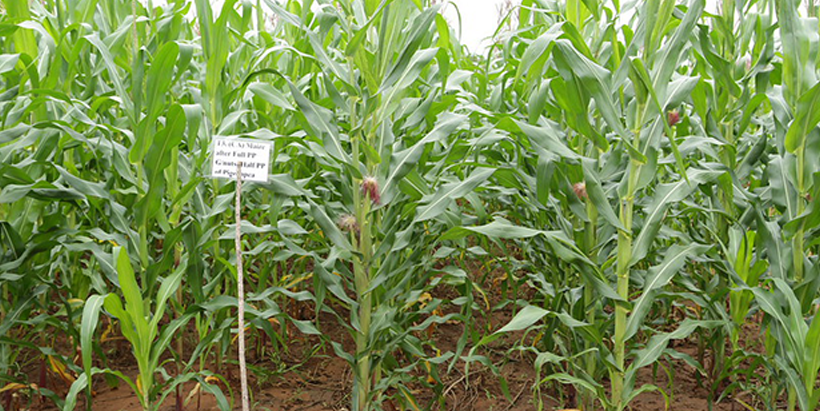
“ Pour combler le déficit de production, l'édition génétique est essentielle pour les cultures de base importantes, en particulier en Afrique subsaharienne ”, a déclaré Leena Tripathi, responsable du programme de biotechnologie à l'IITA et directrice du pôle de l'IITA pour l'Afrique de l'Est. À l'IITA, ces technologies sont mises en œuvre pour développer des variétés de cultures supérieures, notamment le pois bambara, le riz, les tomates, les bananes et les ignames. Les bananes ont enregistré les plus grands progrès, avec un accent mis sur les ravageurs et les maladies et des résultats prometteurs.
L'amélioration des cultures est un catalyseur pour transformer le système agroalimentaire. La modernisation des programmes de sélection est donc essentielle pour répondre aux besoins changeants des utilisateurs finaux, a noté Hapson Mushoriwa, responsable de la sélection à l'IITA. Comme en témoignent les nombreuses variétés améliorées diffusées, le succès de l'IITA a été stimulé par des innovations opérationnelles, l'intégration d'outils et de technologies modernes, des techniques de sélection avancées et la mise en œuvre systématique de meilleures pratiques pour optimiser l'équation de l'obtenteur et les schémas de sélection. Des partenariats stratégiques, les capacités humaines et biophysiques, ainsi que l'adaptabilité aux changements constants ont également été des facteurs clés.
Comprendre le cadre réglementaire de la santé des végétaux est crucial pour le déploiement sûr, efficace et responsable des innovations agricoles. Le responsable du programme sur la santé des végétaux, Lava Kumar, a parlé des différentes réglementations en place et de la manière dont l'unité de la santé des végétaux, qui opère dans plusieurs pays, supervise toutes les opérations relatives à la santé des plantes. Selon Kumar, l'unité supervise le mouvement du germoplasme à l'IITA et garantit le respect de toutes les réglementations.
Les discussions ont porté sur la manière dont les systèmes intégrés de santé des semences génèrent des matériels de plantation de haute qualité en grande quantité et sur les capacités de diagnostic de l'unité de santé de l'IITA, qui vont des méthodes traditionnelles aux plus avancées. Une stratégie fondée sur la nature pour la gestion durable des ravageurs est également intégrée au programme. D'autres stratégies envisagées comprennent l'interférence par ARN (ARNi) pour la gestion des ravageurs et la distribution de précision des pesticides.
Les donateurs sont essentiels à l'avenir de la science végétale. Les ressources financières permettent l'innovation, soutiennent la recherche à long terme pour relever les défis mondiaux urgents et comblent le fossé entre la science et la société. Brigitte Weston, directrice du développement des produits pour Gate Ag One, a parlé des priorités de l'organisation, qui comprennent l'accélération de la recherche dans des domaines importants tels que la photosynthèse fixatrice de carbone, la protection des rendements, l'assimilation et le transport du carbone, ainsi que la symbiose bactérienne fixatrice de carbone. L'organisation se concentre sur les petits agriculteurs qui ont le plus besoin d'innovations et s'efforce de garantir que les produits atteignent les marchés locaux. Les six cultures suivantes sont érigées en priorité : le soja, le maïs, le sorgho, le riz et le manioc. Elle a souligné l'importance des partenariats avec des acteurs clés, notamment les institutions académiques, les organisations internationales, les chercheurs, le gouvernement, les organisations non gouvernementales, les régulateurs et les acteurs du marché pour atteindre ces objectifs. L'Alliance pour l'amélioration du niébé en Afrique (ACIA), le contrôle de l'aleurode du manioc (CWC), la facilitation des symbioses nutritionnelles en agriculture (ENSA) et la réalisation d'une efficacité photosynthétique accrue (RIPE) ne sont que quelques-unes de leurs collaborations actuelles. Deux projets de l'IITA : Cassava Source Sink (CASS) et l'efficacité photosynthétique accrue du manioc grâce à la mise en œuvre d'une dérivation de la photoréspiration carbone-négative (TaCoCass) sont actuellement financés par Gate Ag One.
Le potentiel agricole de l'Afrique est immense. Investir dans la recherche, l'adoption d'outils et de technologies modernes, la mise à l'échelle et l'accès aux technologies sont essentiels pour bâtir des systèmes alimentaires adaptatifs et durables. Le symposium a servi de plateforme aux étudiants et aux jeunes chercheurs pour dialoguer directement avec des experts mondiaux, échanger des idées et acquérir des perspectives sur la navigation dans le paysage en évolution de la science végétale.
Alors que le symposium touchait à sa fin, un sentiment renouvelé d'engagement est apparu, affirmant que les avancées de la science végétale doivent continuer à combler le fossé entre le laboratoire et le terrain, garantissant que chaque découverte contribue à un avenir plus sûr sur le plan alimentaire et adapté au climat.
Contribué par Edwige Gaby-Nkouaya Mbanjo et ’Timilehin Osunde
Contribué par
Histoires récentes