
NEWS

IITA prepares for Impact Bundle trials following advances in gene editing, soil data and climate tools
novembre 27, 2026
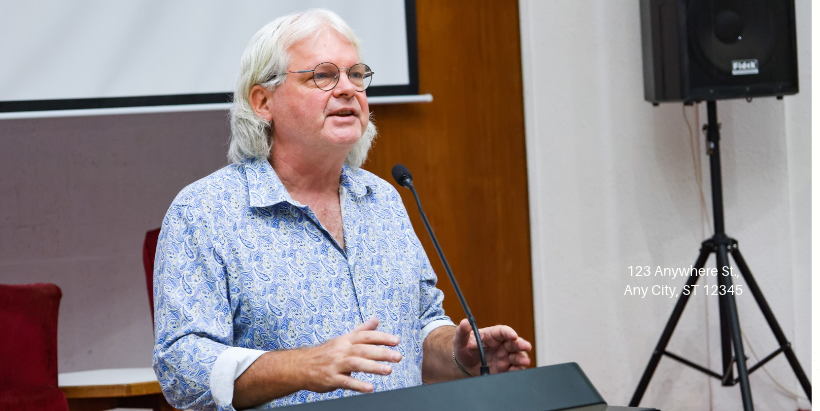
Deputy Director General, Research for Development giving his presentation at the 2026 IITA work planning week.

To bring together technologies, partnerships and support services in country-specific packages designed to address farmers’ needs, IITA will begin testing a new approach to delivering agricultural research impact across countries in 2027.

The approach, known as Impact Bundles, is intended to make the journey from scientific research to adoption more coordinated, efficient and responsive to the priorities of different farming systems.

In an interview during the IITA 2026 Work Planning Week, Deputy Director General, Research for Development, Dr Bernard Vanlauwe, said the Institute is developing draft bundles for countries including the Democratic Republic of Congo, Ghana, Nigeria, and Tanzania, with a two-year trial planned to assess their effectiveness.

Under the approach, each country package will identify the combination of technologies, partners and services required to deliver results in prioritized farming systems and impact areas.

“This approach is new. It is going to change the way countries operationalize IITA’s agenda, the way we sell and promote IITA’s agenda,” Dr Vanlauwe said.

Beyond improving delivery, the bundles are also expected to help identify research gaps and direct IITA’s science programs towards challenges that emerge as the packages are implemented.

The initiative builds on a shift IITA made about 12 years ago to invest not only in research but also in facilitating its delivery. This led to the establishment of its Research for Development (R4D) and Partnerships for Delivery (P4D) Directorates, with programs such as the Technologies pour la Transformation Agricole en Afrique (TAAT) Clearinghouse helping to connect research and delivery.

Dr Vanlauwe described this as a continuous pipeline in which ideas move through prototyping, validation and farm-scale piloting before reaching farmers.

“We never start from zero,” he said, explaining that research initiated several years earlier can produce results today, while new investments continue to generate technologies for future delivery.

Speaking on the achievements of 2026, Dr Vanlauwe noted that the Research for Development Directorate recorded significant results spanning genetic innovation, resilient agrifood systems and broader system transformation.
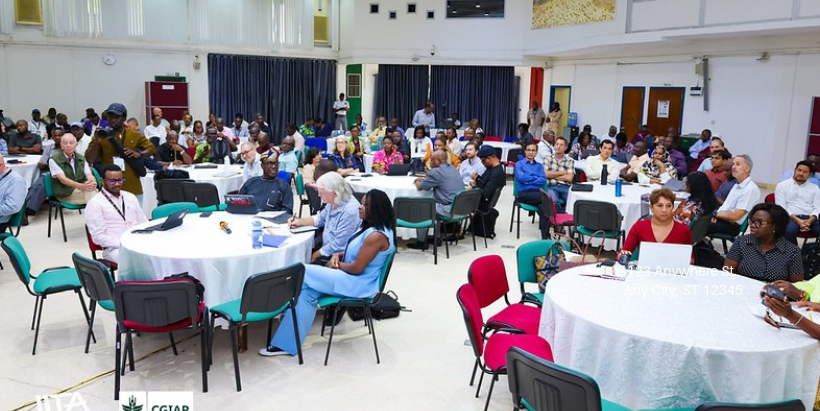
IITA Research for Development and Partnership for Delivery and Scaling staff during a discussion session at the planning week.

In genetic innovation, IITA advanced gene-editing research across several crops and traits, with some countries granting permission for edited crops to undergo testing under real-world field conditions.

The Institute also made progress in strengthening the delivery of quality planting materials. Through the adaptation of its Seed Tracker, IITA is improving the traceability of vegetatively propagated crops, including cassava, yam and banana, from producers to end users, with quality assurance built into the process.

In soil health, efforts to establish national soil information systems in several countries are providing decision-makers and investors with better information about soil conditions and constraints. The Regional Hub for Fertilizer and Soil Health, based in Ibadan, serves West Africa and the Sahel, providing research insights, technical assistance and tools to support better fertilizer and soil management decisions.

For Dr Vanlauwe, soil health and crop breeding are inseparable parts of agricultural innovation.

“Without good agronomy, without fertilizer, that genetic gain will not be delivered,” he said, adding that improved germplasm is equally important because healthy, high-performing crops are needed to make effective use of soil nutrients.

Climate adaptation also featured prominently in the Institute’s 2026 results. Through the ResiliSense survey, IITA assessed the resilience of 2,626 households in Nigeria and Niger to examine their ability to withstand and recover from shocks.

The findings showed an average resilience score of 57 out of 100, while households scored just 21 in their connections to groups, programs, and training that could help them adapt to changing circumstances.

The analysis points to the need for stronger support systems, including access to affordable finance, savings groups and other mechanisms that enable farmers to respond to shocks and adopt improved practices.

IITA also consolidated proven climate technologies into five toolkits on the TAAT e-Catalogue, making practical options more accessible to stakeholders working to strengthen climate resilience.

On nutrition and system transformation, the Institute continued to lead the CGIAR Biofortification Coordination Team, bringing together five CGIAR science programs, while securing substantial new resources for its climate adaptation program.

Ultimately, the significance of these investments is to be measured by what farmers are growing and using, rather than by scientific publications alone.

Dr Vanlauwe pointed to a recent trip from Kano to southern Kaduna, where he observed extensive areas planted with IITA-developed soybean varieties.

He also estimated that there was at least a 50 percent chance that the cassava encountered across Nigeria was an IITA variety, illustrating the extent to which the Institute’s breeding work has reached farmers.

However, he believes there is room to accelerate this progress, particularly for crops that are more difficult to multiply and distribute.

What comes next in 2027?

Beyond testing Impact Bundles, IITA plans to expand its gene-editing research, establish an Agronomic Microbiome Innovation Hub in collaboration with the Institut international de recherche sur le riz, and launch a Science of Scaling program to gather early feedback on prototype solutions and improve their pathway to wider adoption.

Investment in scientific talent will also receive attention. Following external recognition for several IITA scientists, including the Japan International Award for Young Agricultural Researchers, the Institute is strengthening its mentoring program and introducing internal awards for Best PhD Project and Best Mentor, building on its existing Early Career Awards.

The Institute will also continue investing in technologies that accelerate the multiplication and delivery of improved planting materials, while strengthening private-sector partnerships for grain and legume seed systems.

These efforts will form part of the broader research direction as IITA marks its 60th anniversary, with a science conference expected to examine research priorities in the context of CGIAR‘s Africa 2045 strategy. When asked to identify the idea that should define IITA’s science in 2027, Dr Vanlauwe described it as “science that’s absolutely relevant for the people we are working with.”


Contribué par

Anu Oyeleye

Retour en haut
Olaosebikan, Olamide

Olamide Deborah Nwanze est une chercheuse principale spécialisée dans la recherche sur l'approche "genre" afin d'éclairer les politiques de sélection participative et inclusive, de développement de variétés et de systèmes semenciers concernant les cultures de racines, tubercules et bananes (RTB) au siège de l'Institut International d'Agriculture Tropicale, à Ibadan, au Nigeria. Elle est candidate au doctorat à l'Université d'Ibadan et titulaire d'un master et d'un diplôme d'ingénieur agronome en vulgarisation agricole et développement rural. Olamide est membre du programme African Women in Agricultural Research and Development – Gender Responsive Agricultural Systems Policy (SAISIE DE RÉCOMPENSEet les Chercheuses Sensibles au Genre Équipées pour la Transformation Agricole (SUPER. Elle cherche à appliquer ses apprentissages en matière d’approche genre, recherche sensible au genre, et expertise en développement et examen de politiques pour faciliter l’accès et l’adoption par les femmes, les jeunes, les enfants et les groupes sociaux vulnérables aux innovations agricoles qui garantissent la sécurité alimentaire, nutritionnelle, des revenus et des moyens de subsistance en Afrique. Ses rôles actuels comprennent le mentorat de chercheurs stagiaires, le développement de guides et manuels de formation, la mise en œuvre et l'adaptation de cadres et d'outils genre, l'engagement des acteurs de la chaîne de valeur en tant que partenaires de la science citoyenne, l'examen et la refonte des politiques, la gestion et l'analyse des données. Ses recherches actuelles portent sur les méthodes mixtes ainsi que sur les approches participatives et interdisciplinaires pour saisir et mettre en évidence les dynamiques de genre, les besoins, les préférences et les défis rencontrés par les parties prenantes au sein de la chaîne de valeur des moyens de subsistance agricoles afin de prioriser des stratégies axées sur le genre dans les programmes de sélection, la conception et la mise en œuvre des politiques.

À l'IITA, elle contribue à la mise en œuvre du CGIAR Initiative d'Élevage Accéléré et Innovation génétique Programmes ; recherche participative et genre au sein des Prochaine Génération Manioc, HarvestPlus, RTBAliments, et Tricot-ClimMob 1000Fermes Projets ; et la communication des connaissances sur le genre via le Série de webinaires G-LENS, vidéo documentaire, notes de politique, publications, et blogs.


Publications récentes

de Sousa, K., van Etten, J., Manners, R. Bello, A., Teeken, B., Olaosebikan, O., et al. 2024. L'approche tricot : un cadre agile pour les essais décentralisés à la ferme soutenus par la science citoyenne. Une rétrospective. Agron. Sustain. Dev. 44, 8. https://doi.org/10.1007/s13593-023-00937-1

Madu, T., Onwuka, S., Nwafor, S., Onyemauwa, N., Ejechi, M., Ofoeze, M., Ukeje, B., Eluagu, C., Olaosebikan, O., Okoye, B., 2024. Les études sur les consommateurs inclusifs en matière de genre améliorent l'amélioration du manioc au Nigeria dans : Frontiers in Sociology, volume 9, numéro : 1224504, doi : 10.3389/fsoc.2024.1224504

Olaosebikan, O. ; Bello, A. ; Utoblo, O. ; Okoye, B. ; Olutegbe, N. ; Garner, E. ; Teeken, B. ; Bryan, E. ; Forsythe, L. ; Cole, S. ; Madu, T. 2023. Facteurs de stress et résilience au sein de la chaîne de valeur du manioc au Nigeria : Caractéristiques préférées des variétés de manioc et stratégies de réponse des hommes et des femmes pour informer l'amélioration variétale. Sustainability 15, 7837. https://doi.org/10.3390/su15107837

Okoye, B., Ofoeze, M., Ejechi, M., Onwuka, S., Nwafor, S., Onyemauwa, N., Ukeje, B., Eluagu, C., Obidiegwu, J.*, Olaosebikan, O., Madu, T.* 2023. Priorisation des traits préférés dans la chaîne de valeur de l'igname au Nigeria : une analyse de la situation en matière de genre in: Frontiers in Sociology, volume 8, numéro : 1232626, pages 1 – 9, ISSN 2297-7775, 2023. https://www.frontiersin.org/articles/10.3389/fsoc.2023.1232626/full

Olaosebikan, O., Bello, A. A., de Sousa, K., Ndjouenkeu, R., Adesokan, M., Alamu, E. O., Agbona, A., van Etten, J., Kegah, F. N.*, Dufour, D., Bouniol, A., Teeken, B. 2023. Acceptabilité par les consommateurs des produits alimentaires à base de gari-eba de manioc dans des contextes culturels et environnementaux variés en utilisant l'approche triade de comparaison des technologies (tricot) dans : Journal of the Science of Food and Agriculture,

Teeken, B., Olaosebikan, O., Bello, A. A., Madu, T.*, Cole, S. M. 2023. Évaluation qualitative de la positionnalité et des préférences des dyades en relation avec les activités liées au manioc : travailler avec des scientifiques citoyens du procès tricot https://hdl.handle.net/10568/138326 Type : Manuel

Bouniol, A., Ceballos, H., Bello, A. A., Teeken, B., Olaosebikan, O., Owoade, D., Agbona, A., Fotso Kuate, A., Madu, T.*, Okoye, B.*, Ofoeze, M.*, Nwafor, S.*, Onyemauwa, N.*, Adinsi, L.*, Forsythe, L., Dufour, D. 2023. Impact variétal sur le travail des femmes, la charge de travail et la pénibilité associée dans le traitement des plantes à racines, tubercules et bananes : focus sur le manioc en Afrique subsaharienne dans : Journal of the Science of Food and Agriculture, pages 1 – 25, ISSN 0022-5142,

Bello, A. A., Agbona, A., Olaosebikan, O., Edughaen, G., Dufour, D., Bouniol, A., Iluebbey, P., Ndjouenkeu, R.*, Rabbi, I. Y., Teeken, B. 2023. Effets génétiques et environnementaux sur la productivité de la transformation et le rendement des produits alimentaires : la pénibilité du travail des femmes dans : Journal of the Science of Food and Agriculture, pages 1 – 32, ISSN 0022-5142, 5

Cavicchioli, M., Zimbiti, T., Teeken, B., Nwanze, D.O., Liani, M., Parkes, E. & Bello, A. 2023. Rapport sur la formation en sélection génétique sensible au genre à l'IITA. Genetic Resources Center, IITA-HQ, Ibadan, 21-23 septembre 2022. Ibadan, Nigéria : IITA, (34 p.).https://hdl.handle.net/10568/131368

Agbona, A. Peteti P., Teeken B., Olaosebikan O. Bello, A. A., Parkes, E., Rabbi, I. Y., Mueller, L., Egesi, C., Kulakow, P. 2022. Gestion des données dans les programmes d'amélioration des cultures RTB africaines multidisciplinaires. In : Williamson, H.F., Leonelli, S. (eds) Towards Responsible Plant Data Linkage: Data Challenges for Agricultural Research and Development. Springer, Cham. https://doi.org/10.1007/978-3-031-13276-6_5

Lora Forsythe, Pricilla Marimo, Sarah Mayanja, Olamide D. Olaosebikan, Esme Stuart, Bela Teeken, Benjamin Okoye, Tessy Madu, (2021). Analyse transversale du genre dans RTBfoods Étape 2 Cartographie des genres sur les produits RTB. Comprendre les moteurs des préférences en matière de traits et le développement de profils de produits RTB multi-utilisateurs, WP1. Londres, Royaume-Uni : Rapport scientifique de terrain RTBfoods, 30 p.

Teeken, B., Garner, E., Agbona, A., Balogun, I., Olaosebikan, O., Bello, A., Madu, T., Okoye, B., Egesi, C., Kulakow, P. et Tufan, H.A. 2021. Au-delà des “ traits des femmes ” : explorer comment le genre, les différences sociales et les caractéristiques des ménages influencent les préférences pour les traits. Frontiers Systèmes alimentaires durables 5:740926. https://doi.org/10.3389/fsufs.2021.740926

Teeken, B., Agbona, A., Bello, A., Olaosebikan, O., Alamu, E., Adesokan, M., Awoyale, W., Madu, T., Okoye, B., Chijioke, U., Owoade, D., Okoro, M., Bouniol, A., Dufour, D., Hershey, C., Rabbi, I., Maziya‐Dixon, B., Egesi, C., Tufan, H. et Kulakow, P. (020. Comprendre les préférences variétales du manioc par le classement par paires du gari-eba et du fufu préparés par des agriculteurs-transformateurs locaux. Int J Food Sci Technol. https://doi.org/10.1111/ijfs.14862

Bela Teeken, Olamide Olaosebikan, Ireti Balogun, Benjamin Okoye, Tessy Madu, Steven Cole, Abolore Bello, Elizabeth Parkes. (2020). Pilotage des outils de profil client et produit G+ pour l'amélioration sensible au genre du manioc au Nigeria. Nigeria : Institut international d'agriculture tropicale (IIAT). https://hdl.handle.net/20.500.11766/13000