NOUVELLES DE L'IITA

Nigerian women farmers: From subsistence to thriving agribusiness
août 8, 2025

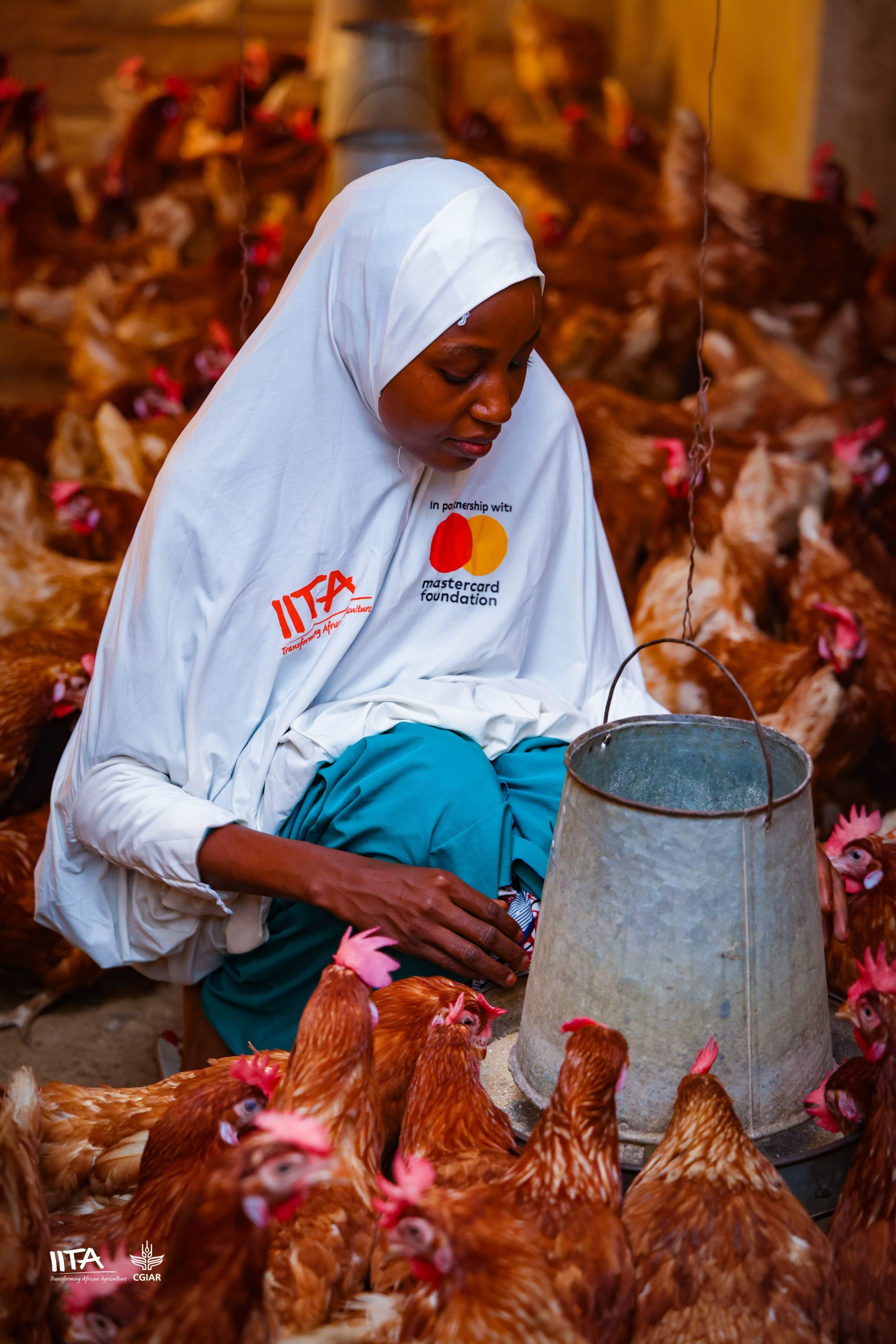
Rukayya Muhammad tending to layer birds in one of her poultry pens.

Mariam Abass and Rukayya Muhammad were subsistence farmers in northern Nigeria, producing just enough food to feed their families, until they came across an agribusiness training program that changed their lives.

This program has equipped them with the knowledge and skills to start and grow their businesses, significantly increasing their productivity and putting them on a sustained profitability path. For instance, one of the women disclosed that her net profit before the training was around a miserly N30,000, but that on applying the knowledge gained, her net income increased to a whopping N500,000, which she described as profound and life-changing. “The training was invaluable, it taught us how to manage our business, connect with buyers, and join groups that expand our knowledge and help us grow,” Rukayya, who lives in Kano State, stated.

Women farmers, particularly in the region, traditionally face low productivity and financial dependence on male family members. Culture and childcare responsibilities have historically hindered their participation in agricultural training, where they could access modern skills, mentorship, and resources to improve their agricultural practices.

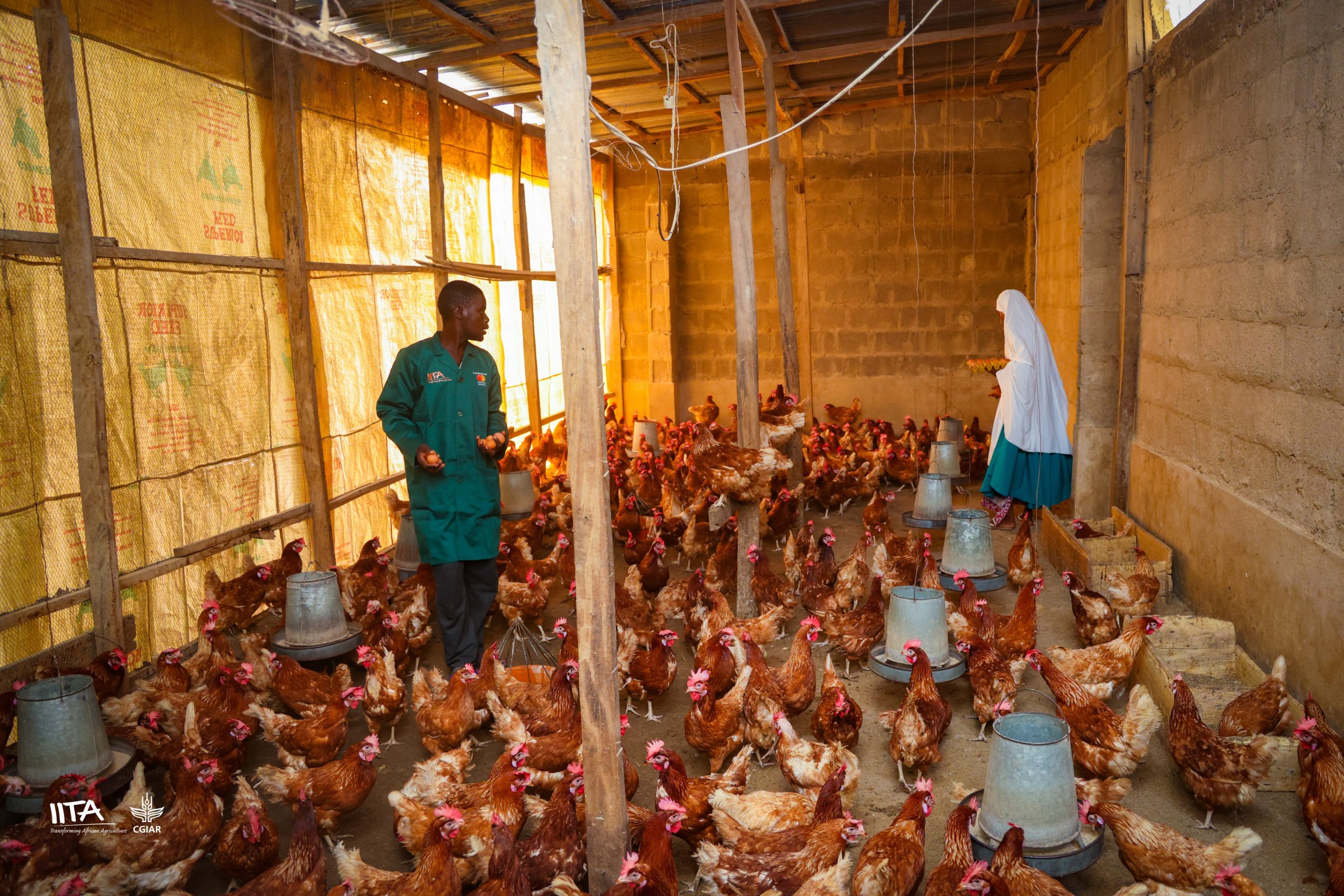
Rukayya and her husband collecting eggs from her poultry farm.

However, that has begun to change, thanks to the agribusiness training designed for them by IITA’s Youth in Agribusiness Unit (IYA).

Given their peculiar situation, the IYA first conducted community assessments to identify the constraints and specific needs of women in the region, particularly those interested in agribusiness training. This eventually led to an agribusiness training program that targeted 70 per cent of women’s participation.

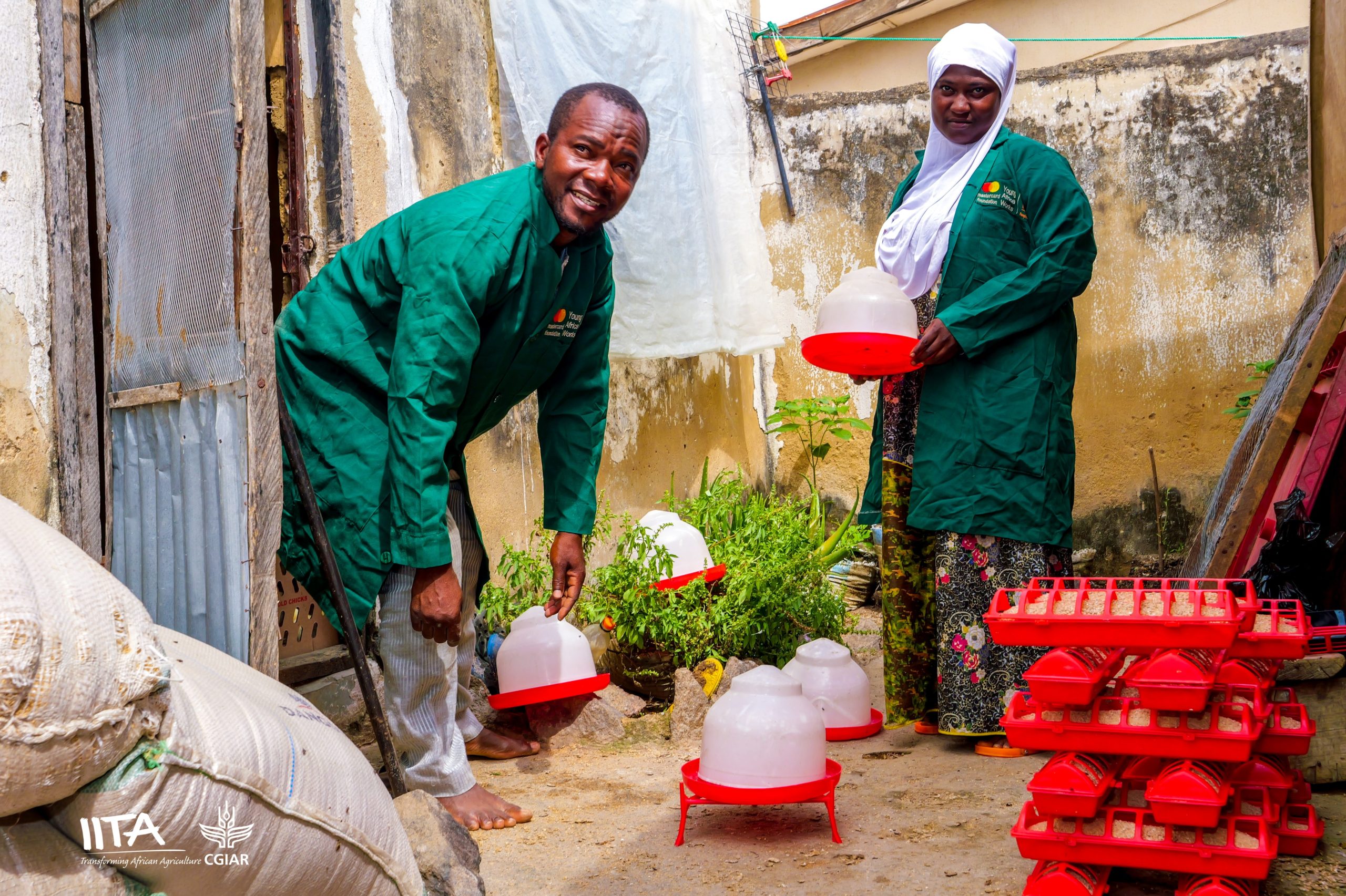
Mariam and her husband, Nasir, preparing feed for their chickens.

The training covered climate-smart farming techniques such as crop rotation, drip irrigation, improved livestock housing, feed optimization, vaccination, efficient waste management, renewable energy integration, and finance skills such as budgeting and record-keeping.

Mariam, who lives in Zaria, Kaduna State, noted that she had seen significant changes in her farm since participating in the training. “With the help of IITA, I now have vast knowledge in the poultry business and marketing,” she stated. “I don’t sell my birds locally anymore. I have markets in Kaduna and Kano, which have increased my income and improved my business insight.”

“Before we started the training, any time we stocked birds, we recorded losses and lost our capital because we didn’t know much about the business. Miraculously, IITA came into our lives, and that was where our journey to success started.”

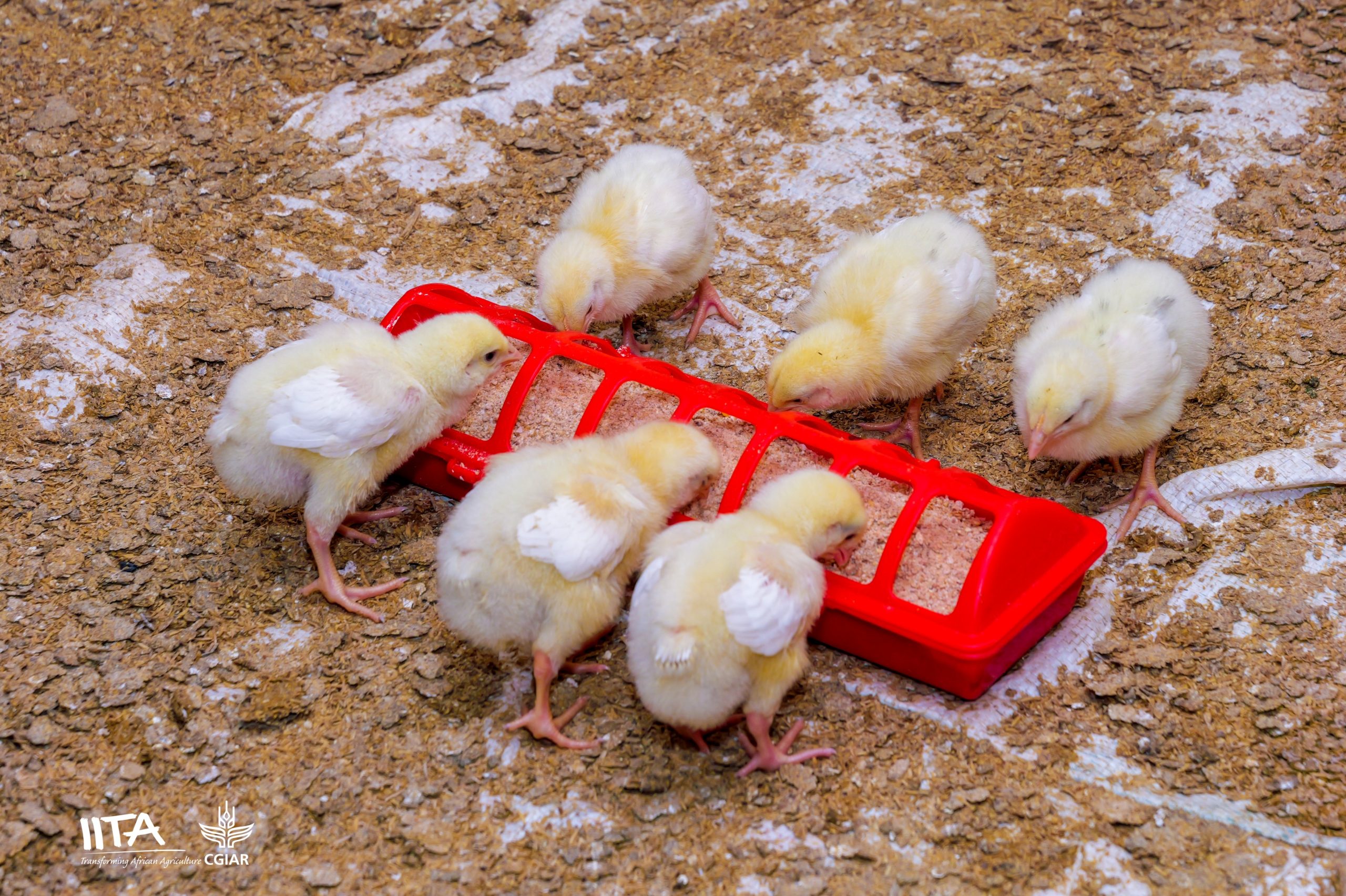
Chicks feeding in Mariam and Nasir’s brooding pen.

IYA provides childcare services and allows recess between training sessions to ensure nursing mothers are not distracted or excluded from the training. Additionally, the program allows couples to participate, eliminating hesitant spouses’ concerns and fostering family support. According to Mariam, the latter was why she could confidently participate in the training, describing the initiative as commendable.

Findings indicated that the training has enabled these women to evolve from subsistence farming into successful agribusinesses, boosting their income and enabling them to be part of the agricultural value chain. “Our business significantly improved after the IITA training,” Nasir Abubakar, Mariam’s husband, said with gratitude.

He added, “We gained marketing skills, which have helped us attract better customers. After our last sales, we deducted our expenses and made a profit of about ₦500,000, whereas before the training, our profit was less than ₦30,000.”

Solomon Adebayo, Monitoring and Evaluation Manager at IITA, emphasized the need for women’s empowerment, saying, “Rural women, who make up about 43 percent of the world’s agricultural workforce, face significant discrimination in land ownership, livestock ownership, equal pay, participation in decision-making roles, and access to credit.”

Concerned by these challenges, the IYA collaborates with organizations like the Mastercard Foundation, le Fonds international de développement agricole (FIDA), and other partners to provide essential training and support that addresses the barriers women in agriculture face.

The women farmers participating in the program say the training has significantly improved their ability to manage businesses effectively. Relying on what she learned at the training, Rukayya has established reliable connections with more buyers and sells locally to supermarkets and MaiShayi vendors (tea sellers). A new buyer from the neighboring Niger Republic recently purchased an entire batch of her broiler chickens.

The training has also taught her how to keep her poultry healthy by cleaning the environment regularly, adjusting their feeding schedules, using clean water, and giving them the right medication. She said these changes had made her chickens healthier and increased profits. “We had 600 chickens in the past, but now we have 800. We added broilers to our poultry to gain more profit and expand our business,” she added.

With their expanded poultry business and increased income, Rukayya says her family’s living conditions are improving. They are moving to complete their building and provide quality education for the children.

Allowing spouses to participate in the training has been crucial in assisting the women’s businesses in thriving. Mariam and Rukayya say their husbands are involved in the businesses, providing logistical support, helping to market the products, and sharing responsibilities in the day-to-day running of the farm, which increases productivity.

“This intervention by IITA has changed our lives,” Nasir remarked. “We have paid our daughters’ school fees for the whole school year, and we have bought foodstuffs for the month, unlike before when we struggled to buy food daily.”

Through the collective efforts of IYA and its partners, women farmers are improving their livelihoods and reshaping their roles within their communities.

Contributed by Jesutofunmi Robinson


Contribué par

Nouvelles connexes

Aucun article trouvé

Laisser un commentaire

Votre adresse e-mail ne sera pas publiée. Les champs obligatoires sont indiqués avec *

Retour en haut
Olaosebikan, Olamide

Olamide Deborah Nwanze est une chercheuse principale spécialisée dans la recherche sur l'approche "genre" afin d'éclairer les politiques de sélection participative et inclusive, de développement de variétés et de systèmes semenciers concernant les cultures de racines, tubercules et bananes (RTB) au siège de l'Institut International d'Agriculture Tropicale, à Ibadan, au Nigeria. Elle est candidate au doctorat à l'Université d'Ibadan et titulaire d'un master et d'un diplôme d'ingénieur agronome en vulgarisation agricole et développement rural. Olamide est membre du programme African Women in Agricultural Research and Development – Gender Responsive Agricultural Systems Policy (SAISIE DE RÉCOMPENSEet les Chercheuses Sensibles au Genre Équipées pour la Transformation Agricole (SUPER. Elle cherche à appliquer ses apprentissages en matière d’approche genre, recherche sensible au genre, et expertise en développement et examen de politiques pour faciliter l’accès et l’adoption par les femmes, les jeunes, les enfants et les groupes sociaux vulnérables aux innovations agricoles qui garantissent la sécurité alimentaire, nutritionnelle, des revenus et des moyens de subsistance en Afrique. Ses rôles actuels comprennent le mentorat de chercheurs stagiaires, le développement de guides et manuels de formation, la mise en œuvre et l'adaptation de cadres et d'outils genre, l'engagement des acteurs de la chaîne de valeur en tant que partenaires de la science citoyenne, l'examen et la refonte des politiques, la gestion et l'analyse des données. Ses recherches actuelles portent sur les méthodes mixtes ainsi que sur les approches participatives et interdisciplinaires pour saisir et mettre en évidence les dynamiques de genre, les besoins, les préférences et les défis rencontrés par les parties prenantes au sein de la chaîne de valeur des moyens de subsistance agricoles afin de prioriser des stratégies axées sur le genre dans les programmes de sélection, la conception et la mise en œuvre des politiques.

À l'IITA, elle contribue à la mise en œuvre du CGIAR Initiative d'Élevage Accéléré et Innovation génétique Programmes ; recherche participative et genre au sein des Prochaine Génération ManiocHarvestPlusRTBAliments, et Tricot-ClimMob 1000Fermes Projets ; et la communication des connaissances sur le genre via le Série de webinaires G-LENS, vidéo documentaire, notes de politiquepublications, et blogs.


Publications récentes

de Sousa, K., van Etten, J., Manners, R. Bello, A., Teeken, B., Olaosebikan, O., et al. 2024. L'approche tricot : un cadre agile pour les essais décentralisés à la ferme soutenus par la science citoyenne. Une rétrospective. Agron. Sustain. Dev. 44, 8. https://doi.org/10.1007/s13593-023-00937-1

Madu, T., Onwuka, S., Nwafor, S., Onyemauwa, N., Ejechi, M., Ofoeze, M., Ukeje, B., Eluagu, C., Olaosebikan, O., Okoye, B., 2024. Les études sur les consommateurs inclusifs en matière de genre améliorent l'amélioration du manioc au Nigeria dans : Frontiers in Sociology, volume 9, numéro : 1224504, doi : 10.3389/fsoc.2024.1224504

Olaosebikan, O. ; Bello, A. ; Utoblo, O. ; Okoye, B. ; Olutegbe, N. ; Garner, E. ; Teeken, B. ; Bryan, E. ; Forsythe, L. ; Cole, S. ; Madu, T. 2023. Facteurs de stress et résilience au sein de la chaîne de valeur du manioc au Nigeria : Caractéristiques préférées des variétés de manioc et stratégies de réponse des hommes et des femmes pour informer l'amélioration variétale. Sustainability 15, 7837. https://doi.org/10.3390/su15107837

Okoye, B., Ofoeze, M., Ejechi, M., Onwuka, S., Nwafor, S., Onyemauwa, N., Ukeje, B., Eluagu, C., Obidiegwu, J.*, Olaosebikan, O., Madu, T.* 2023. Priorisation des traits préférés dans la chaîne de valeur de l'igname au Nigeria : une analyse de la situation en matière de genre in: Frontiers in Sociology, volume 8, numéro : 1232626, pages 1 – 9, ISSN 2297-7775, 2023. https://www.frontiersin.org/articles/10.3389/fsoc.2023.1232626/full

Olaosebikan, O., Bello, A. A., de Sousa, K., Ndjouenkeu, R., Adesokan, M., Alamu, E. O., Agbona, A., van Etten, J., Kegah, F. N.*, Dufour, D., Bouniol, A., Teeken, B. 2023. Acceptabilité par les consommateurs des produits alimentaires à base de gari-eba de manioc dans des contextes culturels et environnementaux variés en utilisant l'approche triade de comparaison des technologies (tricot) dans : Journal of the Science of Food and Agriculture,

Teeken, B., Olaosebikan, O., Bello, A. A., Madu, T.*, Cole, S. M. 2023. Évaluation qualitative de la positionnalité et des préférences des dyades en relation avec les activités liées au manioc : travailler avec des scientifiques citoyens du procès tricot https://hdl.handle.net/10568/138326 Type : Manuel

Bouniol, A., Ceballos, H., Bello, A. A., Teeken, B., Olaosebikan, O., Owoade, D., Agbona, A., Fotso Kuate, A., Madu, T.*, Okoye, B.*, Ofoeze, M.*, Nwafor, S.*, Onyemauwa, N.*, Adinsi, L.*, Forsythe, L., Dufour, D. 2023. Impact variétal sur le travail des femmes, la charge de travail et la pénibilité associée dans le traitement des plantes à racines, tubercules et bananes : focus sur le manioc en Afrique subsaharienne dans : Journal of the Science of Food and Agriculture, pages 1 – 25, ISSN 0022-5142,

Bello, A. A., Agbona, A., Olaosebikan, O., Edughaen, G., Dufour, D., Bouniol, A., Iluebbey, P., Ndjouenkeu, R.*, Rabbi, I. Y., Teeken, B. 2023. Effets génétiques et environnementaux sur la productivité de la transformation et le rendement des produits alimentaires : la pénibilité du travail des femmes dans : Journal of the Science of Food and Agriculture, pages 1 – 32, ISSN 0022-5142, 5

Cavicchioli, M., Zimbiti, T., Teeken, B., Nwanze, D.O., Liani, M., Parkes, E. & Bello, A. 2023. Rapport sur la formation en sélection génétique sensible au genre à l'IITA. Genetic Resources Center, IITA-HQ, Ibadan, 21-23 septembre 2022. Ibadan, Nigéria : IITA, (34 p.).https://hdl.handle.net/10568/131368

Agbona, A. Peteti P., Teeken B., Olaosebikan O. Bello, A. A., Parkes, E., Rabbi, I. Y., Mueller, L., Egesi, C., Kulakow, P. 2022. Gestion des données dans les programmes d'amélioration des cultures RTB africaines multidisciplinaires. In : Williamson, H.F., Leonelli, S. (eds) Towards Responsible Plant Data Linkage: Data Challenges for Agricultural Research and Development. Springer, Cham. https://doi.org/10.1007/978-3-031-13276-6_5

Lora Forsythe, Pricilla Marimo, Sarah Mayanja, Olamide D. Olaosebikan, Esme Stuart, Bela Teeken, Benjamin Okoye, Tessy Madu, (2021). Analyse transversale du genre dans RTBfoods Étape 2 Cartographie des genres sur les produits RTB. Comprendre les moteurs des préférences en matière de traits et le développement de profils de produits RTB multi-utilisateurs, WP1. Londres, Royaume-Uni : Rapport scientifique de terrain RTBfoods, 30 p.

Teeken, B., Garner, E., Agbona, A., Balogun, I., Olaosebikan, O., Bello, A., Madu, T., Okoye, B., Egesi, C., Kulakow, P. et Tufan, H.A. 2021. Au-delà des “ traits des femmes ” : explorer comment le genre, les différences sociales et les caractéristiques des ménages influencent les préférences pour les traits. Frontiers Systèmes alimentaires durables 5:740926. https://doi.org/10.3389/fsufs.2021.740926

Teeken, B., Agbona, A., Bello, A., Olaosebikan, O., Alamu, E., Adesokan, M., Awoyale, W., Madu, T., Okoye, B., Chijioke, U., Owoade, D., Okoro, M., Bouniol, A., Dufour, D., Hershey, C., Rabbi, I., Maziya‐Dixon, B., Egesi, C., Tufan, H. et Kulakow, P. (020. Comprendre les préférences variétales du manioc par le classement par paires du gari-eba et du fufu préparés par des agriculteurs-transformateurs locaux. Int J Food Sci Technol. https://doi.org/10.1111/ijfs.14862

Bela Teeken, Olamide Olaosebikan, Ireti Balogun, Benjamin Okoye, Tessy Madu, Steven Cole, Abolore Bello, Elizabeth Parkes. (2020). Pilotage des outils de profil client et produit G+ pour l'amélioration sensible au genre du manioc au Nigeria. Nigeria : Institut international d'agriculture tropicale (IIAT). https://hdl.handle.net/20.500.11766/13000