
NOUVELLES DE L'IITA

Scaling information and innovation one field day at a time
2 août 2025

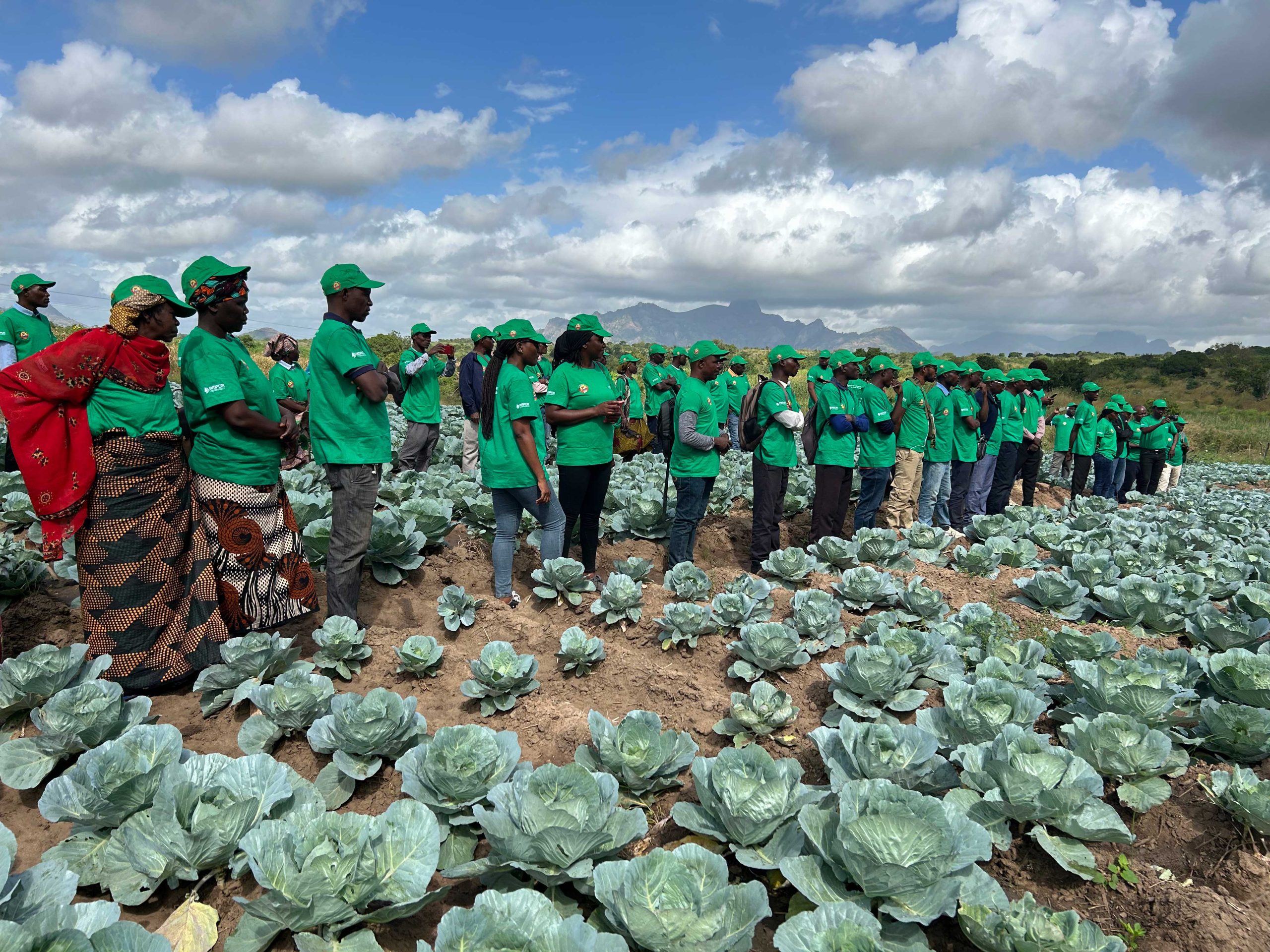
Smallholder farmers during one of the field days.

In Mozambique, communities from various districts in three northern provinces are benefitting from field days’ activities aimed to improve their practical knowledge, introduce technologies and increase adoption of new techniques that can improve agricultural production and productivity in their fields.

The field days involved men, women and youth farmers producing maize, sesame, cowpeas, sweet potatoes, soybeans, peanuts and pigeon peas, and the raising of livestock and poultry. During the field days, the different groups attend practical activities such as good farming practices, using improved climate resilient seeds, and identifying and addressing diseases in crops and animals, agricultural innovations and harvesting techniques.
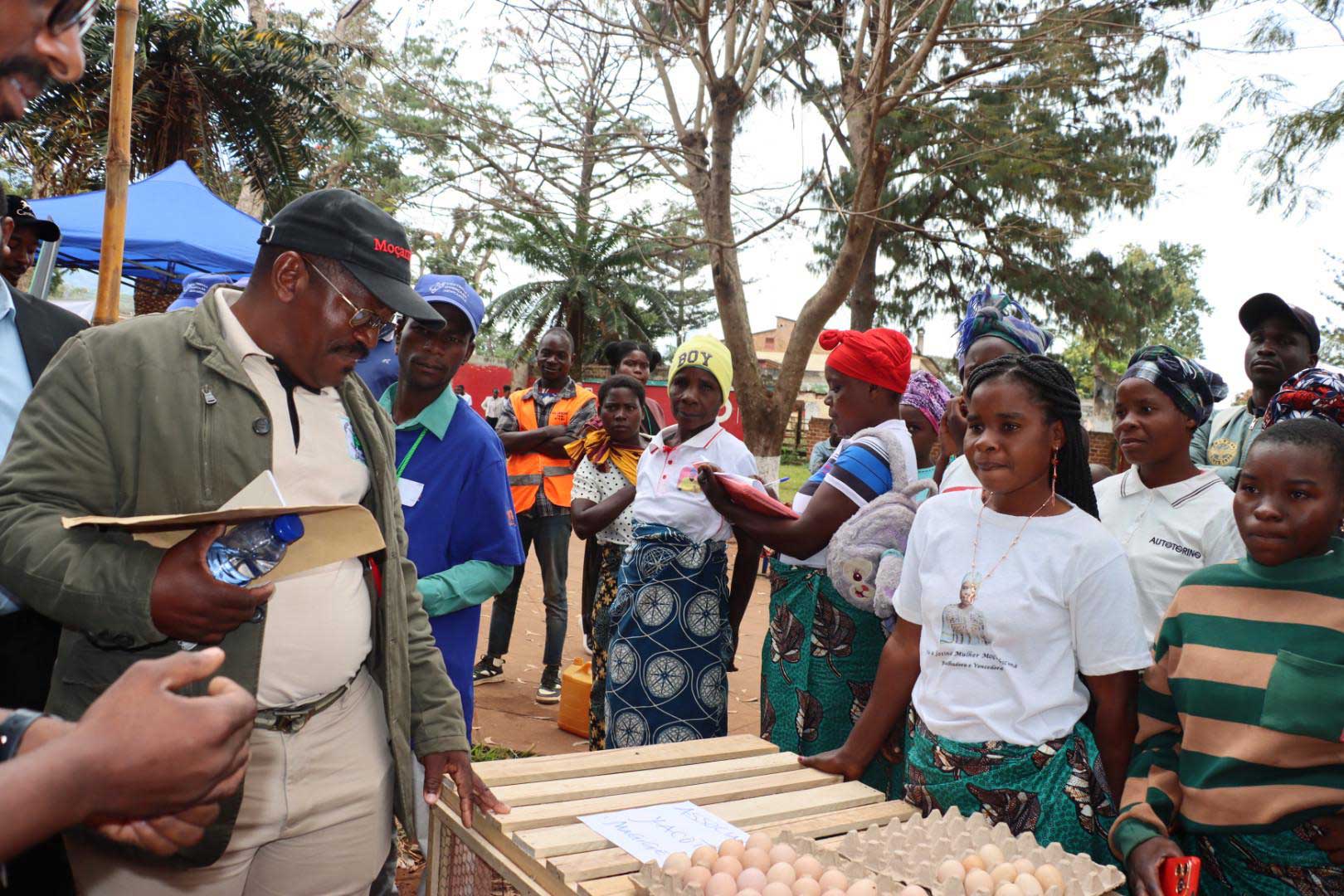
Government officials visiting a sample of eggs from Boschveld chickens being adopted by the community.

In Niassa province, with high agriculture potential, the Accelerated Innovation Delivery Initiative (AID-I) being implemented by IITACGIAR in partnership with the International Potato Center (CIP) has been working with farmers on sweet potato production,, investing in the implementation of new technologies that include the adoption of improved varieties with more nutritional value, short production cycles and better economic returns for families, in the communities.

Through field days, CIP is creating spaces for interaction and knowledge exchange between sweet potato producing communities by distributing seeds, teaching improved planting techniques, and introducing new varieties through informed choices about the benefits of the improved varieties.
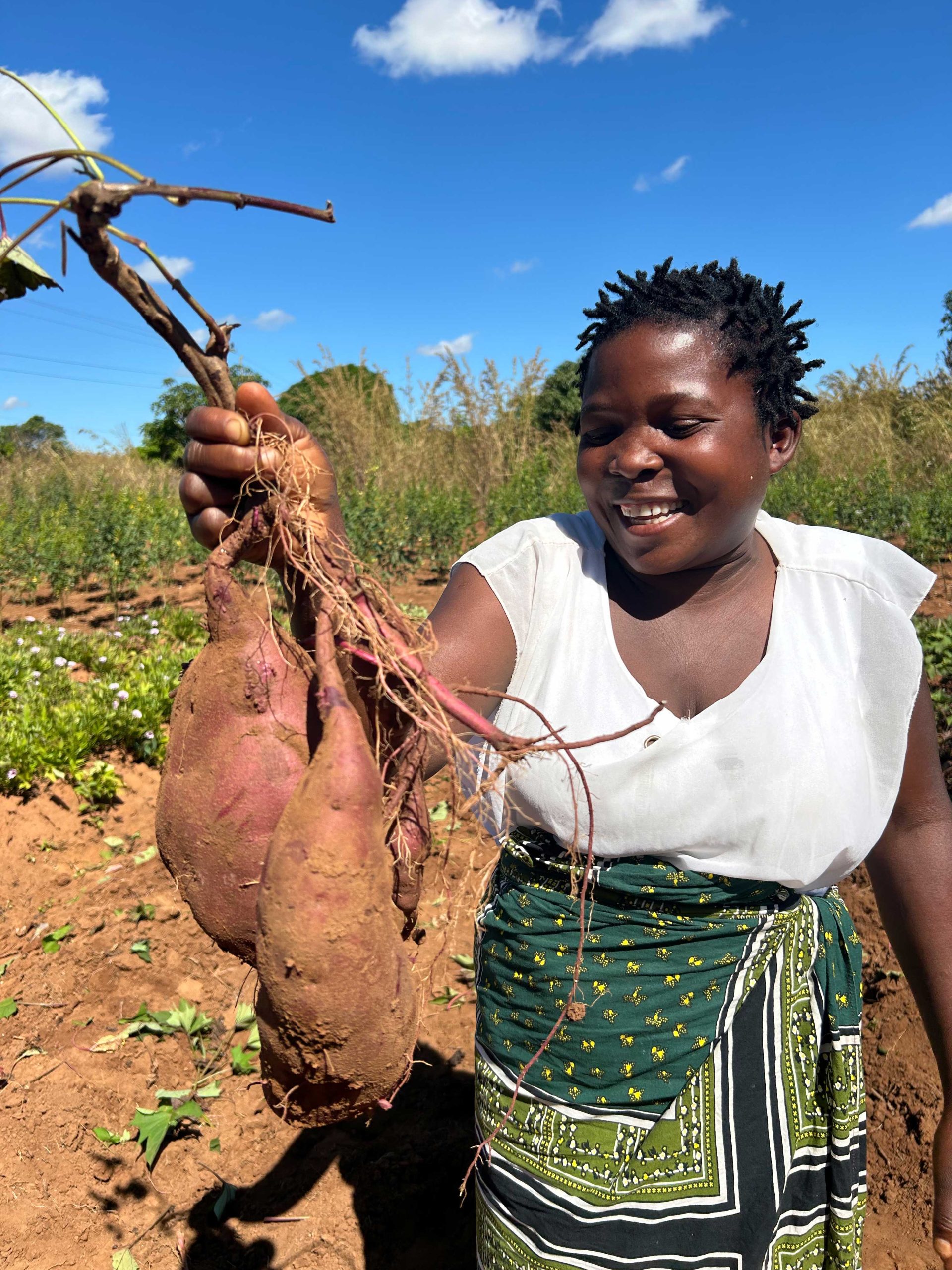
During the filed days, the selection process involved field establishment with multiple varieties of sweet potato, and the producers evaluated various characteristics like the leaves, color of the sweet potato, the pulp and skin, the size, nutritional value, profitability of the varieties and the flavour,, and select the ones that meet their needs.

“Today I learned a lot of things, from recipes for pastry, juice and sweet potato salad, to planting techniques, preventing and managing diseases in the crop. How to sow sweet potatoes in the vegetable gardens,” said Rita Ernesto, a woman farmer in Chimbunila, Niassa province.

In the Zambézia province, the field day organized by the Development Support Association (NANA) served to guide the farmers on organic and inorganic fertilizers’ uses and benefits, their differences and impact on maize production. The session was led by students from Zambeze University, who are beneficiaries of different capacity development activities as part of efforts to contribute to the country’s agriculture sector.

Field demonstrations showed results of the impact of selected fertilizer applications in maize, which includes disease control, and the quantity and quality of maize produced from plots with fertilizer application. The field day also served as an opportunity for smallholder farmers to ask questions and learn about best practices.

“Field days are important for producers because they allow them to consolidate their knowledge to continue producing and to teach other producers. I learned how to make fertilizers from the material that exists in our communities,” said Francisco João, smallholder farmer.

In Alto-Molócue, another district in Zambézi, through Agromiço, the communities also had the opportunity to learn more about maize cultivation techniques, with a focus on identifying and managing pests and diseases during the crop’s growing period in the field.

The field day at theNampula province, had communities learning more about the use of Aflasafe, a natural biocontrol product used to control aflatoxins contamination in maize and groundnut, the incidence of which has negative implications for human health. By using Aflasafe, the communities will be able to improve the quality of the groundnuts and maize, thereby reducing postharvest loss and increasing their supply to markets, and income, and improving their livelihood, and the health of their families and communities.

At the event, smallholder farmers, Directors from the District Services of Economic Activities in Ribáue, Mogovolas and Alto-Molócue, implementing partners, the private sector, and beneficiaries improved their knowledge on the use of Aflasafe, efficient harvesting, and storage techniques in order to reduce losses and pests that compromise the quality of the crops, and negatively impact the income of producers.

In addition to market expansion for aflatoxin-free groundnuts, improving the income and health of their families and communities.

The field days were mostly held while the crops were on the fields, but throughout the entire process, the smallholder farmers were supported by both agricultural and livestock technicians in implementing the best climate-resilient techniques that can improve production and productivity.

In a period of 4 years, the AID-I project, coordinated by IITA, which directly involves 16 partners and the government of Mozambique, will hold 240 field days in the components of demand-driven seed systems, management services and tools, and integrated crop and nutrition consultancy.

Contributed by Safira Gil Chirindza


Contribué par

Nouvelles connexes

Aucun article trouvé
Retour en haut
Olaosebikan, Olamide

Olamide Deborah Nwanze est une chercheuse principale spécialisée dans la recherche sur l'approche "genre" afin d'éclairer les politiques de sélection participative et inclusive, de développement de variétés et de systèmes semenciers concernant les cultures de racines, tubercules et bananes (RTB) au siège de l'Institut International d'Agriculture Tropicale, à Ibadan, au Nigeria. Elle est candidate au doctorat à l'Université d'Ibadan et titulaire d'un master et d'un diplôme d'ingénieur agronome en vulgarisation agricole et développement rural. Olamide est membre du programme African Women in Agricultural Research and Development – Gender Responsive Agricultural Systems Policy (SAISIE DE RÉCOMPENSEet les Chercheuses Sensibles au Genre Équipées pour la Transformation Agricole (SUPER. Elle cherche à appliquer ses apprentissages en matière d’approche genre, recherche sensible au genre, et expertise en développement et examen de politiques pour faciliter l’accès et l’adoption par les femmes, les jeunes, les enfants et les groupes sociaux vulnérables aux innovations agricoles qui garantissent la sécurité alimentaire, nutritionnelle, des revenus et des moyens de subsistance en Afrique. Ses rôles actuels comprennent le mentorat de chercheurs stagiaires, le développement de guides et manuels de formation, la mise en œuvre et l'adaptation de cadres et d'outils genre, l'engagement des acteurs de la chaîne de valeur en tant que partenaires de la science citoyenne, l'examen et la refonte des politiques, la gestion et l'analyse des données. Ses recherches actuelles portent sur les méthodes mixtes ainsi que sur les approches participatives et interdisciplinaires pour saisir et mettre en évidence les dynamiques de genre, les besoins, les préférences et les défis rencontrés par les parties prenantes au sein de la chaîne de valeur des moyens de subsistance agricoles afin de prioriser des stratégies axées sur le genre dans les programmes de sélection, la conception et la mise en œuvre des politiques.

À l'IITA, elle contribue à la mise en œuvre du CGIAR Initiative d'Élevage Accéléré et Innovation génétique Programmes ; recherche participative et genre au sein des Prochaine Génération ManiocHarvestPlusRTBAliments, et Tricot-ClimMob 1000Fermes Projets ; et la communication des connaissances sur le genre via le Série de webinaires G-LENS, vidéo documentaire, notes de politiquepublications, et blogs.


Publications récentes

de Sousa, K., van Etten, J., Manners, R. Bello, A., Teeken, B., Olaosebikan, O., et al. 2024. L'approche tricot : un cadre agile pour les essais décentralisés à la ferme soutenus par la science citoyenne. Une rétrospective. Agron. Sustain. Dev. 44, 8. https://doi.org/10.1007/s13593-023-00937-1

Madu, T., Onwuka, S., Nwafor, S., Onyemauwa, N., Ejechi, M., Ofoeze, M., Ukeje, B., Eluagu, C., Olaosebikan, O., Okoye, B., 2024. Les études sur les consommateurs inclusifs en matière de genre améliorent l'amélioration du manioc au Nigeria dans : Frontiers in Sociology, volume 9, numéro : 1224504, doi : 10.3389/fsoc.2024.1224504

Olaosebikan, O. ; Bello, A. ; Utoblo, O. ; Okoye, B. ; Olutegbe, N. ; Garner, E. ; Teeken, B. ; Bryan, E. ; Forsythe, L. ; Cole, S. ; Madu, T. 2023. Facteurs de stress et résilience au sein de la chaîne de valeur du manioc au Nigeria : Caractéristiques préférées des variétés de manioc et stratégies de réponse des hommes et des femmes pour informer l'amélioration variétale. Sustainability 15, 7837. https://doi.org/10.3390/su15107837

Okoye, B., Ofoeze, M., Ejechi, M., Onwuka, S., Nwafor, S., Onyemauwa, N., Ukeje, B., Eluagu, C., Obidiegwu, J.*, Olaosebikan, O., Madu, T.* 2023. Priorisation des traits préférés dans la chaîne de valeur de l'igname au Nigeria : une analyse de la situation en matière de genre in: Frontiers in Sociology, volume 8, numéro : 1232626, pages 1 – 9, ISSN 2297-7775, 2023. https://www.frontiersin.org/articles/10.3389/fsoc.2023.1232626/full

Olaosebikan, O., Bello, A. A., de Sousa, K., Ndjouenkeu, R., Adesokan, M., Alamu, E. O., Agbona, A., van Etten, J., Kegah, F. N.*, Dufour, D., Bouniol, A., Teeken, B. 2023. Acceptabilité par les consommateurs des produits alimentaires à base de gari-eba de manioc dans des contextes culturels et environnementaux variés en utilisant l'approche triade de comparaison des technologies (tricot) dans : Journal of the Science of Food and Agriculture,

Teeken, B., Olaosebikan, O., Bello, A. A., Madu, T.*, Cole, S. M. 2023. Évaluation qualitative de la positionnalité et des préférences des dyades en relation avec les activités liées au manioc : travailler avec des scientifiques citoyens du procès tricot https://hdl.handle.net/10568/138326 Type : Manuel

Bouniol, A., Ceballos, H., Bello, A. A., Teeken, B., Olaosebikan, O., Owoade, D., Agbona, A., Fotso Kuate, A., Madu, T.*, Okoye, B.*, Ofoeze, M.*, Nwafor, S.*, Onyemauwa, N.*, Adinsi, L.*, Forsythe, L., Dufour, D. 2023. Impact variétal sur le travail des femmes, la charge de travail et la pénibilité associée dans le traitement des plantes à racines, tubercules et bananes : focus sur le manioc en Afrique subsaharienne dans : Journal of the Science of Food and Agriculture, pages 1 – 25, ISSN 0022-5142,

Bello, A. A., Agbona, A., Olaosebikan, O., Edughaen, G., Dufour, D., Bouniol, A., Iluebbey, P., Ndjouenkeu, R.*, Rabbi, I. Y., Teeken, B. 2023. Effets génétiques et environnementaux sur la productivité de la transformation et le rendement des produits alimentaires : la pénibilité du travail des femmes dans : Journal of the Science of Food and Agriculture, pages 1 – 32, ISSN 0022-5142, 5

Cavicchioli, M., Zimbiti, T., Teeken, B., Nwanze, D.O., Liani, M., Parkes, E. & Bello, A. 2023. Rapport sur la formation en sélection génétique sensible au genre à l'IITA. Genetic Resources Center, IITA-HQ, Ibadan, 21-23 septembre 2022. Ibadan, Nigéria : IITA, (34 p.).https://hdl.handle.net/10568/131368

Agbona, A. Peteti P., Teeken B., Olaosebikan O. Bello, A. A., Parkes, E., Rabbi, I. Y., Mueller, L., Egesi, C., Kulakow, P. 2022. Gestion des données dans les programmes d'amélioration des cultures RTB africaines multidisciplinaires. In : Williamson, H.F., Leonelli, S. (eds) Towards Responsible Plant Data Linkage: Data Challenges for Agricultural Research and Development. Springer, Cham. https://doi.org/10.1007/978-3-031-13276-6_5

Lora Forsythe, Pricilla Marimo, Sarah Mayanja, Olamide D. Olaosebikan, Esme Stuart, Bela Teeken, Benjamin Okoye, Tessy Madu, (2021). Analyse transversale du genre dans RTBfoods Étape 2 Cartographie des genres sur les produits RTB. Comprendre les moteurs des préférences en matière de traits et le développement de profils de produits RTB multi-utilisateurs, WP1. Londres, Royaume-Uni : Rapport scientifique de terrain RTBfoods, 30 p.

Teeken, B., Garner, E., Agbona, A., Balogun, I., Olaosebikan, O., Bello, A., Madu, T., Okoye, B., Egesi, C., Kulakow, P. et Tufan, H.A. 2021. Au-delà des “ traits des femmes ” : explorer comment le genre, les différences sociales et les caractéristiques des ménages influencent les préférences pour les traits. Frontiers Systèmes alimentaires durables 5:740926. https://doi.org/10.3389/fsufs.2021.740926

Teeken, B., Agbona, A., Bello, A., Olaosebikan, O., Alamu, E., Adesokan, M., Awoyale, W., Madu, T., Okoye, B., Chijioke, U., Owoade, D., Okoro, M., Bouniol, A., Dufour, D., Hershey, C., Rabbi, I., Maziya‐Dixon, B., Egesi, C., Tufan, H. et Kulakow, P. (020. Comprendre les préférences variétales du manioc par le classement par paires du gari-eba et du fufu préparés par des agriculteurs-transformateurs locaux. Int J Food Sci Technol. https://doi.org/10.1111/ijfs.14862

Bela Teeken, Olamide Olaosebikan, Ireti Balogun, Benjamin Okoye, Tessy Madu, Steven Cole, Abolore Bello, Elizabeth Parkes. (2020). Pilotage des outils de profil client et produit G+ pour l'amélioration sensible au genre du manioc au Nigeria. Nigeria : Institut international d'agriculture tropicale (IIAT). https://hdl.handle.net/20.500.11766/13000