NOUVELLES DE L'IITA

World Bank delegation visits IITA to strengthen collaboration on agriculture and youth engagement initiatives
10 octobre 2025

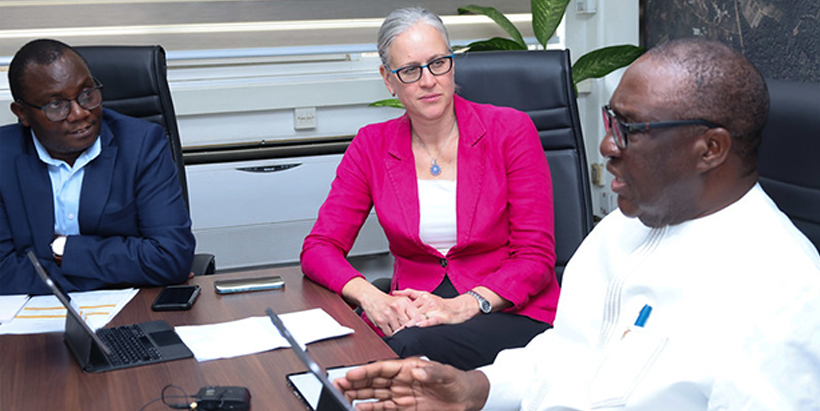
The IITA Director General, Dr Simeon Ehui with the World Bank team during discussions.

From 24 to 26 September, IITACGIAR hosted a World Bank delegation at its headquarters in Ibadan, Nigeria, for a three-day visit designed to strengthen collaboration on agricultural development projects and showcase the institute’s groundbreaking research and innovations.

Welcoming the visitors, IITA Director General and CGIAR Regional Director for Continental Africa, Dr Simeon Ehui, expressed appreciation for the World Bank’s continued partnership and commitment to advancing agricultural transformation across Africa. He reaffirmed IITA’s dedication to fostering innovation and impact-driven collaborations that support farmers, strengthen food systems, and empower young people.

“Our doors are always open to our partners,” Dr Ehui said. “With the assistance of the World Bank, we intend to take technology from the lab and the field directly to the farmers. That is how we can truly transform African agriculture.”

During his remarks, Dr Ehui also highlighted IITA’s work in soil fertility management, youth engagement in agribusiness, and its growing partnerships with several African countries, including Benin, Côte d’Ivoire, Guinea, Liberia, Sierra Leone, and Togo.

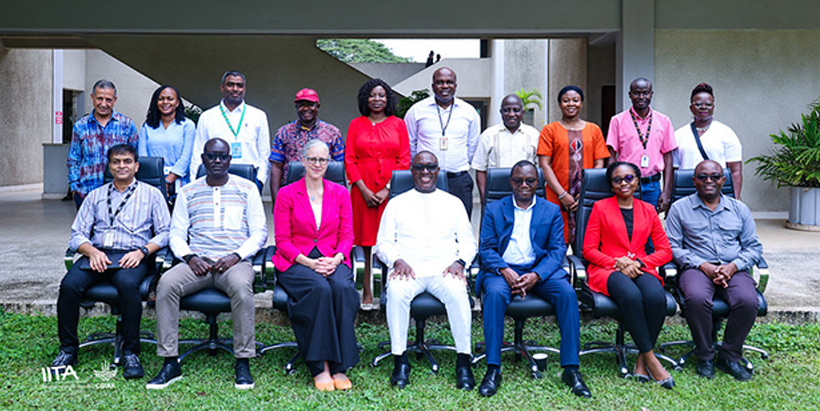
The IITA team with the World Bank delegation following discussions at the IITA Headquarters in Ibadan.

An introductory video showcasing IITA’s mission and its decades-long impact in transforming African agriculture was presented to the delegation, setting the stage for a series of technical briefings.

Dr Abdoulaye Tahirou, IITA interim Deputy Director for Partnerships for Delivery, provided an overview of the institute’s research portfolio and mandate crops. He highlighted breakthrough technologies such as Nodumax, Aflasafe, and High-Quality Cassava Flour (HQCF)—a product capable of replacing up to 25% of wheat in food production—as examples of IITA’s science delivering practical solutions for farmers and industries.

Speaking on behalf of the delegation, Dr Hardwick Tchale, Lead Agricultural Economist for the West and Central Africa Region at the World Bank, commended IITA for its impactful work and forward-thinking approach. He expressed enthusiasm about expanding collaboration with the institute, noting the World Bank’s interest in engaging IITA-CGIAR to lead the second component of the agro project—scaling existing research and technologies from the lab and field to farmers and consumers.

At the IITA Youth in Agribusiness (IYA) Unit, the World Bank delegation commended the team for its impact over the years, noting that the IYA’s mandate aligns with a new program being designed by the Bank to attract young people into agriculture.

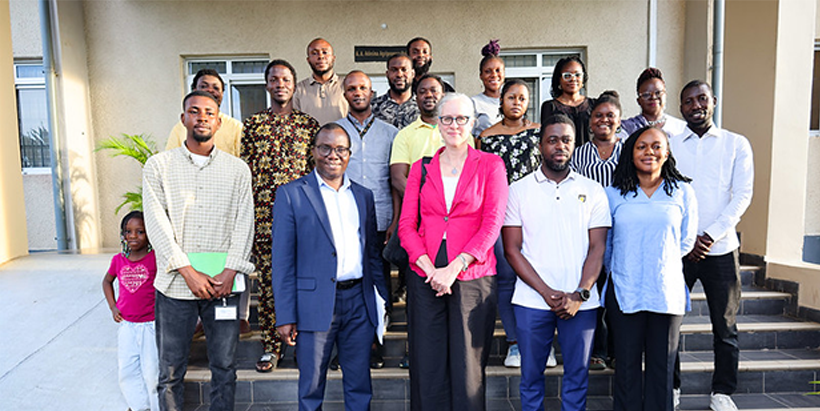
The World Bank delegation with the IITA Youth in Agribusiness team.

Responding to the delegation’s enquiries on the kind of post-training support provided to participants in the employment track and how participants raise capital, Adetola Adenmosun, Partnership and Stakeholder Engagement Manager at IYA, explained that the projects first identify employers and the specific skills in demand before training participants in those areas and linking them to suitable jobs.

She added that the job portal developed by one of the unit’s projects has also been instrumental in connecting participants to dignified jobs in the agricultural and allied sectors. “One remarkable outcome is that some participants in the employment track provide skilled services to those in the entrepreneurship track,” she added.

Addressing questions on how participants finance their agribusiness ventures, Adenmosun explained that while some young farmers already have savings and only require support to scale up, new entrants are provided with starter kits to help them establish their enterprises, build business profiles, and develop credit histories that enable them to access larger financing opportunities. “Some need certification to scale up and access new markets, and we facilitate that for them,” she added.

On the commodities most preferred by young people, she noted that participants are often drawn to short-cycle commodities such as aquaculture, poultry, horticulture, and crops like maize, soybean, cowpea, and vegetables. “We also found that if you want to attract women, you need to consider value addition or enterprises they can easily start at home, so it doesn’t take them away from their families. Those short-cycle commodities also give them quick returns on investment,” she stated.

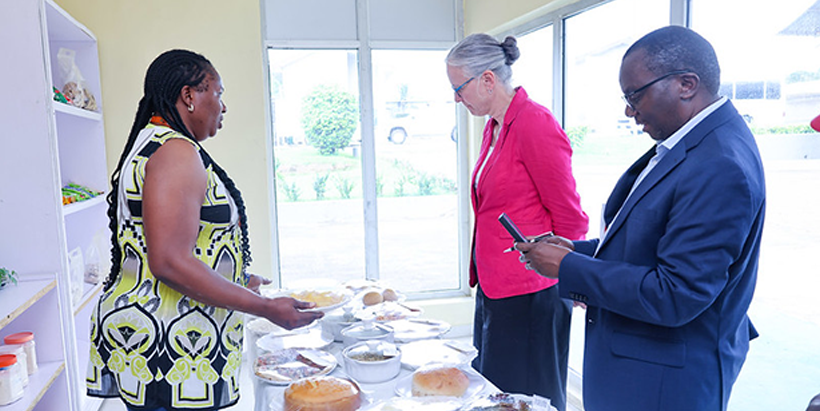
The World Bank team during a tour of the Cassava Processing Unit.

Adenmosun further emphasized that the combination of training, mentorship, and post-program support provided by the unit serves as a strong incentive for aspiring young farmers. She added that IITA continues to engage with governments through policy suggestions addressing systemic issues—such as access to land—that often discourage youth from embracing agriculture.

When asked about the adoption of IITA technologies by young farmers, she explained that during and after training, participants are linked to relevant innovations in their areas of interest. “For example, when we train participants in maize, we introduce them to drought-resistant and biofortified maize varieties. For those into soybean production, we introduce Nodumax to boost yields. For groundnut producers, we promote Aflasafe to prevent aflatoxin and access premium markets. For aquaculture, we collaborate with WorldFish, a CGIAR center, to source improved fingerlings, while catfish processors are introduced to smoking kilns instead of traditional methods,” she said.

In his closing remarks, Dr Hardwick Tchale applauded the IITA team for its accomplishments, noting the strong alignment with the World Bank’s upcoming youth-focused initiatives. “We at the World Bank are developing a new program with the government, and we do have elements within that project that would have to cater to the youth—essentially how to attract the youth into agribusiness—and that seems to be exactly what you are doing,” he said.

The visit concluded with a tour of IITA’s laboratories, incubation centers, and experimental fields, giving the delegation an in-depth look at how the institute’s research innovations are being translated into tangible agricultural solutions for Africa.

Contributed by Babatunde Ajaja, Tolulope Akinola and ’Timilehin Osunde


Contribué par

Nouvelles connexes

Aucun article trouvé

Laisser un commentaire

Votre adresse e-mail ne sera pas publiée. Les champs obligatoires sont indiqués avec *

Retour en haut
Olaosebikan, Olamide

Olamide Deborah Nwanze est une chercheuse principale spécialisée dans la recherche sur l'approche "genre" afin d'éclairer les politiques de sélection participative et inclusive, de développement de variétés et de systèmes semenciers concernant les cultures de racines, tubercules et bananes (RTB) au siège de l'Institut International d'Agriculture Tropicale, à Ibadan, au Nigeria. Elle est candidate au doctorat à l'Université d'Ibadan et titulaire d'un master et d'un diplôme d'ingénieur agronome en vulgarisation agricole et développement rural. Olamide est membre du programme African Women in Agricultural Research and Development – Gender Responsive Agricultural Systems Policy (SAISIE DE RÉCOMPENSEet les Chercheuses Sensibles au Genre Équipées pour la Transformation Agricole (SUPER. Elle cherche à appliquer ses apprentissages en matière d’approche genre, recherche sensible au genre, et expertise en développement et examen de politiques pour faciliter l’accès et l’adoption par les femmes, les jeunes, les enfants et les groupes sociaux vulnérables aux innovations agricoles qui garantissent la sécurité alimentaire, nutritionnelle, des revenus et des moyens de subsistance en Afrique. Ses rôles actuels comprennent le mentorat de chercheurs stagiaires, le développement de guides et manuels de formation, la mise en œuvre et l'adaptation de cadres et d'outils genre, l'engagement des acteurs de la chaîne de valeur en tant que partenaires de la science citoyenne, l'examen et la refonte des politiques, la gestion et l'analyse des données. Ses recherches actuelles portent sur les méthodes mixtes ainsi que sur les approches participatives et interdisciplinaires pour saisir et mettre en évidence les dynamiques de genre, les besoins, les préférences et les défis rencontrés par les parties prenantes au sein de la chaîne de valeur des moyens de subsistance agricoles afin de prioriser des stratégies axées sur le genre dans les programmes de sélection, la conception et la mise en œuvre des politiques.

À l'IITA, elle contribue à la mise en œuvre du CGIAR Initiative d'Élevage Accéléré et Innovation génétique Programmes ; recherche participative et genre au sein des Prochaine Génération ManiocHarvestPlusRTBAliments, et Tricot-ClimMob 1000Fermes Projets ; et la communication des connaissances sur le genre via le Série de webinaires G-LENS, vidéo documentaire, notes de politiquepublications, et blogs.


Publications récentes

de Sousa, K., van Etten, J., Manners, R. Bello, A., Teeken, B., Olaosebikan, O., et al. 2024. L'approche tricot : un cadre agile pour les essais décentralisés à la ferme soutenus par la science citoyenne. Une rétrospective. Agron. Sustain. Dev. 44, 8. https://doi.org/10.1007/s13593-023-00937-1

Madu, T., Onwuka, S., Nwafor, S., Onyemauwa, N., Ejechi, M., Ofoeze, M., Ukeje, B., Eluagu, C., Olaosebikan, O., Okoye, B., 2024. Les études sur les consommateurs inclusifs en matière de genre améliorent l'amélioration du manioc au Nigeria dans : Frontiers in Sociology, volume 9, numéro : 1224504, doi : 10.3389/fsoc.2024.1224504

Olaosebikan, O. ; Bello, A. ; Utoblo, O. ; Okoye, B. ; Olutegbe, N. ; Garner, E. ; Teeken, B. ; Bryan, E. ; Forsythe, L. ; Cole, S. ; Madu, T. 2023. Facteurs de stress et résilience au sein de la chaîne de valeur du manioc au Nigeria : Caractéristiques préférées des variétés de manioc et stratégies de réponse des hommes et des femmes pour informer l'amélioration variétale. Sustainability 15, 7837. https://doi.org/10.3390/su15107837

Okoye, B., Ofoeze, M., Ejechi, M., Onwuka, S., Nwafor, S., Onyemauwa, N., Ukeje, B., Eluagu, C., Obidiegwu, J.*, Olaosebikan, O., Madu, T.* 2023. Priorisation des traits préférés dans la chaîne de valeur de l'igname au Nigeria : une analyse de la situation en matière de genre in: Frontiers in Sociology, volume 8, numéro : 1232626, pages 1 – 9, ISSN 2297-7775, 2023. https://www.frontiersin.org/articles/10.3389/fsoc.2023.1232626/full

Olaosebikan, O., Bello, A. A., de Sousa, K., Ndjouenkeu, R., Adesokan, M., Alamu, E. O., Agbona, A., van Etten, J., Kegah, F. N.*, Dufour, D., Bouniol, A., Teeken, B. 2023. Acceptabilité par les consommateurs des produits alimentaires à base de gari-eba de manioc dans des contextes culturels et environnementaux variés en utilisant l'approche triade de comparaison des technologies (tricot) dans : Journal of the Science of Food and Agriculture,

Teeken, B., Olaosebikan, O., Bello, A. A., Madu, T.*, Cole, S. M. 2023. Évaluation qualitative de la positionnalité et des préférences des dyades en relation avec les activités liées au manioc : travailler avec des scientifiques citoyens du procès tricot https://hdl.handle.net/10568/138326 Type : Manuel

Bouniol, A., Ceballos, H., Bello, A. A., Teeken, B., Olaosebikan, O., Owoade, D., Agbona, A., Fotso Kuate, A., Madu, T.*, Okoye, B.*, Ofoeze, M.*, Nwafor, S.*, Onyemauwa, N.*, Adinsi, L.*, Forsythe, L., Dufour, D. 2023. Impact variétal sur le travail des femmes, la charge de travail et la pénibilité associée dans le traitement des plantes à racines, tubercules et bananes : focus sur le manioc en Afrique subsaharienne dans : Journal of the Science of Food and Agriculture, pages 1 – 25, ISSN 0022-5142,

Bello, A. A., Agbona, A., Olaosebikan, O., Edughaen, G., Dufour, D., Bouniol, A., Iluebbey, P., Ndjouenkeu, R.*, Rabbi, I. Y., Teeken, B. 2023. Effets génétiques et environnementaux sur la productivité de la transformation et le rendement des produits alimentaires : la pénibilité du travail des femmes dans : Journal of the Science of Food and Agriculture, pages 1 – 32, ISSN 0022-5142, 5

Cavicchioli, M., Zimbiti, T., Teeken, B., Nwanze, D.O., Liani, M., Parkes, E. & Bello, A. 2023. Rapport sur la formation en sélection génétique sensible au genre à l'IITA. Genetic Resources Center, IITA-HQ, Ibadan, 21-23 septembre 2022. Ibadan, Nigéria : IITA, (34 p.).https://hdl.handle.net/10568/131368

Agbona, A. Peteti P., Teeken B., Olaosebikan O. Bello, A. A., Parkes, E., Rabbi, I. Y., Mueller, L., Egesi, C., Kulakow, P. 2022. Gestion des données dans les programmes d'amélioration des cultures RTB africaines multidisciplinaires. In : Williamson, H.F., Leonelli, S. (eds) Towards Responsible Plant Data Linkage: Data Challenges for Agricultural Research and Development. Springer, Cham. https://doi.org/10.1007/978-3-031-13276-6_5

Lora Forsythe, Pricilla Marimo, Sarah Mayanja, Olamide D. Olaosebikan, Esme Stuart, Bela Teeken, Benjamin Okoye, Tessy Madu, (2021). Analyse transversale du genre dans RTBfoods Étape 2 Cartographie des genres sur les produits RTB. Comprendre les moteurs des préférences en matière de traits et le développement de profils de produits RTB multi-utilisateurs, WP1. Londres, Royaume-Uni : Rapport scientifique de terrain RTBfoods, 30 p.

Teeken, B., Garner, E., Agbona, A., Balogun, I., Olaosebikan, O., Bello, A., Madu, T., Okoye, B., Egesi, C., Kulakow, P. et Tufan, H.A. 2021. Au-delà des “ traits des femmes ” : explorer comment le genre, les différences sociales et les caractéristiques des ménages influencent les préférences pour les traits. Frontiers Systèmes alimentaires durables 5:740926. https://doi.org/10.3389/fsufs.2021.740926

Teeken, B., Agbona, A., Bello, A., Olaosebikan, O., Alamu, E., Adesokan, M., Awoyale, W., Madu, T., Okoye, B., Chijioke, U., Owoade, D., Okoro, M., Bouniol, A., Dufour, D., Hershey, C., Rabbi, I., Maziya‐Dixon, B., Egesi, C., Tufan, H. et Kulakow, P. (020. Comprendre les préférences variétales du manioc par le classement par paires du gari-eba et du fufu préparés par des agriculteurs-transformateurs locaux. Int J Food Sci Technol. https://doi.org/10.1111/ijfs.14862

Bela Teeken, Olamide Olaosebikan, Ireti Balogun, Benjamin Okoye, Tessy Madu, Steven Cole, Abolore Bello, Elizabeth Parkes. (2020). Pilotage des outils de profil client et produit G+ pour l'amélioration sensible au genre du manioc au Nigeria. Nigeria : Institut international d'agriculture tropicale (IIAT). https://hdl.handle.net/20.500.11766/13000