
NOUVELLES DE L'IITA

IITA collaborates with Dutch government to enhance sustainable insect production
octobre 28, 2021

On 15 September, the Business Incubation Platform (BIP) of IITA hosted the official launch of the “Insects4Feed Impact Cluster” project at the Institute’s Conference Center. The Government of The Netherlands awarded the project to Nigeria, and IITA BIP is one of the implementing partners together with the University of Ibadan (UI), New Generation for Nutrition (NGN), etc. The project seeks to raise insect entrepreneurs in Nigeria that will provide needed alternative protein sources and feed for fish and poultry.
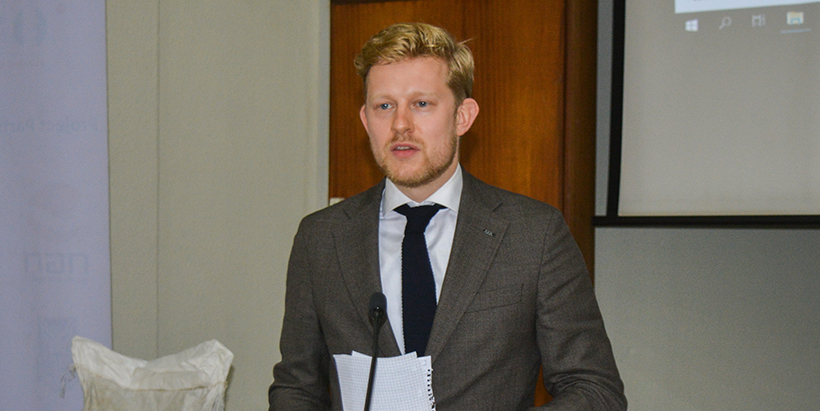
IITA collaborates with Dutch government to enhance sustainable insect production
Abel Neering highlights the strengthened collaboration between the governments of the Netherlands and Nigeria.

IITA-BIP CEO Frederick Schreurs said that the project is a step forward for BIP. He explained that BIP creates businesses by incubating innovations and technologies and collaborating with private organizations for a sustainable market and to ensure job creation. He further explained that the project would create sustainable jobs for Africa, especially for the youth.

Representing the acting UI Vice-Chancellor Prof. Adebola Ekanola, Deputy Vice-Chancellor Administration Prof. Kayode Adebowale said that any innovative action to make food available is appreciated. He explained that the problem of climate change had been linked to the accumulation of greenhouse gases from several sources, including livestock that are the conventional source of protein for humans.
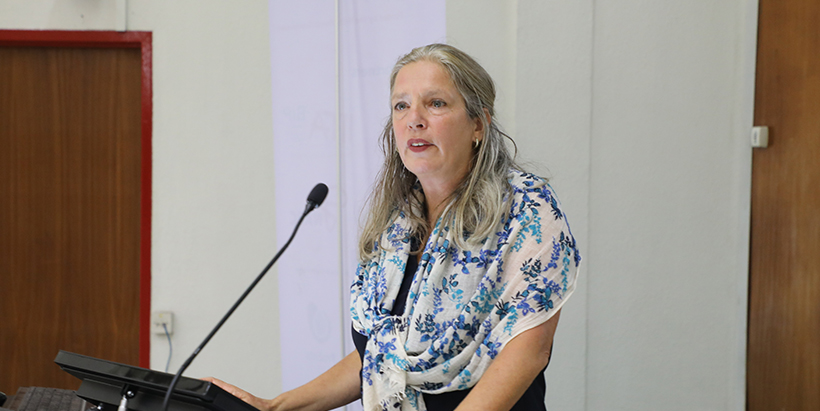
IITA collaborates with Dutch government to enhance sustainable insect production
Marian Peters highlighting the opportunities of insects around the equator.

He expressed his excitement and said that the stakeholders had found an ingenious way to provide protein sources through the insect called black soldier fly (BSF). He emphasized the willingness of UI to support the project and its objectives. He explained the benefits of growing BSF, which can be used as a substitute in any animal feed and reduce the cost of fish and poultry feed due to its rapid multiplication.

NGN CEO Marian Peters spoke about the opportunities around insects, noting that the COVID-19 pandemic resulted in more consumption of local foods. She said that BSF production in  Nigeria would require good climatic conditions for local production to thrive. BSF would provide good nutritional quality for feed as a replacement for fish meal or any other animal protein.

A member of the UI Crop Protection and Environmental Biology Faculty, Adebayo Omoloye, highlighted the role of insects in the circular economy. The high demand for animal-based protein has negatively impacted the ecosystem, making it necessary to look for viable and sustainable protein alternatives. He said insects are a valid substitute in human and animal nutrition for protein. Their treatment and management as a good food source have a low environmental impact and efficient food conservation ability.

Speaking on the business aspect, he introduced the term “entomopreneurship”, which means insect farming presenting an opportunity for youth and gender empowerment. He further explained that sustainable circularity is a step above the recycling system, the linear and circular economy. It can also be used as fuel for domestic and industrial purposes.

Representing Honorable Muyiwa Ojekunle, Commissioner of Agriculture and Rural Development of Oyo State, Alhaja Bola Oloko, Permanent Secretary, Ministry of Agriculture, appreciated the organizers of the program, especially IITA in promoting agriculture. The Insects4Feed Impact Cluster is another program that the State has adopted, which will bring about a positive result in agriculture. “The government is ready to make everything possible for the success of agriculture in Oyo State,” she said.

Abel Neering, Dutch Vice-Consul, Economic Affairs, said that The Netherlands and Nigeria governments signed a memo of understanding to strengthen trade and economic development collaboration. This partnership is one concrete project that intensifies the cooperation and is an excellent example of the “Diamond approach” to collaboration between government and the private sector.

“I’m very happy to open the official Insects4Feed Impact Cluster, and I am convinced it is going to be a heritage,” he said.

IITA Deputy Director-General for Partnerships and Delivery, Kenton Dashiell, commended UI for its partnership with IITA and its research. He highlighted the importance of the partnership to convert waste into wealth and make it a renewable technology. “The government will be a key driver to the success of this project,” he stated.

Linda Agbotah, Project Lead-Insects4Feed NGN, explained the partnership with UI, which carried out the baseline studies and IITA-BIP to incubate the new entrepreneurs around the insect value chain. “This will be scaled up by an industry in Nigeria to build a market around it, and it will be replicated by other countries,” she added.

Discussing the next steps, “There is going to be an opening at the insects training center at UI. Also, a demo farm and business incubation will be established under IITA-BIP with the first cohort of trainees expected in 2022,” she said.

Cies Roskam, Founder of ProEnto, explained the life stages of BSF and business scales associated with it. They include small-scale BSF production, which produces up to 28 tons per year, medium-scale BSF production of up to 28 to 600 tons per year, and large-scale BSF production above 600 tons per year.

John Amole, Project Lead-NGN Nigeria, appreciated all the implementing partners and participants for making the launch a reality.


Contribué par

Nouvelles connexes

Aucun article trouvé

Laisser un commentaire

Votre adresse e-mail ne sera pas publiée. Les champs obligatoires sont indiqués avec *

Retour en haut
Olaosebikan, Olamide

Olamide Deborah Nwanze est une chercheuse principale spécialisée dans la recherche sur l'approche "genre" afin d'éclairer les politiques de sélection participative et inclusive, de développement de variétés et de systèmes semenciers concernant les cultures de racines, tubercules et bananes (RTB) au siège de l'Institut International d'Agriculture Tropicale, à Ibadan, au Nigeria. Elle est candidate au doctorat à l'Université d'Ibadan et titulaire d'un master et d'un diplôme d'ingénieur agronome en vulgarisation agricole et développement rural. Olamide est membre du programme African Women in Agricultural Research and Development – Gender Responsive Agricultural Systems Policy (SAISIE DE RÉCOMPENSEet les Chercheuses Sensibles au Genre Équipées pour la Transformation Agricole (SUPER. Elle cherche à appliquer ses apprentissages en matière d’approche genre, recherche sensible au genre, et expertise en développement et examen de politiques pour faciliter l’accès et l’adoption par les femmes, les jeunes, les enfants et les groupes sociaux vulnérables aux innovations agricoles qui garantissent la sécurité alimentaire, nutritionnelle, des revenus et des moyens de subsistance en Afrique. Ses rôles actuels comprennent le mentorat de chercheurs stagiaires, le développement de guides et manuels de formation, la mise en œuvre et l'adaptation de cadres et d'outils genre, l'engagement des acteurs de la chaîne de valeur en tant que partenaires de la science citoyenne, l'examen et la refonte des politiques, la gestion et l'analyse des données. Ses recherches actuelles portent sur les méthodes mixtes ainsi que sur les approches participatives et interdisciplinaires pour saisir et mettre en évidence les dynamiques de genre, les besoins, les préférences et les défis rencontrés par les parties prenantes au sein de la chaîne de valeur des moyens de subsistance agricoles afin de prioriser des stratégies axées sur le genre dans les programmes de sélection, la conception et la mise en œuvre des politiques.

À l'IITA, elle contribue à la mise en œuvre du CGIAR Initiative d'Élevage Accéléré et Innovation génétique Programmes ; recherche participative et genre au sein des Prochaine Génération ManiocHarvestPlusRTBAliments, et Tricot-ClimMob 1000Fermes Projets ; et la communication des connaissances sur le genre via le Série de webinaires G-LENS, vidéo documentaire, notes de politiquepublications, et blogs.


Publications récentes

de Sousa, K., van Etten, J., Manners, R. Bello, A., Teeken, B., Olaosebikan, O., et al. 2024. L'approche tricot : un cadre agile pour les essais décentralisés à la ferme soutenus par la science citoyenne. Une rétrospective. Agron. Sustain. Dev. 44, 8. https://doi.org/10.1007/s13593-023-00937-1

Madu, T., Onwuka, S., Nwafor, S., Onyemauwa, N., Ejechi, M., Ofoeze, M., Ukeje, B., Eluagu, C., Olaosebikan, O., Okoye, B., 2024. Les études sur les consommateurs inclusifs en matière de genre améliorent l'amélioration du manioc au Nigeria dans : Frontiers in Sociology, volume 9, numéro : 1224504, doi : 10.3389/fsoc.2024.1224504

Olaosebikan, O. ; Bello, A. ; Utoblo, O. ; Okoye, B. ; Olutegbe, N. ; Garner, E. ; Teeken, B. ; Bryan, E. ; Forsythe, L. ; Cole, S. ; Madu, T. 2023. Facteurs de stress et résilience au sein de la chaîne de valeur du manioc au Nigeria : Caractéristiques préférées des variétés de manioc et stratégies de réponse des hommes et des femmes pour informer l'amélioration variétale. Sustainability 15, 7837. https://doi.org/10.3390/su15107837

Okoye, B., Ofoeze, M., Ejechi, M., Onwuka, S., Nwafor, S., Onyemauwa, N., Ukeje, B., Eluagu, C., Obidiegwu, J.*, Olaosebikan, O., Madu, T.* 2023. Priorisation des traits préférés dans la chaîne de valeur de l'igname au Nigeria : une analyse de la situation en matière de genre in: Frontiers in Sociology, volume 8, numéro : 1232626, pages 1 – 9, ISSN 2297-7775, 2023. https://www.frontiersin.org/articles/10.3389/fsoc.2023.1232626/full

Olaosebikan, O., Bello, A. A., de Sousa, K., Ndjouenkeu, R., Adesokan, M., Alamu, E. O., Agbona, A., van Etten, J., Kegah, F. N.*, Dufour, D., Bouniol, A., Teeken, B. 2023. Acceptabilité par les consommateurs des produits alimentaires à base de gari-eba de manioc dans des contextes culturels et environnementaux variés en utilisant l'approche triade de comparaison des technologies (tricot) dans : Journal of the Science of Food and Agriculture,

Teeken, B., Olaosebikan, O., Bello, A. A., Madu, T.*, Cole, S. M. 2023. Évaluation qualitative de la positionnalité et des préférences des dyades en relation avec les activités liées au manioc : travailler avec des scientifiques citoyens du procès tricot https://hdl.handle.net/10568/138326 Type : Manuel

Bouniol, A., Ceballos, H., Bello, A. A., Teeken, B., Olaosebikan, O., Owoade, D., Agbona, A., Fotso Kuate, A., Madu, T.*, Okoye, B.*, Ofoeze, M.*, Nwafor, S.*, Onyemauwa, N.*, Adinsi, L.*, Forsythe, L., Dufour, D. 2023. Impact variétal sur le travail des femmes, la charge de travail et la pénibilité associée dans le traitement des plantes à racines, tubercules et bananes : focus sur le manioc en Afrique subsaharienne dans : Journal of the Science of Food and Agriculture, pages 1 – 25, ISSN 0022-5142,

Bello, A. A., Agbona, A., Olaosebikan, O., Edughaen, G., Dufour, D., Bouniol, A., Iluebbey, P., Ndjouenkeu, R.*, Rabbi, I. Y., Teeken, B. 2023. Effets génétiques et environnementaux sur la productivité de la transformation et le rendement des produits alimentaires : la pénibilité du travail des femmes dans : Journal of the Science of Food and Agriculture, pages 1 – 32, ISSN 0022-5142, 5

Cavicchioli, M., Zimbiti, T., Teeken, B., Nwanze, D.O., Liani, M., Parkes, E. & Bello, A. 2023. Rapport sur la formation en sélection génétique sensible au genre à l'IITA. Genetic Resources Center, IITA-HQ, Ibadan, 21-23 septembre 2022. Ibadan, Nigéria : IITA, (34 p.).https://hdl.handle.net/10568/131368

Agbona, A. Peteti P., Teeken B., Olaosebikan O. Bello, A. A., Parkes, E., Rabbi, I. Y., Mueller, L., Egesi, C., Kulakow, P. 2022. Gestion des données dans les programmes d'amélioration des cultures RTB africaines multidisciplinaires. In : Williamson, H.F., Leonelli, S. (eds) Towards Responsible Plant Data Linkage: Data Challenges for Agricultural Research and Development. Springer, Cham. https://doi.org/10.1007/978-3-031-13276-6_5

Lora Forsythe, Pricilla Marimo, Sarah Mayanja, Olamide D. Olaosebikan, Esme Stuart, Bela Teeken, Benjamin Okoye, Tessy Madu, (2021). Analyse transversale du genre dans RTBfoods Étape 2 Cartographie des genres sur les produits RTB. Comprendre les moteurs des préférences en matière de traits et le développement de profils de produits RTB multi-utilisateurs, WP1. Londres, Royaume-Uni : Rapport scientifique de terrain RTBfoods, 30 p.

Teeken, B., Garner, E., Agbona, A., Balogun, I., Olaosebikan, O., Bello, A., Madu, T., Okoye, B., Egesi, C., Kulakow, P. et Tufan, H.A. 2021. Au-delà des “ traits des femmes ” : explorer comment le genre, les différences sociales et les caractéristiques des ménages influencent les préférences pour les traits. Frontiers Systèmes alimentaires durables 5:740926. https://doi.org/10.3389/fsufs.2021.740926

Teeken, B., Agbona, A., Bello, A., Olaosebikan, O., Alamu, E., Adesokan, M., Awoyale, W., Madu, T., Okoye, B., Chijioke, U., Owoade, D., Okoro, M., Bouniol, A., Dufour, D., Hershey, C., Rabbi, I., Maziya‐Dixon, B., Egesi, C., Tufan, H. et Kulakow, P. (020. Comprendre les préférences variétales du manioc par le classement par paires du gari-eba et du fufu préparés par des agriculteurs-transformateurs locaux. Int J Food Sci Technol. https://doi.org/10.1111/ijfs.14862

Bela Teeken, Olamide Olaosebikan, Ireti Balogun, Benjamin Okoye, Tessy Madu, Steven Cole, Abolore Bello, Elizabeth Parkes. (2020). Pilotage des outils de profil client et produit G+ pour l'amélioration sensible au genre du manioc au Nigeria. Nigeria : Institut international d'agriculture tropicale (IIAT). https://hdl.handle.net/20.500.11766/13000