
On 15 September, the Business Incubation Platform (BIP) of IITA hosted the official launch of the “Insects4Feed Impact Cluster” project at the Institute’s Conference Center. The Government of The Netherlands awarded the project to Nigeria, and IITA BIP is one of the implementing partners together with the University of Ibadan (UI), New Generation for Nutrition (NGN), etc. The project seeks to raise insect entrepreneurs in Nigeria that will provide needed alternative protein sources and feed for fish and poultry.
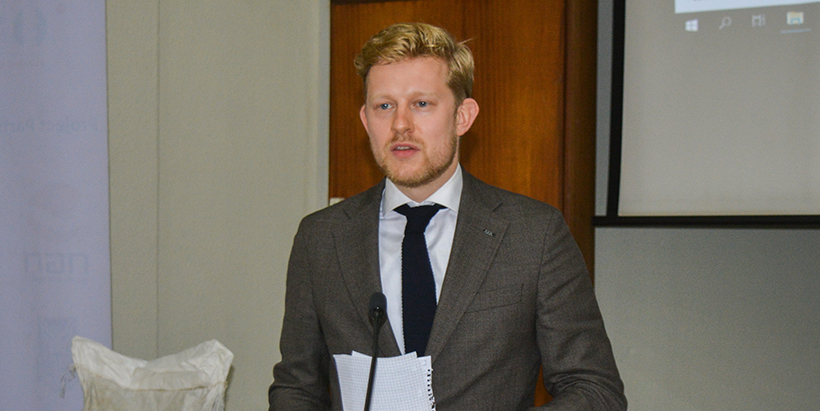
IITA-BIP CEO Frederick Schreurs said that the project is a step forward for BIP. He explained that BIP creates businesses by incubating innovations and technologies and collaborating with private organizations for a sustainable market and to ensure job creation. He further explained that the project would create sustainable jobs for Africa, especially for the youth.
Representing the acting UI Vice-Chancellor Prof. Adebola Ekanola, Deputy Vice-Chancellor Administration Prof. Kayode Adebowale said that any innovative action to make food available is appreciated. He explained that the problem of climate change had been linked to the accumulation of greenhouse gases from several sources, including livestock that are the conventional source of protein for humans.
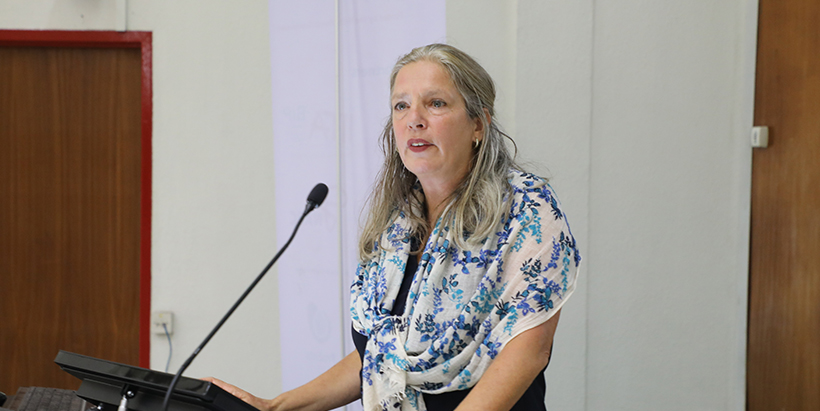
He expressed his excitement and said that the stakeholders had found an ingenious way to provide protein sources through the insect called black soldier fly (BSF). He emphasized the willingness of UI to support the project and its objectives. He explained the benefits of growing BSF, which can be used as a substitute in any animal feed and reduce the cost of fish and poultry feed due to its rapid multiplication.
NGN CEO Marian Peters spoke about the opportunities around insects, noting that the COVID-19 pandemic resulted in more consumption of local foods. She said that BSF production in Nigeria would require good climatic conditions for local production to thrive. BSF would provide good nutritional quality for feed as a replacement for fish meal or any other animal protein.
A member of the UI Crop Protection and Environmental Biology Faculty, Adebayo Omoloye, highlighted the role of insects in the circular economy. The high demand for animal-based protein has negatively impacted the ecosystem, making it necessary to look for viable and sustainable protein alternatives. He said insects are a valid substitute in human and animal nutrition for protein. Their treatment and management as a good food source have a low environmental impact and efficient food conservation ability.
Speaking on the business aspect, he introduced the term “entomopreneurship”, which means insect farming presenting an opportunity for youth and gender empowerment. He further explained that sustainable circularity is a step above the recycling system, the linear and circular economy. It can also be used as fuel for domestic and industrial purposes.
Representing Honorable Muyiwa Ojekunle, Commissioner of Agriculture and Rural Development of Oyo State, Alhaja Bola Oloko, Permanent Secretary, Ministry of Agriculture, appreciated the organizers of the program, especially IITA in promoting agriculture. The Insects4Feed Impact Cluster is another program that the State has adopted, which will bring about a positive result in agriculture. “The government is ready to make everything possible for the success of agriculture in Oyo State,” she said.
Abel Neering, Dutch Vice-Consul, Economic Affairs, said that The Netherlands and Nigeria governments signed a memo of understanding to strengthen trade and economic development collaboration. This partnership is one concrete project that intensifies the cooperation and is an excellent example of the “Diamond approach” to collaboration between government and the private sector.
“I’m very happy to open the official Insects4Feed Impact Cluster, and I am convinced it is going to be a heritage,” he said.
IITA Deputy Director-General for Partnerships and Delivery, Kenton Dashiell, commended UI for its partnership with IITA and its research. He highlighted the importance of the partnership to convert waste into wealth and make it a renewable technology. “The government will be a key driver to the success of this project,” he stated.
Linda Agbotah, Project Lead-Insects4Feed NGN, explained the partnership with UI, which carried out the baseline studies and IITA-BIP to incubate the new entrepreneurs around the insect value chain. “This will be scaled up by an industry in Nigeria to build a market around it, and it will be replicated by other countries,” she added.
Discussing the next steps, “There is going to be an opening at the insects training center at UI. Also, a demo farm and business incubation will be established under IITA-BIP with the first cohort of trainees expected in 2022,” she said.
Cies Roskam, Founder of ProEnto, explained the life stages of BSF and business scales associated with it. They include small-scale BSF production, which produces up to 28 tons per year, medium-scale BSF production of up to 28 to 600 tons per year, and large-scale BSF production above 600 tons per year.
John Amole, Project Lead-NGN Nigeria, appreciated all the implementing partners and participants for making the launch a reality.
Contribué par
Histoires récentes