Formation sur les élections et les menaces à la sécurité au Nigéria
17 février 2023
Le responsable des risques de la Haute Commission britannique, Muhammad Abdulazeez, a présenté et examiné le 9 février 2023 les processus, procédures et mesures de sécurité électoraux. Il a également identifié les options mises en place dans certaines zones de l'État de Kano. La formation s'est déroulée au IITA Salle de conférence de la gare de Kano.
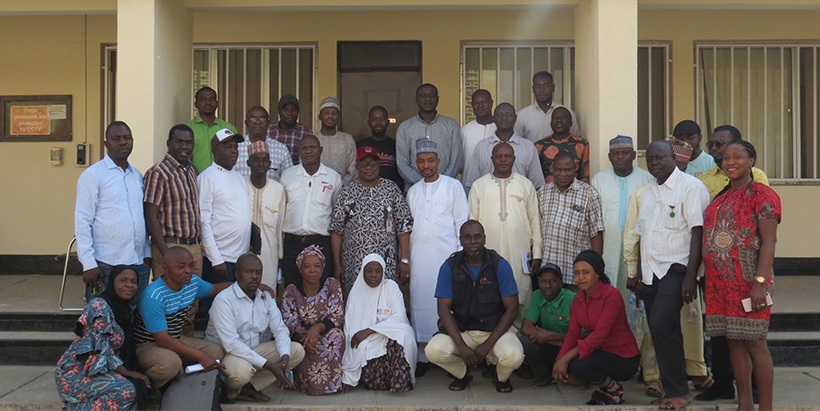
Participants à la formation sur la sécurité des élections.
Les élections générales nigérianes (présidentielle et Assemblée nationale) sont prévues pour le 25 février, tandis que les élections des gouverneurs auront lieu le 11 mars. La campagne électorale a débuté le 28 septembre 2022 et, pour la première fois depuis 1999, il y a trois principaux candidats à l'élection présidentielle, issus de milieux différents et s'appuyant sur un vivier diversifié d'électeurs.
Abdulazeez a souligné lors de sa présentation que la violence électorale existe depuis longtemps et n'est pas propre au Nigéria. Des violences et des affrontements violents entre partisans de partis politiques opposés se produisent dans tout le pays, avec des blessés et des morts parmi les civils enregistrés depuis le début officiel de la campagne électorale jusqu'à présent, de la même manière que lors des précédents scrutins en 2019.
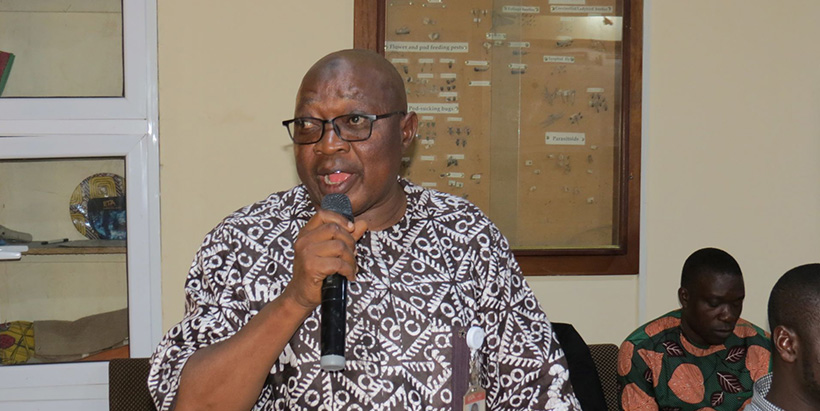
Ado Rabo, de l'administration de la station IITA de Kano, prenant la parole lors de la formation sur la sécurité des élections.
L'un de ces groupes contribuant à la violence électorale n'est pas seulement la jeunesse, mais aussi Boko Haram, qui reste opposé à toute activité électorale, les bandits, et l'IPOB, qui menacent l'élection de 2023 de différentes manières. Boko Haram attaquera pour des raisons idéologiques, les bandits perpétreront des enlèvements contre rançon, et l'IPOB s'en prendra aux journalistes et aux observateurs pour transmettre son message de menace tout en démontrant son contrôle sur le Sud-Est.
Il a ajouté que les médias jouent un rôle majeur en tenant les citoyens informés des événements actuels et en sensibilisant aux divers problèmes de société. Il a indiqué qu'entre 2014 et 2022, les États ayant enregistré le plus grand nombre d'incidents étaient Rivers, Lagos, Kogi, Ondo et Ekiti, respectivement. Alors que les États de Rivers et de Lagos ont de nouveau trôné en tête de liste des endroits ayant enregistré le plus grand nombre de morts, suivis par Taraba, Bayelsa, Delta, Ebonyi, Kano et Kogi. Il a en outre souligné que le 25 janvier 2023, les forces de sécurité ont arrêté 98 individus en possession d'armes à feu et d'armes blanches, qui se dirigeaient d'Ibadan, dans l'État d'Oyo, vers Ado Ekiti, dans l'État d'Ekiti, pour attaquer un rassemblement politique.
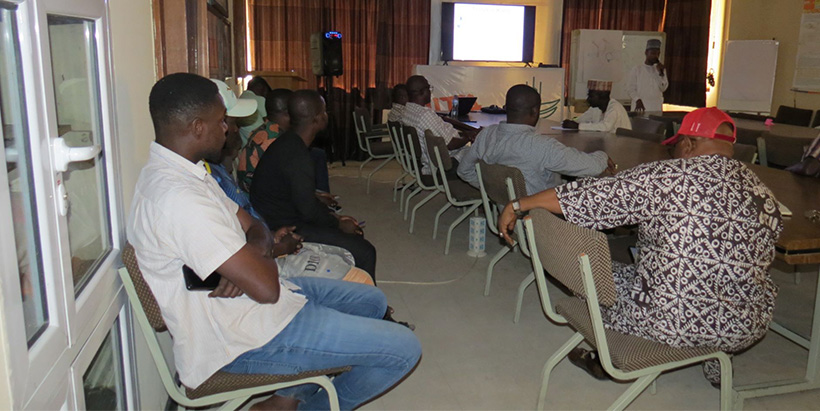
Participants lors de la formation sur la sécurité électorale.
Cependant, Abdulazeez a déclaré que l'État de Kano est l'un des nombreux États nigérians qui connaissent souvent des violences liées aux élections, qu'il s'agisse de scrutins nationaux ou locaux. Kano a également connu une série de සහ tumultes ethno-religieux, notant que de tels émeutes se produisent généralement avant ou le jour du scrutin et concernent des questions de vol d'urnes et d'intimidation des électeurs et des agents électoraux. Il a en outre énuméré certaines zones sujettes à la violence électorale à Kano, notamment Dala, Nassarawa, Fagge, Wudil, Bichi, Kura, Minjibir, Gwarzo et Kabo. Il a conseillé au personnel de faire preuve de prudence dans ces endroits car ils sont susceptibles de connaître des émeutes comme les années précédentes. Il a également indiqué que le personnel doit s'assurer d'être à son bureau de vote respectif à l'heure, de ne pas porter de tenues politiques, d'éviter les conversations sur l'ethnicité ou la religion sur le lieu de vote, et que le personnel doit toujours rester en contact les uns avec les autres. ‘ Si vous savez quelque chose, dites-le ’, a-t-il ajouté.
Le présentateur a souligné la signification, l'importance et les recommandations de la formation pour l'IITA comme suit :
Pour veiller à ce qu'ils disposent de politiques de sécurité et de plans et protocoles spécifiques pour des événements tels que les élections afin de couvrir la sécurité, les bureaux, les communications sécurisées, les zones de refuge, la sécurité des données et des informations, ainsi que les déplacements, les approvisionnements et les situations d'urgence de l'IITA.
Avoir une salle des opérations électorales mise en place au niveau du pays pour promouvoir le partage d'informations entre le personnel de l'IITA qui met en œuvre, prévoit de mettre en œuvre ou est affecté par des activités d'assistance électorale.
Approuver également des limitations de déplacements autour des dates des élections.
Pour avoir également un appui sûr ; quelqu'un que l'on peut appeler en cas de difficultés.
Pour obtenir quelques émetteurs-récepteurs portatifs (talkies-walkies) en cas d'urgence.
L'administrateur de la station, Ado Rabo, a remercié le présentateur pour son excellente présentation et a conseillé au personnel de minimiser les déplacements pendant la période électorale, sauf en cas de nécessité, de faire des provisions suffisantes de produits alimentaires chez eux, et d'éviter les rassemblements ainsi que les zones peuplées.
Proposé par Sarah Sallau
Olamide Deborah Nwanze est une chercheuse principale spécialisée dans la recherche sur l'approche "genre" afin d'éclairer les politiques de sélection participative et inclusive, de développement de variétés et de systèmes semenciers concernant les cultures de racines, tubercules et bananes (RTB) au siège de l'Institut International d'Agriculture Tropicale, à Ibadan, au Nigeria. Elle est candidate au doctorat à l'Université d'Ibadan et titulaire d'un master et d'un diplôme d'ingénieur agronome en vulgarisation agricole et développement rural. Olamide est membre du programme African Women in Agricultural Research and Development – Gender Responsive Agricultural Systems Policy (SAISIE DE RÉCOMPENSEet les Chercheuses Sensibles au Genre Équipées pour la Transformation Agricole (SUPER. Elle cherche à appliquer ses apprentissages en matière d’approche genre, recherche sensible au genre, et expertise en développement et examen de politiques pour faciliter l’accès et l’adoption par les femmes, les jeunes, les enfants et les groupes sociaux vulnérables aux innovations agricoles qui garantissent la sécurité alimentaire, nutritionnelle, des revenus et des moyens de subsistance en Afrique. Ses rôles actuels comprennent le mentorat de chercheurs stagiaires, le développement de guides et manuels de formation, la mise en œuvre et l'adaptation de cadres et d'outils genre, l'engagement des acteurs de la chaîne de valeur en tant que partenaires de la science citoyenne, l'examen et la refonte des politiques, la gestion et l'analyse des données. Ses recherches actuelles portent sur les méthodes mixtes ainsi que sur les approches participatives et interdisciplinaires pour saisir et mettre en évidence les dynamiques de genre, les besoins, les préférences et les défis rencontrés par les parties prenantes au sein de la chaîne de valeur des moyens de subsistance agricoles afin de prioriser des stratégies axées sur le genre dans les programmes de sélection, la conception et la mise en œuvre des politiques.
de Sousa, K., van Etten, J., Manners, R. Bello, A., Teeken, B., Olaosebikan, O., et al. 2024. L'approche tricot : un cadre agile pour les essais décentralisés à la ferme soutenus par la science citoyenne. Une rétrospective. Agron. Sustain. Dev. 44, 8. https://doi.org/10.1007/s13593-023-00937-1
Madu, T., Onwuka, S., Nwafor, S., Onyemauwa, N., Ejechi, M., Ofoeze, M., Ukeje, B., Eluagu, C., Olaosebikan, O., Okoye, B., 2024. Les études sur les consommateurs inclusifs en matière de genre améliorent l'amélioration du manioc au Nigeria dans : Frontiers in Sociology, volume 9, numéro : 1224504, doi : 10.3389/fsoc.2024.1224504
Olaosebikan, O. ; Bello, A. ; Utoblo, O. ; Okoye, B. ; Olutegbe, N. ; Garner, E. ; Teeken, B. ; Bryan, E. ; Forsythe, L. ; Cole, S. ; Madu, T. 2023. Facteurs de stress et résilience au sein de la chaîne de valeur du manioc au Nigeria : Caractéristiques préférées des variétés de manioc et stratégies de réponse des hommes et des femmes pour informer l'amélioration variétale. Sustainability 15, 7837. https://doi.org/10.3390/su15107837
Okoye, B., Ofoeze, M., Ejechi, M., Onwuka, S., Nwafor, S., Onyemauwa, N., Ukeje, B., Eluagu, C., Obidiegwu, J.*, Olaosebikan, O., Madu, T.* 2023. Priorisation des traits préférés dans la chaîne de valeur de l'igname au Nigeria : une analyse de la situation en matière de genre in: Frontiers in Sociology, volume 8, numéro : 1232626, pages 1 – 9, ISSN 2297-7775, 2023. https://www.frontiersin.org/articles/10.3389/fsoc.2023.1232626/full
Olaosebikan, O., Bello, A. A., de Sousa, K., Ndjouenkeu, R., Adesokan, M., Alamu, E. O., Agbona, A., van Etten, J., Kegah, F. N.*, Dufour, D., Bouniol, A., Teeken, B. 2023. Acceptabilité par les consommateurs des produits alimentaires à base de gari-eba de manioc dans des contextes culturels et environnementaux variés en utilisant l'approche triade de comparaison des technologies (tricot) dans : Journal of the Science of Food and Agriculture,
Teeken, B., Olaosebikan, O., Bello, A. A., Madu, T.*, Cole, S. M. 2023. Évaluation qualitative de la positionnalité et des préférences des dyades en relation avec les activités liées au manioc : travailler avec des scientifiques citoyens du procès tricot https://hdl.handle.net/10568/138326 Type : Manuel
Bouniol, A., Ceballos, H., Bello, A. A., Teeken, B., Olaosebikan, O., Owoade, D., Agbona, A., Fotso Kuate, A., Madu, T.*, Okoye, B.*, Ofoeze, M.*, Nwafor, S.*, Onyemauwa, N.*, Adinsi, L.*, Forsythe, L., Dufour, D. 2023. Impact variétal sur le travail des femmes, la charge de travail et la pénibilité associée dans le traitement des plantes à racines, tubercules et bananes : focus sur le manioc en Afrique subsaharienne dans : Journal of the Science of Food and Agriculture, pages 1 – 25, ISSN 0022-5142,
Bello, A. A., Agbona, A., Olaosebikan, O., Edughaen, G., Dufour, D., Bouniol, A., Iluebbey, P., Ndjouenkeu, R.*, Rabbi, I. Y., Teeken, B. 2023. Effets génétiques et environnementaux sur la productivité de la transformation et le rendement des produits alimentaires : la pénibilité du travail des femmes dans : Journal of the Science of Food and Agriculture, pages 1 – 32, ISSN 0022-5142, 5
Cavicchioli, M., Zimbiti, T., Teeken, B., Nwanze, D.O., Liani, M., Parkes, E. & Bello, A. 2023. Rapport sur la formation en sélection génétique sensible au genre à l'IITA. Genetic Resources Center, IITA-HQ, Ibadan, 21-23 septembre 2022. Ibadan, Nigéria : IITA, (34 p.).https://hdl.handle.net/10568/131368
Agbona, A. Peteti P., Teeken B., Olaosebikan O. Bello, A. A., Parkes, E., Rabbi, I. Y., Mueller, L., Egesi, C., Kulakow, P. 2022. Gestion des données dans les programmes d'amélioration des cultures RTB africaines multidisciplinaires. In : Williamson, H.F., Leonelli, S. (eds) Towards Responsible Plant Data Linkage: Data Challenges for Agricultural Research and Development. Springer, Cham. https://doi.org/10.1007/978-3-031-13276-6_5
Lora Forsythe, Pricilla Marimo, Sarah Mayanja, Olamide D. Olaosebikan, Esme Stuart, Bela Teeken, Benjamin Okoye, Tessy Madu, (2021). Analyse transversale du genre dans RTBfoods Étape 2 Cartographie des genres sur les produits RTB. Comprendre les moteurs des préférences en matière de traits et le développement de profils de produits RTB multi-utilisateurs, WP1. Londres, Royaume-Uni : Rapport scientifique de terrain RTBfoods, 30 p.
Teeken, B., Garner, E., Agbona, A., Balogun, I., Olaosebikan, O., Bello, A., Madu, T., Okoye, B., Egesi, C., Kulakow, P. et Tufan, H.A. 2021. Au-delà des “ traits des femmes ” : explorer comment le genre, les différences sociales et les caractéristiques des ménages influencent les préférences pour les traits. Frontiers Systèmes alimentaires durables 5:740926. https://doi.org/10.3389/fsufs.2021.740926
Teeken, B., Agbona, A., Bello, A., Olaosebikan, O., Alamu, E., Adesokan, M., Awoyale, W., Madu, T., Okoye, B., Chijioke, U., Owoade, D., Okoro, M., Bouniol, A., Dufour, D., Hershey, C., Rabbi, I., Maziya‐Dixon, B., Egesi, C., Tufan, H. et Kulakow, P. (020. Comprendre les préférences variétales du manioc par le classement par paires du gari-eba et du fufu préparés par des agriculteurs-transformateurs locaux. Int J Food Sci Technol.https://doi.org/10.1111/ijfs.14862
Bela Teeken, Olamide Olaosebikan, Ireti Balogun, Benjamin Okoye, Tessy Madu, Steven Cole, Abolore Bello, Elizabeth Parkes. (2020). Pilotage des outils de profil client et produit G+ pour l'amélioration sensible au genre du manioc au Nigeria. Nigeria : Institut international d'agriculture tropicale (IIAT). https://hdl.handle.net/20.500.11766/13000