
The recent gathering of international experts at the 2023 Annual CGIAR Gender Research Conference, co-hosted by the Plateforme « GENDER Impact » du CGIAR et le Indian Council of Agricultural Research (ICAR), underscored the crucial role of gender inclusivity in the global agricultural landscape. From 9 to 12 October, the event held in New Delhi, India, focused on the vital theme “From Research to Impact: Towards a Just and Resilient Agri-food Systems.”
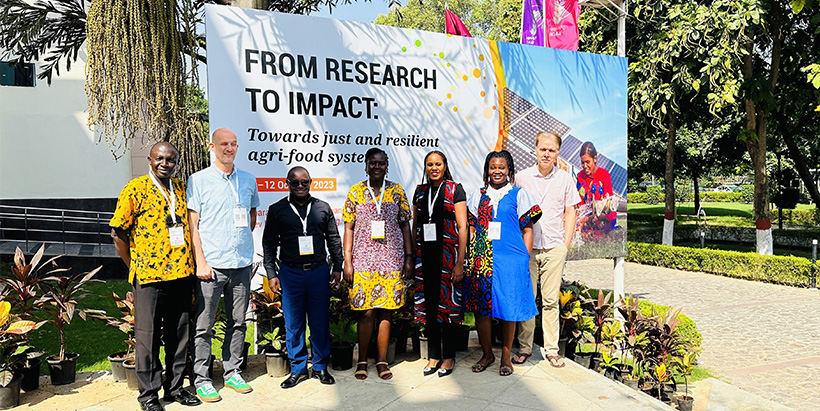
The conference highlighted the fundamental issue of gender and social inequalities deeply embedded within food systems and sought to facilitate a more inclusive approach to agricultural research and practice. With a key emphasis on bridging the gap between research and tangible outcomes, the event aimed to foster resilient, socially just, and gender-equal food systems.
The conference was a vibrant platform for researchers from diverse organizations to engage in meaningful scientific exchanges and dialogues. It provided a conducive environment for sharing innovative insights to transform food systems in line with the global agenda for sustainable development. Throughout the conference, efforts were dedicated to strengthening social networks and cultivating partnerships to drive impactful change in the agricultural landscape.
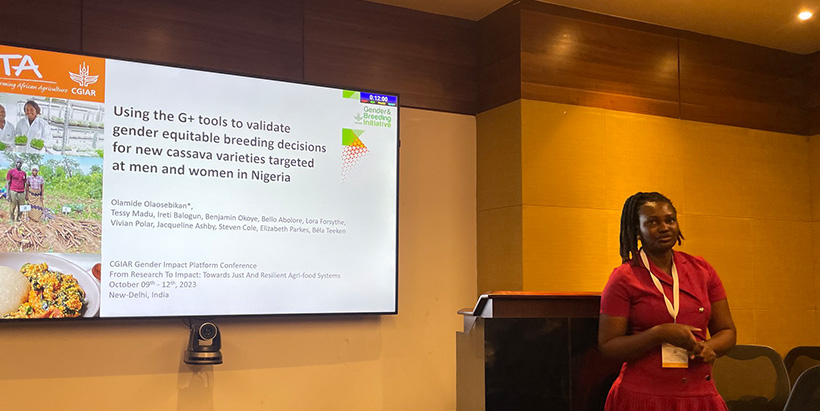
In her speech, CGIAR GENDER Impact Platform Director Nicoline de Haan highlighted the persistent challenges arising from gender disparities within agri-food systems. “We are combining research, evidence, and practical understanding to guide policymakers and investors towards best-bet solutions that can help us get on track to achieve Global Goals on gender equality and women’s empowerment,” she affirmed.
Echoing the sentiment, India President Smt. Draupadi Murmu emphasized the need for ecologically sustainable, ethically desirable, economically affordable, and socially justifiable agricultural production. She emphasized that robust research efforts were critical in enabling conditions conducive to achieving these goals.
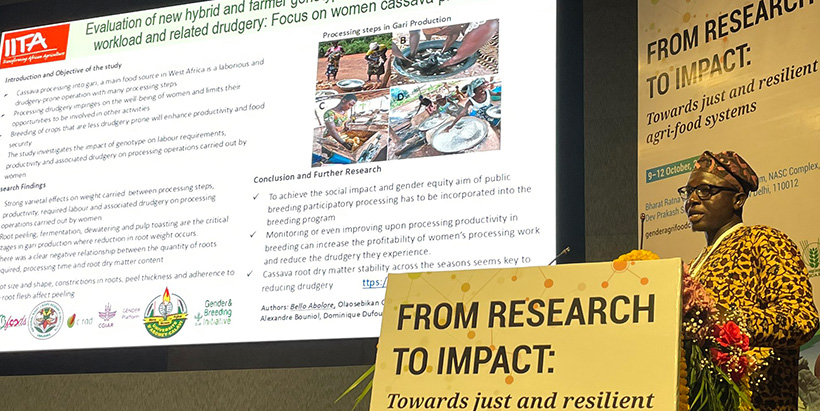
Notable presenters from various disciplines and backgrounds illuminated the conference through fifty-five insightful sessions and four high-level plenaries. The diverse session formats, including capacity-building workshops, scientific discussions, panel sessions, open forums, and poster presentations, facilitated a comprehensive exploration of key issues.
Among the contributors, the IITA Gender Research Team shared their valuable insights and experiences, shedding light on impactful best practices that strengthen the role of women in agriculture. Their presentations delved into diverse topics, ranging from measuring gender transformative change in the context of food security and sustainable agriculture to the intricacies of gendered coping mechanisms amidst climate change challenges.
With extensive research, the team illustrated the potential for transformative change within the agricultural sector. The presenters included Senior Scientist and Gender Specialist Steven Cole, Gender Research Postdoctoral Fellow Millicent Liani, Gender Research Assistant Sarah Msita, Gender Research Assistant Rich Kofi Kofituo, Gender Field Research Coordinator Devis Mwakanyamale, Senior Research Associate Olamide Nwanze, Gender Research Associate Scientist Bela Teeken, and Senior Research Supervisor Bello Abolore.
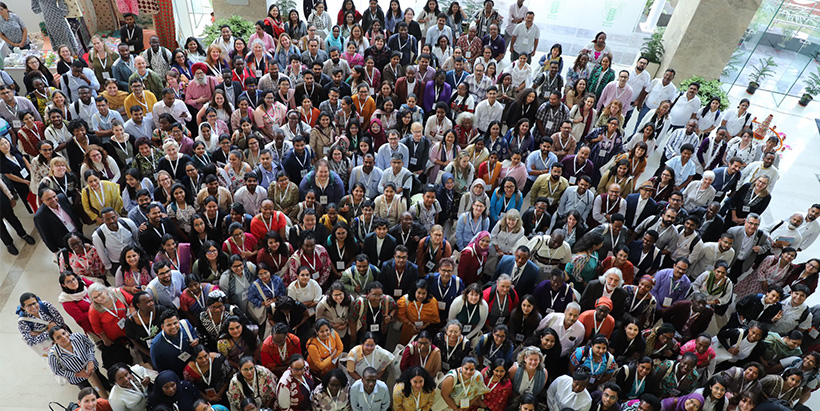
The Country Representative for India and Research Leader of Gender and Livelihoods at the Institut international de recherche sur le riz, Ranjitha Puskur, lauded the conference as a pivotal platform for meaningful discourse. “This gathering serves as an impactful, constructive dialogue, bringing women to the forefront of just and resilient agri-food systems,” she emphasized. The collaborative spirit and shared dedication exhibited by delegates from across the globe spoke volumes about the collective commitment to translating research into tangible, positive impacts.
Contributed by Sarah Msita and Ochuwa Favour Daramola
Contribué par
Histoires récentes