Une nouvelle étude explore les interactions entre l'humain et la nature dans l'Afrotropique
janvier 24, 2024
The extinction of human experience with nature directly correlates to the urban invasion of green spaces and the extinction of natural species. As part of his PhD research, Head of IITACentre Forestier, Adewale Awoyemi along with some researchers from the University of Granada, explored the interactions of humans with nature in the Afrotropics.
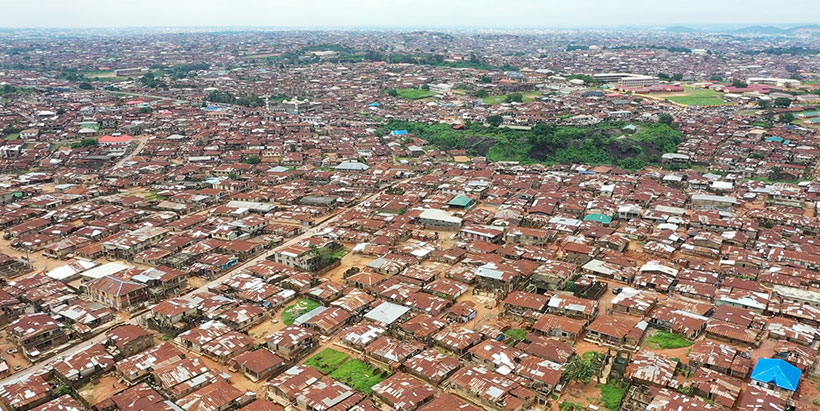
Overview of the urban city of Ibadan, Nigeria.
People have acclimatized to watching television, playing video games, and surfing the internet for leisure rather than hiking, camping, birdwatching, insect catching, and fishing for recreation. The étudier investigated the extinction of experience resulting from the loss of opportunities to experience nature which poses as a challenge to people’s physical and mental health. People’s alienation from nature also contributes to public health issues and environmental degradation.
The authors explored the gap in research data, covering the angle of human and nature connectedness, especially in the Global South. They analyzed data from 600 respondents in four southern Nigeria cities—Auchi, Calabar, Ibadan, and Lagos. Their main goal was to evaluate the level of disconnection between urban population and nature. Respondents, ranging from 14 to 72 years old, reported their frequency of contact with urban greenspaces, parks, and identified nature markers, such as flowers, birds, trees, beaches, mountains, and more. The authors also assessed the potential factors responsible for losing contact with nature, including income and time investment.
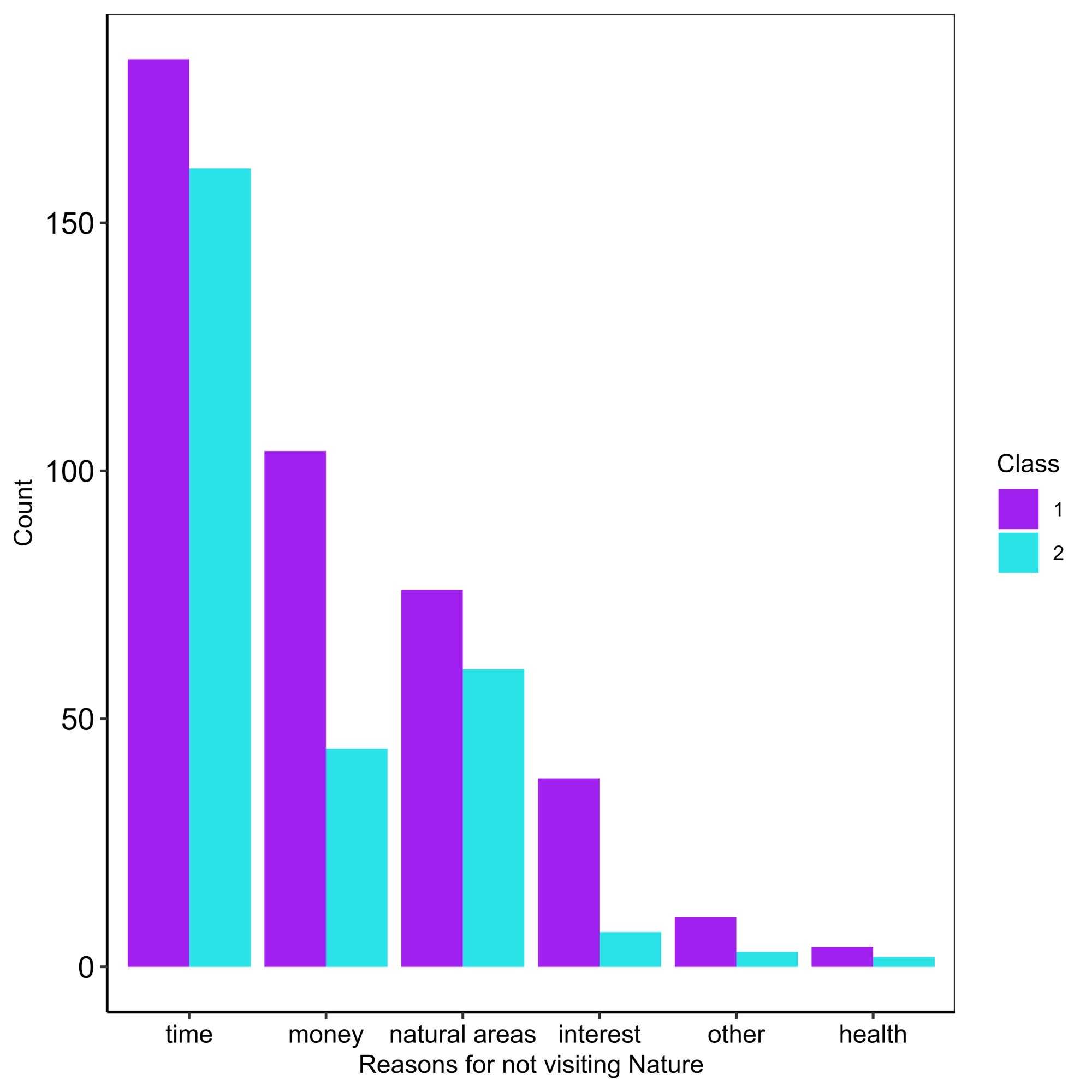
Awoyemi and his three Spanish collaborators combined ecology, sociology, economics, and remote sensing for their research in the newly published transdisciplinary paper. Their results showed a high level of extinction of nature experience in Nigeria. Striking results from this study, the first of its kind in Africa, showed a higher extinction of experience than previous studies from the Global North. The lack of time, money, and few nearby natural areas were respondents’ main reasons for infrequent interactions with nature. The authors also found that neighborhood safety is a promoter of nature connectedness.
Bar chart showing respondent’s reasons for not visiting nature.
The study also revealed contrasting observations between cities, with respondents living in Lagos having less contact with nature than Ibadan respondents. Understandably, Lagos, being an economic hub, has had more natural spaces eroded to accommodate urbanization. This study is imperative as many cities in the Global South, particularly Africa, are experiencing rapid biodiversity loss due to urbanization in matching competition with the Global North. Thus, the study contributes important data to human-nature interactions from the Global South perspective.
The study also showed the importance of birds in this context. Citizens living in areas with more bird species were more connected with nature. Birds are important indicators of environmental safety and an important animal group that promotes social relations and interconnectedness between people and nature. “Promoting birds in cities will not only provide substantial benefits to the environment but also the citizens,” says Awoyemi.
The authors recommend tailored interventions to favor direct and intentional contact with nature to address location and class-specific factors contributing to the extinction of nature experience in Nigeria. “Education is key to preventing this important problem associated with urbanization as we found that more educated people have a higher contact with nature,” says Prof. Ibáñez-Álamo from the University of Granada (Spain) and co-author of the study. They also proposed environmental education through nature organizations such as the Ibadan Bird Club and the A.P. Leventis Ornithological Research Institute to improve the value of human-nature experience and bridge the gap in knowledge of biodiversity and its attendant consequences in Nigeria and potentially other African regions.
Proposé par Folake Oduntan
IITA is an award-winning, research-for-development (R4D) organization providing solutions to hunger, poverty, and the degradation of natural resources in Africa. Since 1967, IITA has worked with international and national partners to improve livelihoods, enhance food and nutrition security, increase employment, and preserve natural resource integrity.
IITA has delivered more than 70% of the CGIAR’s impact in sub-Saharan Africa and remains committed to the science-driven improvement of agriculture and related food value chains. As one of 15 research centers in the CGIAR, a global partnership for a food-secure future, IITA is engaged in several CGIAR Research Programs
(CRPs).
À propos du Centre Forestier de l'IITA
IITA Forest Center manages and utilizes forest resources for conservation, research, and education. The 350 hectares of Forest Reserve within the IITA-Ibadan’s 1000-hectare land support biodiversity and diverse habitats. IITA Forest Center’s ornithological monitoring project is sponsored by A.G. Leventis Foundation, which co-sponsored this research with the APLORI Foundation, Society for Conservation Biology African Section, Spanish Ministry of Science and Innovation, and Spanish Ministry of Universities.
About University of Granada, Spain
The University of Granada is one of the best universities in Spain and an integral part of the cities of Granada, Ceuta, and Melilla. The university is driven by a strong commitment to innovation and equality, and strives continuously to progress in teaching, learning, research, and knowledge transfer.
Olamide Deborah Nwanze est une chercheuse principale spécialisée dans la recherche sur l'approche "genre" afin d'éclairer les politiques de sélection participative et inclusive, de développement de variétés et de systèmes semenciers concernant les cultures de racines, tubercules et bananes (RTB) au siège de l'Institut International d'Agriculture Tropicale, à Ibadan, au Nigeria. Elle est candidate au doctorat à l'Université d'Ibadan et titulaire d'un master et d'un diplôme d'ingénieur agronome en vulgarisation agricole et développement rural. Olamide est membre du programme African Women in Agricultural Research and Development – Gender Responsive Agricultural Systems Policy (SAISIE DE RÉCOMPENSEet les Chercheuses Sensibles au Genre Équipées pour la Transformation Agricole (SUPER. Elle cherche à appliquer ses apprentissages en matière d’approche genre, recherche sensible au genre, et expertise en développement et examen de politiques pour faciliter l’accès et l’adoption par les femmes, les jeunes, les enfants et les groupes sociaux vulnérables aux innovations agricoles qui garantissent la sécurité alimentaire, nutritionnelle, des revenus et des moyens de subsistance en Afrique. Ses rôles actuels comprennent le mentorat de chercheurs stagiaires, le développement de guides et manuels de formation, la mise en œuvre et l'adaptation de cadres et d'outils genre, l'engagement des acteurs de la chaîne de valeur en tant que partenaires de la science citoyenne, l'examen et la refonte des politiques, la gestion et l'analyse des données. Ses recherches actuelles portent sur les méthodes mixtes ainsi que sur les approches participatives et interdisciplinaires pour saisir et mettre en évidence les dynamiques de genre, les besoins, les préférences et les défis rencontrés par les parties prenantes au sein de la chaîne de valeur des moyens de subsistance agricoles afin de prioriser des stratégies axées sur le genre dans les programmes de sélection, la conception et la mise en œuvre des politiques.
de Sousa, K., van Etten, J., Manners, R. Bello, A., Teeken, B., Olaosebikan, O., et al. 2024. L'approche tricot : un cadre agile pour les essais décentralisés à la ferme soutenus par la science citoyenne. Une rétrospective. Agron. Sustain. Dev. 44, 8. https://doi.org/10.1007/s13593-023-00937-1
Madu, T., Onwuka, S., Nwafor, S., Onyemauwa, N., Ejechi, M., Ofoeze, M., Ukeje, B., Eluagu, C., Olaosebikan, O., Okoye, B., 2024. Les études sur les consommateurs inclusifs en matière de genre améliorent l'amélioration du manioc au Nigeria dans : Frontiers in Sociology, volume 9, numéro : 1224504, doi : 10.3389/fsoc.2024.1224504
Olaosebikan, O. ; Bello, A. ; Utoblo, O. ; Okoye, B. ; Olutegbe, N. ; Garner, E. ; Teeken, B. ; Bryan, E. ; Forsythe, L. ; Cole, S. ; Madu, T. 2023. Facteurs de stress et résilience au sein de la chaîne de valeur du manioc au Nigeria : Caractéristiques préférées des variétés de manioc et stratégies de réponse des hommes et des femmes pour informer l'amélioration variétale. Sustainability 15, 7837. https://doi.org/10.3390/su15107837
Okoye, B., Ofoeze, M., Ejechi, M., Onwuka, S., Nwafor, S., Onyemauwa, N., Ukeje, B., Eluagu, C., Obidiegwu, J.*, Olaosebikan, O., Madu, T.* 2023. Priorisation des traits préférés dans la chaîne de valeur de l'igname au Nigeria : une analyse de la situation en matière de genre in: Frontiers in Sociology, volume 8, numéro : 1232626, pages 1 – 9, ISSN 2297-7775, 2023. https://www.frontiersin.org/articles/10.3389/fsoc.2023.1232626/full
Olaosebikan, O., Bello, A. A., de Sousa, K., Ndjouenkeu, R., Adesokan, M., Alamu, E. O., Agbona, A., van Etten, J., Kegah, F. N.*, Dufour, D., Bouniol, A., Teeken, B. 2023. Acceptabilité par les consommateurs des produits alimentaires à base de gari-eba de manioc dans des contextes culturels et environnementaux variés en utilisant l'approche triade de comparaison des technologies (tricot) dans : Journal of the Science of Food and Agriculture,
Teeken, B., Olaosebikan, O., Bello, A. A., Madu, T.*, Cole, S. M. 2023. Évaluation qualitative de la positionnalité et des préférences des dyades en relation avec les activités liées au manioc : travailler avec des scientifiques citoyens du procès tricot https://hdl.handle.net/10568/138326 Type : Manuel
Bouniol, A., Ceballos, H., Bello, A. A., Teeken, B., Olaosebikan, O., Owoade, D., Agbona, A., Fotso Kuate, A., Madu, T.*, Okoye, B.*, Ofoeze, M.*, Nwafor, S.*, Onyemauwa, N.*, Adinsi, L.*, Forsythe, L., Dufour, D. 2023. Impact variétal sur le travail des femmes, la charge de travail et la pénibilité associée dans le traitement des plantes à racines, tubercules et bananes : focus sur le manioc en Afrique subsaharienne dans : Journal of the Science of Food and Agriculture, pages 1 – 25, ISSN 0022-5142,
Bello, A. A., Agbona, A., Olaosebikan, O., Edughaen, G., Dufour, D., Bouniol, A., Iluebbey, P., Ndjouenkeu, R.*, Rabbi, I. Y., Teeken, B. 2023. Effets génétiques et environnementaux sur la productivité de la transformation et le rendement des produits alimentaires : la pénibilité du travail des femmes dans : Journal of the Science of Food and Agriculture, pages 1 – 32, ISSN 0022-5142, 5
Cavicchioli, M., Zimbiti, T., Teeken, B., Nwanze, D.O., Liani, M., Parkes, E. & Bello, A. 2023. Rapport sur la formation en sélection génétique sensible au genre à l'IITA. Genetic Resources Center, IITA-HQ, Ibadan, 21-23 septembre 2022. Ibadan, Nigéria : IITA, (34 p.).https://hdl.handle.net/10568/131368
Agbona, A. Peteti P., Teeken B., Olaosebikan O. Bello, A. A., Parkes, E., Rabbi, I. Y., Mueller, L., Egesi, C., Kulakow, P. 2022. Gestion des données dans les programmes d'amélioration des cultures RTB africaines multidisciplinaires. In : Williamson, H.F., Leonelli, S. (eds) Towards Responsible Plant Data Linkage: Data Challenges for Agricultural Research and Development. Springer, Cham. https://doi.org/10.1007/978-3-031-13276-6_5
Lora Forsythe, Pricilla Marimo, Sarah Mayanja, Olamide D. Olaosebikan, Esme Stuart, Bela Teeken, Benjamin Okoye, Tessy Madu, (2021). Analyse transversale du genre dans RTBfoods Étape 2 Cartographie des genres sur les produits RTB. Comprendre les moteurs des préférences en matière de traits et le développement de profils de produits RTB multi-utilisateurs, WP1. Londres, Royaume-Uni : Rapport scientifique de terrain RTBfoods, 30 p.
Teeken, B., Garner, E., Agbona, A., Balogun, I., Olaosebikan, O., Bello, A., Madu, T., Okoye, B., Egesi, C., Kulakow, P. et Tufan, H.A. 2021. Au-delà des “ traits des femmes ” : explorer comment le genre, les différences sociales et les caractéristiques des ménages influencent les préférences pour les traits. Frontiers Systèmes alimentaires durables 5:740926. https://doi.org/10.3389/fsufs.2021.740926
Teeken, B., Agbona, A., Bello, A., Olaosebikan, O., Alamu, E., Adesokan, M., Awoyale, W., Madu, T., Okoye, B., Chijioke, U., Owoade, D., Okoro, M., Bouniol, A., Dufour, D., Hershey, C., Rabbi, I., Maziya‐Dixon, B., Egesi, C., Tufan, H. et Kulakow, P. (020. Comprendre les préférences variétales du manioc par le classement par paires du gari-eba et du fufu préparés par des agriculteurs-transformateurs locaux. Int J Food Sci Technol.https://doi.org/10.1111/ijfs.14862
Bela Teeken, Olamide Olaosebikan, Ireti Balogun, Benjamin Okoye, Tessy Madu, Steven Cole, Abolore Bello, Elizabeth Parkes. (2020). Pilotage des outils de profil client et produit G+ pour l'amélioration sensible au genre du manioc au Nigeria. Nigeria : Institut international d'agriculture tropicale (IIAT). https://hdl.handle.net/20.500.11766/13000