
NOUVELLES DE L'IITA

Towards gender transformative interventions in the Muhogo Bora cassava seed system project in Tanzania
juillet 13, 2023

Achieving the gender equality commitment in agrifood systems would require deliberate and bold actions to accelerate progress, especially by investing significantly beyond the gender statistics towards building more inclusive transformative interventions to realize the Sustainable Development Goal (SDG) 5.
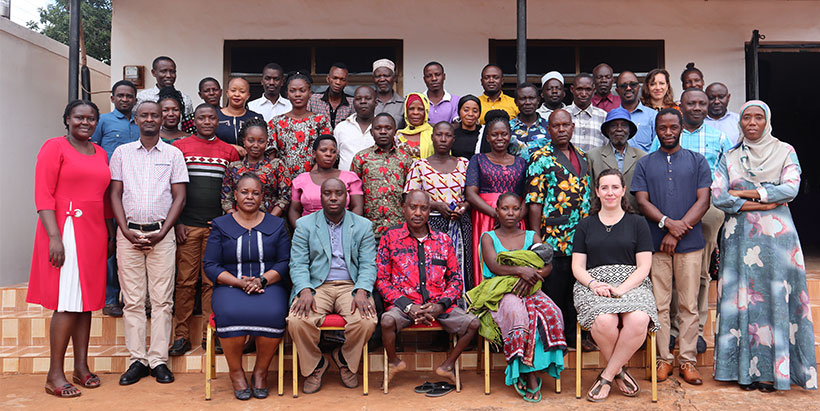
The group of participants attending the validation workshop in Kasulu district council

Such ambitions are being seized through the Muhogo Bora (MB) project, a gender-responsive cassava seed system in Tanzania with targeted outreach in the Western Zone aimed at ensuring that women, youth, and marginalized rural farmers from geographically underserved regions participate and benefit as cassava seed entrepreneurs (CSEs).

To achieve this goal, the MB project gender team conducted a co-creation study in March 2023: Exploratory participatory action research (PAR) on the gender-based constraints and opportunities for women’s and youth participation and benefit as CSEs in Tanzania. The team later organized validation workshops on the 15 and 18 May 2023 in Kasulu Town Council (TC) and Urambo District Council (DC) in Kigoma and Tabora regions of the Western Zone of Tanzania to share the emergent study findings for feedback provision and validation of the proposed potential gender transformative interventions by a diverse group of stakeholders.

IITA gender researcher Millicent Liani informed the participants that the project would integrate gender-responsive and gender-transformative approaches to enhance the equitable participation of women, youth, and marginalized rural farmers as CSEs. She stated, “In the MB project’s first 2021 recruitment cycle, which was informed by the set criteria by the BEST cassava project in Tanzania, there were very few women and youth as trained CSEs, with men accounting for 65% of CSEs with older men at 58% and male youth at 6%; while women were 35%, 25% being older women while 10% were young women.”

Le  BEST cassava gender research study in Tanzania highlights the barriers to women’s low participation based on the project set criteria for CSE recruitment, including the availability to land, financial resources, the proximity of the land to the road, training interest and business acumen, and record-keeping skills. These reasons were approved by the local government authorities (LGAs) as a true reflection of challenges facing CSEs in Tanzania’s Western Zone, for which modified CSE selection criteria were then developed and implemented during the second 2022 recruitment cycle, increasing the total number of women and youth by 67%, from 111 CSEs in MB project.

Liani emphasized the need to go beyond reaching an equal number of women, men, and youth CSEs towards empowering women and youth CSEs while addressing the underlying causes of inequalities. “Reaching women does not ensure that they will benefit from a project or be empowered by it,” she said.

To address this, the Muhogo Bora project adopted PAR methods to facilitate ten co-creation discussions with CSEs and community leaders across two districts in Kigoma and Tabora Regions. The priorities to be tackled included the lack of land for women and youth, gender and youth discrimination, women and youth poverty, and cassava production and marketing challenges. The identified solutions included transformative interventions that create awareness of human and land rights and the importance of making joint decisions on family income, which could be achieved by using community dialogues, theaters, and local radio stations. They also highlighted the need to establish CSE associations for affordable credit provision and building youth capacities to operate agribusinesses. Local collaborators to support such interventions through a community-led bottom-up approach were proposed.

Gabriel Bisangwa, a cassava farmer from Kasulu TC, confirmed that the findings presented correctly reflected the co-creation discussions held during the gender study and further urged the government to act on the recommendations. “The local government authorities, through village leadership, can give opportunities to the survey participants to share the knowledge they gained from the study with their communities,” he said.

Bisangwa also noted that the co-creation approaches that the gender researcher used in the study are not familiar in the community. He suggested that religious groups be used to disseminate more information on gender and social inclusion according to their beliefs.

An influential community leader and farmer, Mariam Mwale, noted the importance of conducting more gender studies because many more challenges still hinder women’s engagement in development. “Many women belong in situations they are in because they do not have opportunities to engage in social discussions, but with such studies, women can open up and express what happens in the communities, and men agree to the discussion and become influencers to fellow men,” she explained.
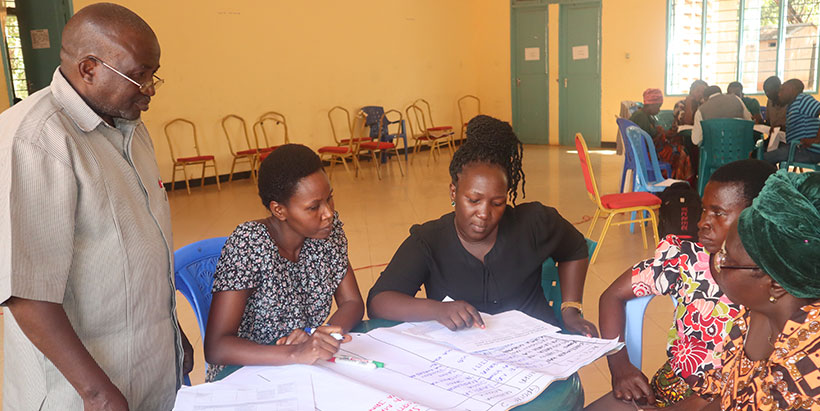
Participants developing transformative action plans to solve the key priority problems identified during the gender study in Tabora Town Council

The workshop participants also discussed and validated the priority problems and developed transformative action plans to solve them. They also shared experiences on gender-related issues with real scenarios from the gender desks and community development officials.

Le Meilleur manioc is a three-year project executed by Cornell University College of Agriculture and Life Sciences and implemented by IITA-CGIARInstitut Tanzanien de Recherche Agricole (TARI), and the LGAs in Tanzania.

Contribué par Gloriana Ndibalema


Contribué par

Recent stories

Aucun article trouvé

Laisser un commentaire

Votre adresse e-mail ne sera pas publiée. Les champs obligatoires sont indiqués avec *

Retour en haut
Olaosebikan, Olamide

Olamide Deborah Nwanze est une chercheuse principale spécialisée dans la recherche sur l'approche "genre" afin d'éclairer les politiques de sélection participative et inclusive, de développement de variétés et de systèmes semenciers concernant les cultures de racines, tubercules et bananes (RTB) au siège de l'Institut International d'Agriculture Tropicale, à Ibadan, au Nigeria. Elle est candidate au doctorat à l'Université d'Ibadan et titulaire d'un master et d'un diplôme d'ingénieur agronome en vulgarisation agricole et développement rural. Olamide est membre du programme African Women in Agricultural Research and Development – Gender Responsive Agricultural Systems Policy (SAISIE DE RÉCOMPENSEet les Chercheuses Sensibles au Genre Équipées pour la Transformation Agricole (SUPER. Elle cherche à appliquer ses apprentissages en matière d’approche genre, recherche sensible au genre, et expertise en développement et examen de politiques pour faciliter l’accès et l’adoption par les femmes, les jeunes, les enfants et les groupes sociaux vulnérables aux innovations agricoles qui garantissent la sécurité alimentaire, nutritionnelle, des revenus et des moyens de subsistance en Afrique. Ses rôles actuels comprennent le mentorat de chercheurs stagiaires, le développement de guides et manuels de formation, la mise en œuvre et l'adaptation de cadres et d'outils genre, l'engagement des acteurs de la chaîne de valeur en tant que partenaires de la science citoyenne, l'examen et la refonte des politiques, la gestion et l'analyse des données. Ses recherches actuelles portent sur les méthodes mixtes ainsi que sur les approches participatives et interdisciplinaires pour saisir et mettre en évidence les dynamiques de genre, les besoins, les préférences et les défis rencontrés par les parties prenantes au sein de la chaîne de valeur des moyens de subsistance agricoles afin de prioriser des stratégies axées sur le genre dans les programmes de sélection, la conception et la mise en œuvre des politiques.

À l'IITA, elle contribue à la mise en œuvre du CGIAR Initiative d'Élevage Accéléré et Innovation génétique Programmes ; recherche participative et genre au sein des Prochaine Génération ManiocHarvestPlusRTBAliments, et Tricot-ClimMob 1000Fermes Projets ; et la communication des connaissances sur le genre via le Série de webinaires G-LENS, vidéo documentaire, notes de politiquepublications, et blogs.


Publications récentes

de Sousa, K., van Etten, J., Manners, R. Bello, A., Teeken, B., Olaosebikan, O., et al. 2024. L'approche tricot : un cadre agile pour les essais décentralisés à la ferme soutenus par la science citoyenne. Une rétrospective. Agron. Sustain. Dev. 44, 8. https://doi.org/10.1007/s13593-023-00937-1

Madu, T., Onwuka, S., Nwafor, S., Onyemauwa, N., Ejechi, M., Ofoeze, M., Ukeje, B., Eluagu, C., Olaosebikan, O., Okoye, B., 2024. Les études sur les consommateurs inclusifs en matière de genre améliorent l'amélioration du manioc au Nigeria dans : Frontiers in Sociology, volume 9, numéro : 1224504, doi : 10.3389/fsoc.2024.1224504

Olaosebikan, O. ; Bello, A. ; Utoblo, O. ; Okoye, B. ; Olutegbe, N. ; Garner, E. ; Teeken, B. ; Bryan, E. ; Forsythe, L. ; Cole, S. ; Madu, T. 2023. Facteurs de stress et résilience au sein de la chaîne de valeur du manioc au Nigeria : Caractéristiques préférées des variétés de manioc et stratégies de réponse des hommes et des femmes pour informer l'amélioration variétale. Sustainability 15, 7837. https://doi.org/10.3390/su15107837

Okoye, B., Ofoeze, M., Ejechi, M., Onwuka, S., Nwafor, S., Onyemauwa, N., Ukeje, B., Eluagu, C., Obidiegwu, J.*, Olaosebikan, O., Madu, T.* 2023. Priorisation des traits préférés dans la chaîne de valeur de l'igname au Nigeria : une analyse de la situation en matière de genre in: Frontiers in Sociology, volume 8, numéro : 1232626, pages 1 – 9, ISSN 2297-7775, 2023. https://www.frontiersin.org/articles/10.3389/fsoc.2023.1232626/full

Olaosebikan, O., Bello, A. A., de Sousa, K., Ndjouenkeu, R., Adesokan, M., Alamu, E. O., Agbona, A., van Etten, J., Kegah, F. N.*, Dufour, D., Bouniol, A., Teeken, B. 2023. Acceptabilité par les consommateurs des produits alimentaires à base de gari-eba de manioc dans des contextes culturels et environnementaux variés en utilisant l'approche triade de comparaison des technologies (tricot) dans : Journal of the Science of Food and Agriculture,

Teeken, B., Olaosebikan, O., Bello, A. A., Madu, T.*, Cole, S. M. 2023. Évaluation qualitative de la positionnalité et des préférences des dyades en relation avec les activités liées au manioc : travailler avec des scientifiques citoyens du procès tricot https://hdl.handle.net/10568/138326 Type : Manuel

Bouniol, A., Ceballos, H., Bello, A. A., Teeken, B., Olaosebikan, O., Owoade, D., Agbona, A., Fotso Kuate, A., Madu, T.*, Okoye, B.*, Ofoeze, M.*, Nwafor, S.*, Onyemauwa, N.*, Adinsi, L.*, Forsythe, L., Dufour, D. 2023. Impact variétal sur le travail des femmes, la charge de travail et la pénibilité associée dans le traitement des plantes à racines, tubercules et bananes : focus sur le manioc en Afrique subsaharienne dans : Journal of the Science of Food and Agriculture, pages 1 – 25, ISSN 0022-5142,

Bello, A. A., Agbona, A., Olaosebikan, O., Edughaen, G., Dufour, D., Bouniol, A., Iluebbey, P., Ndjouenkeu, R.*, Rabbi, I. Y., Teeken, B. 2023. Effets génétiques et environnementaux sur la productivité de la transformation et le rendement des produits alimentaires : la pénibilité du travail des femmes dans : Journal of the Science of Food and Agriculture, pages 1 – 32, ISSN 0022-5142, 5

Cavicchioli, M., Zimbiti, T., Teeken, B., Nwanze, D.O., Liani, M., Parkes, E. & Bello, A. 2023. Rapport sur la formation en sélection génétique sensible au genre à l'IITA. Genetic Resources Center, IITA-HQ, Ibadan, 21-23 septembre 2022. Ibadan, Nigéria : IITA, (34 p.).https://hdl.handle.net/10568/131368

Agbona, A. Peteti P., Teeken B., Olaosebikan O. Bello, A. A., Parkes, E., Rabbi, I. Y., Mueller, L., Egesi, C., Kulakow, P. 2022. Gestion des données dans les programmes d'amélioration des cultures RTB africaines multidisciplinaires. In : Williamson, H.F., Leonelli, S. (eds) Towards Responsible Plant Data Linkage: Data Challenges for Agricultural Research and Development. Springer, Cham. https://doi.org/10.1007/978-3-031-13276-6_5

Lora Forsythe, Pricilla Marimo, Sarah Mayanja, Olamide D. Olaosebikan, Esme Stuart, Bela Teeken, Benjamin Okoye, Tessy Madu, (2021). Analyse transversale du genre dans RTBfoods Étape 2 Cartographie des genres sur les produits RTB. Comprendre les moteurs des préférences en matière de traits et le développement de profils de produits RTB multi-utilisateurs, WP1. Londres, Royaume-Uni : Rapport scientifique de terrain RTBfoods, 30 p.

Teeken, B., Garner, E., Agbona, A., Balogun, I., Olaosebikan, O., Bello, A., Madu, T., Okoye, B., Egesi, C., Kulakow, P. et Tufan, H.A. 2021. Au-delà des “ traits des femmes ” : explorer comment le genre, les différences sociales et les caractéristiques des ménages influencent les préférences pour les traits. Frontiers Systèmes alimentaires durables 5:740926. https://doi.org/10.3389/fsufs.2021.740926

Teeken, B., Agbona, A., Bello, A., Olaosebikan, O., Alamu, E., Adesokan, M., Awoyale, W., Madu, T., Okoye, B., Chijioke, U., Owoade, D., Okoro, M., Bouniol, A., Dufour, D., Hershey, C., Rabbi, I., Maziya‐Dixon, B., Egesi, C., Tufan, H. et Kulakow, P. (020. Comprendre les préférences variétales du manioc par le classement par paires du gari-eba et du fufu préparés par des agriculteurs-transformateurs locaux. Int J Food Sci Technol. https://doi.org/10.1111/ijfs.14862

Bela Teeken, Olamide Olaosebikan, Ireti Balogun, Benjamin Okoye, Tessy Madu, Steven Cole, Abolore Bello, Elizabeth Parkes. (2020). Pilotage des outils de profil client et produit G+ pour l'amélioration sensible au genre du manioc au Nigeria. Nigeria : Institut international d'agriculture tropicale (IIAT). https://hdl.handle.net/20.500.11766/13000