
Achieving the gender equality commitment in agrifood systems would require deliberate and bold actions to accelerate progress, especially by investing significantly beyond the gender statistics towards building more inclusive transformative interventions to realize the Sustainable Development Goal (SDG) 5.
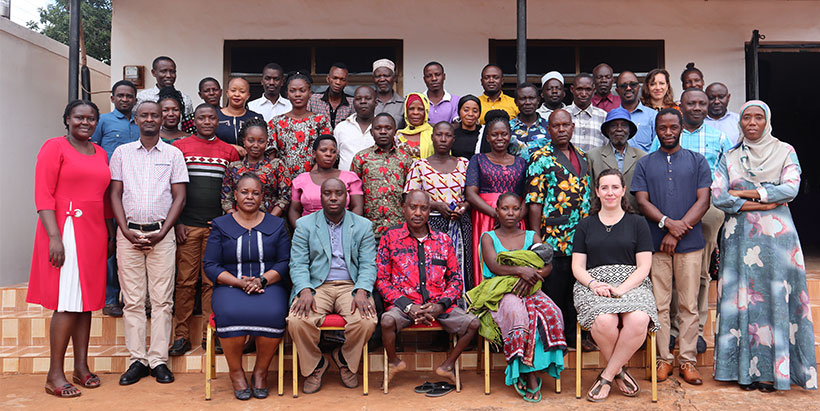
Such ambitions are being seized through the Muhogo Bora (MB) project, a gender-responsive cassava seed system in Tanzania with targeted outreach in the Western Zone aimed at ensuring that women, youth, and marginalized rural farmers from geographically underserved regions participate and benefit as cassava seed entrepreneurs (CSEs).
To achieve this goal, the MB project gender team conducted a co-creation study in March 2023: Exploratory participatory action research (PAR) on the gender-based constraints and opportunities for women’s and youth participation and benefit as CSEs in Tanzania. The team later organized validation workshops on the 15 and 18 May 2023 in Kasulu Town Council (TC) and Urambo District Council (DC) in Kigoma and Tabora regions of the Western Zone of Tanzania to share the emergent study findings for feedback provision and validation of the proposed potential gender transformative interventions by a diverse group of stakeholders.
IITA gender researcher Millicent Liani informed the participants that the project would integrate gender-responsive and gender-transformative approaches to enhance the equitable participation of women, youth, and marginalized rural farmers as CSEs. She stated, “In the MB project’s first 2021 recruitment cycle, which was informed by the set criteria by the BEST cassava project in Tanzania, there were very few women and youth as trained CSEs, with men accounting for 65% of CSEs with older men at 58% and male youth at 6%; while women were 35%, 25% being older women while 10% were young women.”
Le BEST cassava gender research study in Tanzania highlights the barriers to women’s low participation based on the project set criteria for CSE recruitment, including the availability to land, financial resources, the proximity of the land to the road, training interest and business acumen, and record-keeping skills. These reasons were approved by the local government authorities (LGAs) as a true reflection of challenges facing CSEs in Tanzania’s Western Zone, for which modified CSE selection criteria were then developed and implemented during the second 2022 recruitment cycle, increasing the total number of women and youth by 67%, from 111 CSEs in MB project.
Liani emphasized the need to go beyond reaching an equal number of women, men, and youth CSEs towards empowering women and youth CSEs while addressing the underlying causes of inequalities. “Reaching women does not ensure that they will benefit from a project or be empowered by it,” she said.
To address this, the Muhogo Bora project adopted PAR methods to facilitate ten co-creation discussions with CSEs and community leaders across two districts in Kigoma and Tabora Regions. The priorities to be tackled included the lack of land for women and youth, gender and youth discrimination, women and youth poverty, and cassava production and marketing challenges. The identified solutions included transformative interventions that create awareness of human and land rights and the importance of making joint decisions on family income, which could be achieved by using community dialogues, theaters, and local radio stations. They also highlighted the need to establish CSE associations for affordable credit provision and building youth capacities to operate agribusinesses. Local collaborators to support such interventions through a community-led bottom-up approach were proposed.
Gabriel Bisangwa, a cassava farmer from Kasulu TC, confirmed that the findings presented correctly reflected the co-creation discussions held during the gender study and further urged the government to act on the recommendations. “The local government authorities, through village leadership, can give opportunities to the survey participants to share the knowledge they gained from the study with their communities,” he said.
Bisangwa also noted that the co-creation approaches that the gender researcher used in the study are not familiar in the community. He suggested that religious groups be used to disseminate more information on gender and social inclusion according to their beliefs.
An influential community leader and farmer, Mariam Mwale, noted the importance of conducting more gender studies because many more challenges still hinder women’s engagement in development. “Many women belong in situations they are in because they do not have opportunities to engage in social discussions, but with such studies, women can open up and express what happens in the communities, and men agree to the discussion and become influencers to fellow men,” she explained.
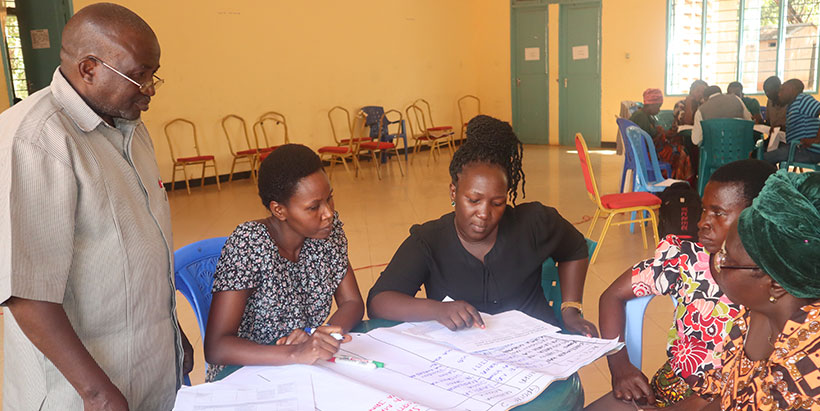
The workshop participants also discussed and validated the priority problems and developed transformative action plans to solve them. They also shared experiences on gender-related issues with real scenarios from the gender desks and community development officials.
Le Meilleur manioc est un projet de trois ans exécuté par Collège d'agriculture et des sciences de la vie de l'Université Cornell and implemented by IITA-CGIAR, Institut Tanzanien de Recherche Agricole (TARI), and the LGAs in Tanzania.
Contribué par Gloriana Ndibalema
Contribué par
Histoires récentes