
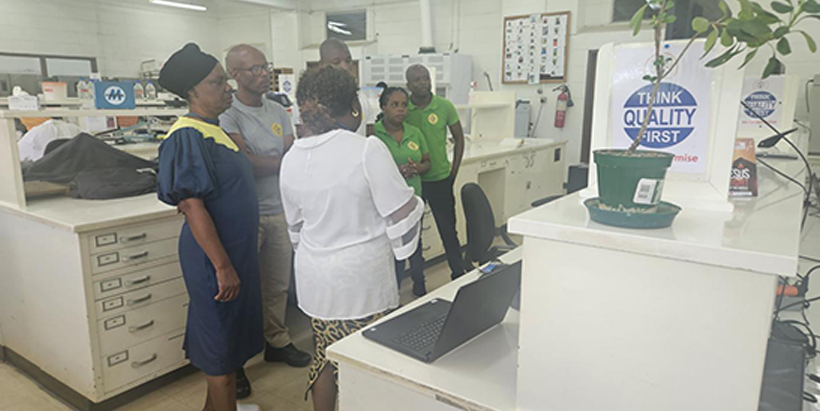
In a significant step toward enhancing agricultural research and food security in São Tomé and Príncipe, IITA–CGIAR recently hosted four staff members from the National Research Institute of São Tomé and Príncipe (CIAT-STP) for a comprehensive one-month training program. The initiative, held at IITA headquarters in Ibadan, was part of the ongoing collaboration with the COMPRAN project formalized in August 2024, which aims to enhance crop improvement and technical research capacity in São Tomé and Príncipe.
The training was designed to equip participants with practical skills in molecular characterization, tissue culture, genebank operations, and Semi-Autotrophic Hydroponics (SAH) technology. It also supported the characterization of plant genetic resources collected during a germplasm mission to São Tomé in February and introduced digital tools for field trial design, data collection, and analysis.
At IITA’s Bioscience Center, participants received hands-on training in essential molecular biology techniques such as DNA extraction, PCR-based diagnostics, and marker analysis to aid the molecular profiling of local germplasm.
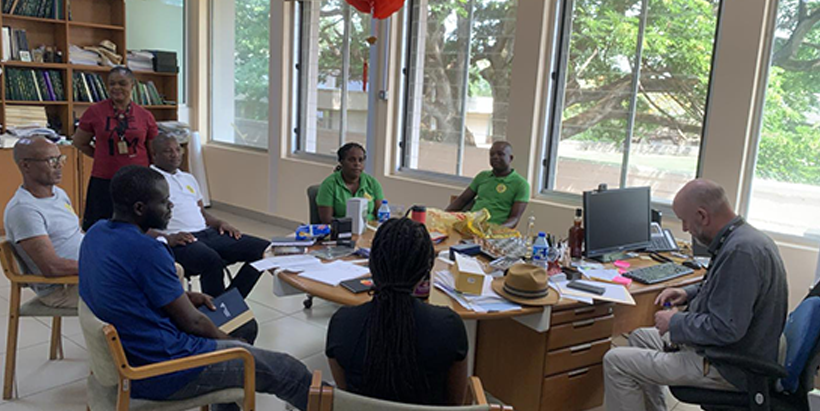
At the Genetic Resources Center (GRC), the CIAT-STP team engaged in genebank management, accession handling, and data curation for long-term conservation of São Tomé’s unique plant diversity. They also received practical training in tissue culture techniques, including explant sterilization, media preparation, callus induction, shoot multiplication, rooting, and acclimatization. A highlight of this component was the introduction to SAH technology for the rapid multiplication of vegetatively propagated crops like yam and cassava.
The team’s exposure to plant virus diagnostics at the IITA Virology Laboratory was an integral part of the program. With plant viruses posing a growing threat to crop productivity, this segment equipped participants with vital skills for detecting and managing viral diseases in cassava, yam, and banana.
The training covered visual symptom recognition, sample preparation, DNA/RNA extraction, and both conventional and multiplex PCR techniques for detecting viruses such as Cassava Mosaic Virus (CMV), Cassava Brown Streak Virus (CBSV), and Yam Mosaic Virus (YMV). Techniques like RT-PCR and ELISA (Enzyme-Linked Immunosorbent Assay) were also demonstrated, highlighting their importance in virus indexing for clean seed production and germplasm health.
The training program aimed to empower the CIAT-STP team with the competencies to integrate modern breeding, conservation, and diagnostics into their national research agenda. The visit also included engagements with IITA scientists, such as Professor Michael Abberton, Head of Bioscience and GRC, focusing on sustaining collaboration and building long-term research partnerships.
After the training, the participants expressed deep appreciation for the practical, hands-on nature of the training and the knowledge gained. They praised the professionalism of IITA’s experts and voiced a strong commitment to applying the new tools and methodologies to improve seed quality, crop health surveillance, and germplasm management.
This initiative reaffirms IITA’s commitment to South–South collaboration and capacity development, ensuring that science continues to serve as a bridge to food security and sustainable development across Africa.
Contribué par Ochuwa Favour Daramola
Contribué par
Histoires récentes