
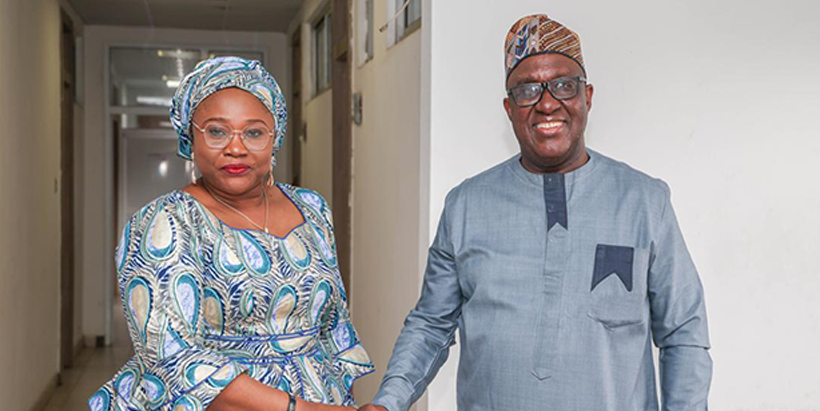
As part of strategic efforts to transform Nigeria’s livestock and agricultural sector through research collaboration, innovation scaling, and capacity development, IITA–CGIAR has reaffirmed commitment to support the Ministère Fédéral du Développement de l'Élevage (MFDE). The partnership aims to enhance feed and fodder production, promote youth engagement, empower women, and integrate the One Health approach to ensure a sustainable and productive livestock ecosystem.
The IITA Director General and CGIAR Regional Director for Continental Africa, Dr Siméon Ehui, led a delegation to the Ministry in Abuja, where he met with the Permanent Secretary, Dr Chinyere Ijeoma Akujobi, and Directors from key departments. The discussions focused on aligning IITA’s agricultural innovations and CGIAR’s global research expertise with the Ministry’s strategic objectives for livestock transformation.
In his remarks, Dr Ehui highlighted IITA and CGIAR’s decades-long contributions to agricultural development across Africa, noting how research-driven technologies have improved productivity, livelihoods, and food systems. “IITA remains deeply committed to supporting Nigeria’s agricultural transformation agenda,” he said. “IITA and other CGIAR centers like the Institut international de recherche sur l'élevage (ILRI) have developed a range of innovations that can help address challenges in feed systems, climate resilience, and animal health. What is critical now is scaling these technologies through partnerships that deliver real impact.”
He also underscored IITA’s efforts to engage youth and create employment opportunities through agribusiness and research-led programs, calling for a technical session between IITA scientists and Ministry pillar leads to harmonize research priorities and develop an actionable roadmap.
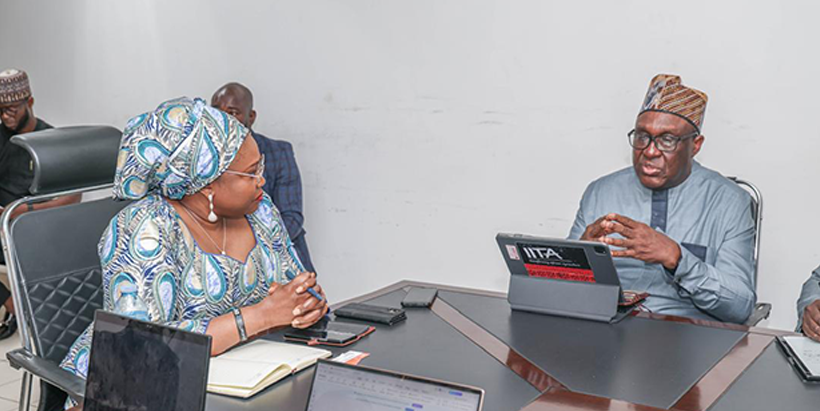
Dr Ehui added that the One Health approach—which integrates animal, human, and environmental health—should be a guiding principle for livestock development in Nigeria, ensuring a holistic and sustainable transformation of the sector.
Responding, Dr Akujobi welcomed the partnership and commended IITA’s leadership in agricultural research. She explained that the Ministry is implementing a long-term livestock transformation framework designed to modernize the sector by improving production systems, empowering smallholders, and promoting inclusivity.
“For Nigeria, livestock is central to our food security, economy, and employment generation goals,” she said. “We are deliberate about integrating women and youth, targeting thousands of beneficiaries across selected states in the first phase of implementation. This partnership with IITA and CGIAR will help us strengthen our technical base and accelerate the achievement of our national targets.”
She emphasized that the Ministry’s strategy prioritizes a shift from subsistence to intensive and sustainable livestock production, focusing on feed production, animal health, and value chain development to double productivity and improve market access.
During the meeting, several Directors from the Ministry made presentations on their focal areas and ongoing initiatives under the national livestock agenda.
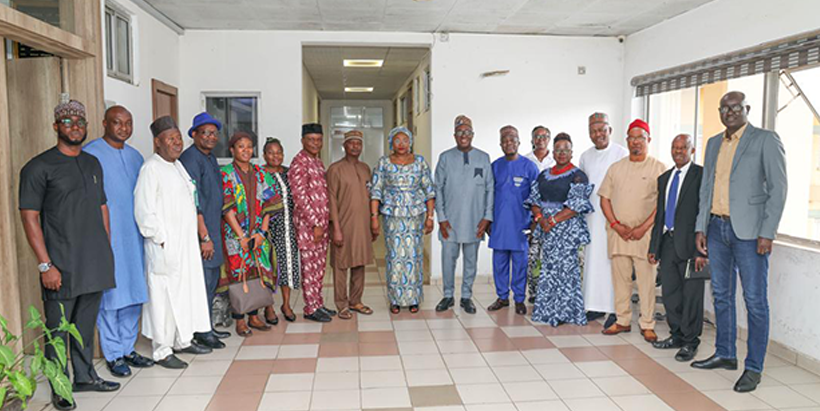
From animal feed and fodder development to youth and gender, and conflict management and field operations, presentations outlined plans to boost local feed production, reduce import dependency, and establish fodder banks to support dry season feeding. Other areas addressed during the discussions focused on the Ministry’s programs aimed at training and equipping women and youth in livestock value chains, including animal husbandry, processing, and entrepreneurship, including efforts to promote farmer-herder conflict resolution, emphasizing the importance of data, dialogue, and community-based models that foster peaceful coexistence and stability in livestock-producing areas.
These discussions highlighted opportunities for collaboration with IITA and CGIAR in women and youth engagement, forage research and feed formulation.
The meeting concluded with a shared vision to explore formalizing collaboration through a Memorandum of Understanding (MoU) between IITA and the Ministry, focusing on joint research, capacity building, and technology scaling for livestock productivity and resilience.
“The Federal Ministry of Livestock Development looks forward to working closely with IITA and CGIAR to drive innovation, improve livelihoods, and ensure that Nigeria’s livestock sector reaches its full potential,” Dr Akujobi said.
Dr Ehui reaffirmed IITA-CGIAR’s commitment to supporting the government’s livestock transformation agenda through science-based solutions. “This collaboration reflects our shared goal of ensuring that agricultural research directly contributes to national development priorities and a food-secure future for Africa,” he concluded.
Contribué par ’Timilehin Osunde
Contribué par
Histoires récentes