
Le 4 octobre 2025, la ferme de recherche de l'IITA à Shika, Samaru, Zaria, s'est animée alors que des chercheurs, des représentants d'entreprises semencières (Premier Seeds, EcoBasics Seed, Value Seed, Techni Seeds et d'autres partenaires tels qu'Olam et Nigeria Flour Mills) se sont rassemblés pour une visite de terrain afin de constater de visu l'impact de la recherche. Des rangées de plants luxuriants de soja, de maïs et de niébé s'étendaient à travers les champs, entraînant les participants dans une immersion au cœur de l'innovation et de la collaboration agricoles.
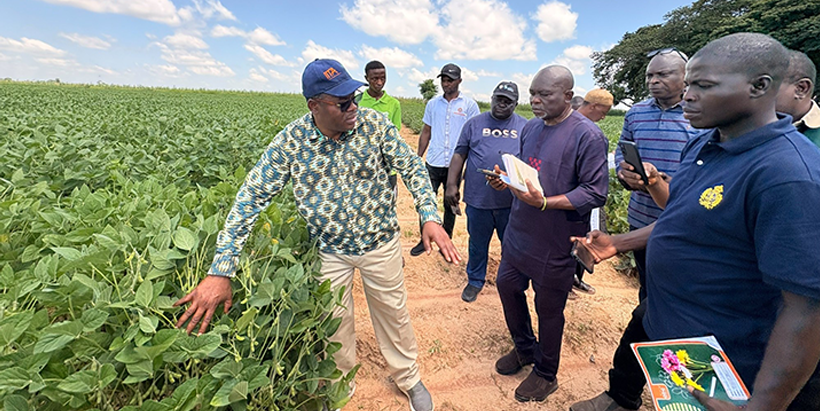
L'événement, animé par le professeur Lucky Omoigui, spécialiste des systèmes semenciers de l'IITA, a servi de plateforme pour présenter les variétés de cultures nouvelles et améliorées de l'IITA et pour renforcer les partenariats avec les entreprises semencières qui s'efforcent de faire parvenir ces innovations aux agriculteurs nigérians.
“ Cette visite de terrain vise à assurer la continuité, en veillant à ce que les agriculteurs aient toujours accès à des semences de qualité ”, a déclaré le professeur Omoigui aux participants en guidant le groupe à travers les parcelles. “ Cet accès à des semences de qualité commence dès les premières étapes de la production de semences. ”
Dans ses propos, le professeur Omoigui a salué les entreprises semencières qui ont constamment collaboré avec IITA sur la production de semences de première génération et a encouragé une participation encore plus large dans les diverses agro-écologies du Nigéria.
Alors que le groupe visitait les champs, les participants ont observé les performances de diverses variétés de soja, notamment TGx 1951-3F, TGx 1904-6F, TGx 1448-2E, TGx 2020-4F et TGx 2029-27F, ainsi que les nouvelles variétés lancées en 2025 (TGx 2029-27F et TGx 2029-53F). Le professeur Omoigui a expliqué comment les variétés plus anciennes mais populaires, telles que TGx 1448–2E, sont progressivement remplacées par des options plus récentes et adaptées au climat qui répondent aux exigences des agriculteurs et du marché.
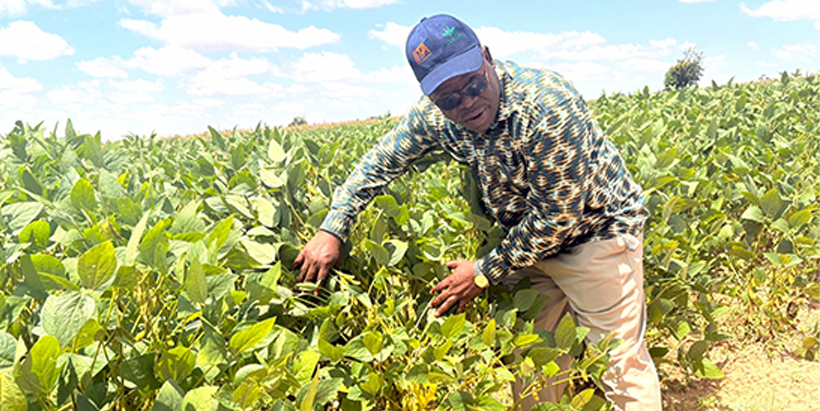
Les discussions sur le terrain ont été animées. Les participants ont échangé des observations sur la manière dont des facteurs tels que l'intensité lumineuse, l'humidité du sol et la pression des maladies influencent la croissance et le rendement des plantes. La visite a permis de constater de visu comment les conditions environnementales façonnent les performances des variétés, des informations cruciales pour une planification éclairée de la production de semences.
Au-delà de l'agronomie, la visite de terrain a souligné l'importance d'une production de semences axée sur le marché. Le professeur Omoigui a souligné que si les agriculteurs peuvent valoriser les variétés à forte biomasse pour l'amélioration des sols, les transformateurs privilégient souvent la qualité des semences pour l'extraction d'huile ou la production de farine.
“ Chaque acteur de la chaîne de valeur compte, a-t-il déclaré. Lorsque nous comprenons ce que veulent les agriculteurs, les transformateurs et les consommateurs, nous pouvons promouvoir des variétés qui sont rentables et durables pour tout le monde. ”
Il a également partagé le succès d'IITA dans le développement d'un Strigavariété de niébé à grandes graines brunes résistante, sélectionnée pour remplacer celle très appréciée mais Strigasusceptible Borno Brown. Il a expliqué que cette innovation reflète l'engagement de l'IITA à “ équilibrer l'équation ” et à répondre à la demande du marché, tout en garantissant la productivité et la résilience des agriculteurs.
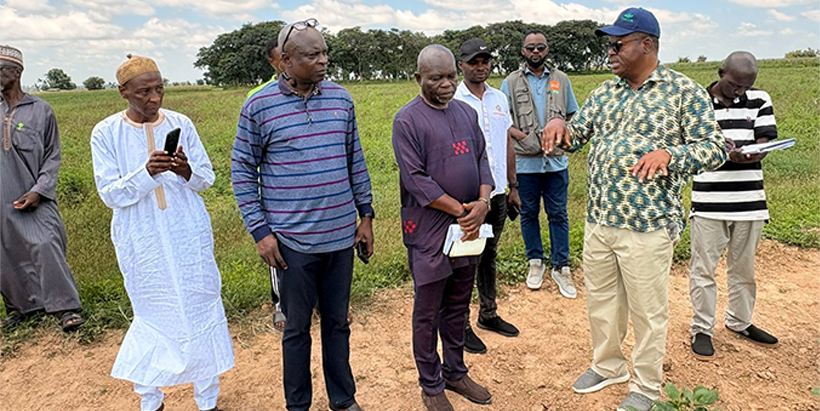
À la fin de la visite, le Dr Afolabi, s'exprimant au nom des entreprises semencières, a félicité l'IITA et le Prof Omoigui pour leur dévouement envers le renforcement du système semencier du Nigéria. Il a loué les progrès visibles réalisés dans le développement de variétés améliorées et a réaffirmé l'engagement des partenaires à poursuivre la collaboration.
Dans ses remarques finales, le professeur Omoigui a remercié les participants pour leur participation active et a réaffirmé l'ouverture de l'IITA aux partenariats, aux commentaires et à l'innovation. “ Nos portes restent ouvertes ”, a-t-il déclaré. “ Ensemble, nous pouvons continuer à bâtir un système semencier plus fort et plus inclusif pour le Nigéria et au-delà. ”
La visite des parcelles de 2025 a mis en valeur les dernières variétés de cultures de l'IITA et a réaffirmé le rôle de l'Institut en tant que force motrice du renforcement du secteur semencier en Afrique. Les participants ont quitté l'exploitation avec un enthousiasme renouvelé et une vision plus approfondie de l'avenir des systèmes semenciers, ancrés dans la science, la collaboration et la croissance partagée.
Proposé par Sarah Sallau
Contribué par
Histoires récentes