
Healthy soil is at the heart of successful agriculture. It does much more than hold plants in place; it provides essential nutrients, stores water, supports beneficial organisms, and creates the right conditions for crops to grow and thrive. However, when soil is degraded through erosion, nutrient depletion, loss of organic matter, and other unsustainable practices, its ability to support crop production declines. The effects can be seen in poor plant growth, reduced yields, and crops that are more vulnerable to pests, diseases, and environmental stress.
As the demand for food continues to grow and climate change places increasing pressure on agricultural systems, the need to protect and restore soils cannot be overemphasized. Healthy soil is not only the foundation of healthy plants; it is also essential to productive farms, resilient food systems, and a sustainable agricultural future.
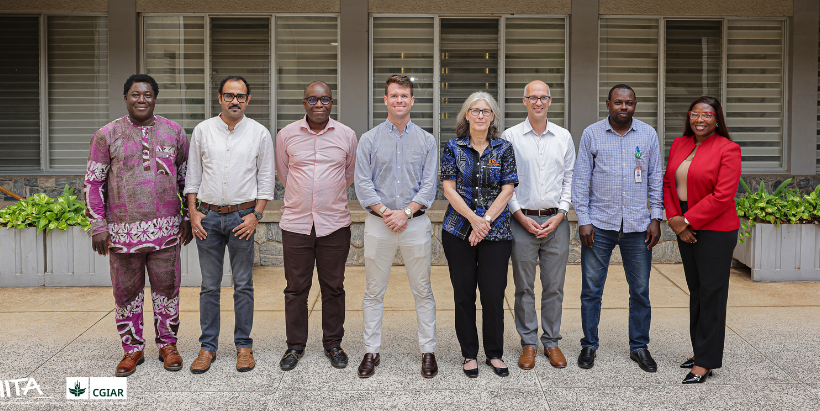
In lieu of this, a delegation from Oath Africa recently paid a courtesy visit to the IITA–CGIAR headquarters in Ibadan to explore opportunities for collaboration to advance soil health and sustainable agricultural production in Nigeria. The visit provided an opportunity for the delegation to introduce Oath Africa and its Oath Soil Life (OSL) System, a microbial soil amendment developed to improve soil health and agricultural productivity. According to the delegation, the system is designed to support soil resilience, improve water conservation, and enhance crop performance, particularly in degraded soils. The team also shared findings from research and field trials, including improved crop yields and reduced dependence on inorganic fertilizers among both commercial and smallholder farmers. They emphasized, however, that the OSL System is not intended to eliminate the use of fertilizers, but rather to reduce the amount of inorganic fertilizer required while improving overall soil health.
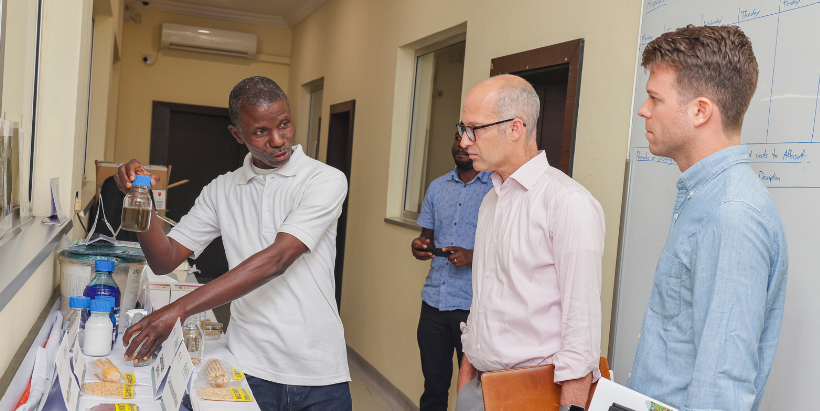
Speaking during the visit, Oath Africa Co-founder and Rwanda Deputy Country Director, Sean Buckley, noted that the product is not crop-specific and can be applied across different farming systems. He added that the organization’s interest in Nigeria is part of its efforts to expand its operations beyond East Africa.
Having received its full commercial operating license in August 2025 after more than two years of engagement in Rwanda, the organization is now looking to establish a similar operational presence in Nigeria. For its proposed trials in Nigeria, Oath Africa is considering a focus on legumes, roots, and tuber crops. Potential locations for the trials include Oyo, Ogun, and Ondo states in the Southwest, and Kaduna and Nasarawa States in the northern regions.
The visit also sparked discussions about potential collaboration with IITA, particularly in soil health research, validation trials, sustainable agriculture, and the assessment of the OSL System for potential application in Nigeria’s agricultural sector. As pressure on agricultural land continues to grow, exploring solutions that can restore degraded soils while supporting productivity will remain critical. Partnerships that bring together research, innovation, and practical application could play an important role in developing more sustainable and resilient agricultural systems for the future.