
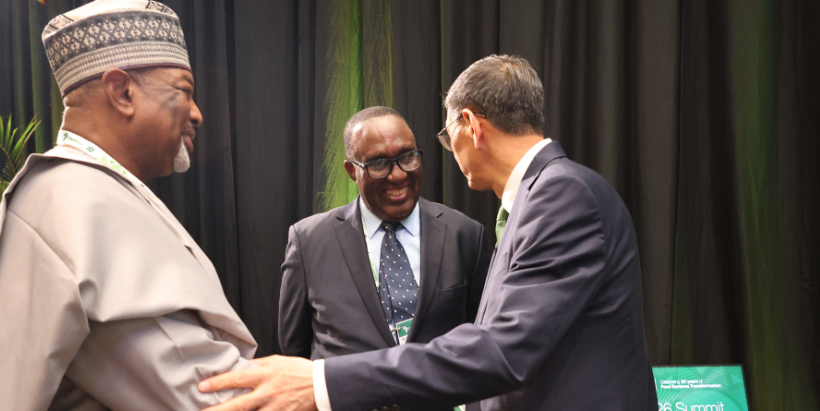
For IITA, the just concluded Africa Food Systems Forum (AFSF) 2026 in Kigali, Rwanda, provided more than a platform for dialogue, it served as a strategic opportunity to strengthen partnerships, showcase science-driven innovations, and align research with national food systems priorities across Africa. The Forum brought together over 5,000 participants from more than 50 countries under the theme “Investing in Africa’s Agri-Food Systems: Nourishing Nations, Growing Jobs, Building Resilience.”
While discussions at AFSF focused on investment, climate resilience, food security, emergency responses, and digital innovation, IITA’s engagement was firmly anchored on a key message: transforming Africa’s food systems requires stronger connections between science, government priorities, investment, and delivery at scale. This message was championed by Dr Simeon Ehui, IITA Director General, whose engagements throughout the Forum centered on deepening relationships with governments and institutions already working with IITA across the continent.
Rather than treating the Forum as a networking event alone, the IITA team used the gathering to advance discussions on scaling proven agricultural innovations, unlocking the potential of roots, tubers and banana, strengthening seed systems, improving soil health, and creating opportunities for Africa’s youth through agriculture.
Nigéria
A key engagement for IITA during the Forum was with Senator Abubakar Kyari, Nigeria’s Minister of Agriculture and Food Security. Discussions led by Dr Simeon Ehui, Director General of IITA, focused on strengthening collaboration between IITA, CGIAR, and the Nigerian government to accelerate the country’s agricultural transformation agenda. Both parties underscored the importance of translating scientific breakthroughs into practical solutions that can boost productivity, improve food security, and strengthen the resilience of Nigeria’s food systems.
In another development, the Governor of Jigawa State, H.E. Umar Namadi also met with the Dr Ehui to discuss ongoing partnership efforts and progress in agricultural development, innovation scaling, and food systems transformation. The engagement highlighted the critical role of sub-national governments in accelerating the adoption of research-based solutions and creating an enabling environment for agricultural investment and rural economic growth.
These engagements reaffirmed IITA’s longstanding partnership with Nigeria and its commitment to supporting the government’s efforts to build a more productive, competitive, and inclusive agricultural sector capable of driving economic growth and improving livelihoods.
Rwanda
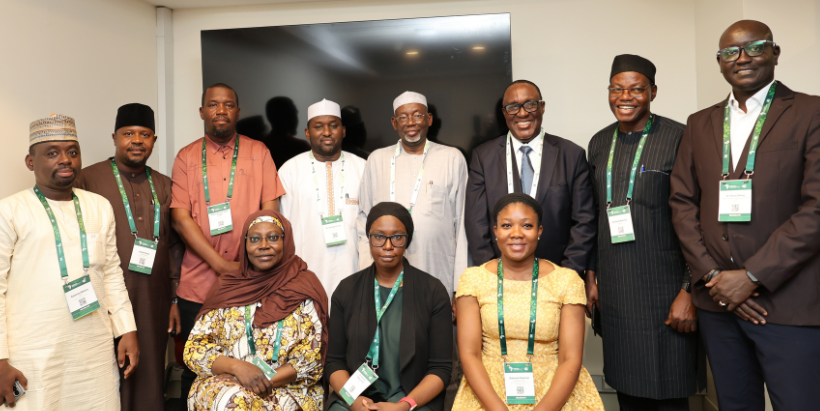
As host nation, Rwanda featured prominently in IITA’s engagements. The Forum came just months after closer collaboration between IITA and the Rwanda Ministry of Agriculture and Animal Resources aimed at scaling agricultural innovations and strengthening food systems.
Dr Ehui met with Dr Florence Uwamahoro, Ag Director General of the Rwanda Agriculture and Animal Resources Development Board (RAB) on strengthening agricultural research collaboration and food-security efforts, reaffirming the commitment of IITA and CGIAR to supporting Rwanda’s agricultural advancement through science, innovation and partnerships.
The country has increasingly positioned itself as a hub for agricultural innovation, and the AFS Forum offered an avenue for both sides to explore pathways for accelerating technology uptake, investment, and farmer impact.
Madagascar
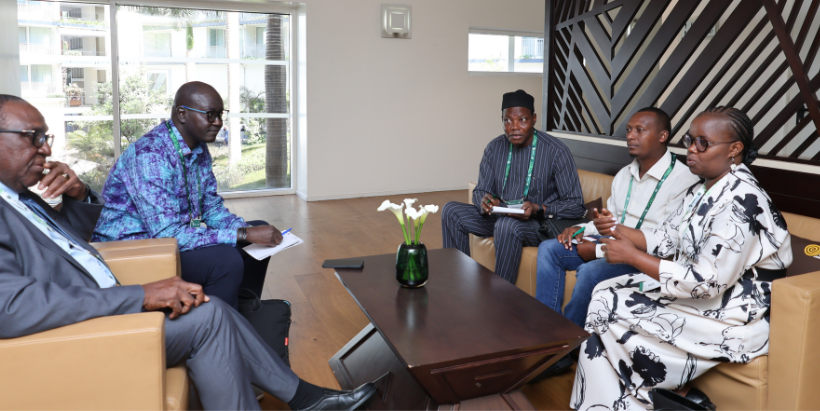
Alongside other engagements, discussions in a meeting with Malagasy government officials, the Director General of AfricaRice, Dr Baboucarr Manneh and the IITA Country Representative for Madagascar, Dr Chieck Diarra focused on strengthening cooperation to support Madagascar’s agricultural transformation. With food sovereignty a national priority, Dr Ehui explored opportunities to strengthen ongoing efforts involving institutions including National Center for Applied Research in Rural Development in Madagascar (FOFIFA), CFFAMA and FIFAMANOR.
Dr Diarra also contributed to the Forum’s youth and entrepreneurship agenda during The Table Session: Linking Youth Innovators to Investors. Joining fellow panelists, he explored practical pathways for addressing the challenges that continue to limit youth participation and growth in Africa’s agribusiness sector.
Drawing on IITA’s experience supporting young agripreneurs across the continent, Dr Diarra emphasized that unlocking youth investment in agriculture requires addressing multiple constraints simultaneously, including access to documentation, the cost of capital, business readiness, market structures, and prevailing perceptions about agriculture.
He noted that broad calls for greater access to finance must be translated into specific solutions tailored to different business stages, sizes, and financing instruments, whether grants, blended finance, debt, equity, or guarantees. He further stressed that meaningful progress will only come when financing mechanisms are aligned with enterprise growth stages and when stakeholders move from dialogue to concrete, measurable commitments that help promising innovators transition from pilot initiatives to scalable businesses.
Malawi
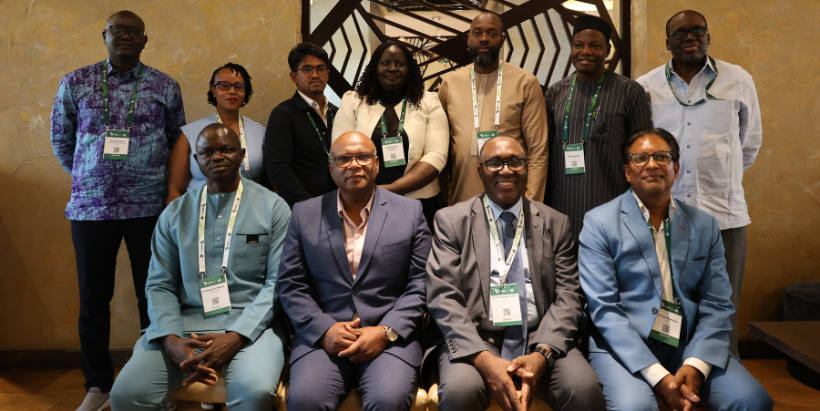
One of the key bilateral engagements during the Forum involved Malawi’s Minister of Agriculture, Irrigation and Water Development, Roza Fatch Mbilizi, discussions focused on strengthening cooperation in agricultural research, seed systems, and innovation uptake in the country.
Reassuring the Minister of IITA’s preparedness to support the country’s agricultural agenda, Dr Ehui highlighted science-based solutions like the semi-autotrophic hydroponic (SAH) capable of addressing productivity constraints in crops like cassava and potato and enhancing food system resilience in the country. He highlighted how IITA’s long-standing presence and research activities with partners in Malawi, has contributed to improving crop productivity, resilience, and farmer livelihoods.
These engagements underscored IITA’s commitment not only to supporting national agricultural priorities but also to building a new generation of agribusiness leaders capable of driving inclusive and sustainable food systems transformation across the continent.

Showcasing science at AFSF
Beyond bilateral meetings, IITA scientists contributed to technical discussions and breakthrough sessions that explored how science and innovation can unlock greater value from Africa’s agricultural systems.
A key highlight was IITA’s contribution, alongside the International Potato Center (CIP), to discussions on unlocking the potential of Africa’s roots, tubers, and bananas (RTB) sector. The session featured notable IITA scientists including Dr Delphine Amah, Dr Beatrice Aighewi, Dr James Legg, Dr Mercy Diebiru-Ojo, and Dr Kiddo Mtunda. The panel examined how investments, innovation, and partnerships can accelerate the development of RTB value chains, which are critical for food security, nutrition, livelihoods, and employment across Africa.
IITA-linked innovations also featured in discussions on next-generation agricultural technologies. One example was the SeedTracker, a smartphone-based system for tracking cassava seed production real-time. Developed through collaborations involving IITA and CGIAR partners, the innovation demonstrates how digital tools can support smallholder farmers and strengthen agricultural resilience.
A Forum that strengthened the road ahead
As the curtains closed on the 20th edition of the AFS Forum, IITA emerged from Kigali with strengthened relationships and renewed momentum for delivering impact at scale. The institute’s engagements across Nigeria, Rwanda, Malawi, and Madagascar reflected a common theme: agricultural transformation succeeds when governments, researchers, investors, development partners, and farmers work together toward shared goals.
For IITA, Kigali was not simply about participating in another continental forum. It was about ensuring that scientific innovations move beyond research plots and laboratories into farmers’ fields, markets, and national development strategies. The partnerships strengthened during AFSF 2026 could help accelerate that journey, bringing Africa closer to more productive, resilient, and inclusive food systems.
Contribué par
Timilehin Osunde
Histoires récentes