
CGIAR has been at the forefront of ensuring that women are visible, their voices heard, and their contributions recognized. Through its Employee-Resource Group (ERG), CGIAR is addressing every form of barrier limiting women from achieving their full potential in the workplace, among other things. Recently, the Women in Research and Science (WIRES)—one of the ERGs—held a webinar to discuss ways to break down barriers to gender-equitable scientific career progression in Africa.
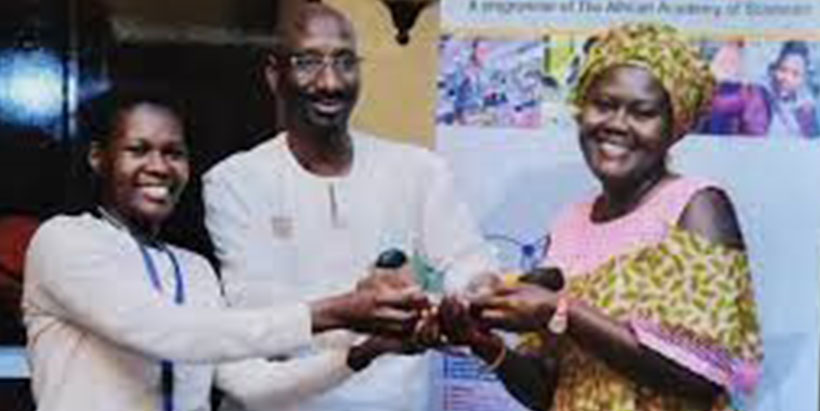
Highlighting ways CGIAR through WIRES has been helping women scientists advance in their career, HarvestPlus Cassava Breeder at IITA, Elizabeth Parkes, who moderated the webinar, mentioned the Random Coffee and Mentorship programs launched in October 2022. She also stated that in February and March this year, WIRES organized all-staff webinars focused on how women can role model success and ways to overcome limiting beliefs.
Parkes included that, in the spirit of continuous improvement and adaptation, WIRES also conducted a series of three focus group discussions in March to better understand the unique challenges of women in CGIAR. They recognized that these barriers are not unique to CGIAR but are also evident in other research organizations globally. “To better understand how to break down these barriers, they need to be addressed the same way any scientific challenge would be addressed, by leveraging evidence, data, and research,” she said.
Hence, WIRES invited IITA Gender Research Specialist, Millicent Liani, to share highlights about her PhD research in this webinar on “Breaking down barriers to gender-equitable scientific career progression in Africa”. Liani stated that following her Doctoral Fellowship program with the DELTAS Africa Learning Research Program at the Liverpool School of Tropical Medicine, United Kingdom, she commissioned a study titled “An examination of the barriers and enablers to gender equitable scientific career pathways in the DELTAS-funded African research institutions”.
Liani explained that from the study, she realized that there is still a large gap between the progression of women and men in scientific research careers, for which overcoming the barriers should not only focus on numerical evidence but also on the underlying social, cultural, and institutional drivers and processes that produce gender inequities in science careers.
Sharing insights on some of the barriers women face, she mentioned insufficient mentorship and shortage of female role models; lack of institutional support for women researchers with nursing needs, such as the absence of a lactation room; and dissatisfaction with the mode of provision for flexi-work arrangement.
Liani also emphasized some actions that could help to address these barriers, including building and nurturing a supportive research community for open dialogues, structured mentorship for all, and psycho-social counseling. She also highlighted establishing an inclusive and enabling work environment with flexi-time and childcare support; and better representation of women in scientific leadership by reshaping better organizational cultures.
Participants added to the conversation, identifying barriers that women in CGIAR face. They also enumerated actions they would like to see implemented in their various CGIAR centers to enhance women’s equitable progression in scientific research careers.
Following the presentation, Multifunctional Landscape Manager at Alliance of Bioversity and CIAT, Arwen Bailey, encouraged participants to enroll in the established programs to assist them in building a successful science career. “In May, we would also be kicking off a series of career development workshops for women in CGIAR,” she concluded.
Contribué par Ochuwa Favour Daramola
Contribué par
Histoires récentes